How to Give a Cat a Pill
Published on March 4th, 2026
Updated on March 24th, 2026


Pilling cats is no joke:
We’ve all seen the memes and jokes about pilling cats, but making sure kitty takes their meds is serious business. This guide to how to give a cat a pill focuses on calm, low-stress techniques designed for real pet parents and real cats, including those who hide at the slightest hint of a pill bottle. Each method is gentle, vet-recommended and broken into clear steps so you can approach medication time with confidence instead of dread. BTW, if possible, enlist a buddy.
Preparing to medicate your cat
This is the time to invoke the famous Boy Scouts motto. After all, a few minutes of preparation can transform the entire experience. When the environment is steady and the supplies are ready, you control the pace and your cat benefits from a calmer process.
1. Gather your supplies
There are few things more annoying than being ready to go and realizing you’re missing one item. Even if you have a buddy to help, it’s best to be ready to go! Create a simple prep station so nothing needs to be fetched mid-process. Your checklist includes:
Medication (pill, capsule, liquid or compounded formula)
Pill dispenser/pill popper (recommended)
Oral syringe or dropper
Small tasty treats or a lickable treat
Pill pocket/wrap or similar tasty treat to enclose a pill
Towel for a secure “purrito” wrap
Water
Disposable gloves (optional)
Petco can help you find pill dispensers, syringes, towels designed for handling and flavor-enhanced treats that make medicating less stressful—for both of you!
2. Review medication instructions
This step is about special considerations you need to be aware of:
- Confirm if the medication needs to be given with or without food
- Check whether the pill can be split or crushed. Many cannot, as altering certain medications can change how they work or make them taste extremely bitter, and you don’t want to do anything that might encourage kitty to spit it out.
- Shake liquid medications if required and measure the dose before bringing your cat into the room (See section on liquid medications for specific steps.)
3. Create a calm environment
You don’t need to go all out and create a spa environment, but here are a few things to keep in mind.
First off, make sure you are calm. If you are running late for work and already stressed, this isn’t a good time
Choose a quiet room with minimal distractions; this isn’t the time to have a loud action movie on in the background
Place your cat on a secure, nonslip surface backed up to a wall or swaddle them in a towel for better control
Give your cat a moment to settle; use a soft voice and look for slow breathing that indicates a calm kitty
Step by step: How to give a cat a pill
OK! You’re prepped and ready to go.
The least-resistant way to get a cat to take a pill is often with the help of pill pockets or compounded flavored treats. Some pills can be given inside a small ball of wet food, sometimes referred to as the “food masking” technique. This sounds good, but it’s still important to check the medication instructions to ensure it’s able to be administered with food.
If your cat will not take a pill when it is hidden within a tasty treat, these 5 steps on how to give a cat a pill follow common veterinary teaching methods and emphasize gentle restraint and precise placement. For all steps, consider talking to kitty in a calm voice; your tone can help and your words give your cat something else to focus on (even if your cat doesn’t always do what you say).
1. Position yourself and your cat
Place your cat on a flat, nonslip surface backed up to a wall or swaddle your kitty. Alternatively, you or your pilling pal can stand behind the cat so they cannot back away. With your nondominant hand, gently grasp the top of your cat’s head with your thumb and forefinger at the base of the cheekbones
Tilt the head slightly upward—not fully back but just enough to encourage your cat to open their mouth
2. Use the “purrito” towel wrap (when needed)
This is a great option for first-timers, helps reduce scratching and lowers stimulation for anxious cats.
Lay a towel flat
Position your cat in the center
Snugly (but not too tightly) wrap their body and all legs inside the towel with only their head exposed
Petco offers various cat blankets and calming aids that can help during handling.
3. Open your cat’s mouth—gently!
With your dominant hand holding the pill, use your middle finger to gently lower your cat’s jaw
Avoid putting pressure on the whiskers; those are extra sensitive and, again, you don’t want to create a reason for your cat to be uncomfortable, especially during the pilling process
4. Place the pill properly
- Using a pill dispenser, place the tip on the back third of the tongue and depress the plunger in one smooth, quick motion. Don’t be rough but don’t linger, either.
- Alternatively, docile cats may allow clinic staff or an experienced pet parent to use a finger to guide the pill to the back third of the tongue in lieu of the pill dispenser.
- Never push the pill so far it stimulates a gag response as this can cause choking or aspiration
5. Help them swallow
Gently close your cat’s mouth while keeping their head level. We have 3 different tips to get your cat to swallow; you can use one or all as needed.
Lightly stroke the throat in a downward motion
Offer a small sip of water via syringe
Blow softly on your cat’s nose; this may trigger automatic swallowing. If your cat appears stressed or doesn’t tolerate handling well, avoid this option
Still having trouble? Our compassionate and experienced veterinarians can help.
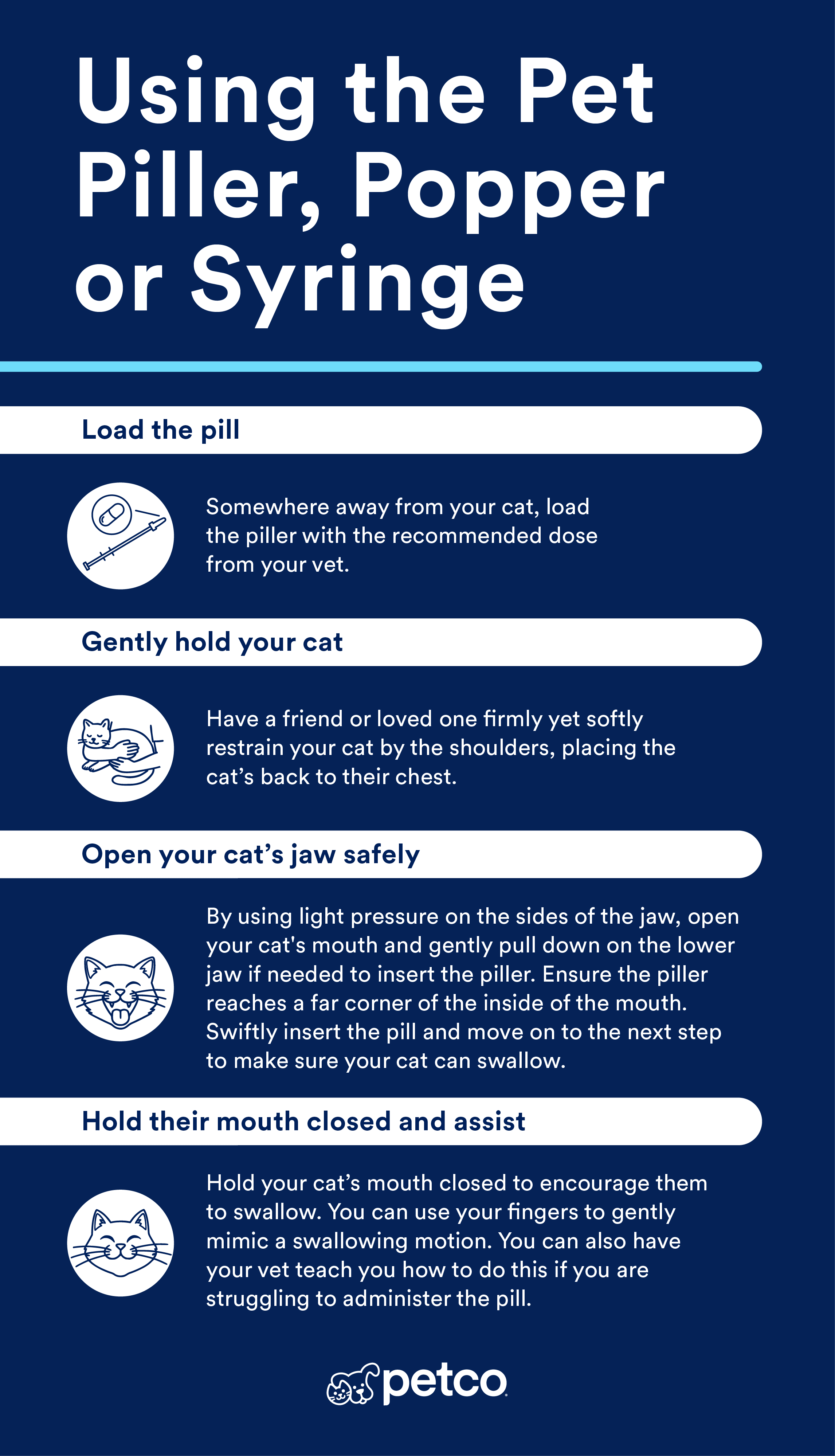
Step by step: How to give liquid medication
Sometimes the medication your veterinarian prescribes comes in a liquid form. Liquid medications allow for more gradual delivery but require careful technique to avoid aspiration or panic. The following 4 steps can help make the medicine go down easier for you both.
1. Prep the syringe dose
Prepare the syringe with the exact dose before approaching your cat
Position your cat and hold their head gently but firmly as outlined in steps 1 and 2 above (same as the pill method), keeping the chin level—not tilted back
2. Place the syringe towards the cheek
Slide the syringe tip into the side of your cat’s mouth at the cheek gap just behind their canine tooth. Never insert it at the front of the mouth; this makes gagging more likely
3. Administer slowly
Dispense a tiny amount at a time, allowing your cat to lick up and swallow between portions
Aim toward the cheek pocket, not down the center of the throat. This helps prevent aspiration, which is a danger to cats
Pause if your cat backs up, tries to pull away or becomes generally stressed
4. Offer water or treats
Offer water via syringe or a treat to clear the taste. This is a good time to serve a very high-value treat. Your cat may never look forward to meds, but an awesome treat can make the experience more, ahem, palatable
Praise and calm petting help reinforce positive associations
Ask a Petco associate about high-value cat treat options.
Troubleshooting common challenges
Even experienced pet parents can run into hurdles. These quick solutions can help keep things on track.
What if my cat spits out medication?
Stay calm and avoid reacting loudly or sharply; don’t scold or chase
Reassess your pill placement technique; this is another instance of location, location, location
Give a short break before trying again. This is for both of your benefits, especially if you are feeling rushed
Consider talking to your vet about switching to flavored liquid or compounded treats if this happens often (more than twice)
How can I help reduce my cat’s stress?
Keep sessions short and predictable
Reserve a specific high-value treat for medication time only to help create a positive correlation
Practice “fake” sessions with empty syringes to build confidence for you and comfort for your cat
Maintain a soft voice and relaxed body language throughout the pilling process
A simple troubleshooting mindset: If your cat becomes more stressed between attempts, pause. Reset or change the environment, offer reassurance or use a different tool such as a pill pocket or compounded formulation.
At-a-glance common problems and solutions
Problem
|
Likely Cause
|
Quick Fix
|
Cat spits out pill
|
Pill placed too far forward
|
Use pill dispenser; place deeper; follow with water
|
Cat foams at mouth
|
Bitter pill or flavor reaction
|
Discuss best alternatives with your veterinarian
|
Cat scratches or squirms
|
Fear, too much restraint
|
Try towel wrap; bring in a calm helper
|
Cat hides
|
Negative association
|
Start practicing different parts of the process with mealtime or treats. When medicating and completing the full process, end session with treats, play, gentle praise
|
Liquid meds drool out
|
Syringe angled wrong
|
Aim at the pocket between the cheek and gums; deliver slowly, allowing the cat to lick up medication before adding more
|
Takeaways
With practice and the right tools, learning how to give a cat a pill becomes easier and less stressful for both you and your cat. Celebrate small wins, even if it’s simply positioning your cat more easily than the day before. Remember, the goal is steady progress, not perfection, so don’t let the process turn you into the one being a pill. If your cat remains highly distressed or becomes impossible to medicate safely at home, consult your veterinarian. With expert guidance and support from resources like Petco, you can find a successful method that keeps both you and your cat safe.