


Are Laser Pointers Bad for Cats?
Published on March 19th, 2026
Updated on March 24th, 2026


Cats and laser pointers are all over social media and maybe even your own home! That’s not surprising. Laser pointers are one of the most popular interactive cat toys—and one of the most debated. Pet parents often ask whether these fast-moving dots provide healthy enrichment or create frustration and stress. Understanding how cats experience laser play is key to using these toys in a way that supports natural behavior rather than undermining it.
This guide explores why cats are drawn to lasers, concerns associated with improper use and best practices for safe, rewarding play. Along the way we will also address a common question: Are laser pointers bad for cats? The answer depends less on the toy itself and more on how it’s used.
Understanding why cats are drawn to laser pointers
Cats instinctively stalk anything that is small and fast-moving. Laser pointers tap directly into that instinct by mimicking unpredictable movement patterns that pique interest. And those red dots are just so pounceable!
How laser movement activates natural feline instincts
The rapid darting motion of a laser dot can trigger a cat’s attention almost instantly. Sudden starts, quick turns and erratic pauses as the dot moves across floors, walls or furniture encourage stalking, pouncing and sprinting behaviors that indoor cats may otherwise lack opportunities to express.
This type of movement activates:
Visual tracking and focus
Muscle engagement and coordination
Short bursts of speed
Because the dot appears and disappears quickly, it helps keep cats mentally engaged and physically active throughout the play session.
Cats do not perceive laser dots as light reflections or tools controlled by humans. Instead, they respond to the movement itself. The dot moves intriguingly but never resolves into a physical object, which is where confusion can arise if play is not managed properly.
For cats, the satisfaction of play comes from completing the cycle: stalk, chase, catch. When the “catch” phase never happens, some cats may become frustrated or overstimulated. This does not mean lasers are inherently harmful, but it does mean thoughtful use matters.
Potential risks of laser pointer toys
Laser toys can be enriching, but misuse can create unintended stress or behavioral issues, which, of course, is the opposite of having fun. Consult your veterinarian if you notice sudden behavioral changes in your cat after interacting with a laser pointer.
Can laser pointers confuse cats?
When laser play ends abruptly or is used too frequently without resolution, some cats may continue searching for the dot long after the session ends. This can look like pacing, fixating on floors or staring at walls. In rare cases, repetitive frustration may contribute to anxiety or compulsive behaviors.
Reducing confusion is often as simple as:
Limiting session length
Ending play with a physical reward, like a treat
Rotating laser play with other toy types
Eye safety and product selection
Laser safety is critical. Never shine a laser directly into a cat’s or anyone else’s eyes or reflect it off mirrors or glossy surfaces. Only use products labeled as cat laser toys or Class 2 lasers designed for home use. FDA regulations limit the visible light power of hand-held laser pointers to 5 milliwatts (mW). A laser aimed directly at the eyes can cause temporary blindness even at the legal power limit.
Petco offers laser toys specifically made for cats that meet safety standards and include features designed for interactive play rather than random exposure.
How to play with lasers the right way
When used thoughtfully, laser pointers can be a valuable part of a cat’s enrichment routine—and fun for you to watch! If your cat has any underlying health conditions or limited mobility, consult your veterinarian to determine if laser pointer play is a safe option for your cat.
Setting the scene
Before starting, choose a calm space with minimal obstacles and nonslip flooring. Play when your cat is alert and interested, such as before meals or during natural activity peaks.
Helpful tips:
Keep sessions short, about 5–10 minutes
Avoid overstimulation
Use lasers as one tool among many; rotate other games and toys frequently
Laser pointer rules
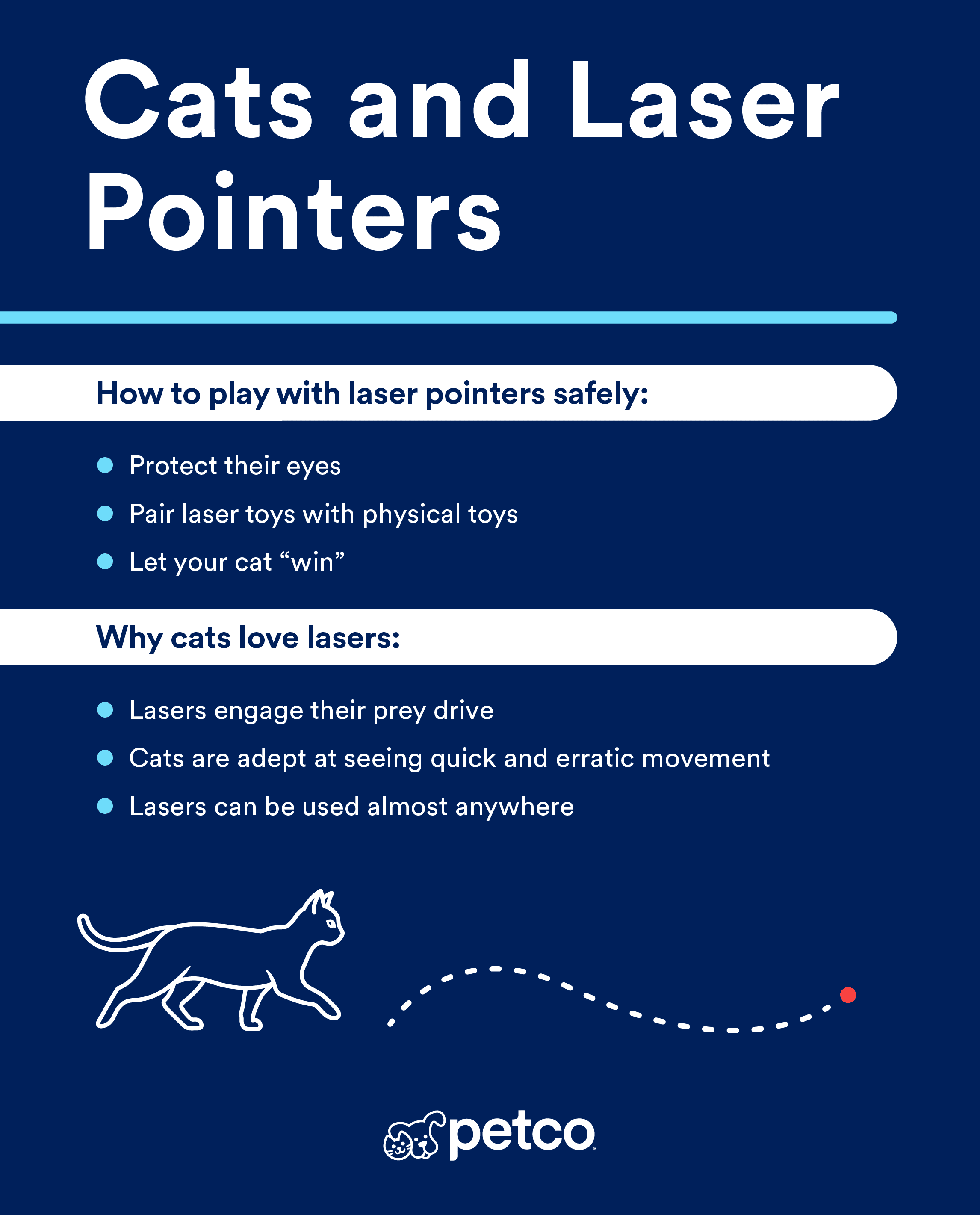
Unlike other toys that don’t have “rules” for playtime, a laser pointer has some guidelines to help keep things fun instead of frustrating or dangerous. Follow these 5 steps to support an enjoyable but safe session for your kitty:
Start slow and low to the ground. Be mindful of furniture or other objects in the room that could be a hazard if your cat speeds or leaps in that direction
Vary speed and direction with pauses to encourage stalking
Allow your cat to chase and pounce rather than constantly sprint
Observe body language and stop if your cat appears stressed or fixated
Mix light play with other play forms
End play sessions with a win
Always finish laser play by directing the dot toward a tangible toy or treat. Toss a plush toy, offer a food puzzle or place a treat where the dot “lands.” This allows your cat to complete the cycle and walk away feeling successful rather than frustrated. It is much the same way a game would be for a person if it never allowed a win. Imagine playing a video game where the goal keeps moving but there is no way to score, finish the level or succeed. Over time, that lack of resolution can feel stressful rather than fun.
Takeaways
Interactive play is essential for indoor cats and laser pointers can be part of a healthy enrichment routine when used correctly. The key is intention. Short sessions, safe products and a clear ending help prevent confusion and frustration. By understanding feline instincts and adjusting play to match your cat’s comfort level, you can turn laser toys into a positive and rewarding experience. Petco can help you in your hunt for both laser cat toys and treats for capturing the dot!
FAQs: Laser pointers and cats
Is it okay to play with your cat using a laser pointer?

Yes, for many cats, laser play can provide exercise and mental stimulation when sessions are short and end with a physical reward.
Are laser pointers bad for cats?
No, just make sure not to point the laser in your cat’s or anyone else’s eyes. If your cat shows signs of excessive frustration or other behavioral concerns after playing with a laser pointer, consult with your veterinarian.
Do cats know you’re controlling the laser?
Most cats respond to the movement rather than the source. They typically do not recognize human control over the dot.
Can using laser pointers cause behavioral issues?
Potential issues may include fixation or frustration if play lacks resolution. Switching up toys and ending sessions with a “catch” helps reduce this risk. Some cats may become overly stimulated, so let your cat guide you.
Are red or green lasers better for cats?
Green lasers are more visible in brighter light while red lasers are commonly used indoors. Both are safe when specifically marketed for laser pointer play with cats, used properly and never directed at eyes.
