How to Replace Your Cat’s Litter Box Entirely
Published on November 14th, 2025
Updated on January 21st, 2026


Just like your toothbrush, replacing your cat’s litter box isn’t just about freshening things up—it’s about protecting your cat’s health and keeping your home odor-free. Cleaning helps in the short term, but over time the box itself wears down. This applies to multiple boxes, as well, which is a factor in multi-cat households.
This article covers:
Signs you should replace the box
Tips for making the transition to a new litter box
Bonus “scoops” of fun facts
When should you replace the litter box?
Once a year, usually
The answer depends on your cat’s habits and the box’s condition, but most experts agree you should replace a litter box about once a year for a typical plastic style. Some recommend every 6 to 12 months depending on cleaning frequency and visible wear and tear (see next section for specific signs).
A fun way to remember? Pick a special date—your cat’s adoption day, birthday or even a holiday—and mark it as “New Litter Box Day.” That way you’ll never forget. And when it’s time for a replacement, Petco carries a variety of litter boxes, from basic open pans to high-sided and hooded styles, making it easy to find the right fit.
Bonus scoop:
Plastic can degrade after long periods of time or excessive use to the point that litter boxes have actually shattered in cat parents’ hands! Aside from being alarming, this is potentially dangerous—and very messy!
Signs you need to replace the cat box
How do you know how often to change the cat box or if it needs replacing sooner than a year? Watch for these four red flags:
Persistent odor even after scrubbing--If you are concerned your cat might have a related issue like a UTI, be sure to contact your vet first.
Visible scratches, stains or discoloration—these can trap bacteria
Avoidance—your cat resists using the box or has accidents elsewhere
Structural weakness like cracks or brittle edges to the box or litter pan
If you notice any of these, it’s time to replace the litter box.
How to replace the old litter box: step by step
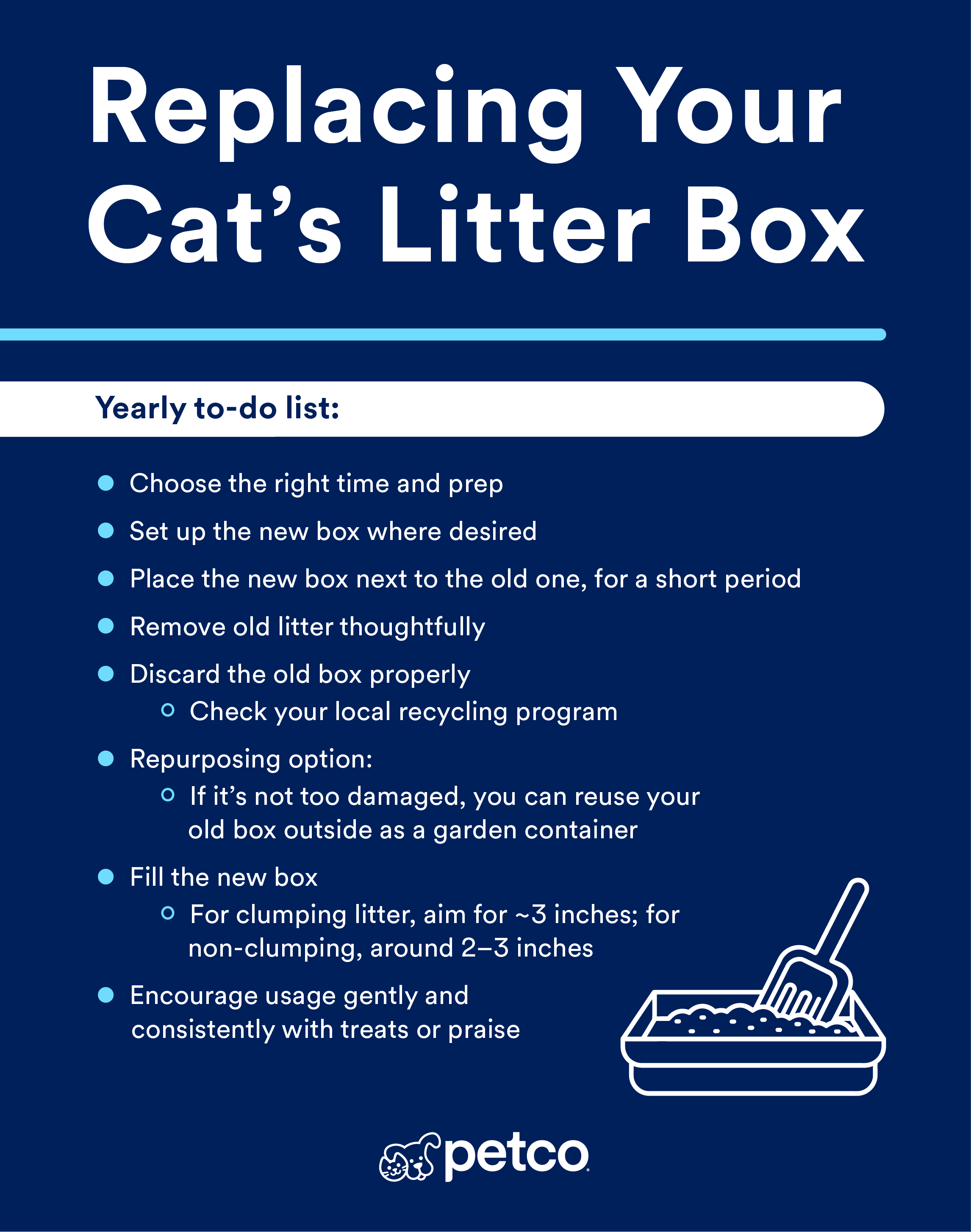
Swapping out your cat’s litter box may seem like a simple out with the old and in with the new. But a thoughtful approach helps your cat adjust smoothly while keeping your home clean and safe. These six steps can help make a smooth transition, which means less stress for your cat:
Choose the right time and prep. Bring in the new box and litter. Pick a calm moment when your household is quiet. It’s OK if your cat is hanging around to observe what you’re doing but not mandatory.
Set up the new box. Add fresh litter—about 3 inches for clumping litter and 2 to 3 inches for non-clumping to the new box. Place the new litter box next to the old one and keep it there for a few days. This gives your cat a chance to sniff, explore and get comfortable. Keep both boxes available until you see your cat consistently using the new one.
Recognize progress. Encourage your cat with praise or a small treat when they use it.
Remove old litter safely. Scoop the old cat litter into a sturdy trash-safe bag. Avoid flushing or composting, which can clog drains and attract pests.
Discard the old box properly:
Plastic boxes:
Some recycling programs accept rigid plastics—check locally. Otherwise, put it in the regular trash.
Broken or cracked boxes:
Place them in a bag, tie it securely and discard. This helps prevent sharp edges from injuring sanitation workers.
Consider repurposing:
If the box isn’t too damaged, reuse it outside as a garden container for nonedible flowers or plants or a plant drip tray. Be sure to thoroughly disinfect the box before any repurposing.
Bonus scoop:
Do not donate used litter boxes to shelters or other pet parents; lingering odors and bacteria might cause problems for new cats.
Why Replacing Matters
Again, replacing the litter box isn’t just a nice idea; it’s a must for your cat’s health and keeping your home smelling fresh. That’s because over time, acidic urine reacts with plastic, leaving pits, scratches and odors that no amount of scrubbing can fix.
These rough surfaces become breeding grounds for bacteria. Aside from being a good cat parent, you don’t really want guests to walk in the door, sniff and say, “Oh, you have a cat.” And if visitors can smell it, imagine your poor cat with their highly attuned noses.
Bonus scoop: Speaking of those highly attuned noses, some sources report cats have up to 20 million scent receptors! According to the National Institutes of Health, humans have a measly 350.
Takeaways
Replacing the litter box might not seem like a big deal, but it’s one of the simplest ways to support your cat’s health and comfort. Over time, even the best-kept litter boxes wear down, trapping odors and bacteria that cleaning alone can’t fix.
When it’s time, Petco has everything you need, from new litter boxes to fresh litter and cleaning supplies, so your cat always has a safe and welcoming space. Setting an annual reminder—whether on your cat’s adoption day, birthday or a favorite holiday—makes it easy to stay on track. Add it to your wall or phone calendar today!
FAQs about changing the litter box
Do different types of litter boxes last longer than others?

Yes. Standard plastic boxes usually need replacing every 6 to 12 months, while stainless steel models can last years since they don’t absorb odors or scratch as easily. Covered boxes don’t necessarily last longer, but they may trap odors more quickly if not cleaned often. Disposable litter boxes, often made of recycled paper or cardboard, are designed for short-term use such as travel or temporary housing. Knowing how often to replace a cat’s litter box depends partly on the material you choose.
Can I recycle or repurpose an old litter box?
It depends on the material and condition of the litter box. Some recycling programs accept rigid plastic litter boxes, but many do not. If the box isn’t too damaged, you can thoroughly disinfect and repurpose it outside as a garden container for nonedible plants or drip tray for plants. Don’t donate used litter boxes to shelters or other pet parents; cats are very sensitive to lingering odors and bacteria.
How many litter boxes should I replace if I have multiple cats?
Follow the general rule: one box per cat plus one extra. Whether you replace them all at once or stagger replacements depends on your cats and household schedule. Staggering may reduce stress for cats who dislike sudden changes, while replacing all at once ensures consistency and freshness across every box. Multi-cat homes may need to replace litter box setups more frequently to prevent odor buildup and keep all pets comfortable.

New cat won't use unscented litter box, pees in shower. What to do?

My cats pee outside clean litter boxes. How do I retrain them?

Why is my cat peeing outside the litter box after wood pellet switch?
Moving with my cat: How to make an indoor/outdoor cat indoor-only?
My huge cat needs a bigger litter box. What are my best options?
How to transition my cat's litter box from upstairs to basement?
My 9-month-old cats make messes. How do I litter train them?
How to switch your cat to a new litter box in the same location?
What causes extreme cat litter box odor and how can I fix it?