Can Cats Drink Milk?
Published on January 20th, 2026
Updated on March 24th, 2026


Why cats shouldn't drink milk
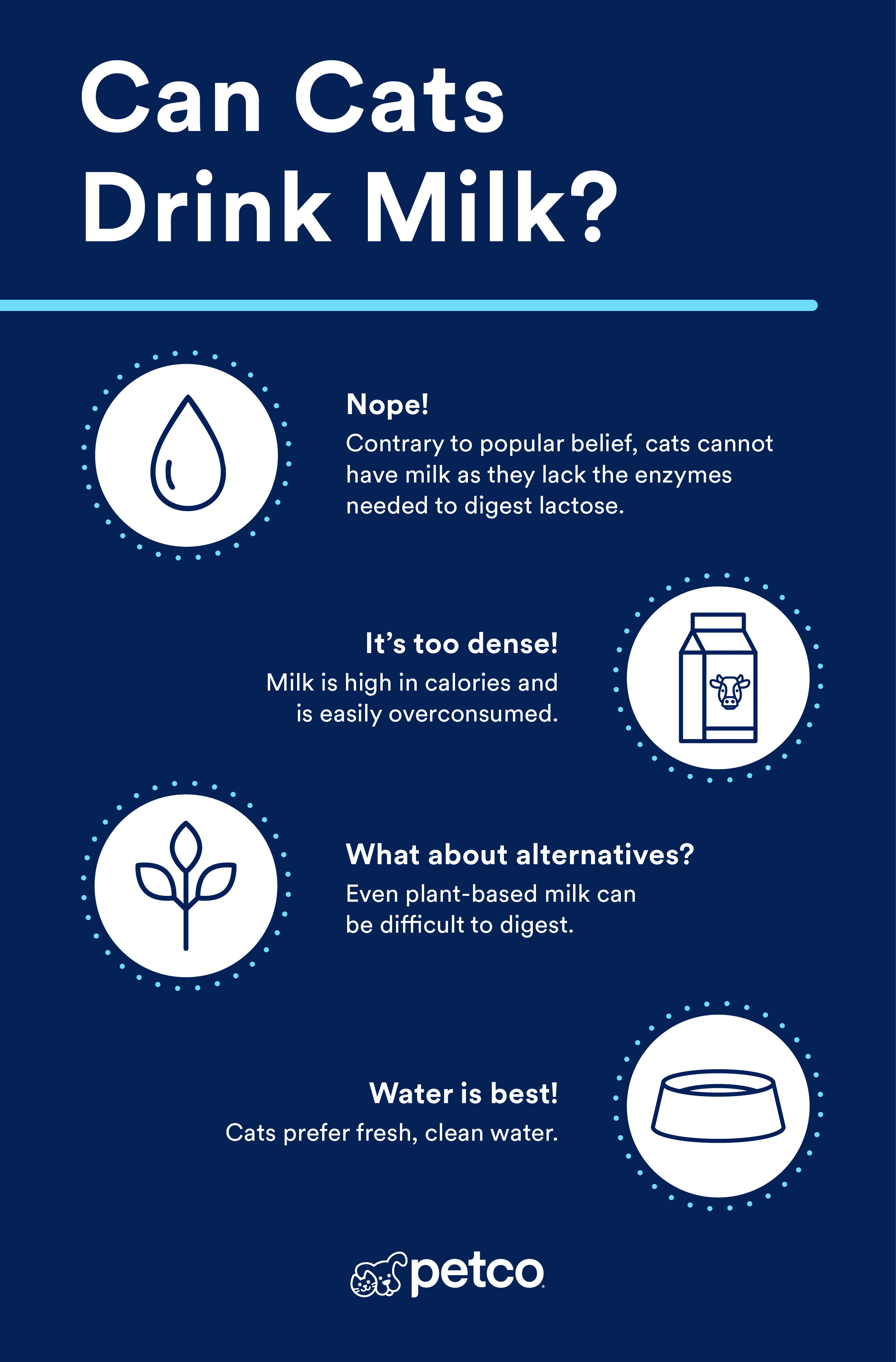
Can cats have milk? The most accurate answer is not really. While a tiny amount may not harm some cats, regular cow’s milk is considered a poor choice as a treat for most adult cats. There are far better treat options when you want to give kitty something special that doesn’t run the risk of pain for your cat and cleanup on aisle 5 for you.
It’s a common plot point in literature, television and film—someone finds a cat and gives them a saucer of milk. (Have you noticed it’s always a saucer, never a bowl, for some reason?) However, it’s time to banish those images from our memories because, yes, most cats are lactose intolerant, which means their bodies can’t properly digest the lactose found in cow’s milk. In this article we’ll explain why milk causes trouble for most cats, what kittens actually need, when to call a vet and healthier alternatives if your cat loves the taste of milk.
Why most cats can’t tolerate milk
When kittens nurse, their bodies produce an enzyme called lactase, which helps them digest their mother’s milk. However, after weaning, lactase production drops significantly. That’s the biological reason most cats are lactose intolerant—they simply don’t make enough of the enzyme needed to break down lactose. Interestingly, this is the same reason people are lactose intolerant; some adults just process dairy products more easily.
When lactose passes through the digestive system undigested, it draws water into the intestines and begins to ferment in the colon. This process can lead to diarrhea, gas, bloating and stomach discomfort. And most of us are familiar with how very unpleasant all of those are!
The reaction varies, which is why some pet parents assume milk is fine for their cat while others see symptoms almost immediately. The truth is, there is no universal “safe amount” of milk for all cats. Some may tolerate a tablespoon without issue, while others react strongly to even a small taste. Regardless, cow’s milk offers little nutritional benefit for an adult cat and carries a very real risk of GI upset.
Pet parents looking for milk-style treats should check their local Petco for lactose-free cat milks, digestive-friendly alternatives and cat treats of all types. Just like any treat, these should be given in amounts not exceeding 10% of their daily calories.
Can kittens have milk?
Again, that mental picture of a kitten lapping milk from a saucer is very powerful, but the answer is still no. Kittens should only consume their mother’s milk or a properly formulated kitten milk replacer. Cow’s milk is not appropriate as a milk replacer and can lead to digestive distress because its fat, protein and lactose levels do not match what kittens need. It is also deficient in the essential nutrients kittens need to grow.
If you’re caring for an orphaned kitten, use a vet-recommended kitten formula. These are easy to find at Petco and designed to support healthy growth.
When to contact a vet
Call your veterinarian if your cat experiences:
Ongoing diarrhea after drinking milk
Vomiting
Signs of dehydration such as dry gums, lethargy or reduced urination
Lack of appetite or unusual behavior following dairy consumption
If your cat drinks milk and shows digestive upset lasting more than 24 hours, schedule a vet visit; make sure you have an established emergency clinic in your phone in case of issues that may occur nights and weekends.
Even if an adult cat seems to tolerate milk, the juice isn’t worth the squeeze, so to speak, especially when that squeeze can be painful. Fresh water must remain the primary daily fluid and other treats are safer. Some pet parents choose lactose-free cat milk products, which are safer than cow’s milk but should still be used sparingly.
Lactose-free options are widely available at Petco, but treat them like any other indulgence and not as a dietary staple. And if you don’t have a vet visit scheduled yet, we can help with that, too!
Healthy alternatives to milk
The best liquid for cats is water. Keep fresh water available at all times and consider a fountain if your cat prefers running water. Some cats like to dip their paws in the water and drink from there, and the fountains can be a source of mental enrichment.
If your cat loves the taste of milk, try lactose-free cat milk formulated specifically for feline digestion. These products satisfy the flavor craving without overwhelming the digestive system.
If you really like that saucer image, another lappable treat option is small amounts of canned or wet food that can be included in the total diet or used as a topper.
Dr. Jonathan Stockman, DVM DACVIM, notes that there are cat-specific products designed to increase hydration. They are generally very tasty and well-tolerated, unlike regular milk.
And there are always lickable treats for something different, as well as, of course, traditional crunchy and chewy treats made for cats.
Veterinarians emphasize that no treat—including lactose-free milk—should replace a balanced, complete diet formulated for your cat’s life stage. Don’t forget to factor in those treats in your cat’s daily caloric totals.
Key takeaways; TLDR
Most adult cats are lactose intolerant and cannot properly digest cow’s milk .
Milk offers little nutritional benefit for adult cats and can cause digestive upset.
If your cat loves the flavor of milk, opt for specially made lactose-free cat milk and use it sparingly.
Water should remain the primary daily liquid.
Contact your vet anytime your cat shows symptoms of illness after drinking milk or if you’re unsure about diet decisions.
FAQs about cats and lactose
Why do some cats seem to tolerate milk without problems?

They may produce slightly more lactase than average, but even these cats can experience delayed digestive issues, meaning “without problems yet.”
Is goat’s milk safe for cats?
It isn’t recommended. It still contains lactose and can cause GI upset.
Can kittens drink cow’s milk?
No. They need their mother’s milk or a proper kitten formula.
Can cats have soy milk or other substitutes?
These should be avoided.
Many plant-based milks have a higher calorie count; some may not be very easily digested and even have sweeteners that are toxic to pets.
How much milk is “too much” for a cat?
For most cats, even small amounts can cause problems. There is no universally safe quantity. Consider the flip side: How much diarrhea is “too much” for you to clean up? The best answer is “any” in both instances.
What is the safest treat if my cat loves the taste of milk?
A lactose-free cat milk product is the best choice.