


Related Articles


Potty Train Your Puppy: A Complete Guide for Stress-Free Success
Published on December 23rd, 2022
Updated on October 15th, 2025


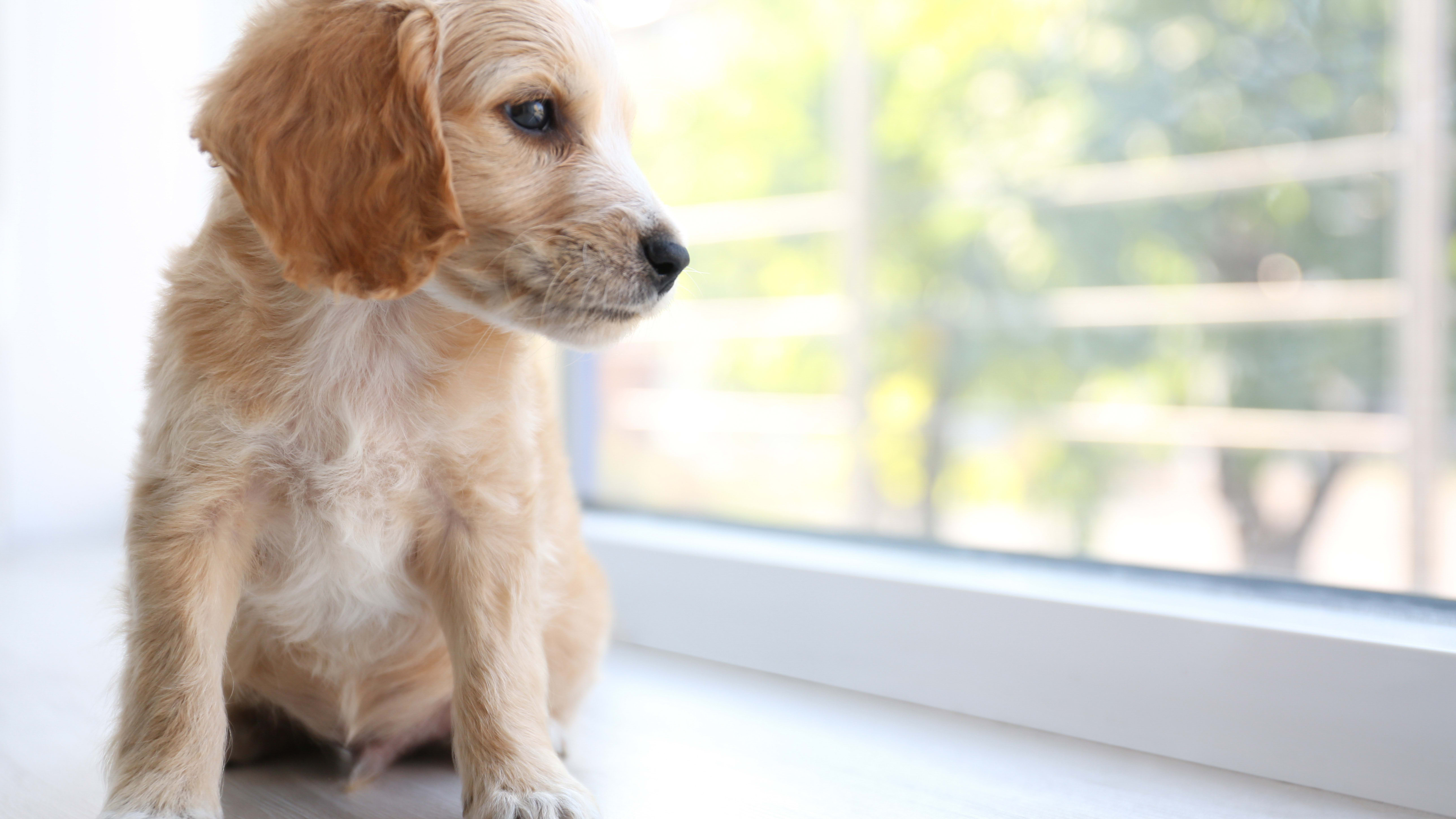
Potty training is one of the most important first steps in setting up your puppy—or newly adopted dog—for a long and happy life in your home. A well-trained pup not only feels more secure in their environment but is also less likely to have accidents. Build a foundation of trust and help reduce stress for both you and your new pet!
Before diving into training, it’s important to do a little research and develop a plan. You’ll need to decide whether to train your dog to go exclusively outdoors or start with indoor training using pee pads or dog litter boxes, with or without the goal of transitioning outside later.
Body Language Cues
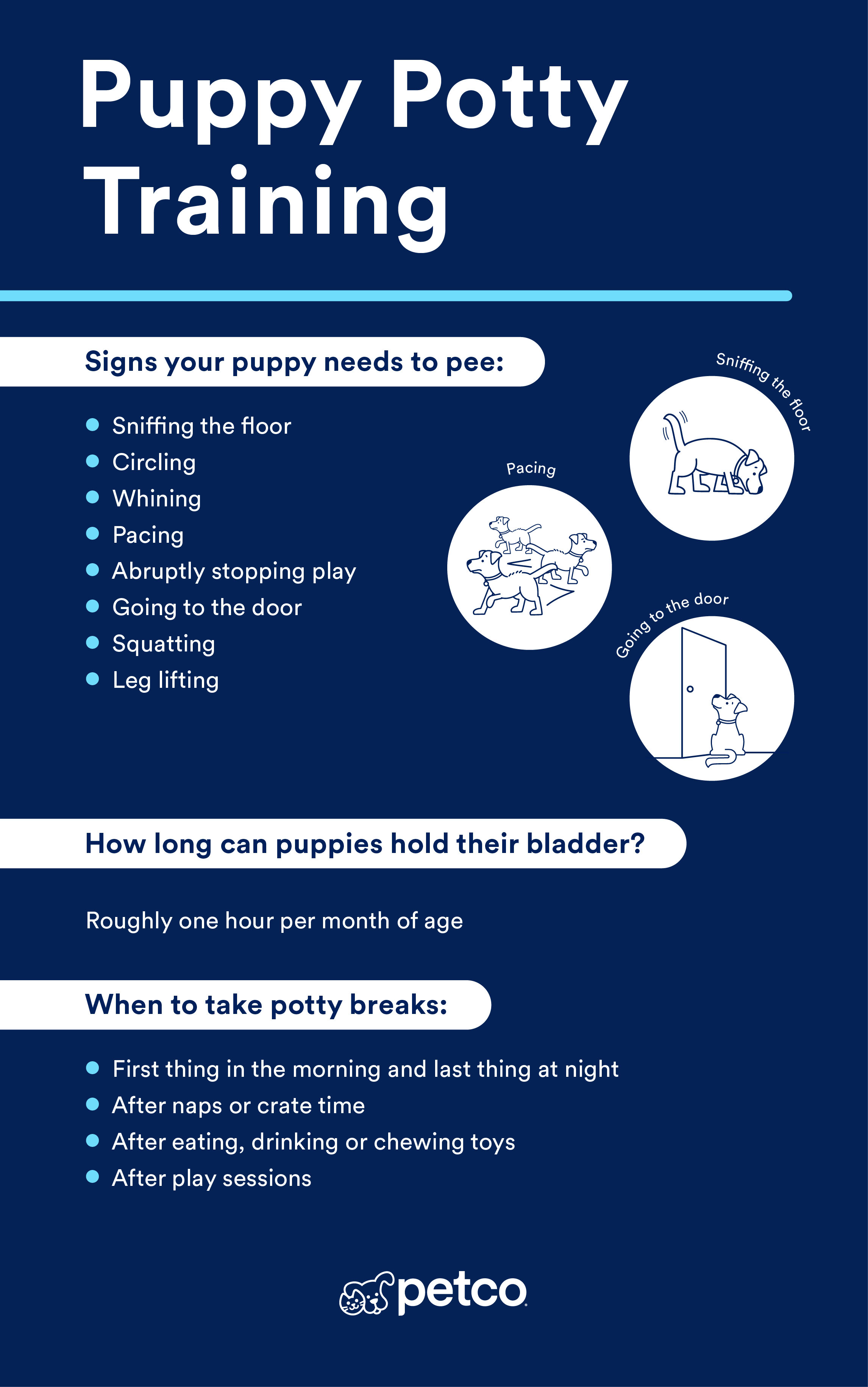
Within 15 minutes of eating, drinking or playing, your puppy should be given the opportunity to relieve themselves, but most puppies need to eliminate outside of that window, too. How will you be able to tell? Puppies often give clear signals when they need a bathroom break, and learning to recognize these cues can make house-training much smoother.
Common signs your puppy needs to go potty include sniffing the floor, circling, whining, suddenly becoming restless and pacing. Some puppies may stop playing abruptly or head toward the door they usually use for potty breaks. If your pup begins to squat or lift a leg, that’s your cue—act fast!
Crate Training
Before they became domesticated couch cuddlers, early dogs lived in dens where they felt secure. That instinct remains strong, and a crate can become a dog’s happy place with the right introduction. Because dogs are naturally clean and avoid soiling their dens, a crate can also be an especially helpful training tool. They can be used both overnight and when you aren’t home and can help limit accidents around the home.
Consider the following puppy crate tips, from size to training hacks.
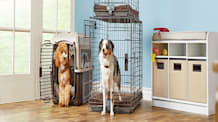
The crate size should be just large enough for your dog to stand, turn around and lie down comfortably (Learn more with our comprehensive crate guide). Any more room encourages them to relieve themselves in one corner and sleep in another, and accidents in the crate can lead to accidents in the home. Some crates come with dividers so you can adjust its size as your dog grows.
To get your puppy used to their crate, toss a treat in and allow them to go inside and come back out at will. Praise your puppy each time they enter. Feeding meals in your puppy's crate can also help them build a positive association with it.
Work your way up to your pet spending 10 minutes in their crate, then go longer (up to overnight).
Take your puppy directly from their crate to their potty spot. When they go, praise them and offer a small treat. This reinforces the idea that pottying in a designated location such as outdoors or on a potty pad or in a litter box is a good thing.
Indoor-to-Outdoor Method
How to Transition a Puppy from Pads and Paper Training to the Yard
Depending on your specific circumstances, you might find pee pads a necessary part of potty training indoors. Examples include:
Those living in harsh climates.
Apartment-dwelling doggos without immediate outside access. Consider using a balcony for potty pads/doggy potty/litter boxes, when possible, to reinforce that pottying should not happen inside the home.
If your puppy isn’t fully vaccinated.
Breeds and personality types that are particularly difficult to potty train.
We recommend that puppy parents who work or are away from home for long hours coordinate with friends, family, neighbors, doggy day care and/or dog walkers to ensure their pet gets the care, attention and exercise they need, but potty pads can help bridge the gap on rare occasions. To begin training your dog to relieve themselves in the correct place indoors, you’ll need to learn how to toilet train a puppy on pads. But first, why disposable pads instead of old towels? There are two main reasons:
Pads can be easily thrown away, which means better hygiene in your home. Some even come with pet-safe deodorizers to help neutralize the “elimination” scent.
Dogs will generally not distinguish between old towels and clothes and new towels and clothes. You don’t want to risk your puppy thinking everything on the floor is a tiny toilet. Pads are made from a unique material that helps puppies understand their singular purpose.
Get started with these five easy steps:
- Determine a confined area—close to family activity or a pet parent’s bedroom, if possible—where your dog can spend their unsupervised time to begin house-training. An x-pen set up on a nonporous, easy-to-clean surface like a bathroom or laundry room floor is ideal. Make sure the area is puppy-proofed, and remove any harmful products from your dog’s reach if they’ll have unsupervised access. Think of what is stored on the floor, on countertops and inside cabinets and install baby locks if necessary.
- Change pee pads often. During initial training, place a small piece of a soiled pad on top of the clean pad. The scent will remind your dog that this area is their bathroom.
- Create a distinct area for pee pads that is away from their bed. Remove the pee pads closest to your pet’s bed once your puppy is reliably peeing on pads.
- Continue removing the pee pads until you have removed all but one or two sheets.
- When you have consistent success with your puppy using only one or two pee pads, you can gradually expand the area they have access to. If accidents begin to occur, reduce the area. For pet parents who plan to transition their puppy to an indoor or patio grass “potty,” migrate the pads near this spot.
How to Train Your Puppy to Pee Outside
Keeping in mind that you should take your puppy out to potty as soon as possible after waking up, within 15 minutes of eating or drinking and before bed, there are some techniques to help your pup understand this is an outing with a specific purpose—not time for wandering or sniffapalooza. Use these tricks to make time outside more productive.
Put your puppy on a leash and walk them out to the part of the yard you have designated as the potty area.
Stay in that spot and wait for your pet to relieve themselves.
When your puppy goes, reward them with treats and verbal praise. This will make peeing outside a positive experience.
If they don’t go, take your puppy back inside and watch closely for behaviors indicating they need to potty and repeat later. Don’t be frustrated, and don’t give puppy the impression you are displeased. It takes time. (Ask your parents—you probably didn’t learn immediately, either!)
Can I teach my dog to tell me when they need to go?
Your puppy can’t tell you they have to relieve themselves, or can they? They can if you teach them a “potty cue.” Potty cues begin by showing your pet how to signal they want to go outdoors.
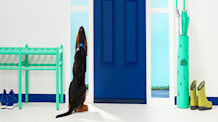
Teaching your dog to ring a bell is a common cue option. Have your dog sit by the door you usually exit from, then point at the bell or lure your dog to the bell. When doggo rings the bell, praise them, open the door and take them outside.
Remember, the potty cue is just for going potty. In the early stages of training, don’t let your dog play before or after doing their business or this may reinforce your puppy alerting any time they want to go play! Play should be initiated without the bell. If your dog does not naturally touch the bell, you can point to it and ring the bell for them before taking them outside the first few times. Next, encourage them to touch the bell by adding peanut butter or an alternative exciting treat that can be smeared on and licked off quickly. Praise them for ringing the bell, then go outside immediately. Alternatively, you teach your dog cues such as “touch” or “shake” and target the bell. When it chimes, immediately praise your pup and go outside. After a few practice rounds, your pup will gain understanding that this is one way to ask for a bathroom break.
What if you find your puppy likes to ring the bell a little too much? If you need to change the potty cue, try removing the bell and teaching them a new cue like sitting at the door. You could even place a rug by the door and train your puppy to know that when they sit on the rug you open the door. Remember, training requires patience and persistence.

How to Deal with Accidents
Accidents will happen no matter how much you try to prevent them. Reducing the occurrence of accidents is a matter of eliminating the cause and reinforcing positive behavior. Never punish your pup for accidents, and never ever “rub their nose in it.” That is outdated thinking and only serves to scare and confuse your puppy.
Recognizing when your pet is stressed and what triggers accidents will help you come up with proactive measures. For cleaning up messes, use a pet-safe product and do a thorough job. Also keep in mind that your puppy has a much more developed nose than you do. Pet-safe stain removers and odor removers are good to have on hand to eliminate unwanted smells immediately.
Remember, even a house-trained pup may have accidents in new environments. To limit this behavior, keep your puppy’s schedule as consistent as possible. If you’re going on a trip or visiting friends, take your puppy on a long walk with lots of opportunities to empty their bladder beforehand. Take frequent potty breaks; the excitement of a new adventure may distract your puppy from remembering their manners.
How to Create a House-training Schedule
One of the best tips for house-training a puppy is tied to routine, factoring in the pup’s age. Healthy puppies can hold their bladder roughly 1 hour per month of age, so a 6-month-old can typically hold it about 6 hours with practice.
Here’s a guideline for scheduled potty breaks:
First thing in the morning and last thing at night
After naps or crate time
After eating, drinking or chewing toys
After play sessions
Additionally, by supervising your pup, you’ll learn their rhythms and signs they need to go. For example, some puppies go when they’re excited, others may stop mid-play to do their business. Keep in mind that many young puppies cannot wait for you to do “one quick thing” before their potty breaks. This is a prime opportunity for accidents to happen.

How Long Does Potty Training Take?
How long does it take to potty train a puppy or new dog? This is a great question, but it is largely unanswerable due to the fact that each puppy is a unique individual.
For example, a rescued juvenile dog who has lived in a home with a routine before may take only a few days to a week to adjust to your home and routine.
Tiny puppies have tiny bladders, and those younger than 12 weeks likely won’t have full bladder control. They may need a couple weeks to a couple months.
No matter their age, consistency, patience and positive reinforcement are key. In general, the more opportunities you give your puppy or new dog to potty in the correct location and reward appropriate behavior, the quicker they will pick up on your expectations.
Q&A: Common House-training Problems
Q: “How do I stop my puppy from urinating in the house?”
A: Toy breeds and some individual pups may take longer to potty train than others. Consider indoor potty solutions like pads or dog litter boxes for easier access to an appropriate potty spot. Also, don’t grant too much freedom too soon—stick to a schedule and designated puppy areas without space to roam.
Q: “Why does my dog keep peeing in the same spot?”
A: That powerful puppy nose can likely pick up urine remnants. When inadequate cleaning leaves lingering odors, it can fool your puppy into thinking their accident location is a proper potty spot. Using enzymatic cleaners can help.
Q: “Why is my puppy soiling their crate?”
A: It could be that their crate is too big. They should have just enough space to sit, stand, turn around and lay down comfortably. Use an appropriately sized crate; some have dividers to accommodate growing puppies. If the space is adequate, the issue could be related to their previous environment if they were forced to eliminate in confinement. It may take time for them to learn to potty outside, but things should improve over time as pups usually prefer clean living quarters. Your schedule and/or their diet could also be causing GI upset. Take a closer look at your dog’s diet and consider more frequent potty breaks. If you're away for long periods, you may need to hire a dog walker or pet sitter so that your puppy can have more frequent potty breaks. If you experience prolonged potty issues without improvement, it’s time to partner with a veterinarian, dog trainer and/or behaviorist.
Q: “Why is my dog pooping inside?”
A: It may be that your dog is not ready to roam the home yet. Consider putting them back in a smaller puppy-proof space and expanding it slowly over time. Your pet may also have more success staying in a central, well-used area of the home with doors closed and gates up to keep them out of unused spaces and away from their favored accident spots. Diet or feeding style could also be an issue. Puppies need high-quality food in small, manageable meals, typically three times a day or more for giant breeds who are growing quickly. Unbalanced diets, excessive treats/new foods, food sensitivities and overfeeding can cause diarrhea, and any digestive issues can slow down potty training. Along with diarrhea, other signs that may indicate the need for a food change are bulky or smelly stools. For any of those conditions, reach out to your vet immediately, especially since diarrhea can cause dehydration.
Finally, help is just a click or phone call away! If house-training does not improve/fails after several weeks, see a vet to rule out any possible health issues. Also, seek out experienced trainers or behaviorists if needed.
Conclusion
Potty training is a journey, and patience is essential—especially if your puppy has a setback or two along the way. Stay consistent and remember that positive reinforcement is the key to long-term success. Support your puppy with the right tools. At Petco, you’ll find everything you need to make puppy housebreaking easier, including crates, pee pads, enzymatic cleaners and tasty training treats.
Help! How do I stop my puppy from peeing and pooping indoors?
My puppy pees on the pad but won't poop. How do I train them?
How to make puppy potty training easier and less stressful for me?
How do I get my new puppy to potty outside instead of inside?
How do I begin crate training my puppy for housebreaking success?
What are the best tips for quickly potty training a 3-month-old puppy?
How can I potty train my puppy positively, indoors and out, no shock collars?

How to easily litter train my new Japug puppy stress-free indoors?
How do I get my puppy to consistently potty outside and signal?
How do I potty train my 7-month-old puppy to go in one spot?


Book an appointment with the pros – our expert trainers are here to help.
