

Houseplants Toxic to Cats
Published on September 5th, 2025
Updated on September 6th, 2025


Cats are naturally curious creatures, and unfortunately, that curiosity can lead them into trouble, especially when it comes to houseplants. Many popular indoor plants contain toxins that can be harmful to cats if chewed or ingested. While some may cause only mild digestive upset, others can result in more serious symptoms or require urgent veterinary care.
Proactive pet-proofing is essential to keeping your feline companions safe. Identifying and removing potentially toxic plants from your home—or replacing them with pet-safe alternatives—is a simple step that can have a big impact. At Petco, we’re committed to supporting pet parents in creating safe, enriching environments for all pets.
This article contains two lists. The first is a top-8 list of plants commonly reported to cause toxicity in cats. The second is specific to holidays. Note: “Toxic” is the term we use to describe a naturally occurring poisonous substance that can compromise the quality of life of a person or pet. It doesn’t necessarily mean life-threatening. As many of us humans know, diarrhea is most definitely a hindrance to quality of life, but the accompanying dehydration can make things more serious for cats.
Crazy 8s: most common harmful houseplants
Keep in mind that this is a list of the top 8 overall harmful houseplants for cats, listed from A to Z. Other plants may be more common in your geographical region or household. Always verify a plant’s name and potential risks before bringing it into your home. Even nontoxic plants can cause mild GI upset in some cats, so when in doubt, consult your veterinarian.Keep reading to learn about these 8 harmful houseplants, their symptoms of toxicity (see legend) and recommended safe alternatives.
Aloe Vera
Aloe vera is a popular, low-maintenance houseplant known for its thick, spiky green leaves and its soothing gel that’s often recommended for use on human skin. However, in cats, ingesting aloe vera can cause vomiting, diarrhea and lethargy. The plant’s natural compounds—saponins and anthraquinones—can irritate the digestive system. While the inner gel is sometimes considered edible for people, the whole leaf can be harmful to pets.
Pet-safe alternative:
Haworthia—a similar-looking succulent that is nontoxic and safe for cats.
Azalea
Also known as rhododendrons, azaleas may brighten up a garden or windowsill, but they’re highly toxic to cats. Even small amounts of this plant can cause vomiting, diarrhea and weakness. In severe cases, ingestion can lead to cardiac failure. The grayanotoxins found in all parts of the plant interfere with normal muscle and nerve function, making it especially dangerous for curious cats.
Pet-safe alternative:
Calathea—a vibrant, nontoxic plant with lush foliage that isn’t a threat to your feline friend.
Lilies
Lilies are among the most dangerous plants for cats. All parts of the plant—including leaves, petals, pollen and even water from a vase—can cause severe reactions. Within hours of ingestion, signs may include vomiting, drooling, lethargy and lack of appetite. In more serious cases, lily toxicity can lead to kidney failure within 24 to 72 hours, which can be fatal without immediate veterinary care.
While calla lilies are not part of the true lily family, they can still cause intense oral irritation and discomfort if chewed. Because of the serious risks involved, it’s safest to avoid any plant with “lily” in its name if you share your home with cats. Peace lilies are not the same level of off-the-charts toxicity but are still at least moderate.
Pet-safe alternative:
Orchids—beautiful, elegant and safe for curious cats.
Monstera Deliciosa
With “delicious” right in its name, this plant is a sneaky one. If your cat tried to take a bite, they might experience burning lips and mouth, difficulty swallowing, excessive drooling, oral swelling and vomiting due to the insoluble calcium oxalates that are highly toxic to cats. With their tropical vibes, giant leaves and easy-care needs, these are very popular houseplants, but they need to be out of reach.
Pet-safe alternative:
Calathea
Pothos
Pothos plants, including golden and satin varieties, are loved for their trailing vines and glossy leaves. Easy to care for and visually striking, they’re a popular choice for plant lovers but not a safe one for homes with cats. If chewed or ingested, pothos can cause mouth pain, drooling, vomiting, loss of appetite and pawing at the mouth due to insoluble calcium oxalate crystals.
Pet-safe alternative:
Spider plant
Sago Palms
Sago palms (Cycas revoluta) bring bold, tropical flair to indoor spaces, but their prehistoric charm hides a dangerous secret. All parts of the plant, especially the seeds, contain cycasin, a toxin that can cause severe liver damage in cats. Even small amounts can be life-threatening, so it’s best to keep this ancient beauty far away from curious paws.
Pet-safe alternative:
Majesty palm
Snake Plant
Snake plants (Sansevieria trifasciata) are sleek, architectural and nearly indestructible, which makes them a favorite for new plant parents. But while their upright green-and-yellow leaves may bring good vibes and clean air, they’re dangerous for cats. If ingested, snake plants can cause nausea, vomiting and diarrhea due to naturally occurring saponins.
Pet-safe alternative:
Calathea
ZZ Plant
With its glossy green leaves and air of effortless elegance, the ZZ plant (Zamioculcas zamiifolia) is a popular pick for low-light homes and offices. While it’s often left off official lists of highly toxic houseplants, this low-maintenance plant still contains calcium oxalate crystals, a type of crystal that can cause irritation and discomfort if your cat decides to take a nibble.
Pet-safe alternative:
Cast iron plant
Seasonal plant dangers: holiday specifics
Holiday decorations often include festive plants that bring seasonal charm to your home, but many of these favorites can be dangerous for curious cats. From spring lilies to winter poinsettias, certain plants can cause anything from mild stomach upset to life-threatening toxicity, making them far from purrfect centerpieces.
To help keep your feline friends safe, we’ve organized the most common holiday plants by season. Whether you’re sprucing up your home for a celebration or gifting greenery to a pet-loving friend, it’s important to know which plants to avoid and what safe alternatives exist.
Spring
Prom, St. Patrick’s Day, Easter
Carnations are classics in corsages and floral arrangements. While they might look harmless, they can still cause discomfort for your cat. While not among the most dangerous plants, it's best to keep these blooms out of reach to prevent unnecessary irritation or digestive upset.
Daffodils are a classic sign of spring, but they pose serious risks to cats. All parts of the plant—flowers, leaves and especially the bulbs—are toxic. Ingesting even a small amount can cause diarrhea, vomiting and increased salivation. Larger amounts may lead to more severe symptoms like low blood pressure, convulsions, tremors and heart arrhythmias. The toxicity is due to compounds such as lycorine, phenanthridine alkaloids and calcium oxalate crystals, making daffodils a dangerous addition to homes with cats.
Hyacinths are fragrant spring flowers that belong to the asparagus family and, like tulips, contain toxins that are harmful to cats. The bulb is the most toxic part, but ingestion of any part of the plant can cause symptoms such as upset stomach, vomiting, diarrhea, drooling, increased heart and breathing rates, and difficulty breathing. In severe cases, cats may experience depression and tremors.
Lilies make our seasonal list too because they are particularly popular around Easter. Every part of the plant, including leaves, petals, pollen and vase water, can cause severe symptoms like vomiting, drooling, lethargy and loss of appetite. In serious cases, ingestion can lead to fatal kidney failure within 24 to 72 hours without prompt treatment. Calla lilies aren’t true lilies but still cause painful oral irritation. To keep cats safe, avoid all plants with “lily” in their name as a precaution.
Shamrocks are a festive favorite around St. Patrick’s Day, but they’re not so lucky for cats. While typically only causing mild symptoms, ingestion of this plant can lead to more serious issues like kidney damage if large amounts are consumed over time.
Another classic spring favorite, vibrant tulips are toxic to cats. All parts of the plant can cause poisoning, with the bulbs being especially dangerous due to their high concentration of alkaloid and glycoside compounds. If a cat ingests tulips, symptoms may include excessive drooling, vomiting, diarrhea, increased heart and breathing rates, and difficulty breathing. Severe cases can lead to convulsions and cardiac problems.
Fall
Mum’s the word
Late-season-blooming chrysanthemums are the “spokesflower” of fall, often seen on porches and in table centerpieces. However, they’re toxic to cats. Mums contain several compounds, including pyrethrins, which are naturally occurring insecticides that are also found in many flea and tick products made for dogs. While safe for dogs in some formulations, pyrethrins are dangerous for cats and can trigger vomiting, drooling, diarrhea and even skin reactions if ingested or touched.
Cyclamen species contain a toxin called cyclamine, with the highest concentration found in the plant’s roots. If ingested by cats, cyclamen can cause severe gastrointestinal irritation, including intense vomiting. In some cases, consumption has even led to fatalities.
Winter
Popular holiday decor
Popular around the winter holidays, amaryllises sprout striking, trumpet-shaped flowers that brighten up indoor spaces. But despite their beauty, they're toxic to cats. Ingesting any part of the plant can cause a range of distressing symptoms.
The Christmas cactus is a popular festive houseplant known for its colorful, tubular flowers that bloom during the winter holiday season. While not highly toxic, ingestion of Christmas cactus by cats can cause mild stomach upset, including vomiting and diarrhea, as well as slight irritation of the mouth. It’s generally considered less dangerous than many holiday plants but should still be kept out of reach to prevent any discomfort. If your cat shows symptoms after chewing on this plant, consult your veterinarian for advice.
Fir and pine trees are popular as Christmas trees and garland but can cause mild irritation in pets, especially cats. The needles can irritate the mouth, throat and stomach if chewed or ingested, sometimes leading to discomfort or mild digestive upset. While generally not highly toxic, don’t let the fir fly.
Holly is a festive favorite during the holidays with its bright green leaves and red berries, but it poses risks to cats. Many varieties, including Christmas and English holly, contain toxins that can cause serious digestive upset. Additionally, the sharp points on holly leaves may cause physical irritation or injury if chewed. Cats who ingest holly may show symptoms such as severe vomiting, diarrhea, excessive drooling, lip-smacking and head-shaking.
Poinsettias are a well-known holiday plant often thought to be highly toxic to pets, but the ASPCA notes they are less dangerous than commonly believed. The milky sap can cause irritation in a cat’s mouth and stomach, leading to symptoms like vomiting and drooling. While generally mild in toxicity, it’s best to keep poinsettias out of reach to avoid discomfort or more severe reactions.
Safe alternatives & cat-friendly options
You might be wondering if it’s all doom and gloom when it comes to blooms. It’s not! For any of the flowers above, you can keep them as long as you place them well out of your cat’s reach, keeping in mind your cat can likely jump several feet to get to something truly fascinating.
To help protect curious cats from nibbling on less safe plants, consider using plant stands or hanging planters that keep greenery out of reach. Additionally, Petco provides practical solutions like pet gates and barriers, which serve as effective tools to prevent access to restricted areas and help protect both your plants and your pets.
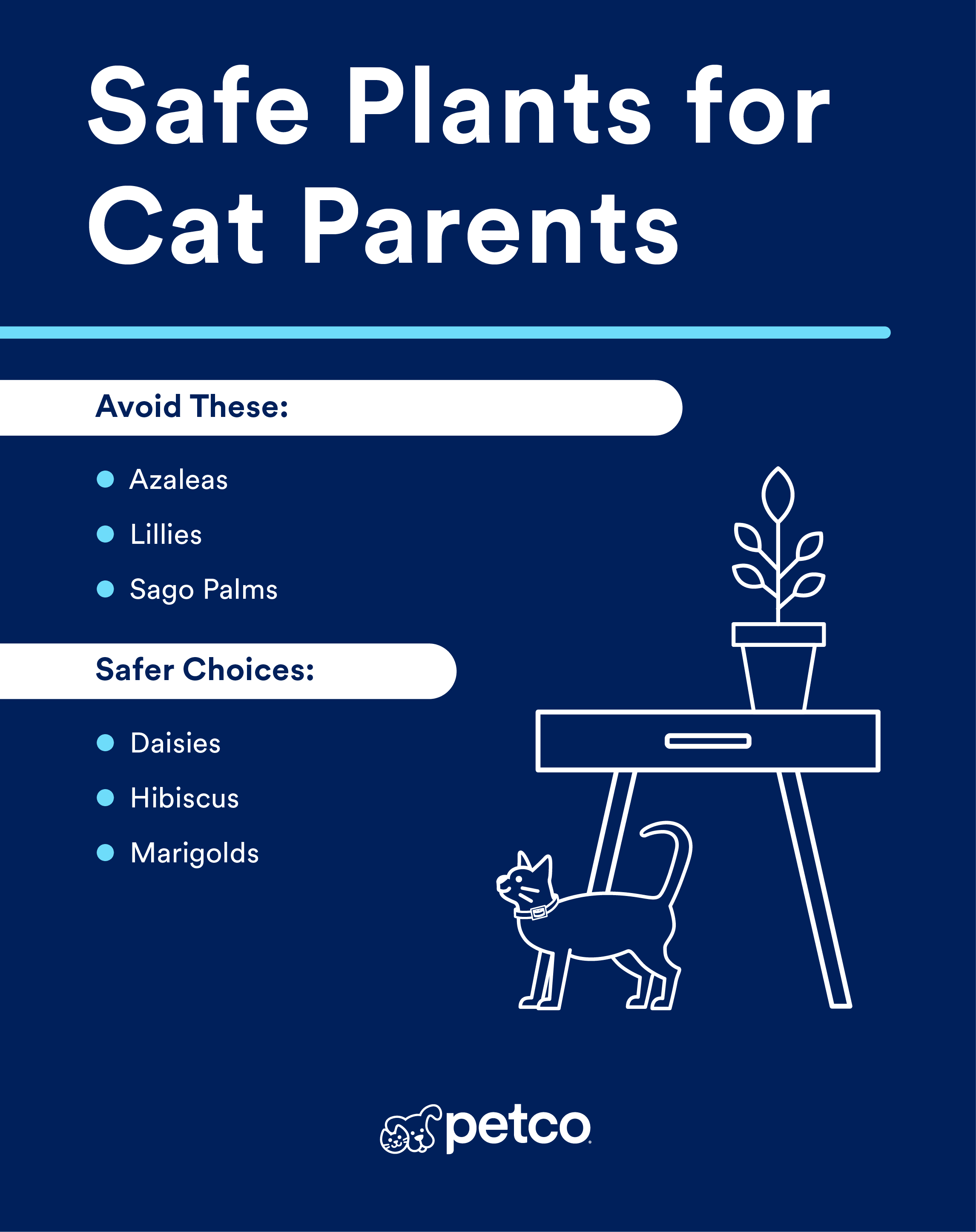
There are also bushels of plants nontoxic to cats you can keep anywhere in your home. From African violets to zinnias, with other extremely popular ones in between, including Gerbera daisies, hibiscus, marigolds and roses, you have tons of options. And Petco can help. We offer a great selection of cat-safe plants, including classics like catnip and charming toy cherry blossoms.
For a comprehensive list of safe plants, the ASPCA’s resource is a helpful guide for any cat parent looking to create a pet-friendly home: https://www.aspca.org/pet-care/animal-poison-control/cats-plant-list
What to do if you think your cat has ingested a toxic plant
If you think your cat has ingested a toxic plant, time is critical. Even small amounts of certain plants can cause serious harm, so it's important to act quickly and decisively.
- Remove the plant immediately from your cat’s environment. Prevent them from eating more or licking plant residue from their paws or fur.
- Call your veterinarian or an animal poison control center as soon as possible. Do not wait to see if symptoms appear. Some effects, such as kidney failure, may take hours to develop but can be fatal.
- Bring a sample of the plant (or a photo if the plant is no longer available) when you go to the vet. Accurate identification can help guide proper treatment.
- Tell your veterinarian about the incident at your next visit, even if your cat seems fine. Some toxins can have lingering effects or delayed symptoms.
Important: Never try to induce vomiting unless specifically instructed to do so by a veterinarian. In some cases, this can cause more harm, especially with corrosive or irritating substances.
If your regular vet is closed or unavailable, contact one of the following 24/7 poison helplines for expert guidance:
Pet Poison Hotline: 855-764-7661
ASPCA Animal Poison Control Center: 888-426-4435
These services are staffed by trained veterinary professionals who can assess the risk and recommend next steps. Note that a consultation fee may apply.
Conclusion
When it comes to protecting your cat from toxic plants, knowledge is your best defense. By learning which blooms are harmful and which are safe, you can create a space that’s both beautiful and pet-friendly. It’s all about finding the balance between style and safety.
Whether you’re bringing home seasonal flowers or decking the halls for the holidays, put the petal to the metal when it comes to researching plant safety. Opt for cat-safe alternatives, use smart placement like hanging planters and keep emergency numbers handy just in case.
Creating a home where your cat can thrive means staying informed and proactive. Bookmark this guide for future reference so you’re always ready to keep your feline friend safe and your home blooming with care.

Is it worth it or advised to remove all possibly poisonous plants or just the ones that are especially toxic to cats before getting one? I did some research and my home has around 6 plants that are supposedly poisonous to them, and I want to make sur

Can you please list out Pet friendly indoor plants? Thank you!.
Hi! I am an aspiring plant lady but also the proud mama to two cat babies and am well aware of the potential of bringing plants into the home that are toxic to cats. Is the ASPCA a reliable source of information for their list of toxic and non-toxic

Can I have tulips in the same room as my cat like on a top shelf were he can’t get near them ? I understand that tulips are toxic to cats but unfortunately I bought them before even knowing
Please could you tell me if pachyphytum succulents are toxic to cats?
Can I use Miracle grow indoor/outdoor potting soil around my cat? Or do I need to keep it out of her reach? It says keep out of childrena reach I'm assuming that since it says it "feeds for up to 6 months" that I need to keep her away from it as we

Can someone tell me what type of plant this is and if it is poisonous to cats please help my cat has thrown up after chewing on it
My cat chewed on a plant that my mother left out i don't know what it is after he threw up a hairball he seems to be fine but i gave him milk so he won't get crystals in his system. Is the plant poisonous or toxic?
Is it safe to grow some bean plants (the ones humans eat) around the house for him to eat their leaves and play with? Aren't they toxic to cats? Tnx
How do you stop a cat from chewing on house plants