


What to Expect at Your Dog’s First Vet Visit
Published on December 18th, 2025
Updated on March 23rd, 2026

Congratulations on your new furry family member! Bringing home a new dog is exciting—and a little nerve-racking. Whether you’ve adopted a puppy or welcomed an older rescue, your dog’s first vet visit is an important milestone. It sets the foundation for your dog’s lifelong health, helps you build a trusted relationship with your veterinarian and helps ensure early detection of potential health issues.
In this guide, you’ll learn when to schedule that first appointment, how to prepare, what to expect during the visit and how to make future visits as stress-free as possible for both you and your pup.
When should you schedule a vet visit?
Most veterinarians recommend scheduling the first exam within a few days of bringing your new pet home. This visit is crucial for establishing a health baseline, starting vaccinations and creating a preventive care plan.
If your new companion is an adult dog with an unknown medical history, book an appointment as soon as possible to address any unseen health needs. Remember, this visit is not just about vaccines—it’s the beginning of a long-term wellness journey in partnership with your dog’s vet.
How to prepare for the visit
While Scar of “The Lion King” was most definitely a bad guy, he did have a good idea with his “Be Prepared” number. A little preparation goes a long way toward making your first appointment calm and productive.
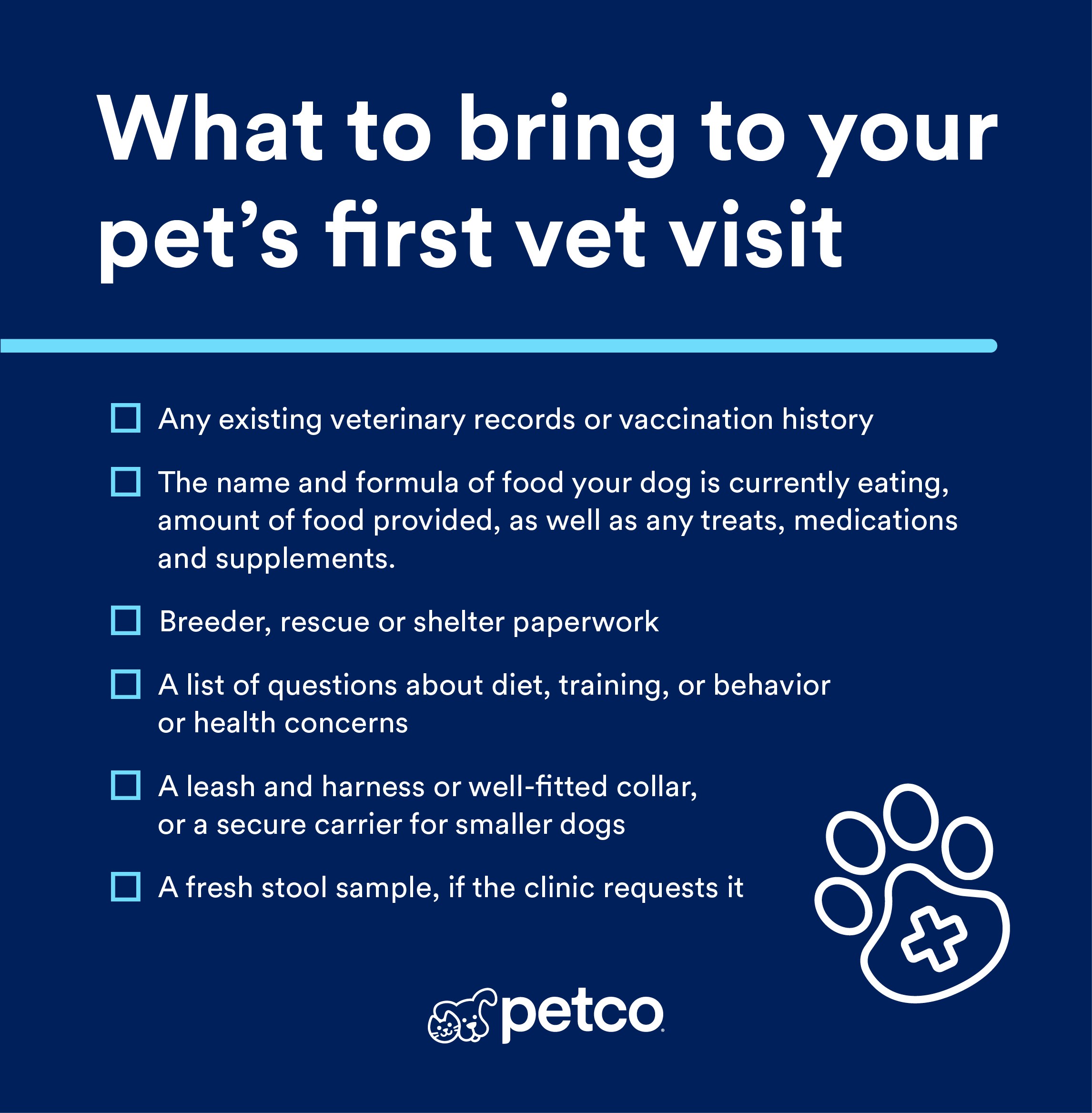
Packing list:
Any existing veterinary records or vaccination history
The brand and formula of the food your dog is currently eating. Be prepared to talk about the amount of food you’re feeding, as well as any treats, medications and supplements.
Breeder, rescue or shelter paperwork
A list of questions about diet, training, behavior and health concerns
A leash and harness or well-fitted collar, or a secure carrier for smaller dogs
A fresh stool sample, if the clinic requests it
Timing
Try to book your appointment at a less busy time of day to reduce stress for both you and your dog. Ask the clinic which days of the week tend to be a little quieter.
Comfort cues:
Bring a familiar blanket, favorite toy or treats to help your dog relax. For anxious pups, consider a short walk before the appointment to release energy. Some vet clinics may allow or even prefer clients to wait in their vehicle until the veterinarian is ready to see them, so ask your clinic if this is an option for an anxious dog or young puppy who hasn’t completed their vaccinations.
What happens during the visit
This first visit helps establish baseline health data and builds a relationship between your dog, your family and the veterinary team. Whether your clinic is part of Petco or somewhere else, there are many commonalities as to what to expect:
Check-in:
You and your dog will check in at the front desk, where staff may weigh your dog before you’re taken to a private exam room. If you did not already do so prior to the visit, they may have paperwork for you to complete with information about you and your pet.
Physical exam:
The veterinarian performs a head-to-tail assessment, including checking:
Weight and body condition
Heart, lungs and abdomen
Ears, eyes, teeth and skin
Coat quality
Gait/movement
Discussion and recommendations:
The vet will talk through your dog’s diet, feeding schedule, dental care practices, parasite prevention (fleas, ticks, general deworming and heartworm*) and vaccination plan. They’ll also discuss spaying or neutering, microchipping and general behavior or training questions.
Diagnostics:
Depending on your dog’s age and history, the vet may recommend tests such as bloodwork, stool checks or heartworm* screening.
Next steps:
Before leaving you’ll receive vaccine reminders, preventive care advice and a timeline for booster visits or rechecks. Be sure to file vet records somewhere where you can easily locate them for future review as needed.
*You may have heard that heartworm is more prevalent in certain areas of the country and be tempted to skip testing. While that is true, every state (and country, for that matter) has incidents of heartworm thanks to mosquito migration and other factors. This is an important test for your pup, no matter where you live.
At many Petco locations, you’ll visit a Vetco Pet Hospital—a full-service veterinary clinic inside the store. These differ from Vetco mobile vaccine clinics, which operate on walk-in schedules and offer limited services. (For a complete first visit, be sure to book an actual vet appointment.)
What to do next
Before you even leave the clinic, praise your pup for being so brave about this new experience. Smells! People! Other animals! Maybe even some he’s never seen before. (Why does that tiny doggo have wings instead of fur?) Reinforce positive feelings about the vet with treats and lots of love.
Schedule follow-up appointments for vaccines and boosters on time
Annual checkups are recommended for all dogs, especially adult and senior dogs
Monitor your dog’s behavior and appetite after any shots or treatments and contact your vet if you notice unusual symptoms
Keep your records organized in a folder or digital app. Start a binder for paper receipts and other printed documents.
While your dog may never go to the vet with the same excitement as walkies, a little positivity after each visit helps make future appointments easier.
FAQs about your pup's first vet appointment
Do I need to bring anything to the first vet visit?

Yes. Bring all available medical records, your dog’s leash or carrier, the name of your dog’s current food and a list of questions. A fresh stool sample may be required for parasite testing. If you don’t have one, no worries. Don’t stress your pup out if they won’t potty first. A few of your dog’s favorite treats can also help make a positive association with the vet.
What kind of tests will the vet perform at the first visit?
Your vet will complete a full physical exam and may recommend bloodwork or stool tests depending on your dog’s age and prior care. Other testing may be recommended depending on your dog’s history and any health concerns you have.
How often should my dog see the vet after the first visit?
Puppies usually visit every 3–4 weeks for vaccines until they’re about 4–5 months old. Adult dogs generally need annual wellness exams. Don’t hesitate on follow-up visits if you ever have a concern.
What if my dog is nervous at the vet?
Some nervousness is to be expected. Choose a quieter appointment time if possible, bring familiar items and reward calm behavior. Let the staff know your dog is anxious—they can take steps to reduce stress.
How much are puppy vaccines?
Pricing varies by location and your dog’s needs. Your vet will tailor additional vaccines and parasite prevention as needed.
Can I combine grooming and vet visits at Petco?
Some Petco stores make this easy by offering Vetco Pet Hospitals and grooming services in the same location. It’s a convenient way to maintain both health and hygiene. Keep in mind this may not always be the best option for every pet, especially if your dog has a history of vaccine reactions.
Should I microchip my dog at the first visit?
Yes, many vets recommend microchipping early to ensure your pet can be identified if lost. Be sure to register your dog’s microchip as soon as possible.
What if my dog came from a shelter or rescue?
Bring any documentation you received. Even if the shelter provided initial vaccines, a vet visit helps verify health and plan ongoing care. Your vet might have some additional insights on the age of your dog, which may be different than the rescue’s or shelter’s guesstimate.

What happens at a puppy's first vet visit and a dog's annual exam?
Adopted a new dog? What to expect at their first vet checkup.

What to expect and how to prepare for your puppy's first day home?
Getting a new puppy? What should I do to prepare for their arrival?
Got a new puppy? Find vet services, vaccines, and pricing near me.
What's the cost of puppy shots and a new dog's first vet visit?
New puppy: Vet visit, shots, deworming, and pet insurance advice?

What to expect after my new puppy's first vaccine and deworming?

New puppy owner: Does my 6-month-old vaccinated dog need a vet check-up?
Is Petco vet care good for my new puppy, or should I find another vet?