How to Store Your Dog’s Food
Published on November 25th, 2025
Updated on February 3rd, 2026


Picture this: It’s dinnertime, and you head to the pantry to scoop out your dog’s kibble. The moment you open the bag, a sour smell hits you. You think, “Eh, it’s not a big deal,” but your dog refuses to eat a single bite. Or worse, your extremely food-motivated dog actually eats the rancid kibble and you’re off to the emergency vet because of illness. That’s when you realize proper dog food storage isn’t just about organization.
Spoiled food can mean wasted money and a sick pet. With the right practices and tools, you can help avoid these risks, keep pests away and protect your dog’s health. Luckily, Petco has both the expert guidance and the wide range of storage products you need—available in store and online—to help make storing pet food simple and effective. After all, it’s OK for your dog to be spoiled but never their food.
Why proper storage matters:
Your dog’s food works from the inside out to support energy, skin, coat and overall health. From the outside in, safe storage helps protect against harmful bacteria, mold and pests. Many pet parents wonder how to store dog food in a way that preserves all that goodness. The U.S. Food and Drug Administration (FDA) further stresses that keeping food in its original packaging ensures vital information—like lot numbers and best-by dates—remains accessible in case of recalls. In short, smart storage preserves nutrition, protects safety and helps maintain accountability.
The Association of American Feed Control Officials (AAFCO) sets nutritional and labeling guidelines for pet food in the U.S. AAFCO emphasizes that proper storage helps preserve not only freshness but also the nutritional adequacy guaranteed by the manufacturer. According to the agency, all pet food sold as “complete and balanced” must meet their nutrient profiles or feeding trial standards.
How to Store Dry Dog Food
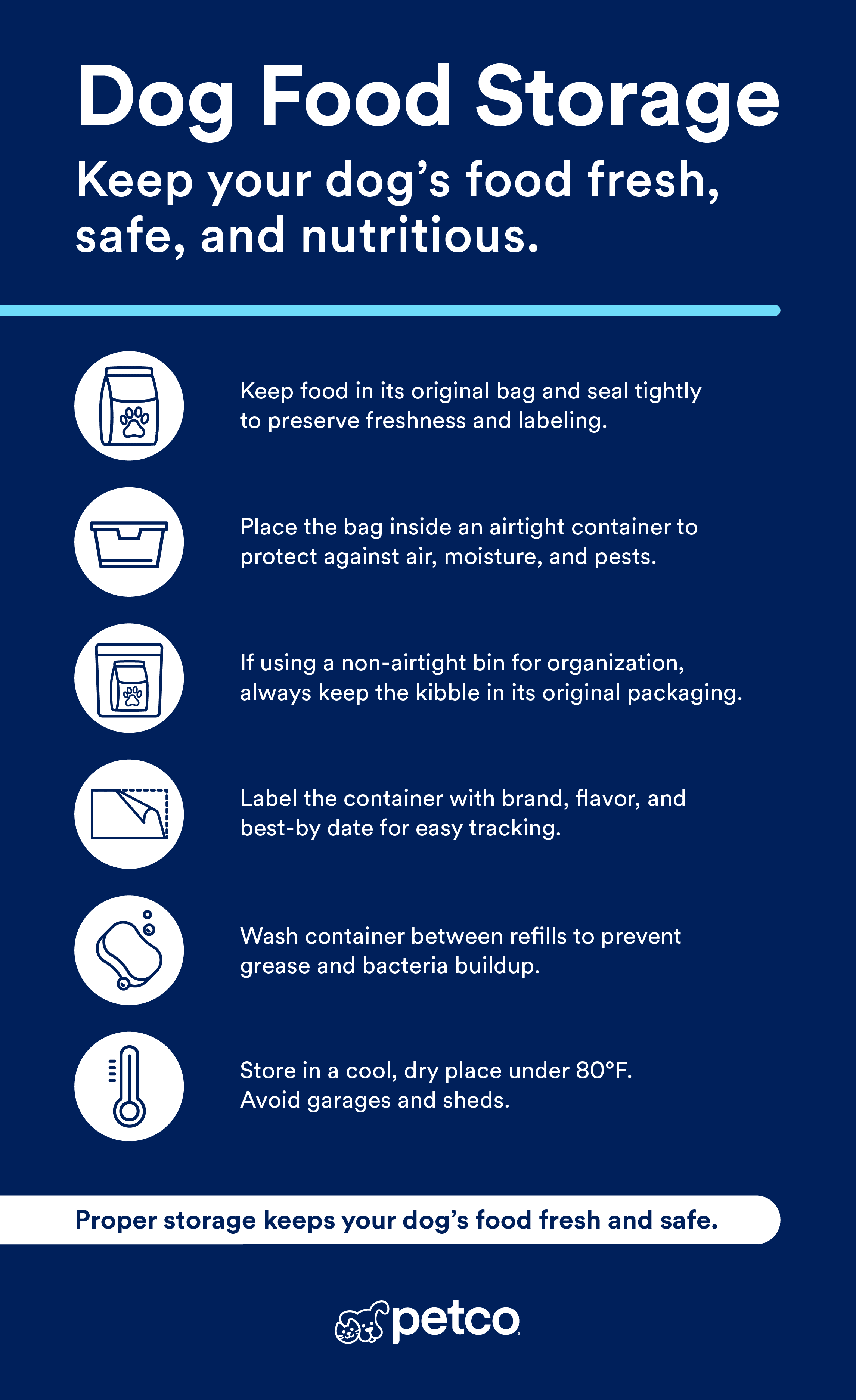
When it comes to kibble, consistency and cleanliness are key. Here are six guidelines recommended by the food industry experts mentioned above:
Keep food in its original bag and seal tightly.
The FDA recommends storing dry food inside its packaging, even if you then put the package in another container, so labeling and dog food expiration dates are always accessible.
Look at the label.
Note the brand, formula and best-by date on the outside of the packaging in case of a recall.
AAFCO requires that pet food labels include guaranteed analysis, nutritional adequacy statements and lot numbers—key details you’ll want to preserve by keeping kibble in its bag, even when placing it in a larger container.
Use an airtight container.
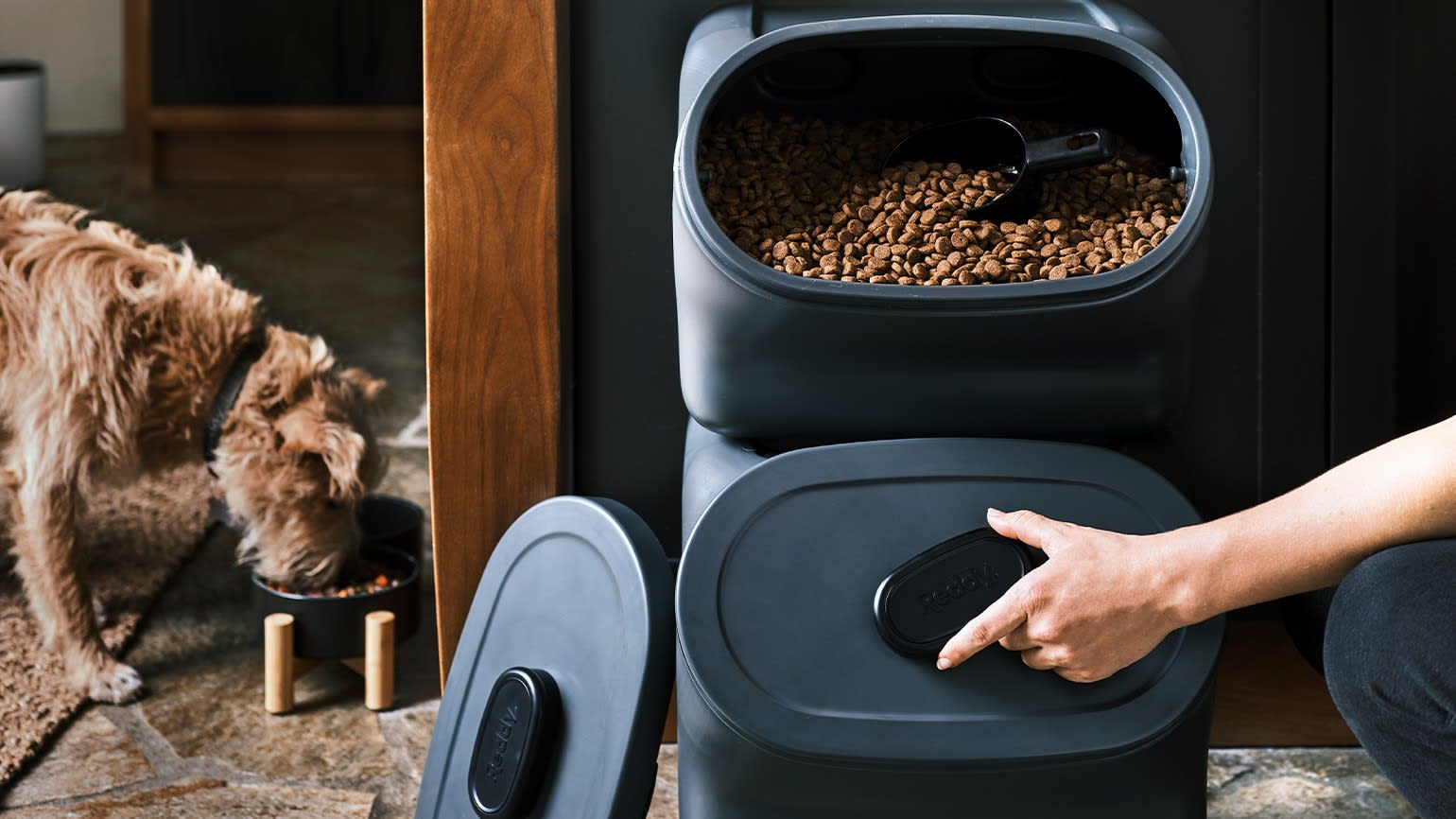
Plastic and stainless-steel bins tend to be best at keeping out moisture, air and pests. Petco stocks a wide selection of airtight containers in different sizes to fit your needs.
Prefer a decorative bin? Place your labeled, sealed bag inside so food stays fresh and traceable.
Clean between refills.
Wash thoroughly to prevent bacteria or grease buildup. Equally important, make sure it is completely dry before you add the kibble.
Store in a cool, dry area (<80°F).
Avoid garages, basements and sheds where heat and humidity can accelerate spoilage.
By sticking to these practices, you’ll extend the life and quality of your dog’s food while helping to keep every meal safe.
How to tell if dog food has spoiled
Recognizing when your dog’s food has gone bad is just as important as storing it properly. As mentioned in the intro, some dogs might consume spoiled food anyway, but that’s not good eats! Feeding spoiled food can lead to food poisoning, gastrointestinal upset and worse. Watch out for these red flags to prevent that:
🚩 Expiration:
Dry food typically lasts up to 18 months unopened. Once opened, many sources advise using it within a month.
🚩 Visual cues:
Mold growth, fat separation or pest contamination. This can include larvae and adult moths.
🚩 Odor:
A sour or rancid smell signals spoiled oils or bacteria.
🚩 Behavioral signals:
Refusal to eat, sudden illness or vomiting after meals.
If you suspect your dog has eaten spoiled food, contact your veterinarian immediately. Keep the numbers to these 24/7 services programmed in your phone:
ASPCA Pet Poison Control: 888-426-4435
Pet Poison Helpline: 855-764-7661
Your local 24-hour emergency clinic
Storing wet, fresh and frozen food
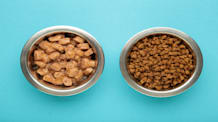
While the focus has been on kibble, we want to give you a quick overview in case you feed your dog a different type of diet or also use toppers. Different food formats have different storage needs and guidelines:
Wet food (opened): Seal with a can cover or put it in an air-tight container and refrigerate. You could wrap the top of the can with aluminum foil, but you risk some odor transfer. Petco experts suggest using wet food within two days of opening.
Wet food (unopened): Store in a cool, dry place away from direct sunlight.
Fresh and frozen meals: Keep frozen until use. Depending on the manufacturer, these typically last 6 to 9 months frozen, and Petco advises consuming fresh and frozen dog food within 7 days of thawing. Always thaw in the refrigerator, never on the counter.
Time limit: Don’t leave opened food out for more than 2 hours.
Following these simple steps help keep every type of pet food at peak quality. For extra convenience, Petco carries fridge-safe can covers and freezer-ready dog food containers designed specifically for pets.
Practical tips
Keep your food storage system simple and consistent with these best practices:
Label every container with the date the bag was opened.
Store scoops and utensils separately to reduce contamination.
Wash bowls daily to remove bacteria.
- Freeze extra kibble if you can’t use it within a month.
By following these steps, you’ll help safeguard your dog’s health, reduce wasted food and make every meal as fresh and safe as possible. Petco’s in-store experts and online selection are here to help you set up a storage system that works for your household. You’ve got this in the bag!
FAQs about Dog Food Storage
Can I leave wet food out overnight?

No, wet food should never be left unrefrigerated for more than 2 hours. Bacteria can multiply quickly and make your pet sick.
Should I keep kibble in the fridge or freezer?
Only freeze kibble if you can’t use it within a month. Otherwise, store in a cool, dry place below 80°F.
Is it safe to pour kibble directly into a plastic bin?
Only if you keep the original bag inside the bin. This helps maintain freshness and keeps important details like the lot number and expiration date available to you; this is key in case there is ever a food recall. Some plastic bins may also leach particles into your dog's food, so it’s always best to keep food stored in the original bag instead of poured directly into a container.
How often should I clean my food container?
Wash and dry your dog's food storage containers thoroughly between refills to help prevent grease and bacteria buildup.
What’s the shelf life of unopened canned food?
Cans last for years when unopened, but always check the best-by date and avoid cans that are bulging, dented or damaged.
Should I store my dog's kibble in the fridge or freezer for freshness?
What's the best way to store dog food: bag or airtight container?
Is it safe to mix different brands of wet and dry dog food together?

Is it safe to feed my pet food that's been open for 3 months?
Can my dog eat only dry food, or is a more natural diet better?
Can any dog food get bugs, or just grain-inclusive formulas?
What's the best food for my active dog: kibble, canned, or moist?
How long can I keep my puppy's wet food in the fridge before spoiling?
What's the best diet for my dog: dry, human food, or a mix?