Can My Dog See Colors?
Published on August 8th, 2025
Updated on December 1st, 2025


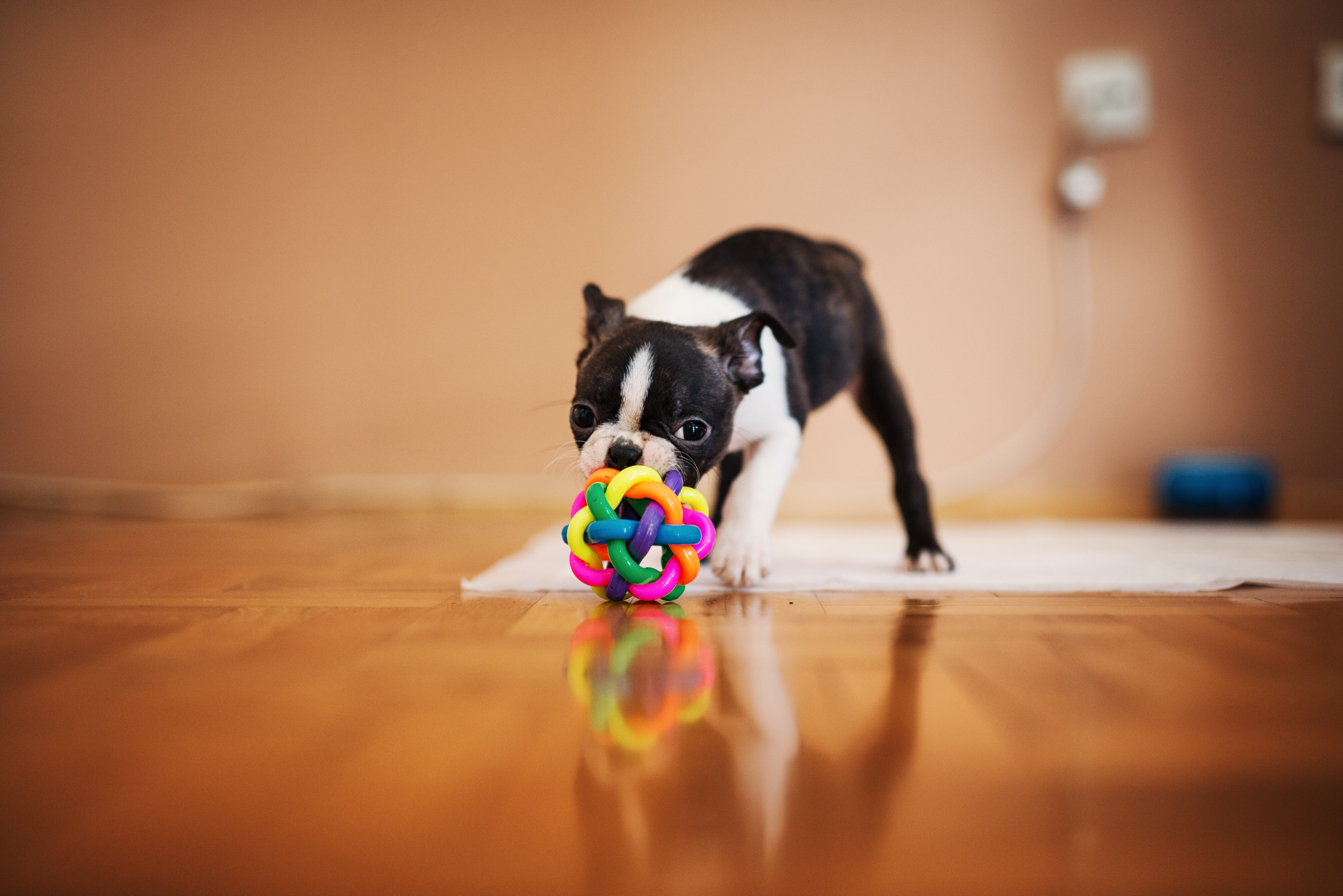
Picture this: You’re in your backyard playing fetch with the brand new red ball you bought for your dog, but your dog just can’t seem to find it. Are they not as good at catch as you thought (gasp!)?
Don't worry--this isn’t a reflection of your dog’s intelligence or skills at all! They may be having trouble keeping their eye on the ball because it’s red, and that’s just physiology.
Learn more about your dog’s vision and how 'the eyes have it' when it comes to future dog toy purchases.

Are dogs colorblind?
A common myth for a very long time was that dogs can’t see any colors, only black and white. This dates back to the 1930s, when dog writer Will Judy claimed dogs could only perceive shades of gray and vague shapes. The idea gained traction in the 1940s after optometrist Gordon Walls suggested dogs had little to no color vision.
Dogs are dichromatic
Science has since proved that dogs do see color—just not the same way humans do. Dogs cannot see the full spectrum of colors that humans can typically see, and those they can differentiate between are typically muted versions of what we see.
Speaking of science, the technical term that explains your dog’s vision type is “dichromatic.” This means they have two types of color receptors—called cones—in their eyes compared to the three most humans have. This makes their color vision similar to red-green colorblindness in people. While dogs can see some colors, their world isn’t as vibrant. For more details on anatomy, see “How does my dog see?” below.
Dogs see blue tones best
Dogs see shades of blue, yellow, yellowish-green and gray—an abbreviated rainbow. Is your dog’s favorite toy a tennis ball? Maybe it’s the fuzzy texture, but it could also be that its vibrant yellow color makes it easier to find. On the other paw, dogs tend to have difficulty distinguishing red and blue-green, which appear more like muted brown or yellow. For example, a lush green lawn may look like dry, beige grass to a dog, and their cozy red dog bed might register as a dark brown blob.
What about blended shades? If you’re wondering what colors dogs can’t see, mixed colors, such as orange and purple, along with blueish green, are typically on the list. Some believe dogs can see orange, but they likely see it as yellow or brown due to their limited color perception. Similarly, purple, which is a mix of red and blue, likely appears as just blue to dogs.
How is a dog's vision different from a human's?
Canine vision 101
OK, so your dog sees a lot of yellow, blue and various shades of gray. That “gray’s anatomy” is largely the result of two components of the retina, which has millions of light-sensing cells:
Cones for color
Dogs have two types of these color-sensing receptors in their retinas: blue-sensitive and yellow-sensitive. The main role of cones is vision in bright light and controlling color perception.
Rods for movement
Rods are extremely sensitive cells that catch movement and work in low light.
Dogs have more rods than cones in their retinas, whereas people have more cones, and this is what makes the difference in color perception. Rods and cones see different levels of light, but there are other important distinctions for how your dog sees light at night compared to humans.
Dogs are known for their keen night vision, and part of that ability comes down to how their eyes are built. They see well in low light thanks to a special eye structure called the tapetum lucidum—a reflective layer behind the retina that bounces light back through the eye, giving rods a second chance to detect it. This allows dogs to see in dimmer conditions than humans can, and it’s why their eyes seem to glow in the dark and in flash photos.
What color dog toys should I buy?
When it comes to choosing dog toys, color matters more than you might think—especially to your dog. Because of dogs’ limited color perception, many popular dog toys, especially red and green ones, may blend into the background for your pup.
Try bright blues and yellows first
You can use color as a training aid, according to some experts. Because blue and yellow toys provide higher contrast against natural environments and are easier for dogs to spot, try using one of each when training or playing fetch to support both recognition and enrichment.
Incorporate fun textures and sounds
That said, color shouldn’t be the only factor when deciding what toys to buy. Dogs also respond to texture, sound and movement—key features to consider for pets with lower visual acuity, whether from age or medical conditions. Toys with different surfaces and those that crinkle, squeak or rattle can be especially engaging. Some toys are even designed with canine vision or specific visual impairments in mind. You’ll find options like these at Petco, which offers a range of accessible enrichment toys for all types of dogs. Remember, safety first.
Regardless of the type and color you choose, always supervise your pet’s play with any toy, and remove and replace them when they begin to show signs of wear and tear. Keep your dog’s size in mind, too, and avoid too-small toys that could become a choking hazard.
You might be wondering, “If dogs can’t see red, why do they still like red toys?” The answer often lies in texture, scent or emotional association, not color recognition. And as for why so many dog products come in bright reds and greens, that’s often more about human marketing than canine perception. What looks fun to us might be difficult for them to see, so focusing on contrast, visibility and multisensory engagement is key to finding the best toys for your pup.
How well does my dog see?
Visual acuity (sharpness)
Visual acuity refers to sharpness or clarity of vision. Compared to humans, a dog’s vision is generally much blurrier. Most dogs see at about 20/75, meaning they need to be 20 feet from an object to see it as clearly as a person with perfect vision does at 75 feet. However, what dogs lack in visual sharpness, they make up for with their exceptional ability to detect movement, even at a distance.
Light-sensitivity
Most dogs also have excellent low-light vision, thanks to that tapetum lucidum. This is a result of their evolution as nocturnal hunters. While most dogs share similar visual traits, some breed-specific differences can exist. Sighthounds like Greyhounds, for example, tend to be better at spotting fast movement across open spaces. Dogs whose eyes are closer to the sides of their head than the front can also have an advantage when it comes to quickly scoping out the area around them.
If you’re ever concerned about your dog’s eyesight or notice changes in their behavior that might be related to vision, it’s important to consult a veterinarian, as only they can properly diagnose and manage medical conditions.
Takeaways
Dogs can see color—but not the same way humans do. Their world is made up mostly of blues, yellows and grays, and while their vision may be less clear than ours, don’t feel bad for them! Dogs are excellent at spotting motion and navigating in low light. Knowing how your dog sees the world can make a big difference in how you play, train and choose toys.
When selecting toys, aim for high-contrast items, especially in blue and yellow, and pay attention to texture and sound for added stimulation.
Again, color isn’t the only source of engagement: Try experimenting with different colors and styles at home, and observe how your dog reacts. You might be surprised by what catches their attention.