


Related Articles


Why Do Dogs Lick Their Paws?
Published on April 12th, 2023
Updated on March 24th, 2026


Dogs use their mouths to explore, clean and self-soothe, so some paw licking is expected. The challenge for pet parents is knowing when a normal grooming habit crosses into something that signals discomfort, illness or stress. Understanding the difference helps you respond early, reduce irritation and know when veterinary care is needed.
Why Do Dogs Lick Their Paws?
Paw licking often starts as a natural behavior. Dogs clean dirt, pollen and small debris from their feet after walks or playtime. Licking can also be comforting, especially before sleeping or during quiet moments. For some dogs, paw chewing becomes a way to self-soothe when they feel anxious, bored or overstimulated.
Occasional paw attention usually resolves on its own. Problems arise when licking becomes frequent, intense or focused on one area. At that point, the behavior may be your dog’s way of responding to itchiness, pain or emotional stress that needs to be addressed rather than ignored.
Is it Ever Normal for a Dog to Lick or Chew Their Feet?
Yes, paw licking can be completely normal depending on frequency and context. Brief licking after a walk, after meals or as part of bedtime grooming is typical. It is healthy for dogs to groom without causing redness, hair loss or skin changes.
Occasional licking becomes concerning when it turns habitual or excessive. If your dog returns to the same paw repeatedly, licks for long stretches or interrupts play and rest to chew their feet, it suggests something more than grooming. The duration and frequency matter here, as well as the physical result. Normal licking does not damage skin or affect mobility. Excessive licking often does.
Signs of Excessive Paw Licking or Chewing
Problematic paw licking is usually accompanied by visible changes if allowed to continue. Watch for redness, swelling, unusual odor or discharge between the toes or pads. You may notice hair thinning or complete hair loss from moisture and repeated friction.
Some dogs limp or favor one paw, indicating pain or discomfort. Others develop hot spots or secondary infections caused by constant licking. If your dog seems uncomfortable, restless or focused on their feet despite redirection, the behavior deserves closer attention.
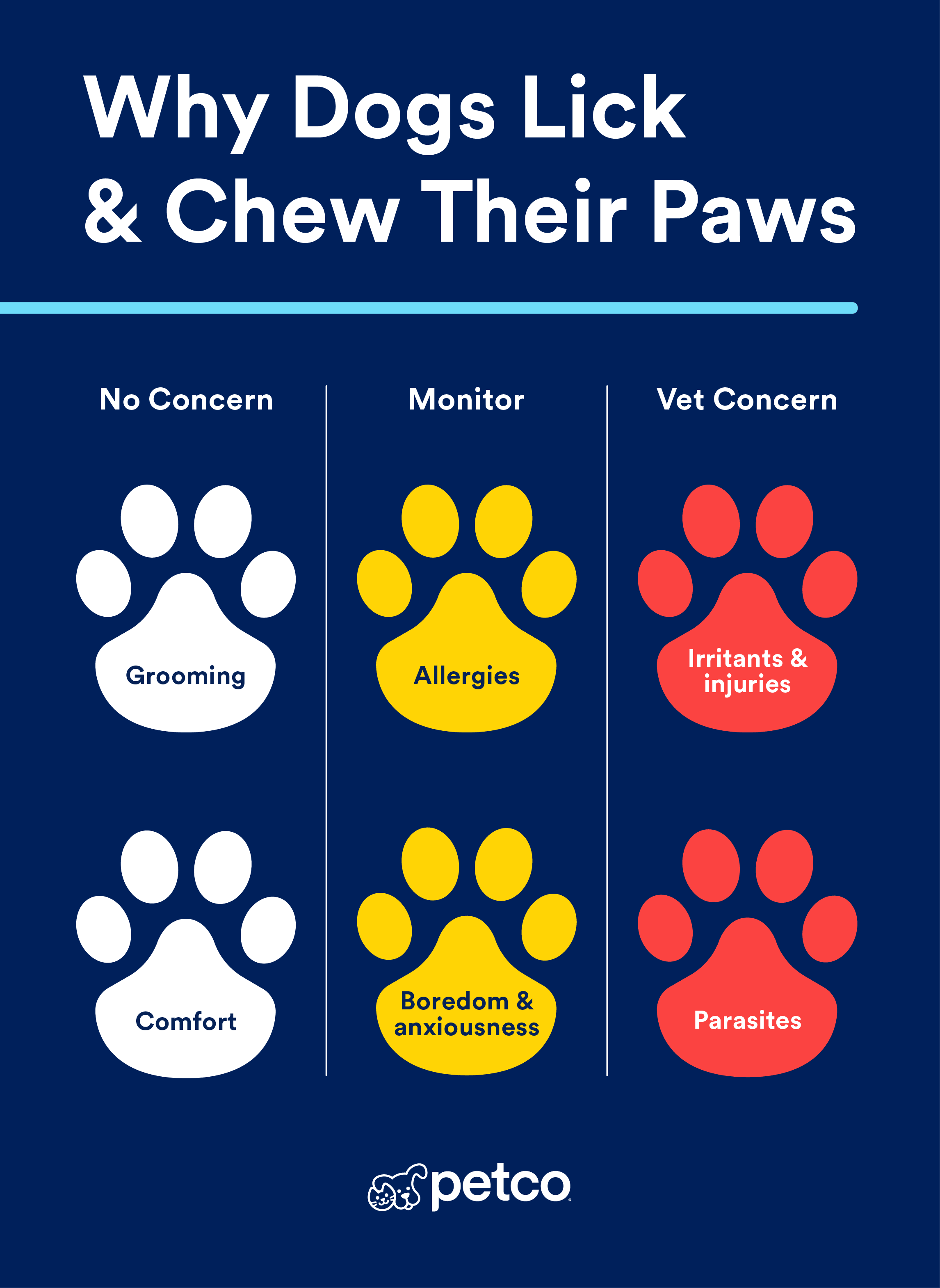
Comparison Chart—Normal vs. Excessive Paw Licking
Normal behaviors
Brief cleaning after walks
Rare chewing without fixation
No redness, swelling or hair loss
Dog easily redirects to other activities
Excessive behaviors
Constant licking throughout the day
Visible irritation, hair loss or sores
Repeated focus on the same paw/area of the body
Signs of discomfort or limping
Monitor changes in frequency, skin appearance and your dog’s ability to disengage from the behavior. If your dog can’t pause with the paws, there is an issue.
Common Causes Behind Paw Licking
Like many things our dogs do, there are both physical and behavioral reasons behind them. Let’s explore more.
Physical Causes: Allergies, Irritants, Injuries and Parasites
Many cases of paw licking stem from physical irritation. Environmental allergens such as pollen, grass and mold commonly trigger itchy feet. Food allergies can also cause paw-focused itching. Literal bloodsuckers such as fleas and mites may irritate the skin even if you do not see them. This is also true for those pesky foxtails, which can easily embed themselves between paw pads. If your dog walks in areas where these are prevalent, the self-check (below) is extra critical.
Yeast and bacterial infections thrive in warm, moist areas between the toes and often create a strong odor. Minor injuries like cuts, splinters, burns from hot pavement and irritation from ice melt can also lead to sudden licking. Identifying the trigger is key to stopping the cycle.
Behavioral Causes: Anxiety or Boredom
Dogs experiencing stress, separation anxiety or boredom may lick as a calming ritual. This behavior often appears during downtime or when routines change. Dogs without enough mental or physical enrichment may develop repetitive habits that persist even after the original trigger fades.
Symptoms and Likely Causes
Itchiness: Allergies or yeast
Limping: Injury or embedded object
Odor: Infection
Sudden onset: Irritants or minor trauma
What to Do if Your Dog is Licking or Chewing Their Paws
Home Care Steps and Self-Check
These 4 simple steps can help keep your dog on the right foot and allow you to quickly assess when something is, well, afoot, that needs veterinary attention.
Inspect paw pads and between toes and look for stuck debris, cuts, swelling, discharge, sores and anything that looks out of the ordinary.
Give the paws a sniff for odor
Rinse gently with a pet-safe cleanser
Monitor changes in behavior over 24 to 48 hours and consult your veterinarian if abnormal licking/chewing continues even if no other symptoms or concerns are present.
Many pet parents find helpful tools like paw wipes, booties and gentle dog cleansers at Petco, which can make routine checks easier and less stressful.
When to Contact a Veterinarian
Seek veterinary care if redness or swelling is present, bleeding occurs or irritation spreads from your dog licking their paws. Obvious pain, limping and sudden worsening should never be ignored. Signs of infection such as discharge and strong odor also require professional treatment. Even if there are no visible signs of a health concern, it is best to alert your veterinarian if biting/licking is excessive. Early intervention helps prevent minor issues from becoming chronic problems.
Everyday Paw Care and Prevention Tips
Regular prevention goes a long way. Inspect paws after walks, especially during allergy seasons and extreme weather. Keep nails trimmed to help prevent snags or breaks and fur between toes trimmed to help reduce moisture buildup. Use pet-safe de-icers in winter and wipe paws after outdoor activity.
Provide enrichment through walks, training games and dog puzzle toys to help reduce boredom-related licking. If allergies are suspected, follow a consistent bathing schedule and avoid known triggers when possible. Supplies for routine paw care and enrichment are readily available at Petco and can support long-term comfort.
Takeaways
Paw licking can be normal or a sign of trouble depending on frequency and impact. Learning to recognize changes allows you to act quickly. Follow simple at-home checks, support healthy habits and involve your veterinarian when symptoms persist. Small observations can make a big difference in keeping your dog comfortable and mobile.
FAQs about dog paw chewing
How much paw licking is too much?

Licking that causes redness, hair loss or distraction from normal activities is excessive.
Is it normal for puppies to chew their feet?
Puppies may explore with their mouths, but persistent chewing still warrants monitoring.
Can seasonal changes affect paw licking?
Yes, allergies and weather-related irritants often increase licking. If your dog’s outdoor domain includes areas with foxtails, this, too, can be the source of additional licking if they get stuck. Review the checklist after each walk.
Should I bandage my dog’s paw?
Bandaging can trap moisture and should only be done under veterinary guidance.
Can I use human antiseptic on my dog?
Many human products are unsafe for pets. Use only pet-approved solutions or consult your veterinarian.





Book an appointment with the pros – our expert vets are here to help.
