Do Dogs Get Seasonal Depression?
Published on November 21st, 2025
Updated on January 21st, 2026

When Old Man Winter shows up, you might feel your energy dip or notice mood changes—a condition often linked to seasonal affective disorder (SAD).
It’s not surprising that many people wonder if dogs can get seasonal affective disorder, too. Some pet parents notice their pups sleeping more, showing less interest in play or eating differently during darker months. While science hasn’t confirmed that dogs experience true SAD, they can still be affected by seasonal shifts. Here’s what experts know, what’s still uncertain and how you can help your dog stay happy all winter long.
Understanding Season‑Related Mood Changes in Dogs
Seasonal affective disorder in humans
Seasonal affective disorder (SAD) is a type of depression in people that’s triggered by reduced sunlight exposure during fall and winter. Shorter days can disrupt circadian rhythms (basically a fancy term for sleep cycles) and decrease serotonin levels, leading to fatigue, sadness and changes in appetite or sleep patterns.
What the research says about S.A.D. and dogs
There’s no scientific proof that dogs experience SAD in the same way humans do. However, many pet parents share anecdotally that their pups become more sluggish, sleep longer or seem less playful during winter months, sometimes prompting them to wonder if dogs get depressed. While the causes aren’t fully understood, experts believe environmental and routine changes play a major role.
Signs your dog has low energy
While no one doggo is likely to display all of the symptoms below, it’s worth keeping an eye out for subtle changes in any of these areas to help you support your dog’s well-being. Common blues clues include:
Sleeping more than usual or seeming harder to wake
Losing interest in walks, toys or playtime
Eating more or less than normal
Acting withdrawn or clingy or preferring to be alone
Showing occasional irritability or restlessness indoors
If you’ve ever wondered if dogs get seasonal affective disorder, these signs reflect how some pups react to shorter days and less activity—not necessarily depression, but a similar seasonal slowdown. Keep in mind that other factors might be at play as well, including age, change in mobility or a health issue.
Changes in eating can be important signals for health problems, so contact your vet if you are concerned about your dog’s appetite. If you notice sudden changes in your dog's behavior or the symptoms above seem concerning or prolonged, discuss them with your veterinarian so that they can rule out any underling health concern.
What causes these seasonal changes in dogs
Dogs who seem tired or uninterested in play during winter may not truly be depressed, but they can show mood-like changes influenced by their environment, which includes weather outside that’s frightful and how you react to it.
Reduced daylight: Less sunlight may influence hormones such as melatonin and serotonin, which affect mood and energy.
Cold or bad weather: Dogs may resist going outside in snow, rain or freezing temperatures, leading to less exercise.
Routine changes: Dog parents often walk less or play indoors more, reducing both exercise and stimulation.
Boredom: Shorter days and less outdoor time can make even normally happy dogs feel restless.
How to cheer up your dog
Again, there is no one approach for all dogs, but consider implementing one or more of the following five tips to help your dog stay pawsitive.
1. Go outside or play indoors
When the weather allows, schedule walks during daylight hours for both sunlight and exercise, as age appropriate. If it’s too harsh outside, try indoor fetch, stair climbing or tug games. Petco offers indoor agility equipment and toys to help your dog stay active even when it’s cold out.
2. Fun and games
An occupied mind helps keep boredom at bay. Use puzzle feeders, scent games or short training sessions to challenge your dog mentally. Hiding treats around the house or teaching a new trick can be just as tiring as a walk.
3. Optimize natural light exposure
Open blinds to let in natural sunlight and encourage naps near bright windows. On darker days, consider vet-approved, full-spectrum lights to mimic daylight. A few extra minutes outdoors when the sun is shining can also lift your dog’s mood and help ease the effects of seasonal affective disorder in dogs.
4. Stick to a routine
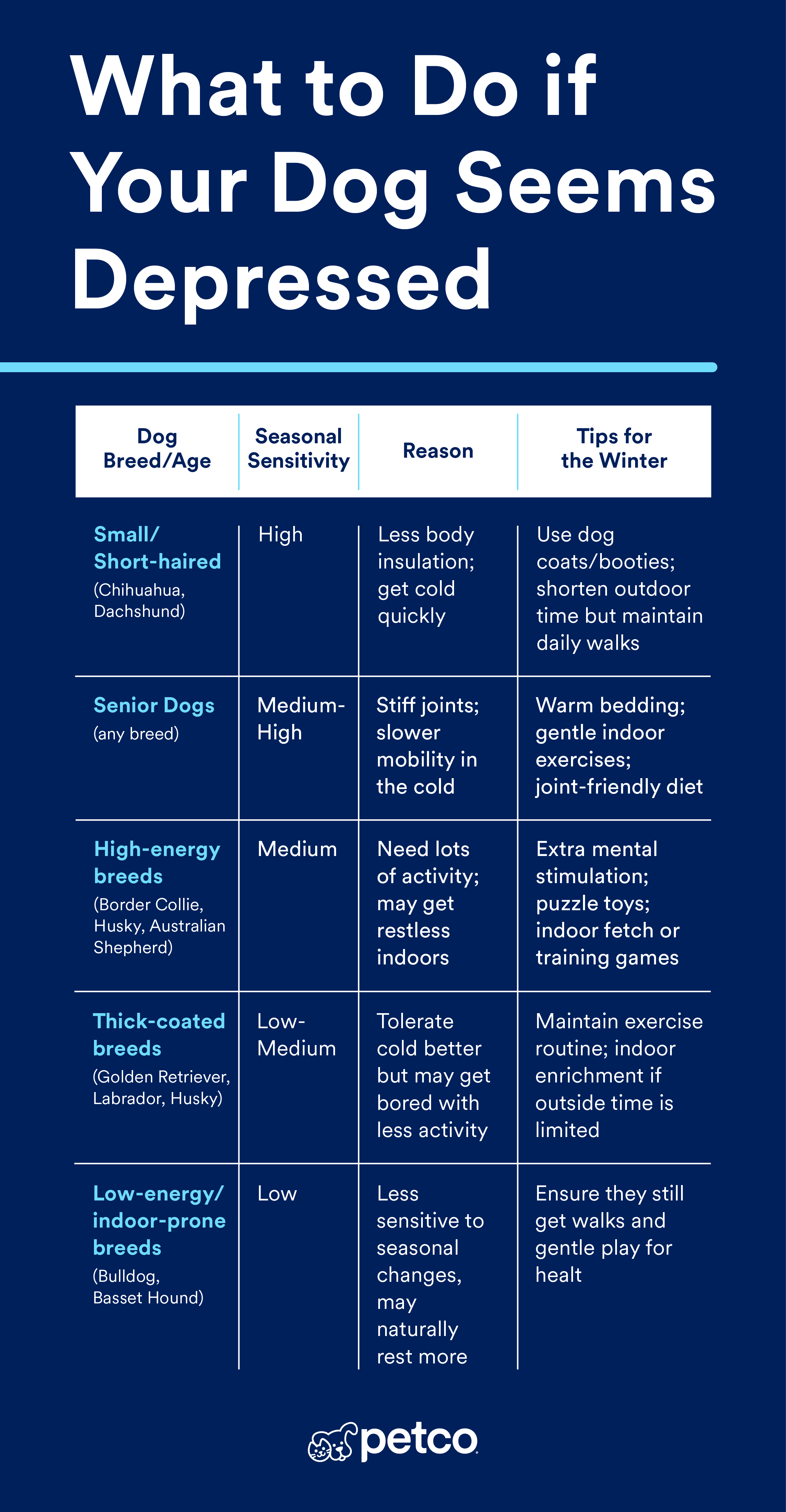
Dogs thrive on consistency. Stick to regular feeding, sleeping and walking times, even on chilly days, as long as you and your dog can both safely enjoy spending time outdoors, depending on the weather. Keep in mind that senior dogs, young puppies and those with shorter coats often have a lower tolerance for the cold and may need protective coats or less time outdoors during chilly weather.
5. External comfort, including you!
Provide a warm bed away from drafts, and make sure your dog has cozy blankets or a heated pad if needed. More quality time—extra cuddles, grooming or play—helps them feel secure and content.
Petco carries a variety of enrichment toys, cozy pet beds and puzzle feeders that make it easier to keep your dog comfortable and mentally stimulated all winter long.
When to call the vet
If your dog’s behavior changes suddenly or severely—with extreme lethargy, loss of appetite or ongoing sadness, for example—it’s time to talk to your veterinarian. Persistent mood or energy changes can also signal medical conditions such as arthritis or thyroid disease or pain that may worsen in cold weather. A vet can rule out underlying issues and help determine if your dog’s symptoms are part of normal seasonal behavior or something more serious.
Takeaways
While dogs don’t experience seasonal affective disorder the same way humans do, many react to shorter days and colder temperatures. They may sleep more, exercise less or seem less enthusiastic.
By maintaining a steady routine, offering enrichment like new toys, increasing light exposure and staying alert to concerning symptoms, you can help your dog stay happy and healthy. Petco’s range of interactive toys, cozy bedding and nutrition dog food options can make winter easier for both you and your pup.
FAQs about seasonal dog mood changes
Can my dog actually have seasonal affective disorder like a human?

No, dogs don’t get SAD in the human sense. Still, many show winter behavioral changes likely caused by less sunlight, reduced activity and shifts in routines.
Which dog breeds are more likely to show winter blues?
No breeds are proven more prone. Smaller, short-haired and older dogs may be more sensitive to cold and reduce activity during winter.
How long do winter behavioral changes usually last?
They often fade as daylight increases and routines normalize. If symptoms persist or worsen, it may indicate a medical condition that needs veterinary attention.
Can special lights or supplements help lift my dog’s mood?
Natural light is typically considered safest and most effective. Some pet parents use full-spectrum lamps or supplements, but vet guidance is essential before starting anything.