How Many Treats Can I Give My Cat?
Published on September 29th, 2025
Updated on September 30th, 2025


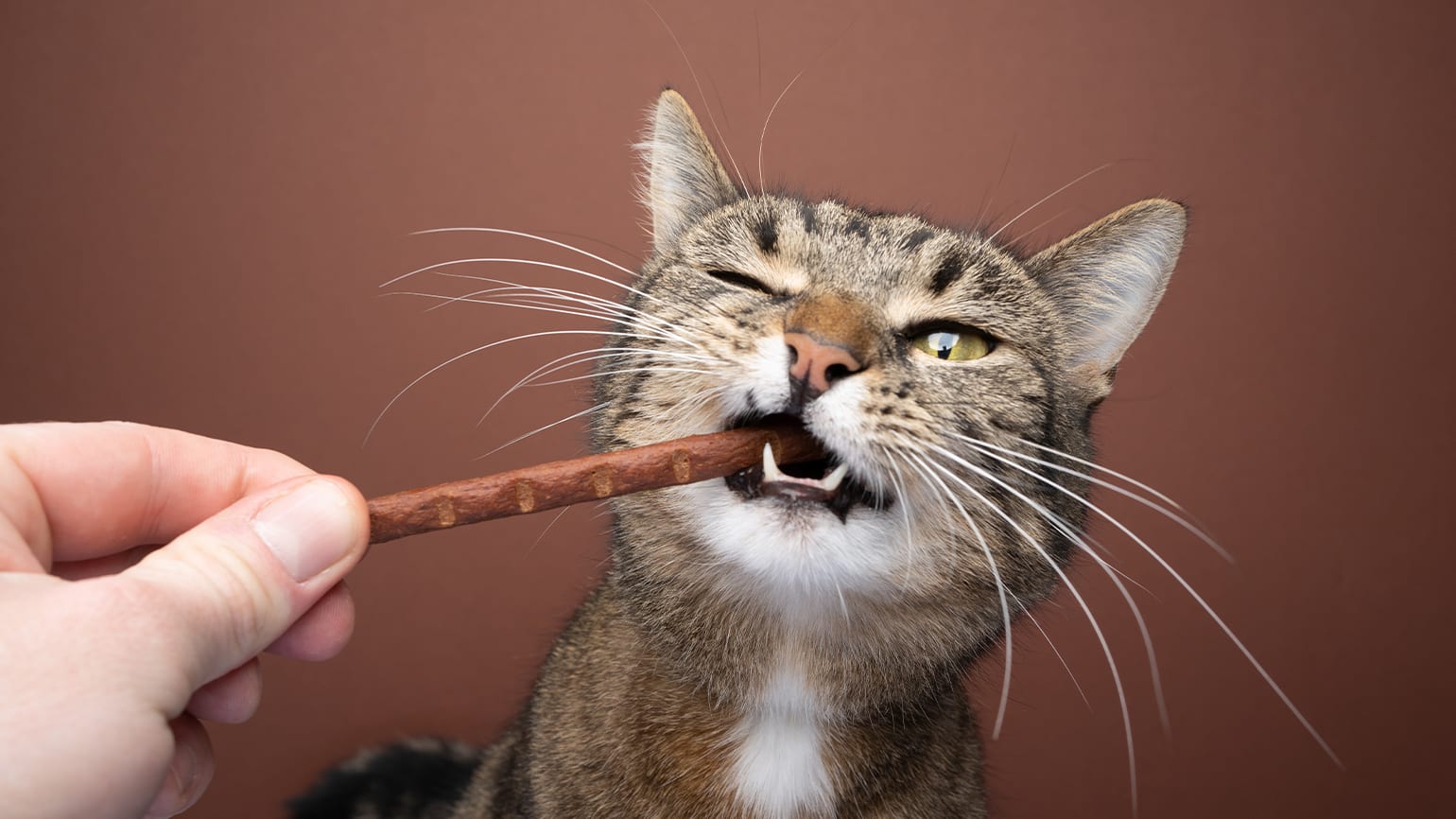
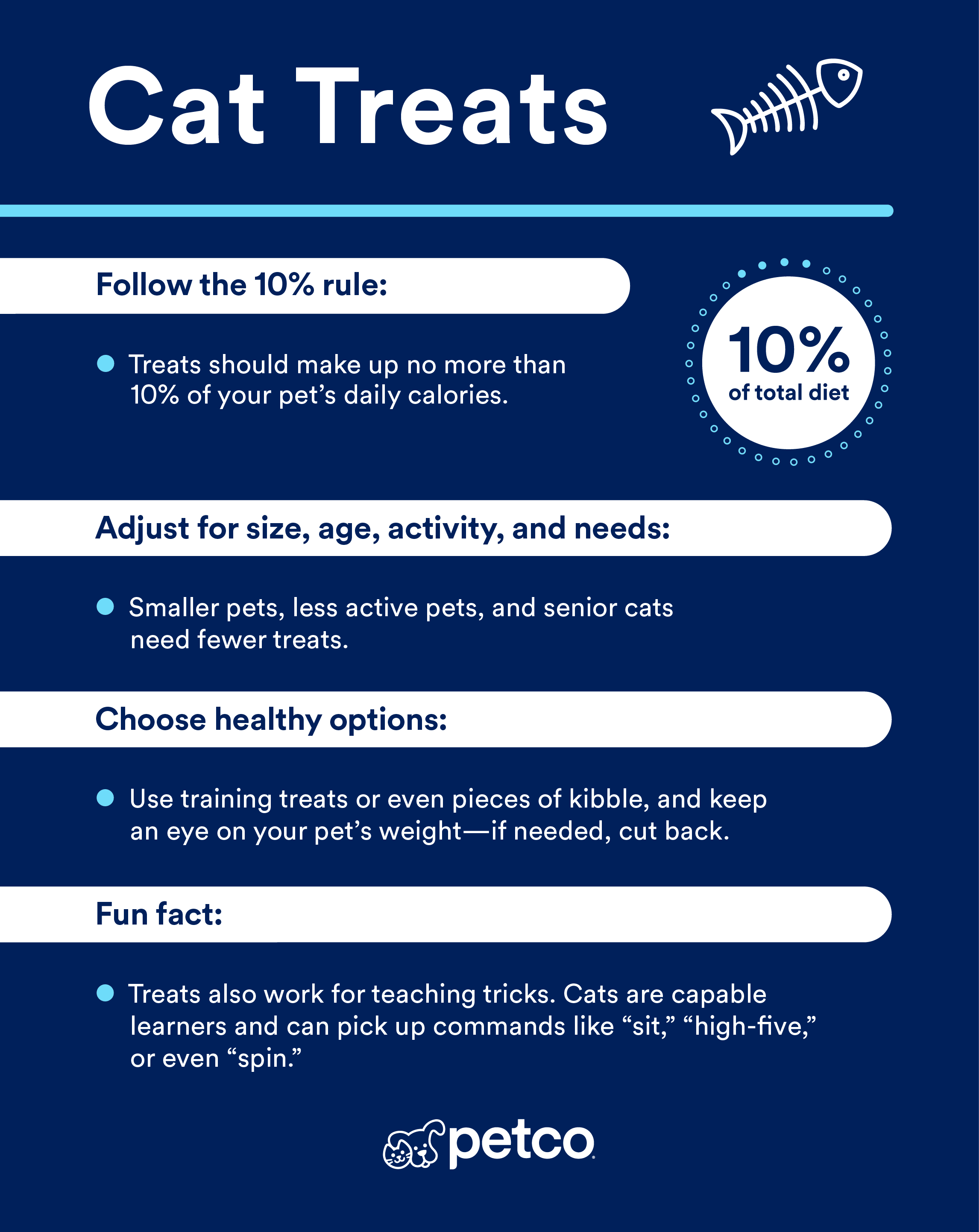
Treats can play an important role in your cat’s life, from strengthening your bond to rewarding good behavior and even supporting training. However, they should always be seen as a special addition to your cat’s diet and not a replacement for balanced meals. To prevent weight gain and nutritional imbalances, veterinarians recommend treats make up no more than 10% of your cat’s daily caloric intake.
Petco is on hand to help you navigate the trickiness of treats. Read on for guidance on how many treats are appropriate, as well as creative and healthy ways to make them a pawsitive and mindful part of your cat’s routine.
How many treats can cats have a day?
When it comes to cat treats, moderation is key. As already mentioned above, veterinarians recommend that treats make up no more than 10% of your cat’s daily caloric intake.
By the numbers: An average adult cat typically needs to consume about 20 to 35 calories per pound each day. Here’s how that breaks down for our sample cat, Butterscotch.
Butterscotch is a healthy, neutered, 10 lb. adult cat.
He typically eats 300 calories a day—270 from his cat kibble, 30 from treats.
The exact number of treats your cat can eat depends on several factors, including their age, weight, activity level and any health conditions. A young, active cat may be able to enjoy a few more treats than a senior or overweight cat, while those with medical conditions such as diabetes may need stricter limits. As always, include your veterinarian on this decision to ensure all variables that apply to your cat are factored in. Even if your own cat sounds a lot like Butterscotch, that doesn’t mean their caloric needs are also the same.
Those 20 to 35 cat treat calories can add up quickly, so dole them out throughout the day so they last longer. This gives you more opportunities to reward positive behavior or strengthen your bond with your cat.
Hungry for more? The Pet Nutrition Alliance has formulas to estimate how many calories your cat needs for their resting and maintenance energy requirements.
The role of treats in a cat's diet
Treats can be a valuable tool in your cat’s life—for training, bonding, providing occasional health supplements (like dental or urinary care chews) and simply rewarding good behavior.
But like anything else, cat treats can turn into too much of a good thing. The Cornell Feline Health Center, part of the Cornell University College of Veterinary Medicine, warns that obesity is the most common nutrition-related problem in cats. Obesity makes cats susceptible to a number of health concerns, particularly arthritis and diabetes. Additionally, a diet focused on treats doesn’t just add too many calories, it can disrupt balanced nutrition.
Treats are best used mindfully and sparingly. Keeping them limited helps ensure you’re supporting your cat’s overall health, while still keeping interactions fun and rewarding.
Hungry for more? Visit the Cornell Feline Health Center for other nutritional guidelines.
Grooming
One of the most practical uses for cat treats is positive reinforcement during care routines. Offering a small treat after nail clipping, brushing or teeth-brushing helps turn these experiences into positive ones. Over time, your cat will begin to associate these tasks with rewards, making them easier for both of you.
Tricks & training
Treats also work beautifully for teaching tricks. Cats are capable learners and can pick up commands like “sit,” “high-five” or even “spin.” Start by luring your cat into the desired position with a treat, marking the behavior with praise or a click and then rewarding them. Repeat in short sessions, being sure to end on a positive note and keeping it fun. With patience, your cat will begin to respond to the cue alone, always motivated by the tasty reward.
Pro tip: if you are feeling like 10% of calories to be used as a treat is too restrictive and your cat is in love with their food, consider using mealtime as a training opportunity to work on new tricks. Offer a bite of their regular food ration for each trick performed or nail clipped as part of your positive training regimen.
Medication
Another clever use is delivering medication for your cat. Many cats resist pills or liquid medicine, but hiding medication in a soft treat or using specially designed pill pocket treats can reduce stress and make the process smoother. Always ensure the treat fully conceals the medicine so your cat doesn’t spit it out.
Nutritional supplements
There are also treats that provide extra nutrition and some that can help reduce anxiety. These specialized options make treats not only enjoyable but also supportive of your cat’s well-being.
Nutritional treats may include added vitamins, minerals or fiber to support digestion and overall health.
Calming
Calming treats, often made with ingredients such as L-theanine or chamomile, can help ease stress when friends or family visit, when the environment is louder than normal and during travel or other anxiety-inducing events.
Takeaways
Treats can be a wonderful way to bond with your cat, support training and even provide health benefits, but moderation is essential. Keeping treats to less than 10% of your cat’s daily calories helps prevent obesity and ensure a balanced diet. Always consult your veterinarian for personalized advice on treat types and quantities that best suit your cat’s needs. And Petco is here to help you with in-store and online shopping. Your cat will think you’re pawsome!

My kitten always goes crazy when she smells chicken/meat and she starts sniffing the pizza box and meowing begging me to give her some, is it ok if I give her or should I let her stick to her kitty food until she's a little bit older? also is it ok i
I just had my cat spayed and was told NOT to feed her human food i.e. chicken, turkey, etc., why? I only feed her a few pieces for a treat not as a full meal - I give her regular cat food for a regular meal.

Pelly turns 1 year tommorrow. What give him as a treat apart from his routine dry and wet cat food. Please suggest some tasty food items that is preferred by persians. (He doesn't like fish, chicken and prawns)
My cat is on urinary tract health cat food. Is it okay to give him regular cat treats? Also, does the food have to come from the vet or is the food from the pet store just as good?
Is it okay to give a kitten about 4 months old, cat treats? If the kitten is eating Purina One Kitten food, would it be okay to try to switch to another brand of kitten food, or another Purina brand kitten food? When do we switch from kitten food to
My cat, he doesn't eat any treats beside the temptation one. It was provided by his previous owner and now my cat is kinda hook up to it. We tried to stop it coz my previous experience, that treat is harmful. So we brought other kind of treat, dried
She just had major surgery of blocked lower GI tract with a lot of thread 4 days ago. The vet just wants her to eat anything at this point. All she will eat at the moment is temptation cat treats. Yesterday she almost half a small can of fancy feast
Is it okay to feed my cat "people" food?
What can i feed my cat besides dry catfood?
She ate about 15 of the Purina whisker lickins Yummy and Crunchy cat treats. She has always been healthy. Will she be okay??