Can Dogs Have Seasonal Allergies?
Published on September 11th, 2025
Updated on September 11th, 2025


“It’s the time of the season…for sneezing.”
While The Zombies sang about love in the air, for many dogs it’s actually pollen floating around—and it’s not so romantic. Seasonal allergies are surprisingly common in dogs, especially in spring and fall. If your pup starts licking their paws, scratching nonstop or exhibiting skin issues during specific times of the year, it may be seasonal dog allergies. Spotting symptoms early helps keep your dog feeling their best no matter the season. Read on to learn how to recognize symptoms, what you can do at home and when it’s time to visit your vet.
Understanding seasonal allergies in dogs
Seasonal allergies in dogs, also called atopic dermatitis, occur when a dog’s immune system overreacts to specific environmental allergens during certain times of the year. Most dogs with seasonal allergies show symptoms during spring (March to May) and fall (September to November), though this can vary depending on climate and location.
It’s important to note that seasonal allergies are different from other types of allergies dogs may have, like food allergies or reactions to fleas or ticks. One of the giveaways is, well, that whole seasonality thing.
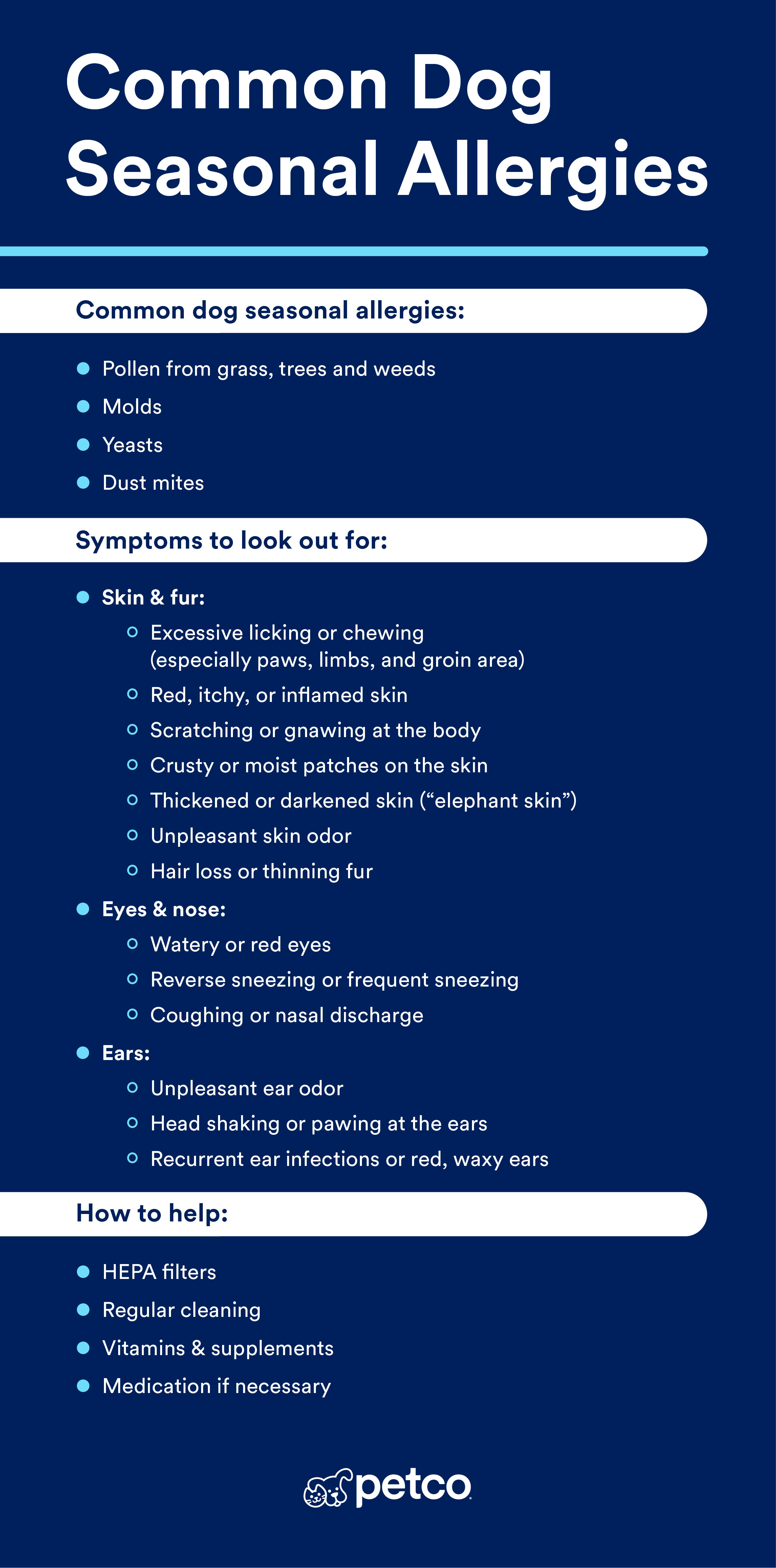
Common allergens include:
- Pollen from grass, trees and weeds
- Molds
- Yeast
- Dust mites
While any dog can get seasonal allergies, it is reported that atopic dermatitis is more common in certain breeds, including Boxers, Cairn Terriers, Chow Chows, Cocker Spaniels, Fox Terriers, French Bulldogs, German Shepherds, Golden Retrievers, Labrador Retrievers and West Highland White Terriers, often starting between ages 2 and 6.
Common symptoms of dog seasonal allergies
Like with humans, two common symptoms of seasonal allergies in dogs are sneezing and watery eyes. If only it ended there! Unfortunately, many furry friends also show their discomfort through skin issues and excessive grooming. The most common areas affected are the paws (especially between the digits), limbs, mouth, ears, abdomen, groin, armpits, tail and around the eyes. Seasonal dog allergy symptoms include:
Skin & fur:
- Excessive licking or chewing (especially of the paws, limbs and groin area)
- Red, itchy or inflamed skin
- Scratching or gnawing at the body
- Crusty or moist patches on the skin
- Thickened or darkened skin (“elephant skin”)
- Unpleasant skin odor
- Hair loss or thinning fur
Eyes & nose:
- Watery or red eyes
- Reverse sneezing or frequent sneezing
- Coughing or nasal discharge
Ears:
- Unpleasant ear odor
- Headshaking or pawing at the ears
- Recurrent ear infections or red, waxy ears
If your dog shows multiple signs or their symptoms are persistent, consult your veterinarian. They can help identify the cause and recommend allergy relief treatments or diagnostics to help keep your pup feeling their best.
Managing seasonal allergies at home
Not only are seasonal allergies annoying, but they put your dog at risk of secondary skin infections if they keep biting or scratching the itchy areas. Management and prevention are key. Below we’ll explore environmental, topical and oral strategies for helping to control seasonal allergies. (Injectable medications are also available; see veterinary treatments and medications below.) The “cone of shame” may need to be employed, too, to help prevent your pup from scratching, especially if they are fixated on a particular area they can’t reach while wearing the cone.
Environmental checklist:
- Keep your home as free of allergens as possible by regularly dusting surfaces and cleaning floors. Allergens such as pollen, mold spores and dust mites can settle indoors and continue to trigger your dog’s symptoms.
- Vacuum frequently using a vacuum with a HEPA filter to help remove pet dander, dust and pollen from floors, rugs and upholstery. Aim for at least once or twice a week, especially during peak allergy seasons.
- Mop hard floors regularly to pick up any allergens vacuuming might miss. Use pet-safe, fragrance-free cleaners to help avoid further irritation.
- Wash your dog’s bedding, blankets and soft toys weekly in hot soapy water to eliminate built-up allergens. Consider using a hypoallergenic detergent that’s gentle on sensitive skin.
- Use air purifiers with HEPA filters in common areas where your dog spends time. These help trap airborne allergens like pollen and dander before they can settle on surfaces or be inhaled.
- Keep windows closed on high-pollen days to prevent outdoor allergens from entering your home. Using an air conditioner with a clean filter can also help maintain air quality and reduce allergy flare-ups.
Topical treatments:
- Topical remedies come in the form of shampoos, leave-in conditioners, sprays and wipes. These can target bacterial or fungal issues and soothe irritated skin. Look for over-the-counter products at Petco.
- Baths help wash away allergens like pollen and dust from your dog's coat and skin. Choose oatmeal-based or vet-approved moisturizing shampoos made specifically for dogs to avoid irritating their skin. Also, get your vet’s input on frequency; too much bathing can dry out your dog’s skin, causing itching for a different reason.
- Routine ear cleaning can help prevent ear infections, which are common in dogs with seasonal allergies. If your dog already has an ear infection, follow your vet’s treatment and cleaning recommendations closely.
- After walks, wipe your dog’s paws with pet-safe wipes to remove allergens and reduce skin irritation—especially if they’re prone to licking their feet.
Oral supplements:
- A balanced, nutrient-rich diet helps support your dog’s immune system, which is critical in managing seasonal allergies. Ask your veterinarian about allergy-friendly food options if symptoms persist.
- Omega-3 fatty acids, commonly found in fish oil supplements, can help relieve itchy skin, reduce inflammation and improve coat health. They may also help with related issues like anal gland inflammation. Since they often take 4 to 6-plus weeks to become effective, year-round use is ideal for dogs with seasonal allergies.
- Probiotics can support gut health and may enhance your dog’s immune response to allergens. Look for formulas designed specifically for pets.
- Over-the-counter antihistamines may offer relief for mild symptoms, but always consult your veterinarian for the correct type and dosage. Never use medications containing decongestants like pseudoephedrine, as they are toxic to dogs.
- Some pet parents try giving dogs local honey to build resistance to local pollen. Again, consult your vet first. While results are inconsistent in clinical studies, honey is considered safe in small amounts and may be a sweet, low-risk addition to your dog’s diet.
Veterinary medications
If at-home remedies aren’t effective enough, your veterinarian may opt for medical treatments for seasonal allergies that both diagnose the root cause and manage symptoms effectively. While there is no cure for seasonal allergies, these treatments can significantly improve your dog’s quality of life. It’s important to follow a personalized treatment plan created by your veterinarian. Don’t be impatient if it isn’t a “one-and-done” visit. Because the seasons are ongoing, your dog’s treatment will likely be ongoing, though probably less frequent as treatments are identified and implemented.
The first step typically involves a physical exam, reviewing your dog’s history of recurring symptoms (often appearing during the same seasons each year), and ruling out other conditions like mites, fleas or food allergies. The diagnosis of seasonal allergies is by exclusion of other causes that can cause your dog’s itchy skin. A blood test or intradermal allergy test and a diet trial may be needed to reach a diagnosis.
Try to document your dog’s symptoms and when, where and what you think causes them to occur and bring it to the visit, or email it to your clinic ahead of time. Once a diagnosis of seasonal allergies is confirmed, your veterinarian may recommend a combination of treatments depending on the severity and type of symptoms. Common options range from antihistamines for mild cases up to corticosteroids for more intense inflammation and itching. Other products that may be recommended to reduce the itching sensation caused by allergic or atopic dermatitis could be Apoquel (a daily pill) or Cytopoint (an injection administered at the vet’s office that typically lasts for several weeks). When skin infections are present, antibiotics or antifungals may be necessary. Again, your vet might also add the cone in such instances to help give the skin a chance to properly heal.
For dogs with ongoing symptoms, allergy testing can help identify specific environmental triggers. Allergy testing can be done as a blood test or by skin injections. Based on those results, immunotherapy—administered as shots or oral drops—may be recommended to gradually desensitize your dog to allergens. If your dog exhibits severe symptoms like extreme swelling, breathing difficulties or constant scratching that causes open wounds, seek immediate veterinary care. Prompt attention can help prevent complications and help keep your dog comfortable and healthy.
Preventing seasonal allergies
We all know about the importance of prevention, and this topic is no different. For seasonally allergic dogs, it starts with minimizing their exposure to environmental allergens. When pollen counts are high—typically early morning and late afternoon—try to keep your dog indoors as much as possible and time walks accordingly.
After outdoor activities, wipe down your dog’s paws and coat with pet-safe wipes to remove pollen or give them regular baths with a gentle, hypoallergenic shampoo to soothe their skin and wash away irritants.
For new pet parents and those with allergies themselves, creating an allergen-reduced environment is key. Use air purifiers, vacuum frequently with a HEPA filter and wash pet bedding often to reduce the buildup of dust, pollen and dander.
If your dog is prone to seasonal allergies, speak to your veterinarian about starting preventive treatments before peak allergy season begins. Keeping your home clean and practicing consistent grooming routines can make a big difference in reducing the impact of seasonal allergens—for both you and your pet.
Takeaways
Seasonal dog allergies can be frustrating, but with a little patience and a proactive mindset you can help your pup feel their best. By staying observant, addressing symptoms early and working closely with your veterinarian, you’ll be better equipped to create a personalized plan that helps keep allergies under control. A multimodal approach—using a mix of medications, topical treatments, grooming routines and lifestyle changes—can make a world of difference.
Every dog is unique, so don’t be discouraged if it takes some trial and error to find the right combination. For extra support, visit your local Petco for allergy-friendly products, grooming tools and expert guidance. With the right care, your pet can thrive—no matter the season!

My dog is scratching and congested. Could it be seasonal allergies?
My dogs have allergies: itchy eyes, sneezing. How to diagnose and relieve?

Dog has seasonal outdoor allergies, very itchy. Is it serious?

How can I treat my dog's chronic allergies without huge vet bills?
My dog gets hives and bumps outside. Could it be seasonal allergies?
Why is my allergic dog scratching raw and acting so sluggish?
My dog has dust allergy from construction. How to manage symptoms?
My dog has seasonal allergies. Can Cetirizine help his itchy paws?
My dog has chronic skin allergies. What can I do to help him?