


Is my 5-gallon tank too small for my goldfish? Why are they dying?
Updated On September 23rd, 2025
Pet's info: Fish | Unknown - Fish
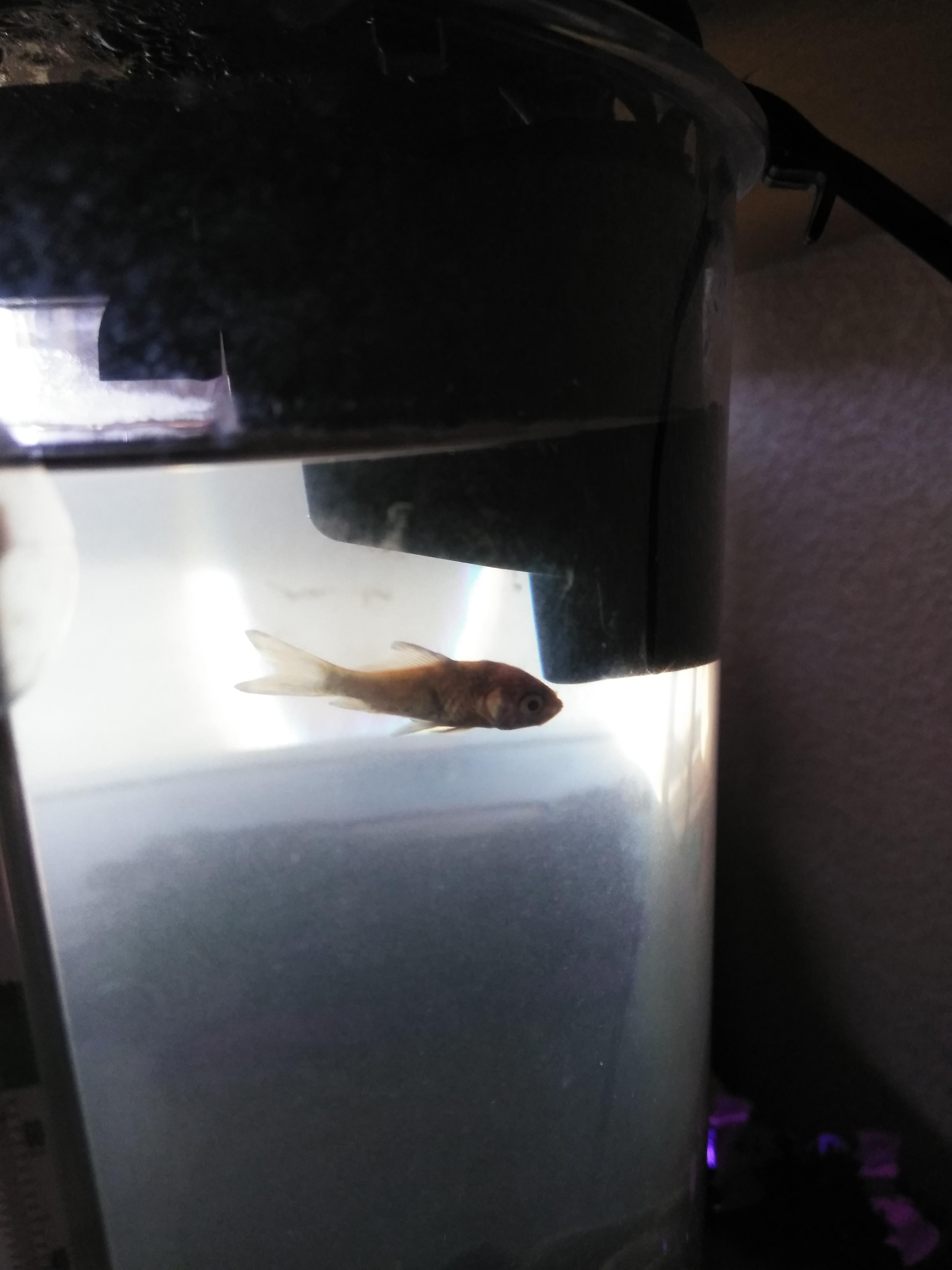
Please help!! I have a 5 gallon fish tank starter kit. Water conditioner. Thermometer. And it has a filter. I have bought 3 gold fish all from Walmart. (I know bad idea) and all have died 1 first day. 2nd one the next day. And the third is dying currently :( they swim by the filter and float then have a hard time breathing it looks like and then die. My autistic 5 yr old is devistaed and I don't know what I could be doing wrong. I did research and research and more research!! Help:(


3 Answers
Most Helpful Answer

Published on September 18th, 2018
A 5 gallon tank is insufficient for goldfish. They produce a larger than normal bio-load (wastes) that can quickly overwhelm a small tank. Ideally, one goldfish should be in a 20 gallon tank with an extra 10 gallons added per additional goldfish. The filter should be rated for at least twice the volume of the tank. They are likely succumbing to ammonia and/or nitrite toxicity. If you test the water, it is likely both parameters will be dangerously high. Perform a 50% water change. Use only conditioned water that is temperature matched to prevent further stress or shock. Goldfish are cold water fish and do best between 65 F and 72 F. Plain aquarium salt, NOT table or Epsom salt, can be used to reduce stress, improve gill function and aid in recovery. Dissolve 1 teaspoon per gallon in a cup or two of tank water and gently pour it into the tank. Treat for no more than 14 days then perform a partial water change to decrease salinity. A 5 gallon tank would be appropriate for one male Betta or a small school of Neons (3-5).

1Pet Parents found this answer helpful
Related Answers from Veterinarians
-
Published on March 3rd, 2019
Check the water chemistry and quality. This can be done by using a home test kit ( https://www.petco.com/shop/en/petcostore/product/api-freshwater-master-test-kit ) or by submitting a water sample for testing. The local Petco may do this for free or for a small fee. Aim for an absence (0 ppm) of ammonia and nitrites. Nitrates can be 20 ppm or less. Perform a partial water change if necessary. use conditioned water that is temperature matched to prevent additional stress or shock. Goldfish are cold water fish and do best between 65 F and 72 F. You can add plain aquarium salt (NOT table or Epsom salt) as a general tonic. Dissolve 1 teaspoon per gallon of water in a cup or two of tank water and gently pour it into the tank. It can improve gill function, reduce stress, treat minor infection and aid in any recovery. Treat for 14 days then reassess the condition. Perform more partial water changes afterwards to reduce salinity. In case he is constipated, you can offer bits of cooked and shelled green peas until defecation and swimming are normal. You can soak food in garlic juice to stimulate the appetite and provide an immune system boost.
1Pet Parents found this answer helpful
-
Published on January 23rd, 2018
Goldfish need powerful filtration. Your filter should be rated for at least twice the tank volume. Once you get a test kit, check the chemistry. Aim for 0 ppm ammonia and nitrites with nitrates at about 40ppm. Use a kit that has liquid reagents, not strips. The liquid kit is more accurate. The pH should range between 7.2-7.6. Being cold water fish, goldfish thrive between 65F and 72F. You can dissolve 1 teaspoon of plain aquarium salt (NOT table salt) per gallon of water to use as a general tonic. It will reduce stress, improve gill function, treat minor infection and aid in recovery. Treat for 10-14 days then reassess the condition of your fish. When performing partial water changes, treat only the volume of water being replaced not the entire tank volume. Change no more than 30% of the volume at a time. Use only aged or conditioned water that is temperature matched to prevent stress or shock.
1Pet Parents found this answer helpful

Hello, I have aquarium, it had 4 goldfishes in it. 2 were about 3 years old and 2 I bought it few days ago. But suddenly, all of them got infected and today one of the old goldfish died.. kindly help me...
How do I know when my goldfish tank is to small for the goldfish

My black moor is sick I just got him from the fish store along with a goldfish to add with my other goldfish in a ten gallon tank I did a big water change because there was slot of nitrate and nitrite when I put him in the tank after that I noticed h
Two of the fish fins are clamping down close to their body. I did 75% water change and hopefully they will get better. I do not have the water testing kit. Will buy soon. Is there any ways to get them better? I could see some of their scales are off.
My fish can’t open it’s mouth, and Is resting on the bottom of the tank, has a swim then goes back to the bottom of the tank
I used to have 7 Fish 2 gold comet Fish 2 Comet silver Fish and 3 Shubunkins one Gold Comet Fish died and the gold comet Fish that didn't die is now pecking at my other Fish and it looks soooooooooooo annoying please help xoxoxoxxoxoxoxoxox love Foxi
One of my goldfish is spazzing out. I feel like it's because of the water condition because, even though the water is perfectly clear, they are two goldfish in a 5 gal tank (beyond my control). How should I deal with this situation and how should I c
I NEED HELP!!! I fell in love with my goldfish and he's dying!!! He's had white snow on his body! He's breathing but he's on his side!! Not eating or swimming HELP!!!
Hi I'm really scared because I went to my boyfriends parents house and I left my sister to look after my 7 Fish and she sent me a photo and I saw (HEAPS) of food layers on the to and I had to cut my holiday short my 11 days and I get back to sad babi
I clean my fish tank because it got really cloudy I put in all the drops that are supposed to. Woke up the next morning and three of my fish were dead. So I clean my water again and put the remaining fish back in it. But my fish tank is cloudy once a

Book an appointment with the pros – our expert vets are here to help.
