


Why is my cat losing fur on his ear and scratching constantly?
Updated On September 23rd, 2025
Pet's info: Cat | Mixed Breed | Male | neutered | 5 years and 3 months old | 10 lbs
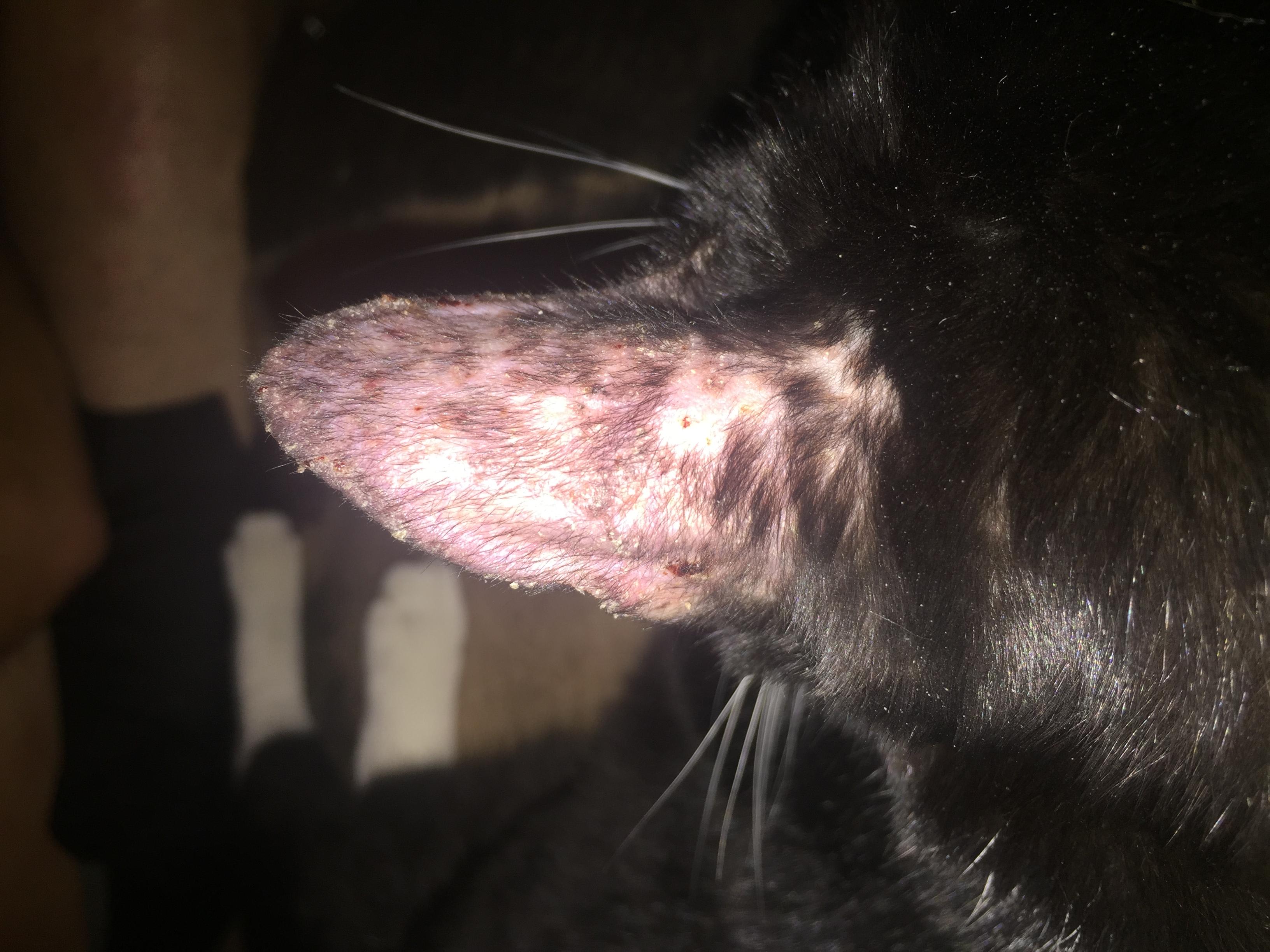
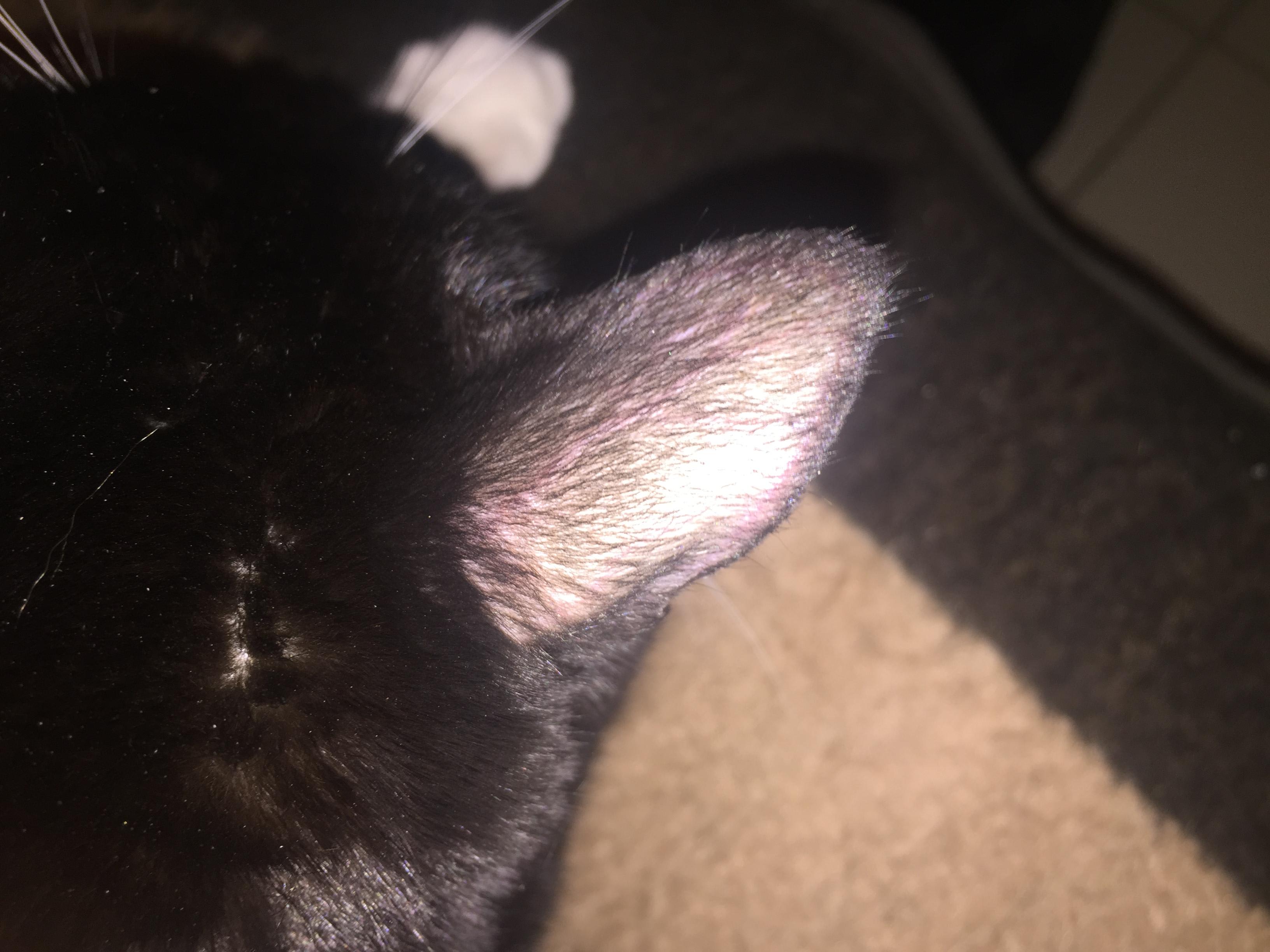
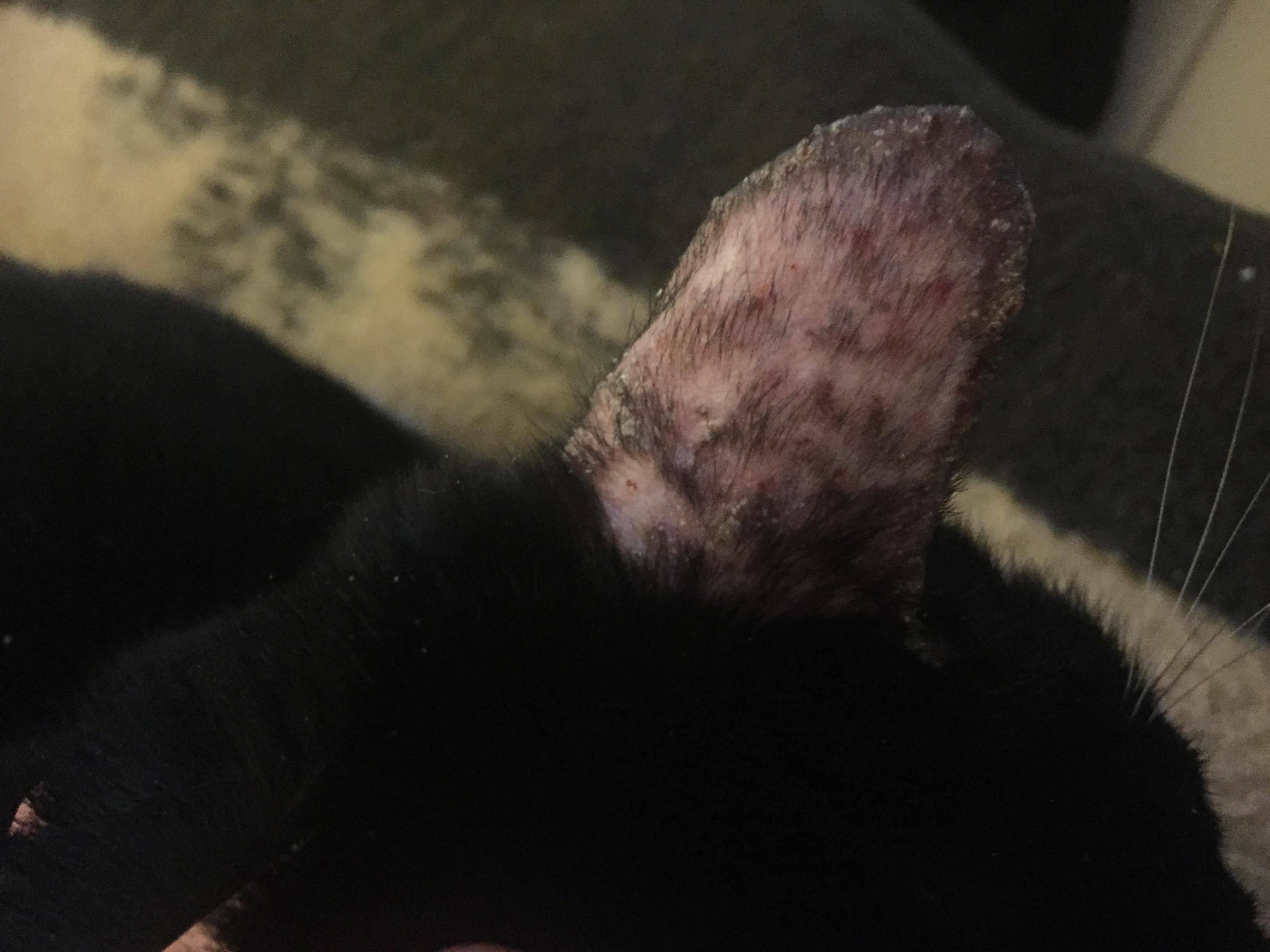
My cat has lost his hair on his ear


5 Answers
Most Helpful Answer

Published on August 13th, 2017
Poor Panda! I can tell by the look of his ears that he has been scratching at them quite a bit causing some self trauma which is evident by the red spots (erythema), hair loss and inflammation. A very common cause in cats would be ear mites. This is a very easily treatable condition that your veterinarian would be able to dignose and treat effectively. Best of luck!

1Pet Parents found this answer helpful
Related Answers from Veterinarians
-
Published on November 6th, 2018
Thanks for using Petco Pet Education Center, formerly Petcoach! This is possibly due to allergies. It really comes down to figuring out what is causing his allergies so that they can be treated or the specific allergen avoided. A secondary infection is likely and also needs to be addressed. There are many things that can cause allergies though in most cases they can be broken down into 3 big categories: flea, food and environmental allergies. Allergies are usually worked up in a stepwise fashion starting with flea allergies as this is the easiest and cheapest to take care of. If not on a flea preventative, then it would be a good idea to get started on one. If already on one then it would be a good idea to change to something else (there are many new products out in the market). If not improved in 1-3 months then it is time to move on and check for food allergies by switching to a novel diet (new protein and new carbohydrate). If that does not seem to be the issue then you are left out having to check for environmental allergies which require blood and/or skin tests. Allergies can be very frustrating to deal with at first but so rewarding at the end when we are able to treat them effectively!
2Pet Parents found this answer helpful
-
Published on November 21st, 2018
Thanks for using Petco Pet Education Center, formerly Petcoach! This is possibly due to allergies. A secondary infection is likely and also needs to be addressed. There are many things that can cause allergies though in most cases they can be broken down into 3 big categories: flea, food and environmental allergies. Allergies are usually worked up in a stepwise fashion starting with flea allergies as this is the easiest and cheapest to take care of. If not on a flea preventative, then it would be a good idea to get started on one. If already on one then it would be a good idea to change to something else (there are many new products out in the market). If not improved in 1-3 months then it is time to move on and check for food allergies by switching to a novel diet (new protein and new carbohydrate). If that does not seem to be the issue then you are left out having to check for environmental allergies which require blood and/or skin tests. Allergies can be very frustrating to deal with at first but so rewarding at the end when we are able to treat them effectively!
1Pet Parents found this answer helpful
-
Published on April 27th, 2017
Some of the most common reasons for Indica's skin issues are related to allergies (to fleas, food, or the environment), ringworm or mange. When cats become excessively itchy, they can scratch to the point of developing a skin infection. Make sure that Indica is receiving a high quality flea preventative (such as Advantage or Revolution) monthly. He should be examined by his vet to try to determine the cause of the hair loss and skin lesions, because antibiotics or anti-itch medications may be needed. I hope that he's on the mend soon!
1Pet Parents found this answer helpful
-
Published on December 30th, 2017
Thanks for using Petco Pet Education Center, formerly Petcoach! This likely represents self-trauma from him scratching at it. This may be due to allergies if associated with itchiness. You can consider using an e-collar to prevent further self-trauma in the meantime. It really comes down to figuring out what is causing his allergies so that they can be treated or the specific allergen avoided. There are many things that can cause allergies though in most cases they can be broken down into 3 big categories: flea, food and environmental allergies. Allergies are usually worked up in a stepwise fashion starting with flea allergies as this is the easiest and cheapest to take care of. If not on a flea preventative, then it would be a good idea to get started on one. If already on one then it would be a good idea to change to something else (there are many new products out in the market). If not improved in 1-3 months then it is time to move on and check for food allergies by switching to a novel diet (new protein and new carbohydrate). If that does not seem to be the issue then you are left out having to check for environmental allergies which require blood and/or skin tests. Allergies can be very frustrating to deal with at first but so rewarding at the end when we are able to treat them effectively!
1Pet Parents found this answer helpful



My outdoor cat is losing hair behind his ears and also in front of the ears. He was a stray that took me five months to catch and get neutered. Although we have had him for five years, it's very hard to get him to sit still long enough to get a pic m

is this because of ear mites? he has bald spots with brown markings beside his ear if you can’t see. If yes, are there anything else i should do, besides giving him medication?

My cat is male and getting old he has a red scab next to his ear the side of his head it has no fur on it and is red and the skin around it looks sore

The back of my cats ear is very red and he has what looks like liquid matted in the fur there. I tried to wipe it off to clean it and fur came with it. I noticed a little scratch on his ear on Tuesday but no pus or liquid til this morning. What is wr
My cat keeps shaking his head and scratching and he has hair loss around his ears and on his face what can I do to help him
Hi Good Day Can anyone tell me what happened to my cat. He has lost fur around the ears and the back of his head, and has smal red dots on there. He is domestic cat, age +/- 1 years old, can not sure, he was a stray.
Hello I bought a cat I notice her hair fall a lot Near the ear and above the eyes there is lot of hair loss Please check the photos
My cat is losing hair on her ears. The outside ears are very rough and ear itself is red. She is scratching but it is not ear mites.

My cat is losing fur on of his both ears,and his nose. The nose is full of tiny scabs and his ears are just losing there fur it used to be all flakey. He was a stray and loves the outdoors but spends most indoors he eats dry food.What is producing hi
My cat has been losing hair on her ear for 3 days now and the skin is a little crusty. I’m not sure if I need to bring her into a vet or not. She’s been eating normal, playing, and doesn’t seem to be itching it at all, however has never happened befo

Book an appointment with the pros – our expert vets are here to help.
