Petco Text Logo
Petco Pet Logo
Jump To Section

    About Chesapeake Bay Retriever

    These traditional American gundogs are a great breed for activity outdoors. They are strong swimmers and powerful runners. Chesapeake Bay Retrievers are a loyal and intelligent breed. They can be a bit standoffish with strangers, but their family is always close to their heart. With a storied history in Maryland and fans around the world, the Chesapeake Bay Retriever is one of the iconic American sporting dogs. It’s a great breed for a country home or a big house in the suburbs. Beware of keeping them cooped up in an apartment – they are meant for active rural living.

    Origin: United States   Other Names: Chessie, CBR, Chesapeake


    Sporting Group

    Naturally active and alert, Sporting dogs make likeable, well-rounded companions. Dog breeds in the Sporting group are usually remarkable for their instincts in water and woods, and many of these breeds actively continue to participate in hunting and other field activities. Potential owners of Sporting dogs need to realize that most require regular, invigorating exercise.

    Breed Appearance

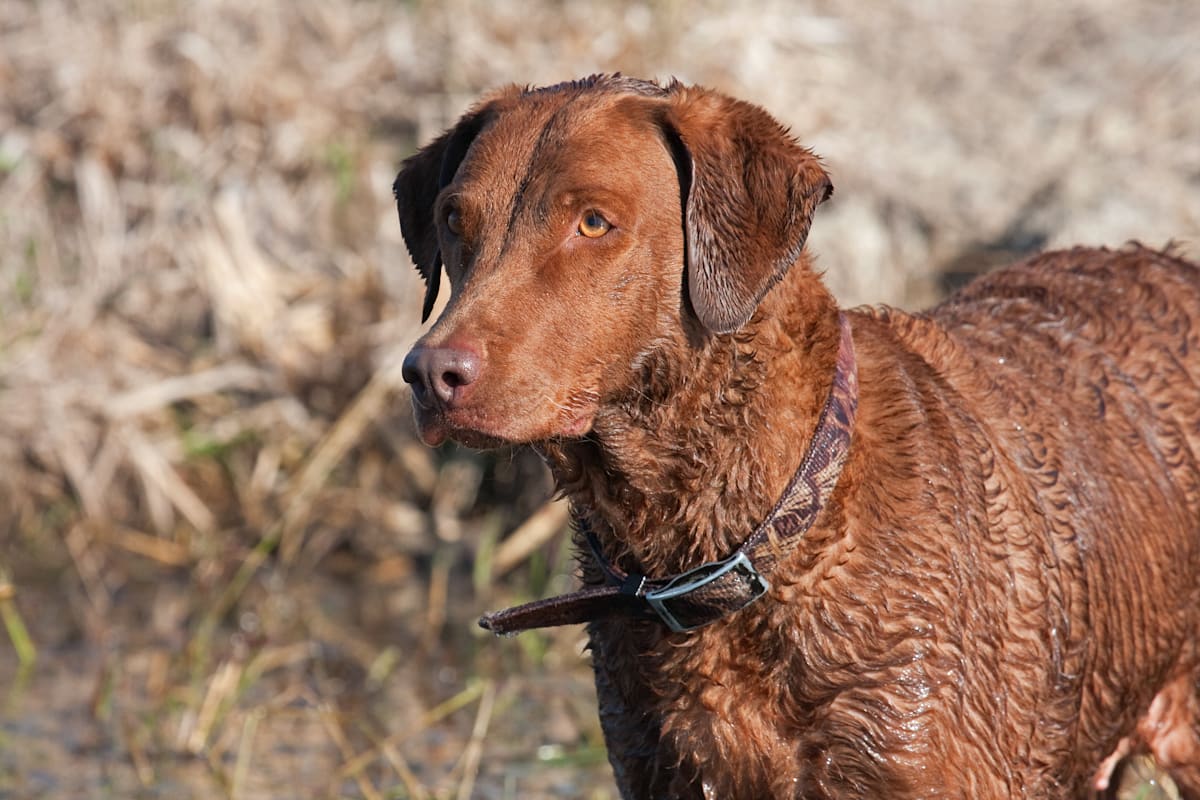
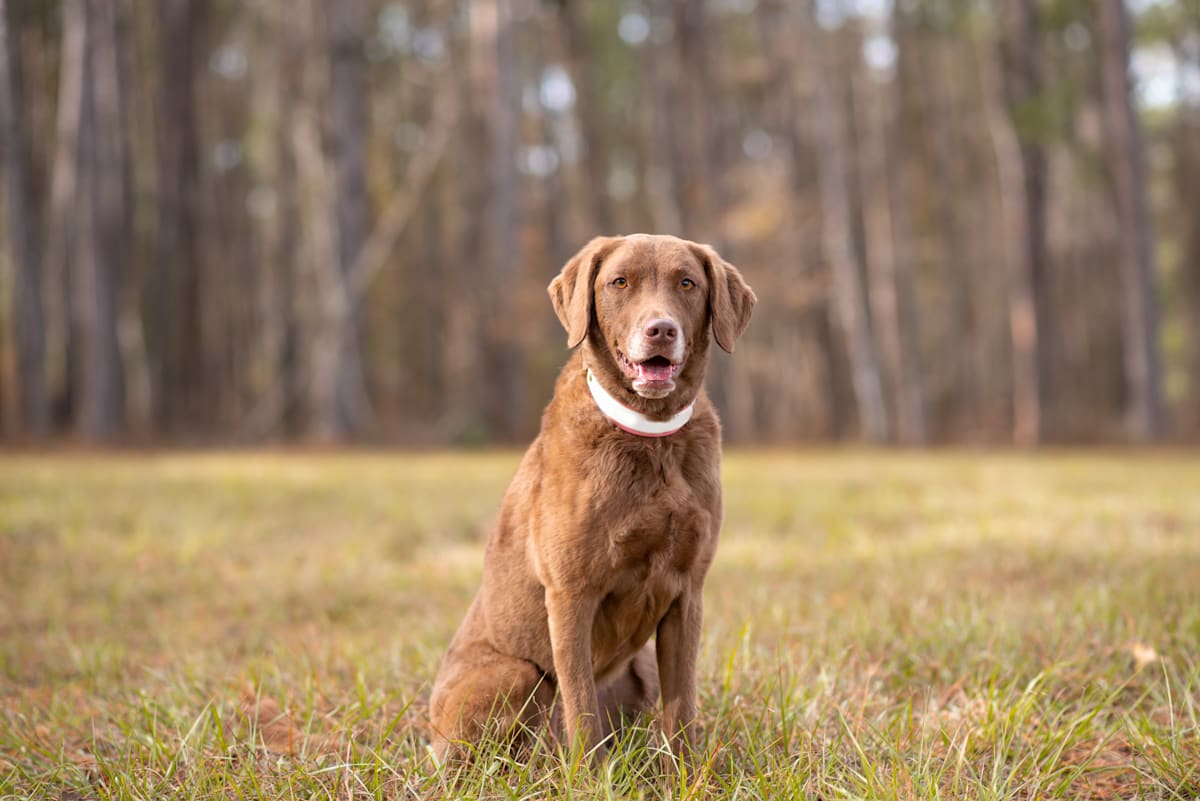
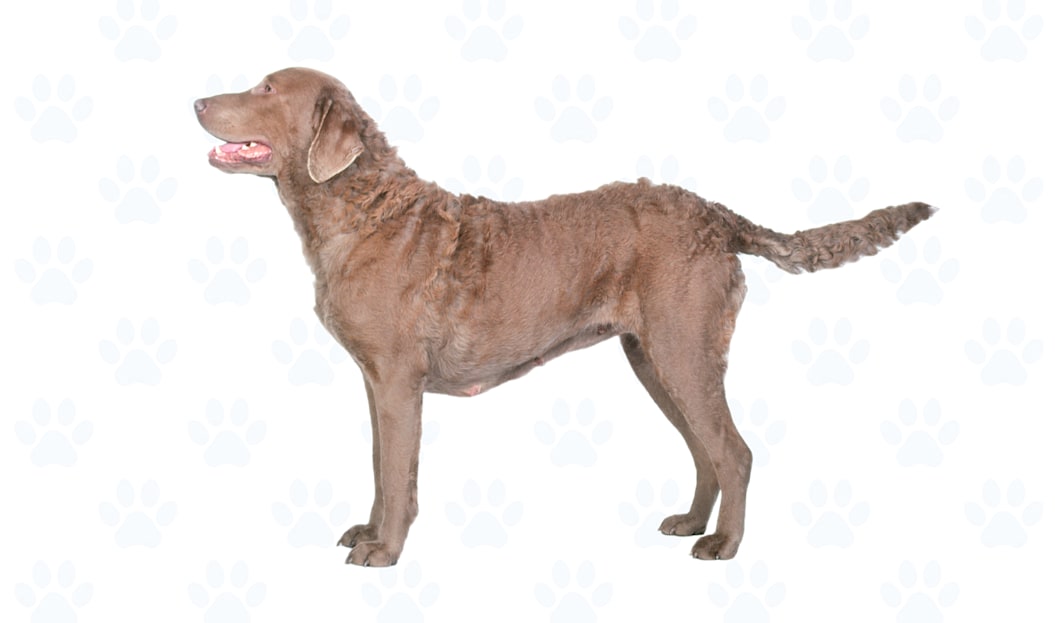
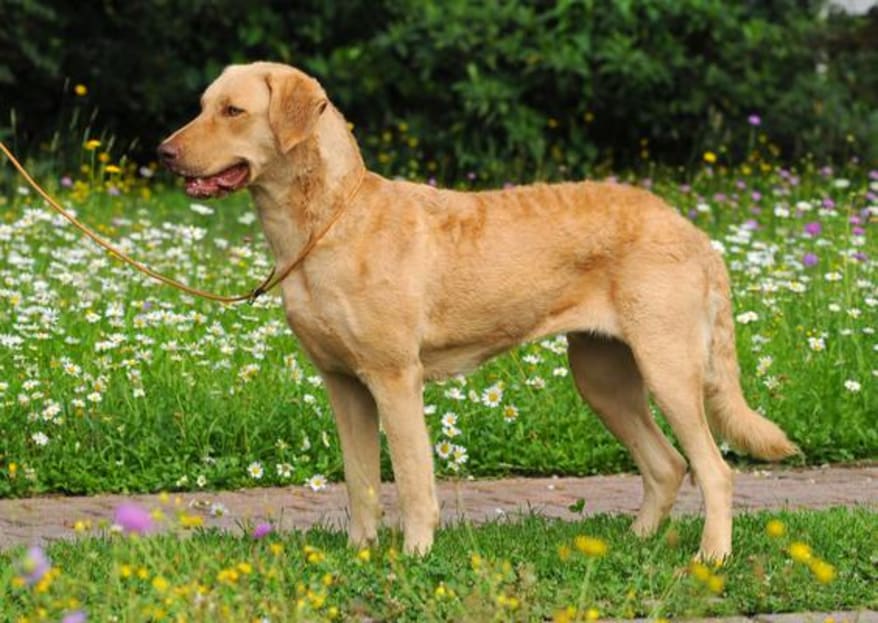
    The Chesapeake Bay Retriever is a muscular and stout dog of medium to large build. Their coat is oily and thick, perfect for long wet days in the fields. Their head is round with a broad skull and a medium-sized muzzle. Their ears are not overly large, and they have powerful hindquarters. Webbed toes make them strong and effortless swimmers. A solid chest is well suited for breaking through ice in pursuit of wounded fowl in the water.

    The AKC recognizes 8 coat colors in the official breed standard: brown, dark brown, dark deadgrass, deadgrass, light brown, light deadgrass, sedge, and tan. The coat is wavy and thick with heavy oil for waterproofing and warmth. White marking on the chest are typical of the breed, but not part of the breed standard.

    Size & Weight

    Chessies are usually around two feet tall with an average weight range between 55 and 80 pounds. Females are markedly smaller than males.
    Full Grown
    Female
    21 in. / 55 lbs.
    Male
    26 in. / 80 lbs.
    Height bar
    Female Pet
    Height Figure
    Male Pet
    Height is measured up to the shoulders.

    Chesapeake Bay Retriever Characteristics

    Size

    Tiny

    Jumbo

    Weight

    Light

    Heavy

    Shedding

    Minimal

    Abundant

    Coat Length

    Short

    Long

    Grooming Frequency

    Occasional

    Frequent

    Living Space

    City apartment

    Ranch

    Exercise

    Couch potato

    Bring it on!

    Climate

    Warm

    Cold

    Personality

    Antisocial

    Outgoing

    Protection

    None

    Bodyguard

    Behavior with Kids

    Always monitor

    Babysitter

    Training

    Headstrong

    Obedient

    Barking

    Mute

    Loud

    How to Care for a Chesapeake Bay Retriever

    Caring for a Chesapeake Bay Retriever means supporting an active, intelligent dog with consistent training, regular exercise and a balanced routine. With thoughtful grooming, proper nutrition and preventive care, this devoted sporting companion can thrive both at home and outdoors.

    Coat & Grooming:

    Maintaining a Chesapeake Bay Retriever’s coat can be a challenge for a novice dog owner. Their thick coat needs specific care to maintain a good look without stripping too much oil from their fur. Over-brushing and over-bathing will harm the natural qualities of their fur. Weekly brushing is ideal. Infrequent bathing (3-4 times per year) with a mild shampoo will maintain the natural oils while reducing that dreaded “dog smell”. In competition, the Chesapeake Bay Retriever is judged on its coat with a heavy emphasis on the scoring cards.

    Shedding: 

    They are great dogs, but the Chesapeake Bay Retriever isn’t a good choice if you struggle to manage a heavy-shedding dog. Chessies shed a lot, and it’s often difficult to contain their fur in a meaningful way. Regular grooming with the proper tools (Furminator, grooming glove, etc.) will mitigate some of the flying fur. A healthy Chesapeake Bay Retriever will shed more often around the change of seasons, but they will happily shed their fur year-round. Invest in a powerful vacuum cleaner to maintain the fur balls around your house. Patience and a realistic approach to cleanliness standards are also good assets for a Chesapeake Bay Retriever owner.

    Training

    Chesapeake Bay Retrievers are a classic gundog with a wide range of skills and high versatility. They often compete in agility and tracking competitions, along with hunting skill tests and conformation trials. Chessies are intelligent and eager to please, but they can be a challenge for even the most experienced trainers. Traditionally, breeders relied on physical discipline and harsh training to hold their attention, but modern techniques focus more on consistency and daily positive reinforcement training mixed with structured playtime before and after obedience lessons. Firmness is an asset to a trainer, but it’s equally important to have patience and understanding.

    Barking: 

    Chesapeake Bay Retrievers are not overly loud or prone to barking, but they will sound an alarm or vocalize their emotions from time to time. They can be stubborn, so it’s important to imbue a sense of obedience and discipline early in their life. Puppy training classes are ideal, and you need to remain committed to your training regimen. If your Chessie is barking to beat the band, it may be a sign of behavior problems and health stress.

    As a retriever and traditional gundog, the Chessie is prone to wandering and displaying a high prey drive. Training is very important to temper their natural tendencies, and this is not the best breed for a novice owner or trainer.

    Personality: 

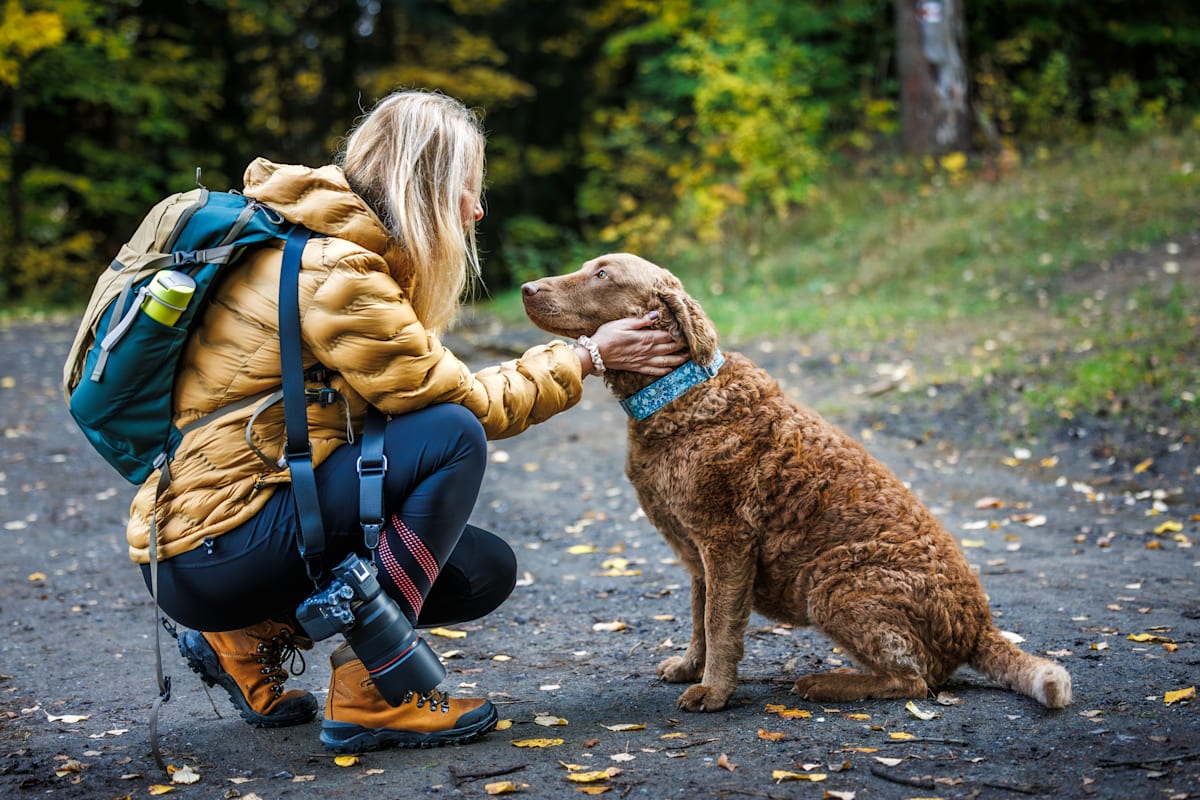
    Chessies are affectionate and loyal with their immediate family, but they can be wary of strangers, other dogs, and smaller pets. They are should not be aggressive or unhappy unless something is terribly wrong.

    Temperament & Behavior: 

    A typical Chesapeake Bay Retriever exhibits happiness and a quiet disposition. They are affectionate and protective. With proper socialization, they are great dogs for a family with children. Chesapeake Bay Retrievers need a fair amount of exercise, as they are traditional gundogs accustomed to working to earn their keep. Some Chessies are standoffish with strangers, but they are warm, loving, and affectionate with their family. They aren’t particularly friendly with other dogs and pets – it may take a while for them to warm up to other pets in the household and around the neighborhood.

    Behavior with Kids: 

    Children familiar to a Chessie are no problem – they are loving and affection dogs. Strangers are suspicious, and it may take some time for your Chesapeake Bay Retriever to warm up to new friends. Always supervise your dog with other kids for their safety and the safety of your pets. Don’t be afraid to show any children (or adults) the proper way to handle a dog.

    Protection: 

    While they aren’t timid, Chesapeake Bay Retrievers are not good bodyguards either. They can be standoffish with strangers, but they are not fierce protectors like many other medium and large dogs. Proper socialization is key to develop any desired behaviors, but a bodyguard is probably a stretch for this breed.

    Life span: 

    On average, Chessies live to be around 10-13 years old.

    Inherited Health Issues: 

    The Chesapeake Bay Retriever is a relatively healthy breed, but some health conditions do occur either through a genetic link or at a greater prevalence in the breed, primarily affecting the eyes and joints. Responsible breeders perform genetic testing and hip evaluations when possible to decrease the incidence of these conditions. They can include the following: Von Willebrand’s disease, cranial cruciate ligament rupture, hip dysplasia, cataracts, entropion, generalized progressive retinal atrophy, retinal dysplasia, exercise induced collapse and degenerative myelopathy.

    Preventive Care: 

    As a larger breed, Chesapeake Bay Retrievers are more prone to developing joint issues, such as hip dysplasia and cranial cruciate ligament rupture. Keeping your dog at a healthy body weight is the best way to prevent extra strain on the joints. Fish oil supplements can be useful to decrease inflammation from arthritis, which can occur secondary to joint conditions.

    Von Willebrand’s disease is a blood clotting disorder that occurs in Chessies through a genetic link. Before any surgical procedures, talk to your dog’s veterinarian about a blood test to determine if this disease is present, as it could lead to more blood loss in surgery.

    Chesapeake Bay Retrievers can easily become overweight if overfed or under-exercised. Feeding your Chessie portion-controlled meals of a balanced diet is crucial to maintaining a healthy body weight. Avoid giving excessive treats or table foods to your dog because this can easily pack on the pounds.

    Daily Consumption

    Average daily consumption for an adult Chessie is 2 to 3 cups

    Energy Level

    Frisky, energetic breed that is always ready for action

    Habits and Exercise: 

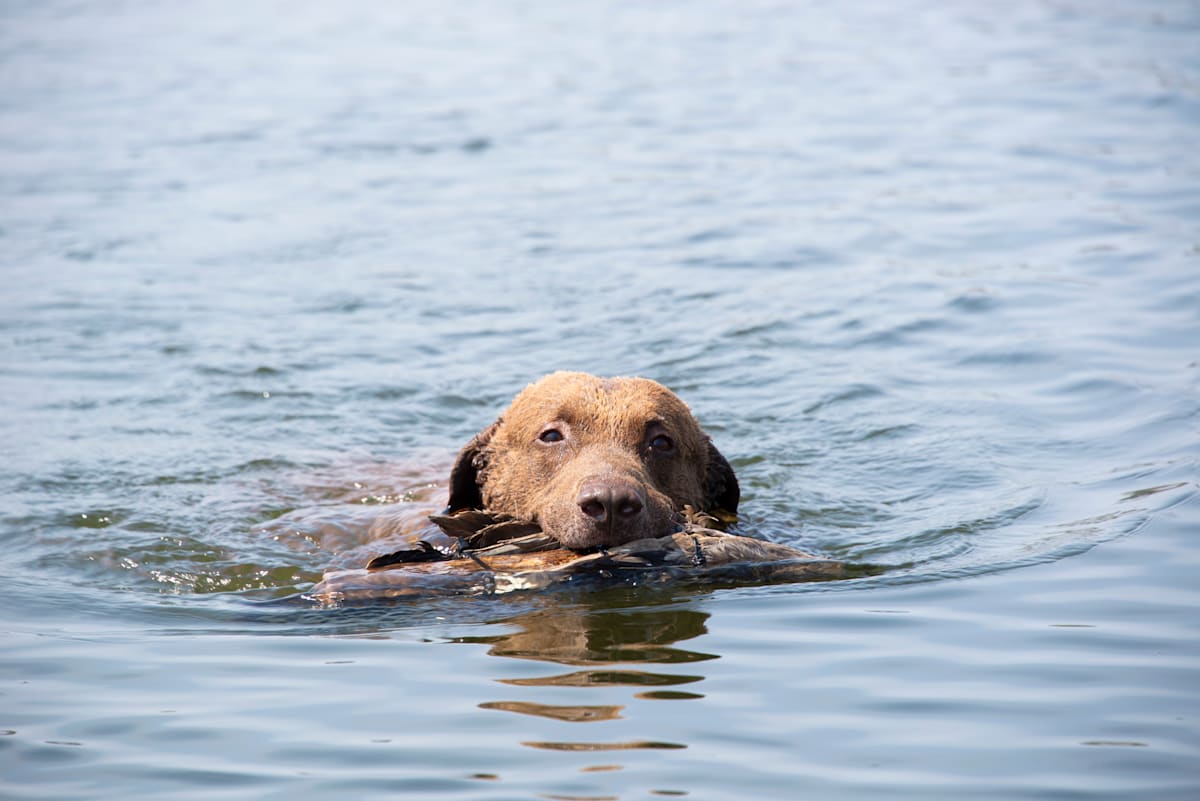
    This breed is a good one for a rural or suburban lifestyle – they need a lot of exercise and room to roam. Chesapeake Bay Retrievers love to swim and play around the water. They are excellent swimmers, and stubborn when it comes to prey. This trait comes in handy when they work as retrievers, but it can be a handful in modern living outside of the hunt.

    Climate

    Their thick fur and strong constitution make the Chessie a versatile breed for outdoor activity. They do better in the cold than the heat, but they can take pretty much anything you throw at them. It’s a good idea to keep an eye on them in extreme conditions, but you can rely on them to be comfortable in almost any weather.

    Cost of Owning

    On average, owning a middle-aged Chessie costs around $1150 per year
    $350
    Vet Care
    $200
    Grooming & Boarding
    $400
    Food & Treats
    $200
    Other

    Unlock exclusive rewards with Vital Care, or enjoy up to 35% off essentials when you subscribe with Repeat Delivery.

    Enjoy exclusive rewards every time you shop. Get member-only deals, points, and special offers designed to help you save more on what your pet needs.

    Never run out of the essentials. Subscribe and get your pet’s favorites delivered on schedule—with up to 35% off plus the convenience of automatic refills.

    Fun Facts

    One of the proudest owners in the annals of Chesapeake Bay Retrievers was General George Armstrong Custer. Other famous Chessie fans were President Theodore Roosevelt, actor Paul Walker from The Fast and The Furious, and actor Tom Felton from the Harry Potter movies.

    One of the proudest owners in the annals of Chesapeake Bay Retrievers was General George Armstrong Custer. Other famous Chessie fans were President Theodore Roosevelt, actor Paul Walker from The Fast and The Furious, and actor Tom Felton from the Harry Potter movies.

    In 1964, the breed achieved official status as the dog of the State of Maryland.

    In 1964, the breed achieved official status as the dog of the State of Maryland.

    The University of Maryland, Baltimore County has a Chesapeake Bay Retriever as their mascot.

    The University of Maryland, Baltimore County has a Chesapeake Bay Retriever as their mascot.

    History

    As a ship slowly sank off the coast of Maryland, two pups were rescued by local sailors. Those dogs, Sailor and Canton, went on to breed with various other dogs (spaniels and hounds) to create a unique breed for Maryland living. Chesapeake Bay Retrievers became an iconic breed in the Chesapeake Bay area and around the state of Maryland. Sailor and Canton were believed at the time to be Newfoundland dogs, but they were probably St. John’s water dogs (Lesser Newfoundland dogs).

    The breed won AKC registration in 1918. Unlike many other early AKC-registered breeds, the Chesapeake Bay Retriever has seen very few changes and amendments to the breed standard. It remains a popular dog in Maryland and throughout North America.

    Read More

    Sponsored