


Related Articles


Feed Your New Puppy Right: What, When & How Much for a Healthy Life
Published on July 18th, 2024
Updated on April 2nd, 2026


Welcoming a new puppy into your home means ensuring their well-being, and a major part of that is providing the right nutrition to keep them healthy and growing strong.
With a wide variety of dog foods available, knowing what, how much, and how frequently to feed your puppy can be challenging. This guide covers what you need to know about feeding a growing pup.
Why your puppy needs specialized nutrition
Providing balanced nutrition is key for your puppy's growth and long-term health. As Dr. Travis Arndt, assistant medical director at the Animal Medical Center of Mid-America, points out, "Puppies have different requirements for amino acids, vitamins and minerals than adult dogs do, specifically calcium and phosphorus. And puppies need more calories to fuel their higher energy level."
Before arriving in your home, your puppy received nutrition from their mother's milk. Now that they are weaned, they need puppy-specific food to ensure they continue to receive the nutrients necessary to grow into a healthy adult.
What food to feed your puppy
While kibble (dry food) and canned (wet food) are the most common options, healthy alternatives like dehydrated, fresh, and frozen food are also available.
Canned and fresh options typically have higher moisture content than kibble or dehydrated food, making it easier for puppies with baby teeth to chew and swallow. If you prefer kibble, try moistening it with water before your young puppy begins eating.
Nutritionally, ensure your puppy receives a suitable mix of protein, fat, calcium, and calories. Since puppies have different needs than adult dogs, a diet formulated for puppies is often the best option. However, "all-life stages" formulas can also be fed from puppyhood into adulthood.
Be sure to ask your veterinarian about puppy food designed for specific breeds. Key differences among breed-based diets come down to calorie density and calcium content.
"Large-breed growth diets are typically lower in calcium and are less energy-dense in order to reduce the risk of overfeeding, which will lead to obesity," says Dr. Arndt. "All puppies should be kept lean throughout growth and beyond to promote health and longevity."
Finally, consider what your puppy was eating before joining your family. If your veterinarian recommends switching diets, slowly introduce the new food to ease potential digestive trouble.
The best way to pick the right food is by talking to your vet. Our trained Petco store partners are happy to guide you based on your vet’s recommendations when you stop by your nearest Petco location.
Shop puppy food at Petco
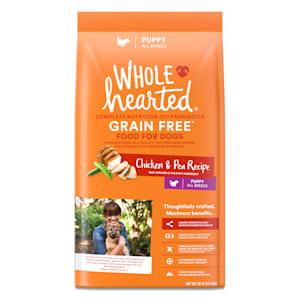
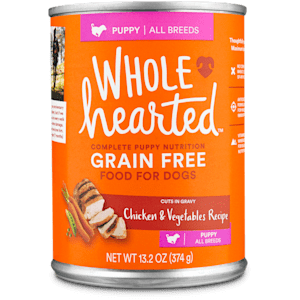
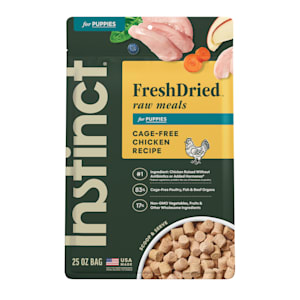
Understanding industry guidelines for food
The FDA requires all dog nutrition labels, including puppy formulas, display a list of ingredients so pet parents can easily compare contents. Look specifically for a statement from the Association of American Feed Control Officials (AAFCO).
While this organization does not regulate, test, approve, or certify pet food, it establishes model nutritional standards to provide safe, nutritious options for your pet.
For puppy food, AAFCO guidelines state that no fewer than 37 nutrients must be present, including 10 amino acids, 12 minerals, and 11 vitamins. AAFCO also recommends that puppy nutrition contain 25–30% protein.
How much to feed your puppy
When determining portion sizes, consider your puppy's size and breed.
"The larger the puppy, the more food is required," says Dr. Arndt. "Because each puppy is an individual and activity levels vary by breed, it is difficult to give a one-size-fits-all recommendation."
While you should always consult your veterinarian, follow these general guidelines:
- Check the packaging: Most products provide feeding guidelines based on age and weight.
- Monitor eating habits: If your puppy leaves food behind, slightly reduce the amount. If they devour the meal and seem hungry, ask your veterinarian about increasing the portion. Note: If your puppy leaves food and is not gaining weight, seek veterinary care immediately.
- Increase cautiously: Some dogs will eat every bite regardless of hunger, so avoid overfeeding.
When to feed your puppy
Establishing a set feeding schedule early on creates consistency, which helps with training and transitioning to living in your home.
Most puppies should finish their food within 15-20 minutes. Dr. Arndt recommends avoiding lots of treats and picking up uneaten food 30 minutes after it has been offered to keep them on schedule.
Most puppies should be fed two to three meals per day. “By 12 weeks of age, that can be tapered back to two meals,” Dr. Arndt says. “Some toy breeds may still require three meals as they are at risk for becoming hypoglycemic.”
Scheduled feedings generally lead to more regular bowel movements, making housetraining easier. You'll also be able to monitor caloric intake more easily.
If you are considering a “free-feeding” model—where food is left out at all times—consult a veterinarian first.
Many veterinarians warn against free-feeding because it can lead to obesity, bone growth problems (from consuming too many calories too soon), food aggression (in multi-dog households), and difficulty monitoring eating habits.
Your puppy will also need separate food and water dishes. Wash and dry both bowls daily to prevent bacteria growth, and ensure access to fresh water at all times. To help establish housetraining habits, take your puppy outside after every meal.
Puppy Feeding Frequency: First-Year Timeline
Structure Update: Converted text to timeline list- Up to 8 Weeks: Puppies are generally weaned off milk. Switch to a puppy formula targeted to their age and breed size. If not fully weaned, mix in puppy milk replacer to ease the transition.
- After 8 Weeks: You can feed your pup up to three times a day. Continue feeding the same brand of puppy food to avoid an upset stomach; if changing foods, do so gradually.
- Growing Phase: While most vets recommend feeding twice a day in this age range, consult your veterinarian for specific guidance as they grow. Small breeds may need to continue feeding at least three times a day to avoid low blood sugar events.
< 8 weeks ˇ

Puppies are generally weaned off milk by the time they are 8 weeks old. At this point, you can switch to a puppy food formula targeted to their age and breed size. If your puppy has not yet been fully weaned, mixing in puppy milk replacer can help ease the transition to puppy food.
8+ weeks ˇ
After 8 weeks, you can feed your pup up to three times a day. Continue to feed the same brand of puppy food as before—sudden changes in food can cause an upset tummy. If you want to change foods, do so gradually.
6–12 months ˇ
While most vets recommend feeding your dog twice a day in this age range, it's best to consult with your veterinarian to receive guidance on how often and how much to feed your puppy as they continue to grow. Many small breeds will need to continue to feed at least three times a day to avoid low blood sugar events.
How to incorporate treats into your puppy's diet
Show your puppy extra love with healthy snacks. Just remember, dog treats should not exceed 10% of your puppy's daily caloric intake. This is particularly important if you have enrolled your puppy in a training class or use treats to train at home.
Choose healthy treats formulated especially for puppies or adult treats that are safe for puppies. Break treats into smaller pieces to decrease total intake and avoid choking risks. Once you've hit the daily limit, extra playtime, belly rubs, and puppy-safe chew toys are excellent ways to show you care without unnecessary calories.
Establishing healthy eating habits early on is one of the best ways to show your love and contributes to their long-term well-being.

Puppy feeding: What to feed, how often, and what foods to avoid?

How much and how often should I feed my new 2-month-old puppy?
Just got a new puppy? What to feed, potty train, and first shots?
My dog just had puppies, she's malnourished. How to feed her & pups?
What's the best food and feeding schedule for my 9-week-old puppy?
What should I feed my new 2-month-old puppy for healthy growth?
What should I feed my 23-day-old puppy and how many times daily?
New puppy owner? How to plan diet & exercise for your young dog?
How many times a day should I feed my 3-month-old puppy?
What's the best food for my puppy and how often should I feed him?









Book an appointment with the pros – our expert vets are here to help.
