









Petco Text Logo
Petco Pet Logo
Jump To Section

    About Sphynx

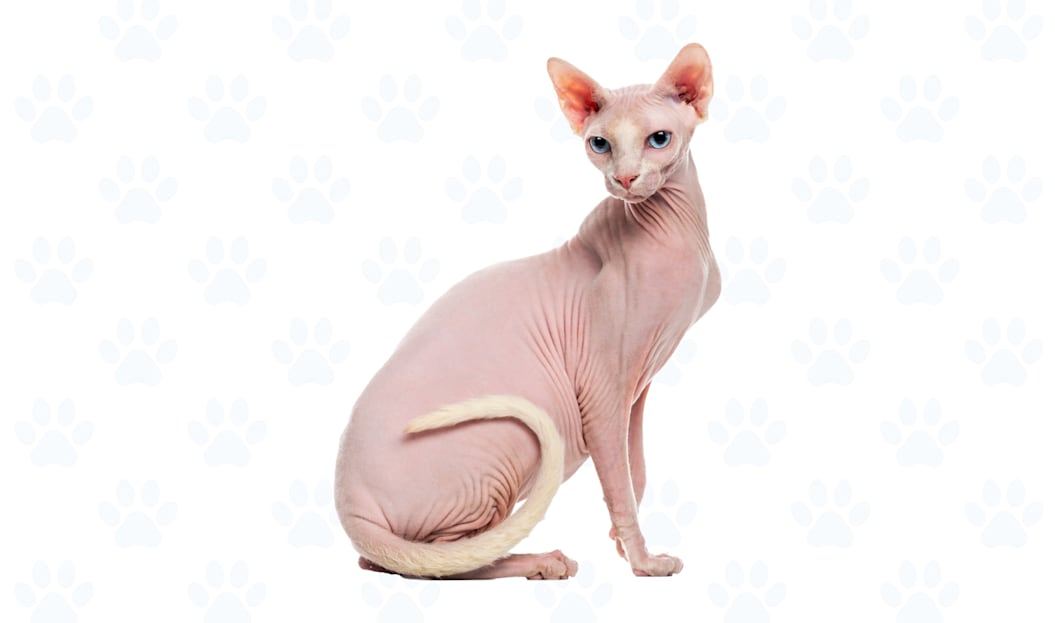
    Aside from their unique, hairless look, the Sphynx has a unique personality as well. This breed is curious and smart, and they are always out to entertain. They make great family pets and love to cuddle, but it’s essential that their owners understand that just because Sphynx are hairless doesn’t mean they don’t require grooming and coat care.

    Origin: Canada

    Sphynx Appearance

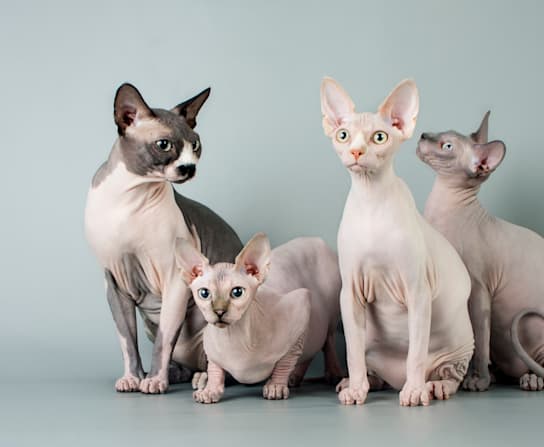
    The Cat Fanciers Association recognizes nearly all feline colors and markings in the breed standard. These are Black, Blue, Red, Cream, Chocolate, Lavender, Cinnamon, Fawn, White, Bi-Colored, and other markings.

    Overall the Sphynx is a loyal, active cat with a hairless or mostly hairless coat. Most examples of the breed have a soft, almost suede-like feel.

    Size & Weight

    An average Sphynx weighs between 6 and 12 pounds.
    Full Grown
    Female
    8 in. / 6 lbs.
    Male
    10 in. / 12 lbs.
    Height bar
    Female Pet
    Height Figure
    Male Pet
    Height is measured up to the shoulders.

    Sphynx Characteristics

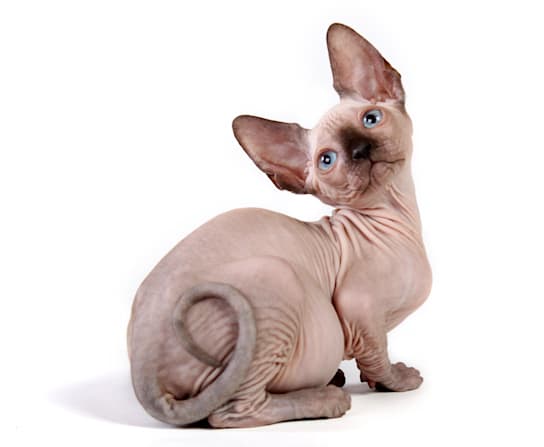
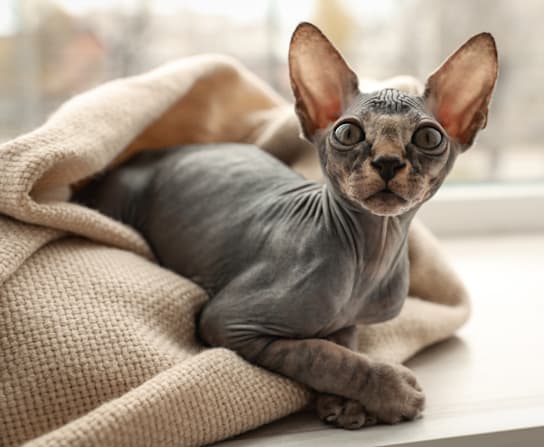
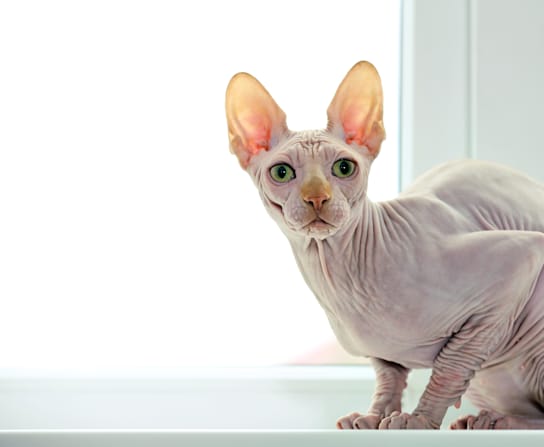
    Although the hairlessness of this breed is what first catches your eye, there’s much more to him than just a suede-like, buttery coat. The Sphynx cat is a medium-sized breed with a wrinkled face, big ears and lemon-shaped eyes. It’s also important to note that a Sphynx is not always completely hairless. There is usually some short hair around their nose and ears, and sometimes their toes and tail. Outside of that, different levels of hairlessness may be visible on different cats. They come in almost any color pattern, and both weather and hormones can play a part in the hair growth in some members of this breed, says Teri Lawrence of the Sphynx cattery.

    Size

    Tiny

    Jumbo

    Weight

    Light

    Heavy

    Shedding

    Minimal

    Abundant

    Coat Length

    Short

    Long

    Grooming Frequency

    Occasional

    Frequent

    Living Space

    City apartment

    Ranch

    Exercise

    Couch potato

    Bring it on!

    Climate

    Warm

    Cold

    Personality

    Antisocial

    Outgoing

    Behavior with Kids

    Always monitor

    Babysitter

    How to Care for a Sphynx

    The Sphynx is a relatively needy cat, and they can be quite vocal at times, as well. This is a breed that requires a lot of attention, and will most often be found following you around, riding on your shoulder or lying right next to you in bed or on the couch. They don’t do well when they are left alone for long periods of time.

    Coat & Grooming: Known mostly for its hairlessness, the Sphynx has a suede-like coat that, while unnecessary to comb, does require regular bathing. The Sphynx coat has a tendency to become oily, and baths help prevent clogged pores and overall greasiness. It’s also important to dry your Sphynx off immediately after a bath to prevent their skin from getting chapped. The Sphynx is also prone to ear infections, so it’s important to be diligent about cleaning their ears to remove excess wax.

    Shedding: Since they don’t have traditional fur, the Sphynx doesn’t shed like a regular cat does.

    Personality: This is a highly social and curious breed, and they love company as well as a good cuddle.

    Temperament & Behavior: Sphynx lovers will tell you that living with a cat of this breed is unlike anything else. In fact, “you will often hear that this breed is more like a dog than a traditional cat,” says Lawrence. The Sphynx is a pure people lover, highly sociable and entertaining. They get along well with strangers, kids and other pets, as long as they are properly cared for (their hairless coats need lots of attention!) and provided with lots of cuddles.

    Behavior with Kids: The Sphynx is a gentle and loving cat, and they love to play and be around people.

    Life span: On average, Pomeranians live to be about 12-16 years old.

    Inherited Health Issues: The Sphynx is generally a healthy cat, however, may develop certain health conditions such as hypertrophic cardiomyopathy (HCM) and a neurological disease called hereditary myopathy. Sphynx cats may also develop a dermatological condition known as Urticaria pigmentosa.

    Preventive Care: Cats commonly develop renal disease later on in life so it is important to monitor blood values on a regular basis when your cat reaches is middle to senior aged. Dental disease is common in cats so it is important to ensure regular dental cleanings (once yearly after 12 months of age) are performed.

    Feed a high quality diet that is also age appropriate. Ensuring your cat is being fed the appropriate amount based on the amount of calories per cup / can is important in preventing obesity.

    Daily Consumption: An adult Sphynx eats 1/4 to 1/2 cup of dry food per day.

    Energy Level: Frisky, energetic breed that is always ready for action

    Exercise: The Sphynx is a breed that loves to entertain and keep people happy. They excel at interactive games and, because of their inquisitive nature, can often be seen “holding” objects that interest them.

    Climate: The hairless Sphynx prefers warmer climates so they don’t get too cold.

    Cost of Owning

    On average, owning a middle-aged Pomeranian costs around $800 per year
    $300
    Vet Care
    $250
    Grooming & Boarding
    $250
    Food & Treats
    $250
    Other

    Unlock exclusive rewards with Vital Care, or enjoy up to 35% off essentials when you subscribe with Repeat Delivery.

    Enjoy exclusive rewards every time you shop. Get member-only deals, points, and special offers designed to help you save more on what your pet needs.

    Never run out of the essentials. Subscribe and get your pet’s favorites delivered on schedule—with up to 35% off plus the convenience of automatic refills.

    Your love story starts here.

    Find adoptable pets near you with a simple search.

    Fun Facts

    The Sphynx is the product of a spontaneous natural mutation.

    The Sphynx is the product of a spontaneous natural mutation.

    Although the Sphynx doesn’t have a traditional fur coat, they are still not considered hypoallergenic, since they still produce dander, which is what causes allergies.

    Although the Sphynx doesn’t have a traditional fur coat, they are still not considered hypoallergenic, since they still produce dander, which is what causes allergies.

    The Sphynx isn’t always totally hairless — there are different degrees of hairlessness for each individual cat.

    The Sphynx isn’t always totally hairless — there are different degrees of hairlessness for each individual cat.

    The Sphynx is a favorite amongst celebrities, with owners like Lady Gaga and Steven Tyler making their love of the breed well known.

    The Sphynx is a favorite amongst celebrities, with owners like Lady Gaga and Steven Tyler making their love of the breed well known.

    History

    Although the first known hairless cat was discovered about a century ago, the modern-day Sphynx began its journey in 1966, when a domestic cat gave birth to a hairless kitten in Toronto, Canada. Since then, breeders in North America and Europe have helped spread the breed, usually by mixing a spontaneously hairless cat with a Rex.
    Read More

    Sponsored