Petco Text Logo
Petco Pet Logo
Author Profile Photo
Written by Cheryl Lock

About Himalayan

If you’re in the market for a sweet cat who prefers a cuddle to energetic play, the Himalayan may just be the right breed for you. Affectionate without being demanding and chatty without being too loud, Himalayans enjoy nothing more than relaxing with their people.


Origin: United States, Great Britain   Other Names: Himmy

Petco Pet Education Center

General appearance

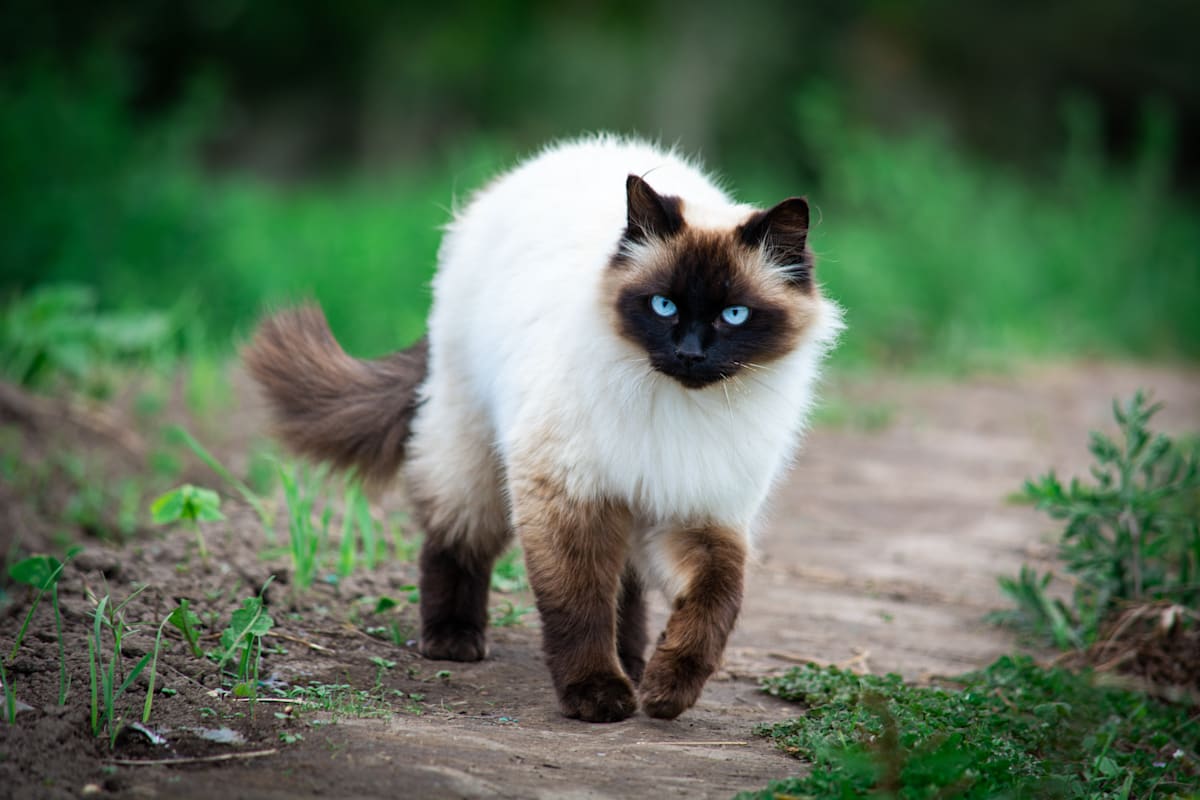
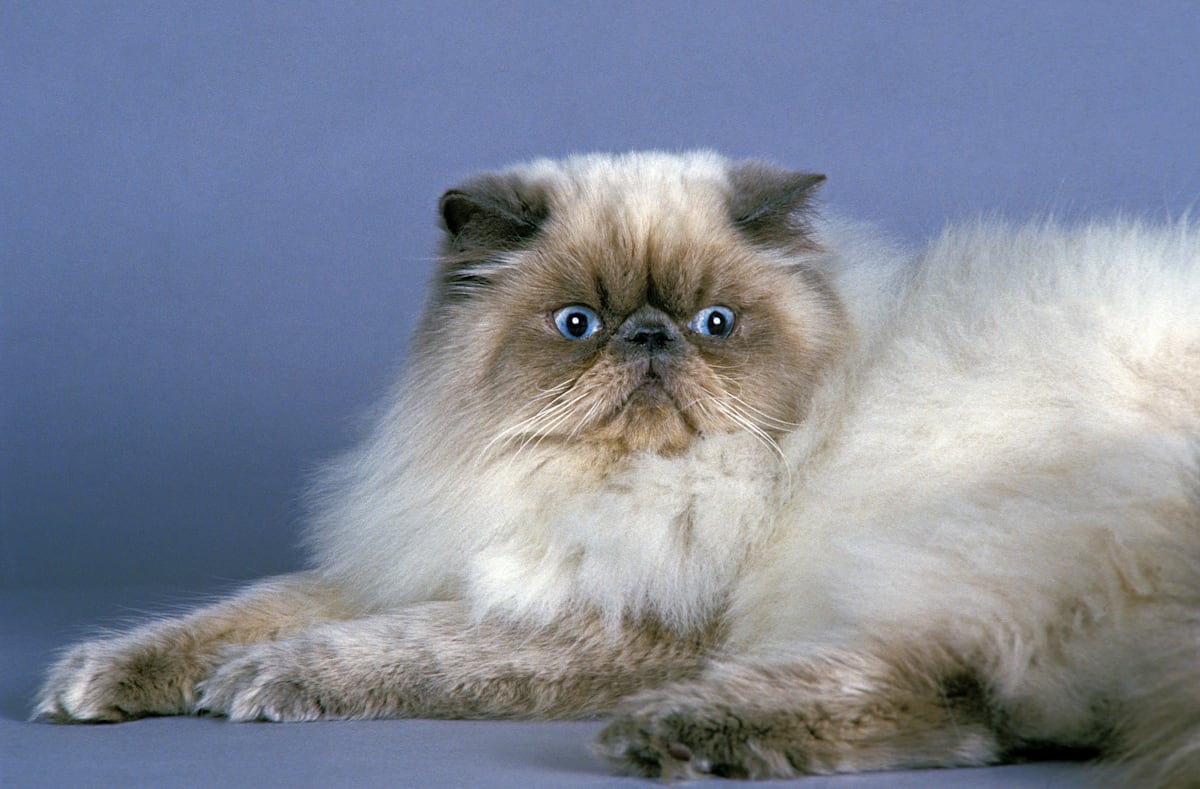
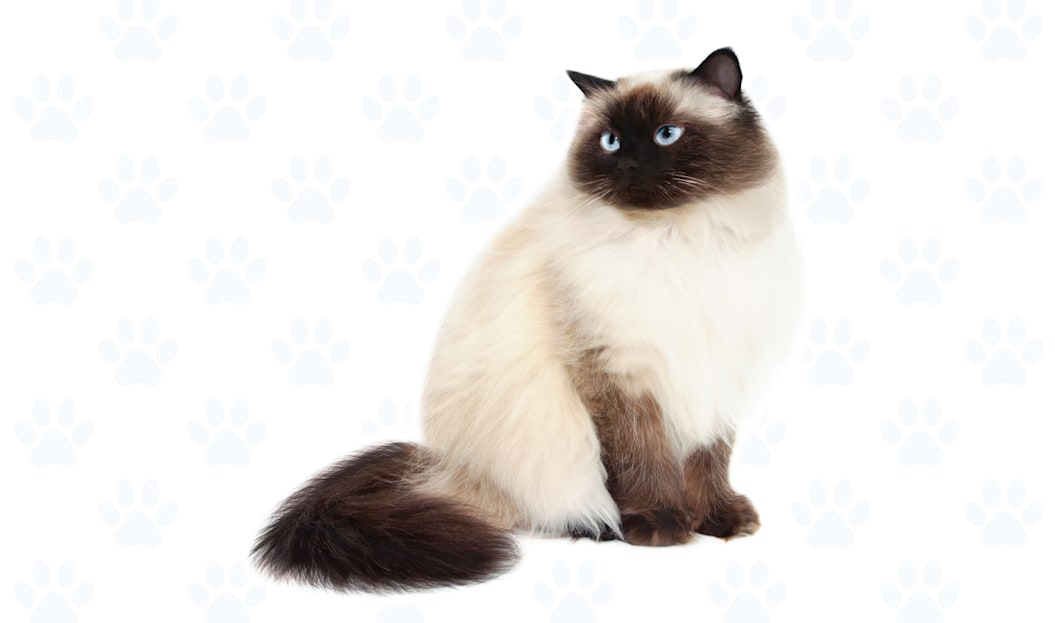
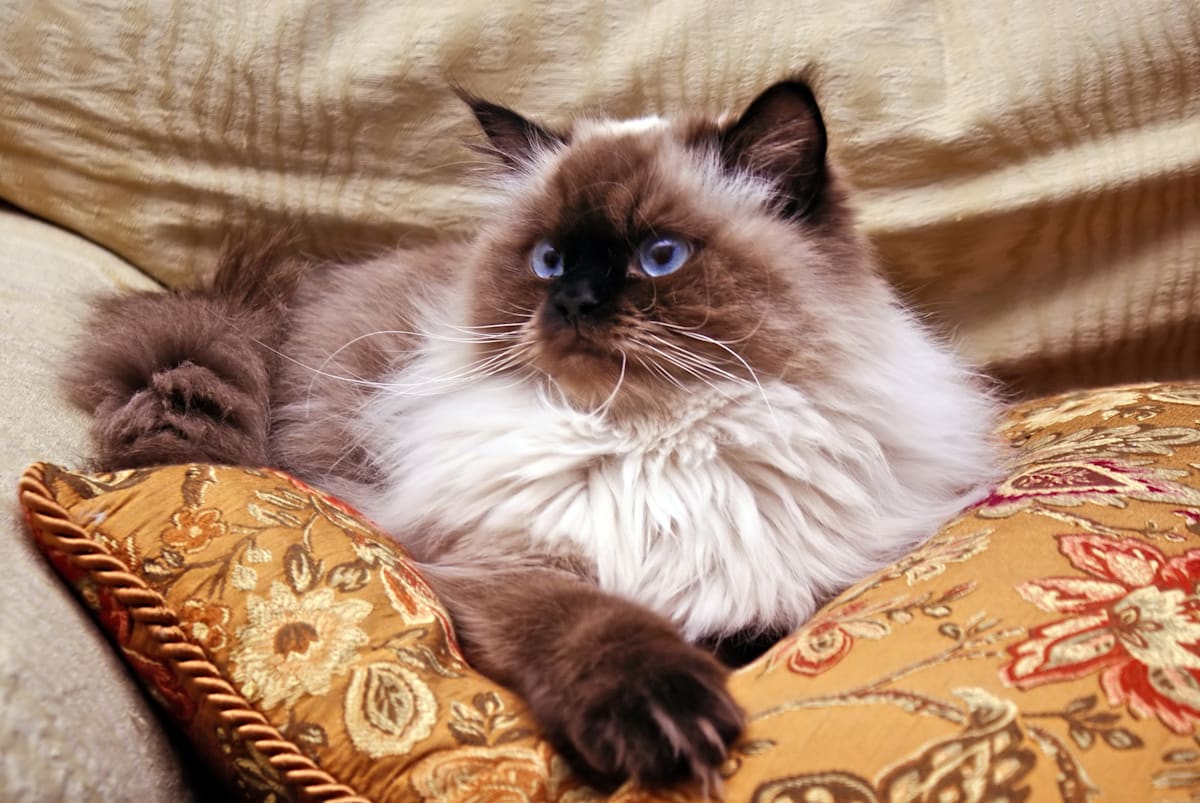
The Himalayan is a solid cat with a soft appearance. “Their coats are generally uniform in color, with subtle shading on the body and darker shaded ‘points’ on the face, ears, paws legs and tail,” says Jackie Rose, a former Himalayan and Persian breeder.


Himalayans come pointed in chocolate, seal, lilac, red, cream, blue-cream tortie, blue, fawn, silver or cinnamon colors that can also include lynx (tabby points) in those colors. “As they mature, the body shading may darken,” Rose adds.


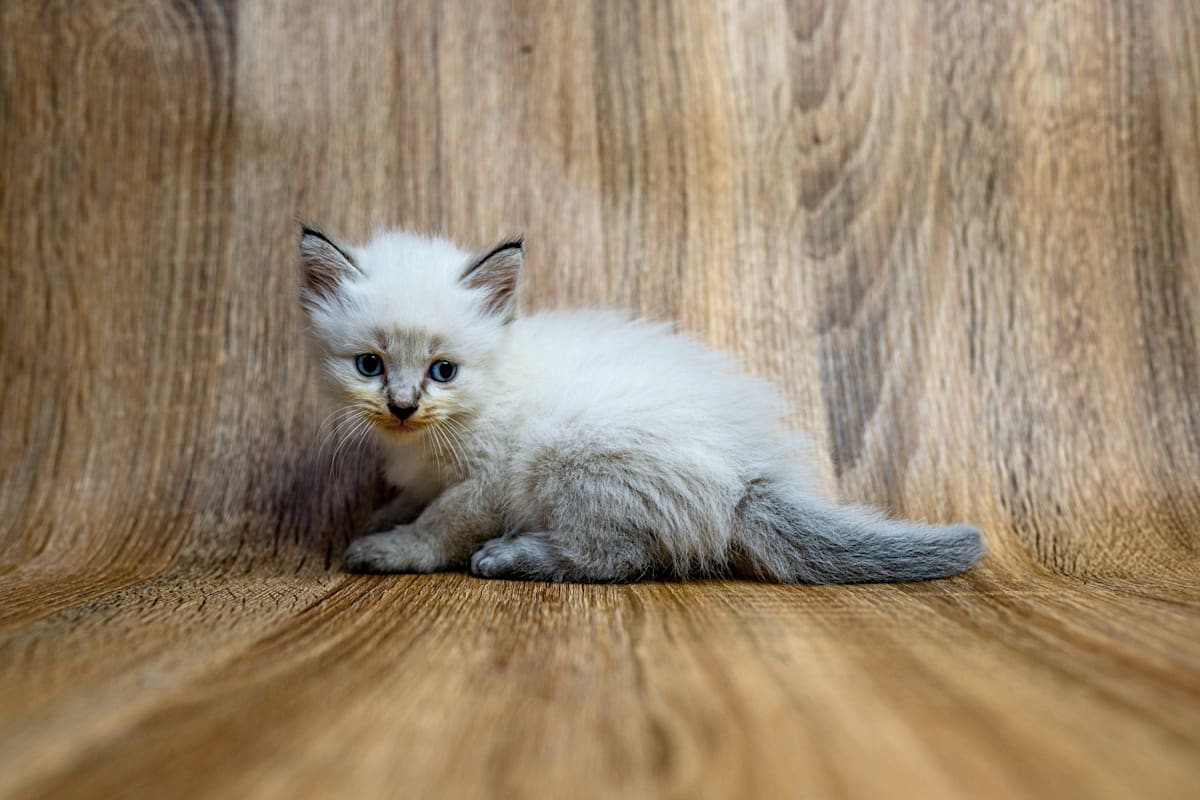
Similar to Siamese cats, Himalayan kittens are born completely white in color. “Like the Siamese, Himalayan’s have the gene that ‘restricts’ the hair follicle to produce color pigment if over a certain temperature,” says Rose. “As kittens are all warm when in utero, they are born white. The extremities — face, ears, legs, paws and tail — are cooler than the body and thus start producing/showing color in those areas.”


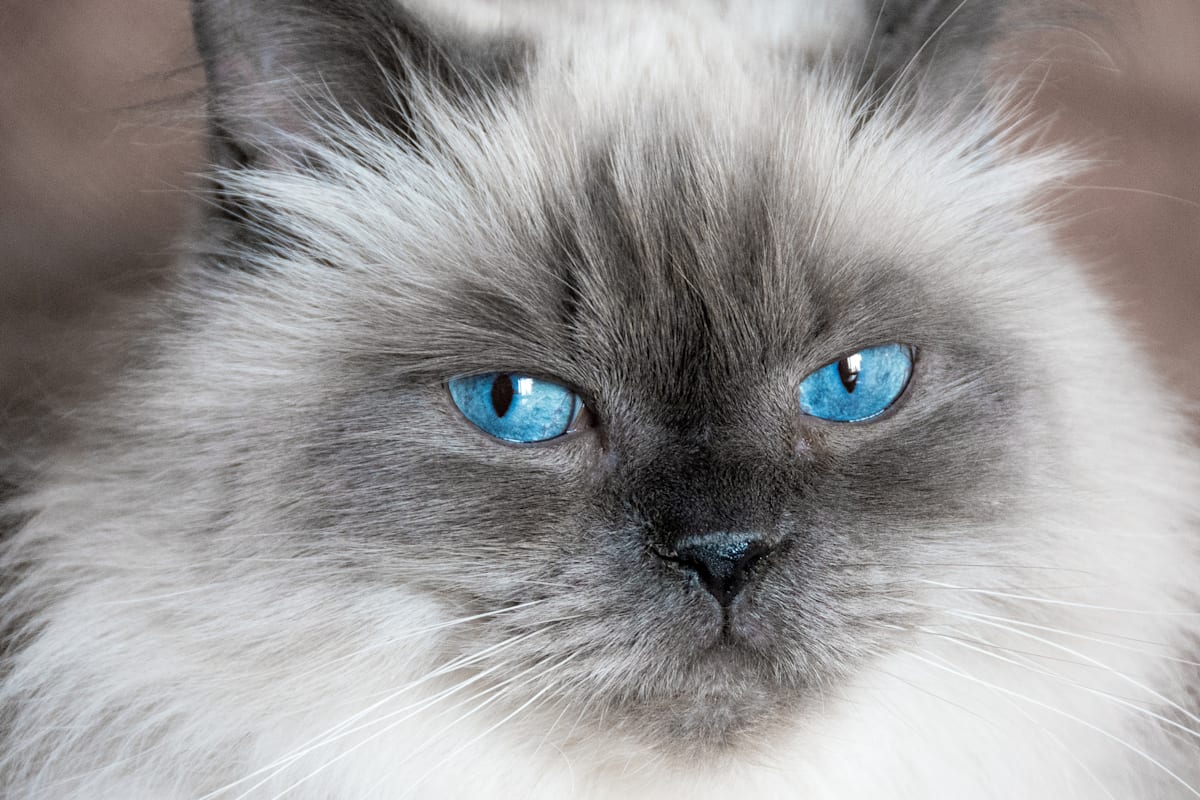
Because of their big bones and long, dense coats, Himalayans can also appear quite large. They also have large, round blue eyes and the appearance of a flat face when viewed straight on, as well as small ears and a snub nose.
Size & Weight

The Himalayan is a medium to large breed, typically weighing between 8 and 12 pounds. They measure between 10 and 12 inches at the shoulder.

Full Grown
Female 10 in. / 10 lbs.
Male 12 in. / 12 lbs.

Height is measured up to the shoulders.

Female Size Chart
Height Figure
Male Size Chart
6 ft. 4 ft. 2 ft.

Cost of Owning

The average cost of owning an adult Himalayan cat is $1050 per year.
$250
Vet Care
$300
Grooming & Boarding
$250
Others
$250
Food & Treats

Characteristics

Temperament & Behavior

Himalayans are very people-oriented, but they aren’t overly needy. Their calm and collected personalities make them a great match for quieter households, although they are also known to exhibit bursts of kitten-like energy and enthusiasm from time to time, especially if met with grins and encouragement from their human, Rose adds. Mostly though, you’ll be more likely to find your Himalayan lounging or sitting next to you on the couch rather than running around and playing. The Himalayan is also a very adaptable breed and they can do well with change.

Barking: Understanding your cat

Training

Habits and Exercise

The Himalayan is a smart breed that occasionally likes to play games — especially those that involve puzzles with food. Sweet and docile, these cats prefer affection over all else and they flourish in a home that’s equally as laidback and serene.


Since the Himalayan isn’t likely to exercise heavily on its own, it’s important for owners to provide daily entertainment and movement to keep this breed from gaining too much weight.

Energy Level

Not interested in exercise, would rather doze the day away

Energy Level

Nutrition

Since Himalayans are happier sitting in a sunny windowsill than running laps through the house, they have a greater propensity to become overweight than some other breeds. Himalayan owners should take care to feed their cat portion-controlled meals of a high quality, balanced diet. Too many treats coupled with their couch potato habits can quickly pack on unnecessary weight.

Daily Consumption

An adult Himalayan eats 1/3 to 1/2 cup of dry food per day

Daily Consumption

Preventive care

As with all cats, Himalayans should be examined by a veterinarian once or twice per year. Subtle changes may be apparent during this physical exam that could lead to the earlier diagnosis and treatment of a health problem. Himalayan owners should continue to monitor their cat closely at home for any sudden or gradual changes.


The Himalayan’s characteristic flat face and snubbed nose is due to brachycephalic airway syndrome. With this condition, many cats experience a combination of narrow nostrils, a small trachea (windpipe), elongated soft palate or everted laryngeal saccules, which can partially obstruct the trachea. These airway abnormalities can lead to breathing difficulty, particularly in hot environments or during strenuous activity. Obesity can also exacerbate these changes, so Himalayan owners should work to keep their cat at a healthy body weight and avoid temperature extremes.

Inherited health issues

As with all breeds, certain health conditions can occur in Himalayans through inheritance or at an increased frequency within the breed. These conditions may include, but are not limited to, the following: Pericardial effusion, Fading kitten syndrome and Polycystic kidney disease.

Life Span

Healthy Himalayan cats may live to be between 10 and 15 years.

Life Span

Did you know?

  • While the Himalayan is viewed as its own separate breed by some cat registries, others consider it to be a variety of the Persian breed.
  • The Himalayan is a very intelligent breed and can be responsive to its owners’ moods and emotions.
  • The breed originated as an intentional crossing of a Persian and a Siamese cat.
  • All Himalayan kittens are born white.

Coat and Grooming

The Himalayan is known for its gorgeous long fur, which requires daily grooming to remain clean and free from mats. Bathing your Himalayan at least once a month can be helpful since that long fur can pick up plenty of things from the floor.


Some Himalayans have a problem with excessive tearing, so washing your cat’s face daily can minimize unwanted staining. Some owners also take their Himalayan to a groomer in the summer for a “lion cut” to help keep their cat cooler in the hot weather, Rose adds.

Coat length

Long

Coat length

Grooming

Frequent

Grooming

Shedding

The Himalayan’s long coat requires daily grooming to minimize shedding. However, even with daily maintenance the breed is a heavy shedder.

History

The Himalayan breed was first developed in 1931 by Virginia Cobb and Dr. Clyde Keeler without much fanfare. In 1950, a man named Ben Borrett began working on a similar breeding program in Canada. However, it wasn’t until a woman named Marguerita Goforth began her breeding program to create a Persian-type cat with Siamese markings that the breed finally began gaining popularity.


In 1957, the Himalayan was recognized for Championship status by the Cat Fanciers Association, making it a relatively new breed.