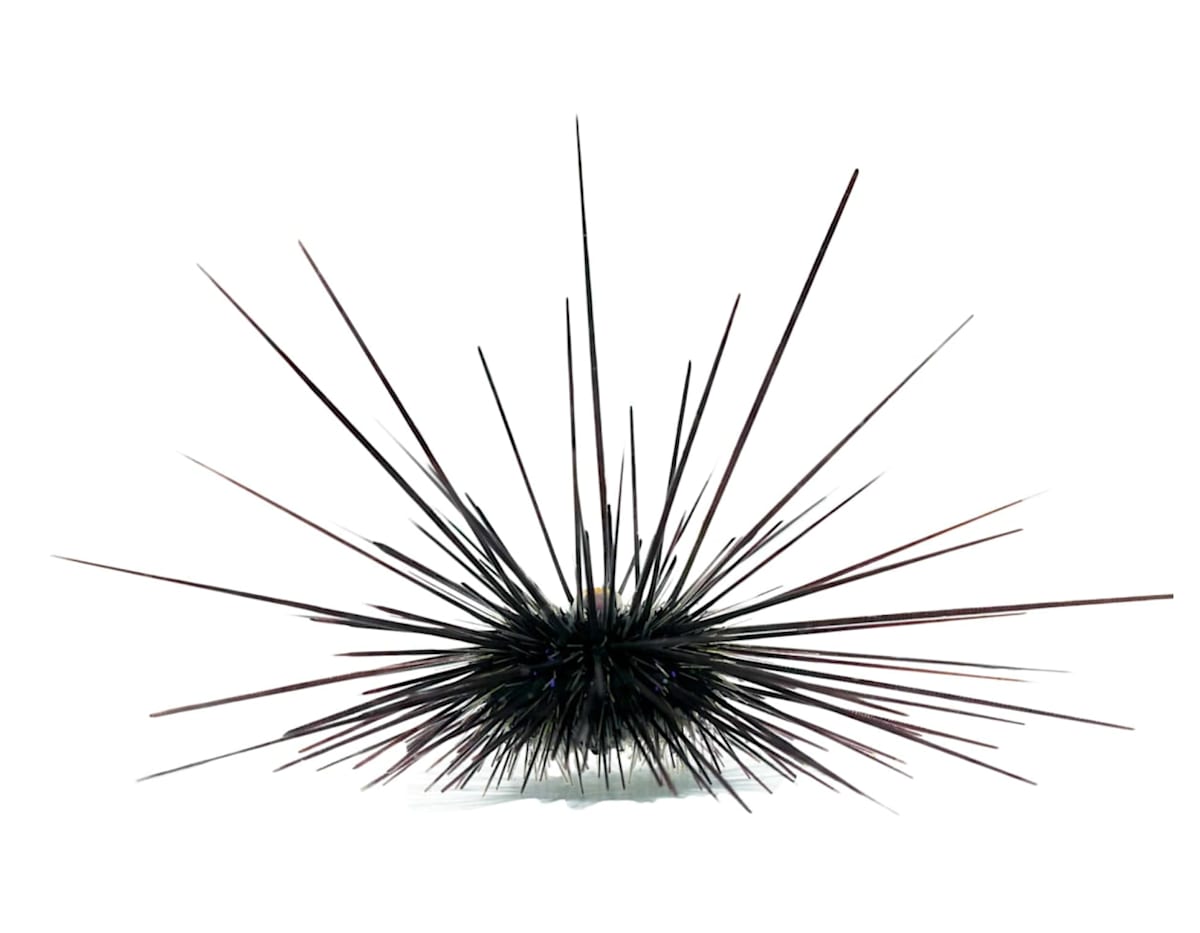
This care sheet covers a variety of urchins, including:
- Pincushion urchin
- Black longspine urchin
- Pencil urchin
- Shortspine urchin
- Rose pink urchin
- Rock boring urchin
- Tuxedo urchin
- Hairy urchin
Typical appearance and behavior
- Sea urchins come in a variety of sizes and colors; some species have long, thin spines, and others have short thick bumps or protrusions
- Sea urchins have tiny claws on the surface of their shells in between their spines; these are thought to help urchins clean parasites and algae off their shells
- Sea urchins have mouths with five teeth underneath their bodies; they feed using these teeth to grab and bite food and bore into rock
- Sea urchins are primarily herbivores and spend most of their time grazing on algae and undersea vegetation, but they have also been known to feed on plankton, sponges, sea stars, mussels, sea cucumbers, carrion and polychaete (Bristle) worms.
- Sea urchins are relatively easy to maintain as long as their tanks have stable temperature, specific gravity and pH
- Because of their sharp teeth, urchins are not recommended for acrylic aquariums
Characteristics
| Care difficulty | Beginner to advanced, depending on species |
| Average Life Span | Depends on species |
| Average adult size | Depends on species |
| Diet | Herbivorous |
| Minimum habitat size | 10+ gallons, depending on species |
| Water temperature | 72–78°F; urchins prefer cooler temperatures |
| Specific gravity | 1.023–1.025 |
Habitat
Habitat size
A minimum of 10+ gallons is recommended for urchins; however, water conditions can change rapidly in smaller water volumes. A larger aquarium is recommended for larger urchin species.
Building your habitat
- Water health -
- Provide proper filtration to ensure optimal water quality to help maintain health
- Provide slow to moderate water circulation, depending on species, to mimic water currents found in the urchin's natural habitat
- Stable water quality (pH, ammonia, nitrate, nitrite) and water temperature are critical to the health of aquatic life
- If you are unsure of your water quality, bring a sample to Petco for free testing
- A protein skimmer can help maintain great water quality and high dissolved oxygen levels
- An aquatic heater should be used to stabilize water temperature, ensuring it does not fluctuate more than +/-2 degrees in a 24-hour period
- The specific gravity should remain stable; do not allow specific gravity to fluctuate more than +/-0.001 in a 24-hour period
- Provide rocks and décor for hiding places
- Live rock can provide a natural food source while also enhancing biological filtration
Feeding
- Urchins will primarily consume algae; provide dried algae sheets, spinach or other greens if algae are lacking
- Urchins will also consume leftover foods and decaying matter
- Vitamins or trace minerals can be beneficial to all marine inverts
Things to remember when feeding your urchin:
- Feeding depends on your aquarium’s condition; supplemental feeding should be offered if sufficient algae is not available
Urchin care
- Water care: Maintaining great water quality with regular water changes and adequate filtration is important to help keep your urchin healthy
- Daily: Check filter, water temperature, specific gravity and other equipment
- Weekly: Check water quality at least once a week.
- Monthly: Change 10–25% of the total volume of water every 2–4 weeks, or as needed; change filter media monthly
- Copper-based medications are toxic to marine inverts
- Avoid overcrowded conditions, which are a major cause of stress and disease
Where to buy
In store and online. Urchins are available for purchase at Petco online and in store. If visiting your local location, please call ahead to check availability.
Supplies
- Appropriately sized aquarium
- Appropriate food, dry and frozen
- Décor
- Water conditioner
- Marine aquarium salt
- Filter
- Water test kit
- Full-spectrum lighting
- Net
- Thermometer
- Protein skimmer
- Marine substrate
- Heater
- Refractometer
- Live rock
Tank mates
- Angelfish
- Anthias
- Basslets
- Blennies
- Butterflyfish
- Clownfish
- Damsels
- Dartfish
- Dragonets
- Cardinals
- Filefish
- Foxface/rabbitfish
- Gobies
- Hawkfish
- Lionfish
- Pseudochromis
- Reef-safe wrasse
- Tangs
Introduce new inhabitants to the aquarium gradually.
Health
Signs of a healthy urchin
- Bright, even coloring
- All spines intact
- Active feeding
Red flags (if you notice any of these signs, contact your local aquatic specialist or aquatic veterinarian)
- Loss of color or appetite
- Missing or deteriorating spines
- Open sores or dissolving tissue
Common health issues
Little is known about diseases that affect invertebrates; as long as environmental conditions and food supplies are adequate, invertebrates are fairly resistant to disease.
FAQs
- What do urchins eat? Urchins are primarily herbivores who feed on algae, but they are also opportunistic feeders and will consume leftover foods, detritus and carrion.
- How do urchins eat? Urchins use their beak-like mouth, which is fitted with five sharp teeth, to scrape and consume algae.
- How do urchins obtain oxygen? Most urchins do possess gills, but their gills do not provide most of their oxygen needs; instead, oxygen and gas exchange is done within their tube feet.
- How does temperature affect urchins? Urchins live in a variety of water temperatures, but water that is too cold or too warm can cause issues with reproduction and even mortality.
- How do urchins move? Urchins use their hundreds of tube feet to propel themselves.
Notes and resources
Ask a Pet Care Center associate about Petco's selection of products available for the care and happiness of your new pet. All products carry a 100% money-back guarantee.
Because all aquatic life are potential carriers of infectious diseases, such as atypical mycobacterium and salmonella, always wash your hands before and after handling your aquatic life or habitat contents to help prevent the potential spread of disease.
Pregnant women, children under the age of 5, senior citizens and people with weakened immune systems should contact their physician before purchasing or caring for aquatic life and should consider not having aquatic life as a pet.
Go to the Centers for Disease Control at cdc.gov/healthypets for more information about aquatic life and disease.
The information on this care sheet is not a substitute for veterinary care. If you need additional information, please contact your veterinarian as appropriate.