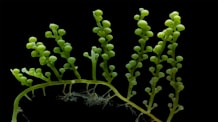


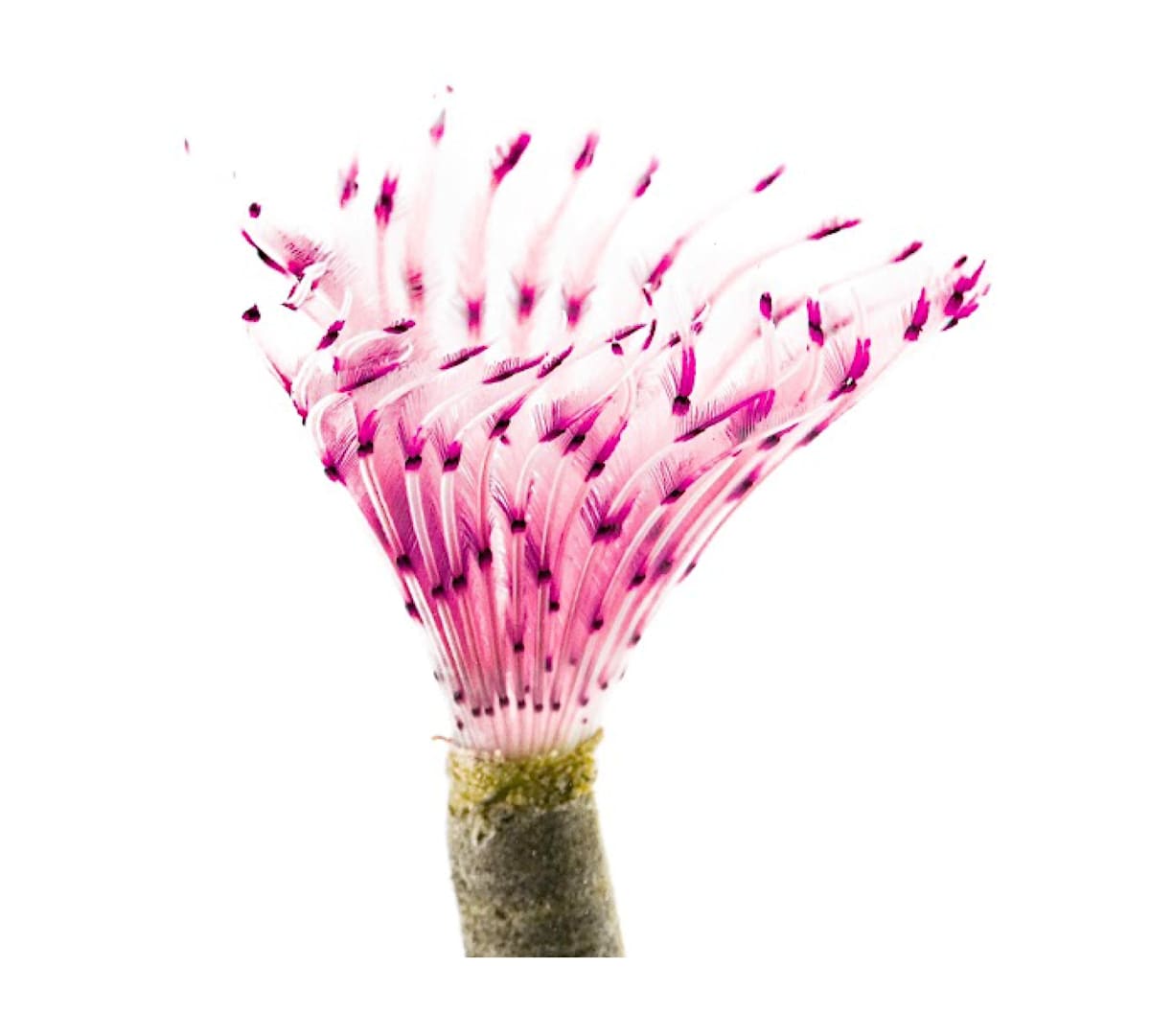
This care sheet covers a variety of feather dusters, including:
- Feather duster
- Colored feather duster
- Coco worm
- Cluster duster
Typical appearance and behavior
- Feather dusters are peaceful filter feeders who can be kept singly or with other annelids
- Feather dusters come in many beautiful colors, depending on species, and can live 1–2 years or more with proper care
- Feather dusters prefer average current so that plankton can be brought to them; they then use their feathers to trap the plankton for food
- Feather dusters can lose their feathers for a variety of reasons, including stress, malnourishment and getting ready for mating season
- Most feather dusters create their leathery tube homes using a secretion and items like detritus, sediment and sand
- Coco worms secrete a hard calcium carbonate to construct their tube
- Cluster duster worms tend to grow in colonies
Characteristics
| Care difficulty | Beginner to advanced, depending on species |
| Average Life Span | Depends on species |
| Average adult size | up to 10 inches, depending on species |
| Diet | Omnivorous |
| Minimum habitat size | 10+ gallons, depending on species |
| Water temperature | 74–80°F |
| Specific gravity | 1.023–1.025 |
Habitat
Habitat size
A minimum of 10+ gallons is recommended for feather dusters; however, water conditions can change rapidly in smaller water volumes.
Building your habitat
- Water health
- Provide proper filtration to ensure optimal water quality to help maintain health; slow to moderate water circulation, depending on species, should be provided to mimic water currents found in the feather duster's natural habitat
- Stable water quality (pH, ammonia, nitrate, nitrite) and water temperature are critical to the health of aquatic life
- If you are unsure of your water quality, bring a sample to Petco for free testing
- A protein skimmer can help maintain great water quality and high dissolved oxygen levels
- An aquatic heater should be used to stabilize water temperature, ensuring it does not fluctuate more than +/-2 degrees in a 24-hour period
- The specific gravity should remain stable; do not allow specific gravity to fluctuate more than +/-0.001 in a 24-hour period
- Provide sand or coral rubble substrate to assist with tube creation
- Live rock can provide a natural food source while also enhancing biological filtration
- Provide full-spectrum lighting
Feeding
A well-balanced feather duster diet consists of:
- Live, floating microplankton
- Supplemental feedings of phytoplankton and zooplankton should be provided
- Vitamins or trace minerals can be beneficial to all marine inverts
Things to remember when feeding your feather duster:
- Feed supplements 3–4 times per week by dispersing food just upstream with a pipette or straw
Feather duster care
- Maintaining great water quality with regular water changes and adequate filtration is important to help keep your feather duster healthy
- Daily: Check filter, water temperature, specific gravity and other equipment
- Weekly: Check water quality at least once a week
- Monthly: Change 10–25% of the total volume of water every 2–4 weeks, or as needed; change filter media monthly
- Coco worms require proper alkalinity and calcium levels to grow their tubes
- Copper-based medications are toxic to marine inverts
- Avoid overcrowded conditions, which are a major cause of stress and disease
Where to buy feather dusters
Various feather dusters are available for purchase at Petco online and in store; availability varies by location. If visiting you local Petco Pet Care Center location, please call ahead to check availability.
Supplies
- Appropriately sized aquarium
- Appropriate food, dry and frozen
- Décor
- Water conditioner
- Marine aquarium salt
- Filter
- Water testing kit
- Full-spectrum lighting
- Net
- Thermometer
- Protein skimmer
- Marine substrate
- Heater
- Refractometer
- Live rock
Tank mates
- Clownfish
- Damsels
- Reef-safe wrasses
- Gobies
- Dartfish
- Blennies
- Peaceful invertebrates
Health
Signs of a healthy feather duster
- Bright, even coloring
- Extended tentacles and tube are intact
Red flags (If you notice any of these signs, contact your veterinarian)
- Loss of color or appetite
- Limp plume of tentacles
- Missing or deteriorating tentacles
- Dissolving tissue
- Missing crown
Common health issues
Little is known about diseases that affect invertebrates. If environmental conditions are stable and food is provided, invertebrates are fairly resistant to disease.
FAQs
- Where can I buy a feather duster? Various feather dusters are available for purchase at Petco online and in store; availability varies by location. If visiting your local location, please call ahead to check availability.
- What do feather dusters eat? Feather dusters are filter feeders and will feed on floating microplankton within the aquarium, but they should also be provided supplemental feedings of phytoplankton and zooplankton.
- What eats feather duster worms? Many species that are not reef safe, such as certain butterflyfish, large and small angelfish, triggers and predatory invertebrates—like decorator crabs and peppermint shrimp—can feed on feather duster worms.
Notes and resources
Ask a Pet Care Center associate about Petco's selection of products available for the care and happiness of your new pet. All products carry a 100% money-back guarantee.
Because all aquatic life are potential carriers of infectious diseases, such as atypical mycobacterium and salmonella, always wash your hands before and after handling your aquatic life or habitat contents to help prevent the potential spread of disease.
Pregnant women, children under the age of 5, senior citizens and people with weakened immune systems should contact their physician before purchasing or caring for aquatic life and should consider not having aquatic life as a pet.
Go to the Centers for Disease Control at cdc.gov/healthypets for more information about aquatic life and disease.
The information on this care sheet is not a substitute for veterinary care. If you need additional information, please contact your veterinarian as appropriate.