


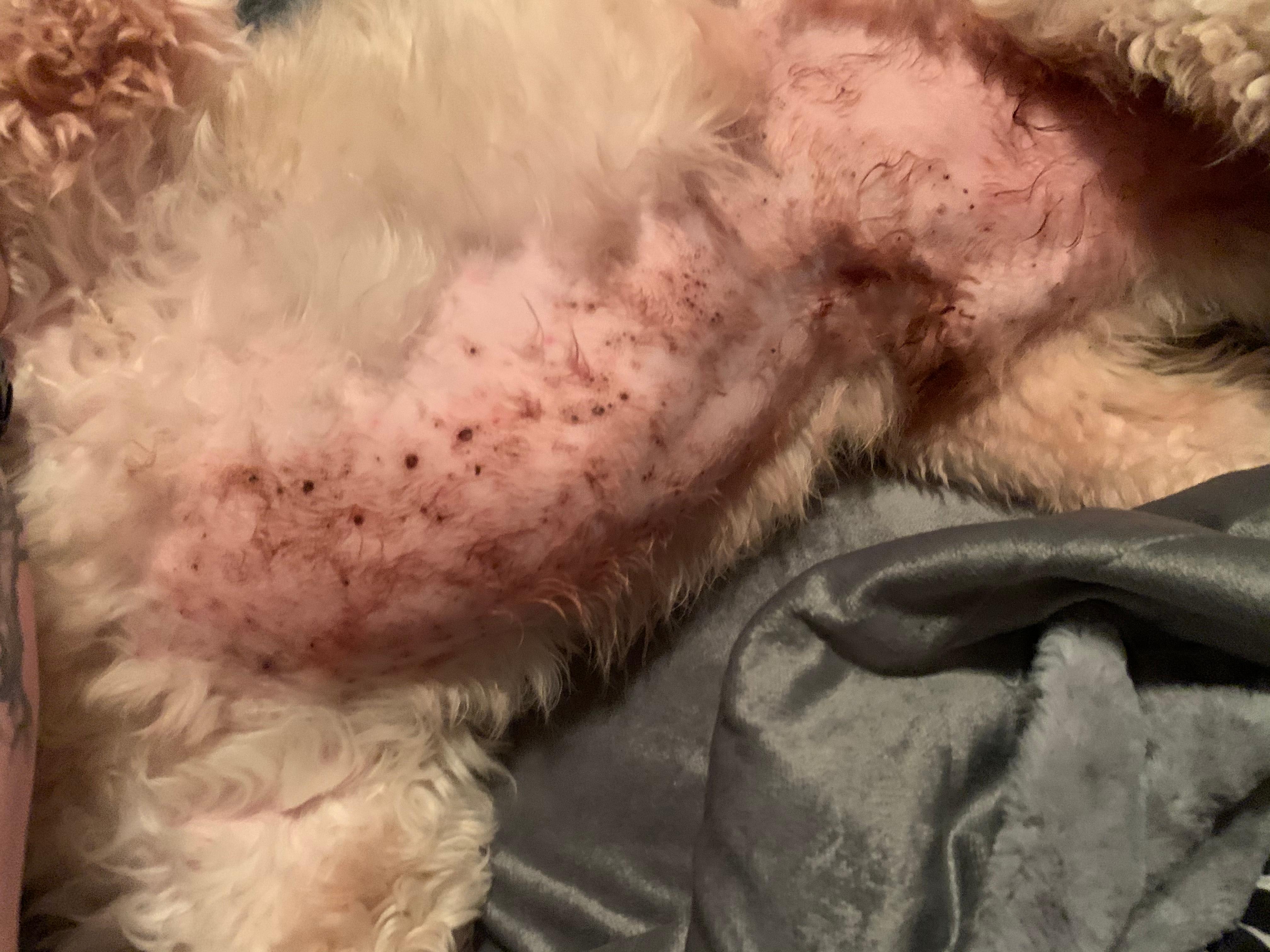
What are these spots on my dog's belly and how can I treat them?
Updated On September 23rd, 2025
Pet's info: Dog | Goldendoodle | Male | neutered | 15 years and 2 months old | 70 lbs
My dog has spots on his belly


4 Answers
Most Helpful Answer

Published on December 14th, 2019
Those spots on Ben's could be several things including allergies, skin mites, flea bites, ringworm (which humans can get) or a bacterial infection. You can try adding in an omega 3 fatty acid supplement for dogs, this can help improve the skin health. You may also try changing his diet to something like Royal Canin or Nutro as they are aimed at skin health. You can also check or treat for fleas. You can wash the lesions with soap once a day and rinse well (don't wash his whole body, just those spots). Protect the areas from licking or scratching and he may need to wear an Elizabethan collar at all times. If the lesions don't start looking better within about a week or if they get worse, have him examined by the veterinarian who may prescribe medications. Best of luck and please feel free to post any additional questions.

2Pet Parents found this answer helpful
Related Answers from Veterinarians
-
Published on August 16th, 2019
Oh dear! That is an extensive rash on little Ramsey. Those spots on could be several things including allergies, skin mites, flea bites, ringworm (which humans can get) or a bacterial infection. You can try adding in an omega 3 fatty acid supplement for dogs, this can help improve the skin health. You may also try changing his diet to something like Royal Canin or Nutro as they are aimed at skin health. You can wash the lesions with soap once a day and rinse well (don't wash his whole body, just those spots). Protect the areas from licking or scratching. If they don't start looking better within about a week or if they get worse, have him examined by his veterinarian who may prescribe medications. Best of luck and please feel free to post any additional questions.
2Pet Parents found this answer helpful
-
Published on March 30th, 2020
Those spots on Eloise could be several things including fleas, allergies, skin mites, bacterial infection, ringworm (which humans can get) or endocrine disease. There are a couple things you can do at home and they can help but they may not address the underlying cause. You can try adding in an omega 3 fatty acid supplement for dogs, this can help improve the skin health. You may also try changing her diet to something like Royal Canin or Nutro as they are aimed at skin health. You can wash the lesions once a day (not her whole body, just the lesions). Also protect the area from trauma by having your pup wear an elizabethan collar at all times. If the lesions do not start improving within a week or if they are getting worse, have her examined by the veterinarian. I hope this helps and please feel free to post any additional questions.
1Pet Parents found this answer helpful
-
Published on August 18th, 2019
Those spots on Delma could be several things including allergies, skin mites, flea bites, ringworm (which humans can get) or a bacterial infection. You can try adding in an omega 3 fatty acid supplement for dogs, this can help improve the skin health. You may also try changing her diet to something like Royal Canin or Nutro as they are aimed at skin health. You can wash the lesions with soap once a day and rinse well (don't wash her whole body, just those spots). Protect the areas from licking or scratching. If they don't start looking better within about a week or if they get worse, have her examined by his veterinarian who may prescribe medications. Best of luck and please feel free to post any additional questions.
1Pet Parents found this answer helpful


My dog got this circle rash on his belly. What is it and what can i do about it. I have placed a cone on him. Thank you everyone you are all the best.

My dog has a rash under his belly. Continues to lick, nibble and chew and starting to make sections bleed. What human products can I use?
My canine has what looks like a hot spot on her belly. It has been there for about 3 weeks. I initially thought it to be a rash. Now it is peaking slightly around the edges. I’m not sure what’s going on. It does not seem to bother her.

Hi, I have a 3month old pug and he has a few red spots in his belly,its not itchy but it looks like a mosquito bite, what could it be?

What are the red spots on my dog's belly

Bee has these on his belly . I think its due to warm.
My dog is having this red spot on her belly what to do

Why does my dog have pink spot on it skin
My dog had some small discoloration spots on her fur. She is tan and the spots almost look like rain drops hit her. The skin in the spots isnt red or anything. The spots appeared about a week ago. And they havnt gotten worse.

My jack Russell pup has a couple of spots but there like scabs on his back

Book an appointment with the pros – our expert vets are here to help.
