


How to stop my cat from pulling hair, over-grooming, and itching?
Updated On September 23rd, 2025
Pet's info: Cat | Mixed Breed | Female | spayed | 13 lbs
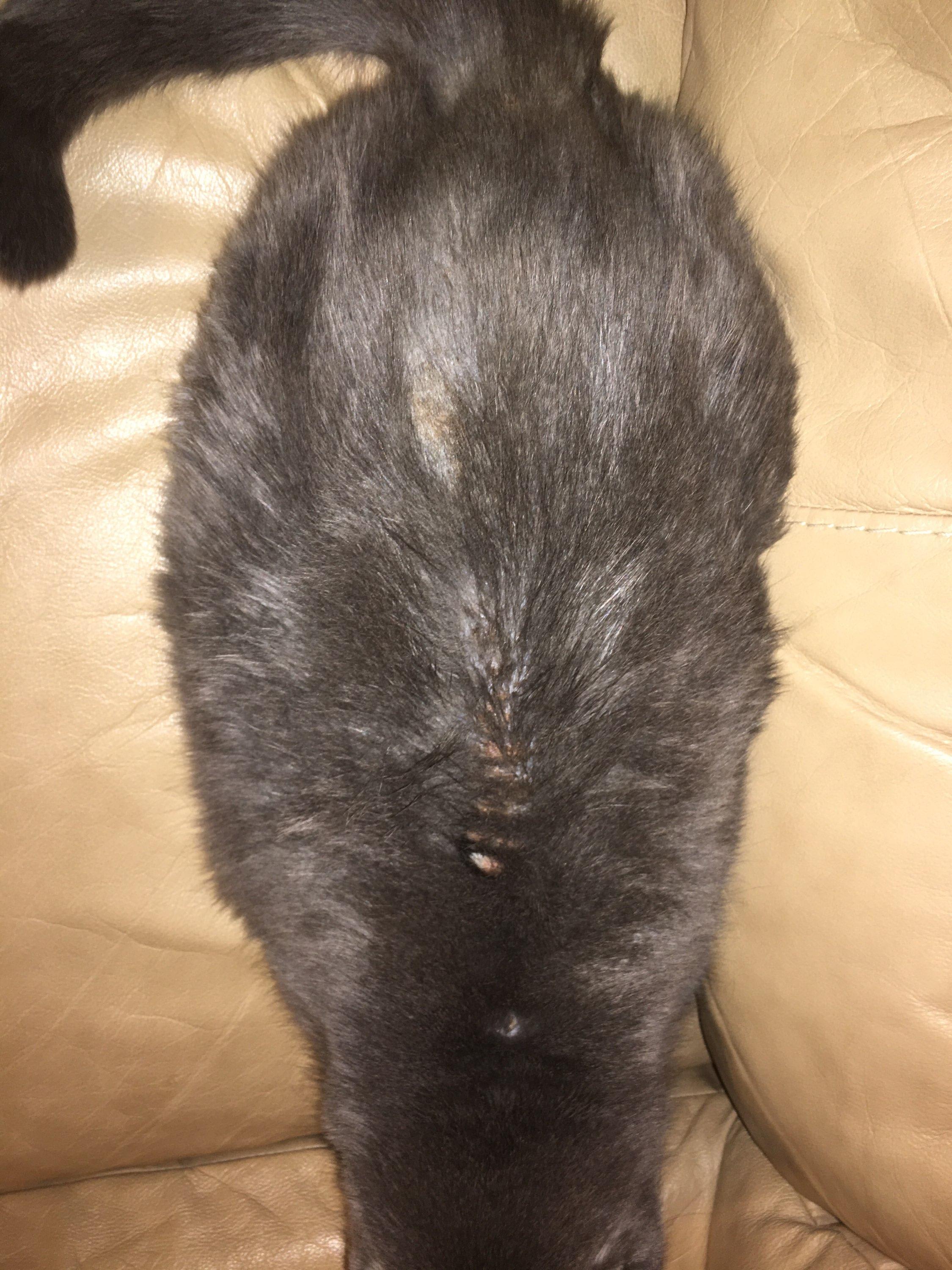
Hi, My cat is about 11y/o and has been over grooming and pulling her hair out at the base of her tail and along the spine of her back. She has scabs and sores because of it and has some scabs by her neck. She does itch a bit. I have combed her and found no fleas. I don't know how to soothe her itching and over stop her from ripping hair out.


5 Answers
Most Helpful Answer

Published on November 29th, 2018
If she isn't on a flea preventative, that is one thing she should get on right away. Some cats have an allergy to flea bites, and all it takes is one flea to cause the itch to start. You may not find a couple fleas with a flea comb. Since she has trauma to her skin, I would recommend that you have Meow Meow examined by the vet. She may need an antibiotic or anti-inflammatory while we work on why she is pulling out her hair. In addition to fleas, there are other causes, such as pain, anxiety, mites, food allergies, etc. Here is a good article explaining what might be going on: https://www.petcoach.co/article/excessive-grooming-in-cats-what-it-means-and-how-to-help/

2Pet Parents found this answer helpful
Related Answers from Veterinarians
-
Published on January 2nd, 2020
Hi, and thanks for your question. This could be due to an allergy, although it could also be infection or mites. First of all, in order to rule out skin parasites, you will need to treat with a high quality flea treatment, then ask the vet to perform a skin scrape - this might reveal an infection or a mite infestation. If all of those came back negative, the next step is to treat the allergy symptomatically and try to discover the cause of the allergy. Three main type of allergies are usually affecting pets: food allergies, flea and parasite related ones and environmental type (allergens coming from trees, pollens, dust etc etc). Some medications can be given by the vet in order to repair any possible skin lesions (like steroids and antibiotics). If no meds are effective and all the tests are negative psychogenic overgrooming can be suspected. Stress is a major factor in these cases. Hope this answer was helpful, but please do not hesitate to contact us again on the forum or by requesting a consultation if you have any more questions or to discuss it any further. If this answer was helpful please let us know, this will be used to improve our service!
1Pet Parents found this answer helpful
-
Published on April 22nd, 2018
The most common reason for chewing and itching in that area is from flea bite dermatitis. She may only have one flea bite every few weeks but they can cause itching and irritation much longer if she’s allergic to the bites. I recommend using a monthly flea prevention product regularly. I like Advantage which is sold at PetCo. You can check her for fleas and flea dirt, which looks like pepper, with a fine tooth flea comb. Often they are difficult to see if there are only a few of them. If this continues after using a flea product then you may want to have a veterinary exam to check the skin and give treatment for the itching. Thanks for using Petco Pet Education Center, formerly Petcoach to help you care for Princess.
1Pet Parents found this answer helpful
-
Published on July 8th, 2019
Thanks for using Petco Pet Education Center, formerly Petcoach! This is possibly due to allergies. It really comes down to figuring out what is causing her allergies so that they can be treated or the specific allergen avoided. A secondary infection is likely and also needs to be addressed. There are many things that can cause allergies though in most cases they can be broken down into 3 big categories: flea, food and environmental allergies. Allergies are usually worked up in a stepwise fashion starting with flea allergies as this is the easiest and cheapest to take care of. If not on a flea preventative, then it would be a good idea to get started on one. If already on one then it would be a good idea to change to something else (there are many new products out in the market). If not improved in 1-3 months then it is time to move on and check for food allergies by switching to a novel diet (new protein and new carbohydrate). If that does not seem to be the issue then you are left out having to check for environmental allergies which require blood and/or skin tests. Allergies can be very frustrating to deal with at first but so rewarding at the end when we are able to treat them effectively!
1Pet Parents found this answer helpful
-
Published on August 9th, 2017
Hi and thanks for using Petco Pet Education Center, formerly Petcoach! Sorry to hear about Oreo. Not all flea products are created equally and you want to make sure to use what your vet recommends. But having said that, it may not be flea related. Allergies, skin infections, intestinal parasites, nutrition, etc all play a role in skin and hair coat. External parasites of course must be addressed and it sounds like you have done that. It is possible that stress/anxiety can also cause over grooming. Your vet can assess her now with the new information that you are using what they recommended. They can do skin tests such as fungal Woods lamp, skin scrape, fungal culture and other tests to try to determine what is going on. Once those are done your vet can then advise a sound treatment plan. She may need antibiotics, steroids, fish oil, antihistamines, etc to get her back on track. Good luck with Oreo.
1Pet Parents found this answer helpful



My cat has been pulling her hair out for about 2 weeks now. I’m not sure what it could be. It looks like the hair may be growing back. Her mood is normal and is eating and drinking water. It looks like her hair may be growing back. Do you know if we
My cat is always biting at himself as if he has fleas but he doesnt. It is causing him to lose his hair all over on his stomach,above tail and now everywar is there anythg over counter i can buy
Over the last few days my cat has been pulling out hair on the back of her neck creating bold spots. She has also cut herself. She is flea treated on a regular basis so I dont think its fleas. I ahve removed her collar incase its causing anixety as i
Reason why cat has been pulling and bitting out hair for months
How do I treat a cat who is constantly grooming itself & making herself bleed & pulling out her fur?

I have a 6 year old, male, Maine Coon cat that I’be had since he was four months old. He reaches around his back as far as he can and pulls his hair out. He’s been doing it since I got him; however, it is much much worse now. There is clumps of his h
I moved house a year ago and after a few months my one (of three) cat started excessively cleaning. At first, we assumed she had fleas so gave regular treatments which seemed to help, however, it hasn't cured it (none of the cats actually had fleas).
Hi. I have recently noticed my 9 year old cat is excessively grooming herself. I put some flea treatment on her neck but think it may have had an adverse affect and she is now getting bald patches all over her body. Please see attached. Please could

My cat is developing bald spots on his inner front legs and on his right hip he has a huge spot where the hair is noticeably shorter than the rest.

My car is licking a lot and chewing she is pulling her fur out
Book an appointment with the pros – our expert vets are here to help.
