


My salamander has recurring black spots and is lethargic. What to do?
Updated On September 23rd, 2025
Pet's info: Amphibian | Unknown - Amphibian | Female | unspayed | 0.08 lbs
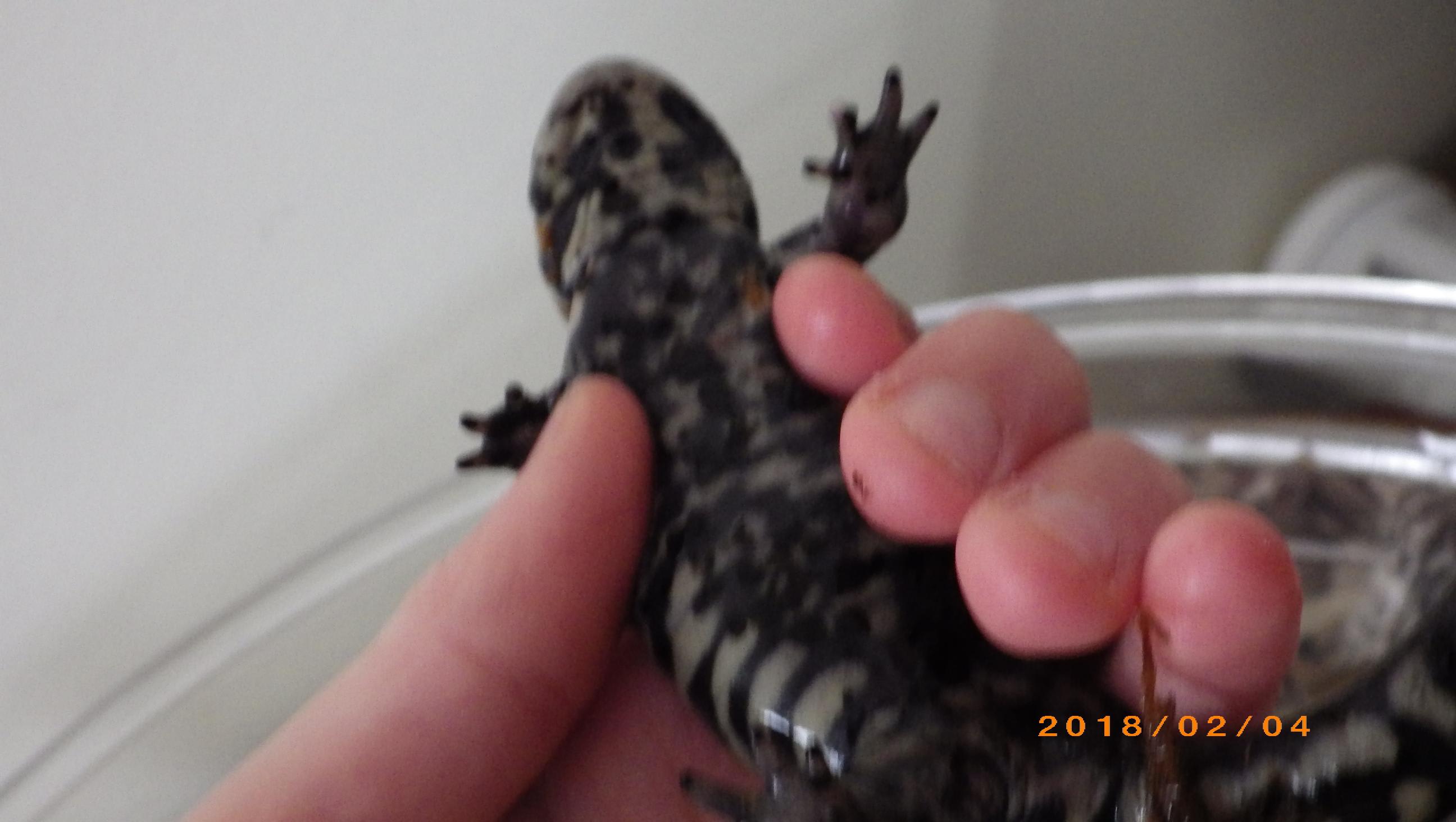
I asked yesterday on the 4th about my salamander,I have not reiceved my responce. My salamander had spots growing on its body, they were black and my salamander shed its skin to get them off and they came off, then today they were back, it (gender unknown) has been acting dopy lately. What is it and what can i do to treat it.


1 Answer
Most Helpful Answer

Published on February 5th, 2018
There are several possibilities including bacterial or fungal overgrowth. Check the temperature of the enclosure. Tigers do well between 50F and 75F. Anything above 80F for an extended period of time can predispose them to heat stress. Change the substrate completely. Normally, this should be done every 3-4 months. Spot clean poop whenever you can. The best substrate is an organic, pesticide/fertilizer free topsoil or local topsoil. Coconut fiber, or coir, can be used but will require more frequent maintenance or changing. The substrate should be moist but not dripping if you squeeze a handful. Depth should be a minimum of 5 inches. Once any corrections are made, if required, monitor your salamander for more spots. If they return or if your salamander remains lethargic, consider an exam with your veterinarian or an experienced herp vet to diagnose illness or injury.

1Pet Parents found this answer helpful

Hi, my tortoise (small one) has black dots since I bought it and today, I noticed the black dots are expanding. He didn't eat anything himself except when I fed him with a stick. He also didn't move and sleep for 23 hours a day. What should i do?
My iguana has lost energy slept for two days so far she usually don’t want to be picked up and whip you now she letting me pick her up and cradle her she now has black spots on top on head and when I 1st got her she had a white build up on her side w
I have a tiger salamander with a infection. I do not know if it is bacteriL or fungul, but I know how to treat it as it has happened before. but how warm should the water be for my salamanders medecine bath be? also, how do you feed a salamanderr the
Hi, my boyfriend got a baby green iguana about 2 weeks ago and it has a dark (blackish) spot on the leg that comes out. The outline of the spot is bright green. The iguana stopped eating yesterday and it looks smaller and weaker. The spot Started sma
I’ve noticed red spots under my baby iguanas body. All the way down his tail on the underside. Could there be something wrong ?
My red eared slider turtle has black spots all over its shell and it doesn't seem to be because of being in water for too long. What could the possible reason for the black spots that are developing on its shell. P.S. Im not able to provide UV light
We just tranferred Joey from a 40 Gallon Tank to a new 90+ Gallon Terrain... He seemed to be pretty happy till today. We noticed right before we changed tanks that he had some dark coloration on his left side and tip of his tail.. He was shedding at

Hello sir I have Indian soft shell turtle the problem is black spot on down side of my turtle and there are no pet doctor in my city please help me I'm also attaching the photos of my turtle
My axolotl has white spots on her gills and one of her legs. I'm a bit concerned for her but don't know what I'm supposed to do. Shes pretty new to my home but was with my friend for a year. I think it may be from stress but don't know if its fatal.
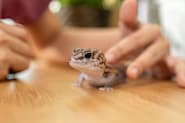
We have a 6-9 month old leopard gecko. He is currently shedding at his head and tail and acting very lethargic. This is a rapid change from a few days ago. He seems lighter too. Any thoughts or insights would be most appreciated.

Book an appointment with the pros – our expert vets are here to help.
