


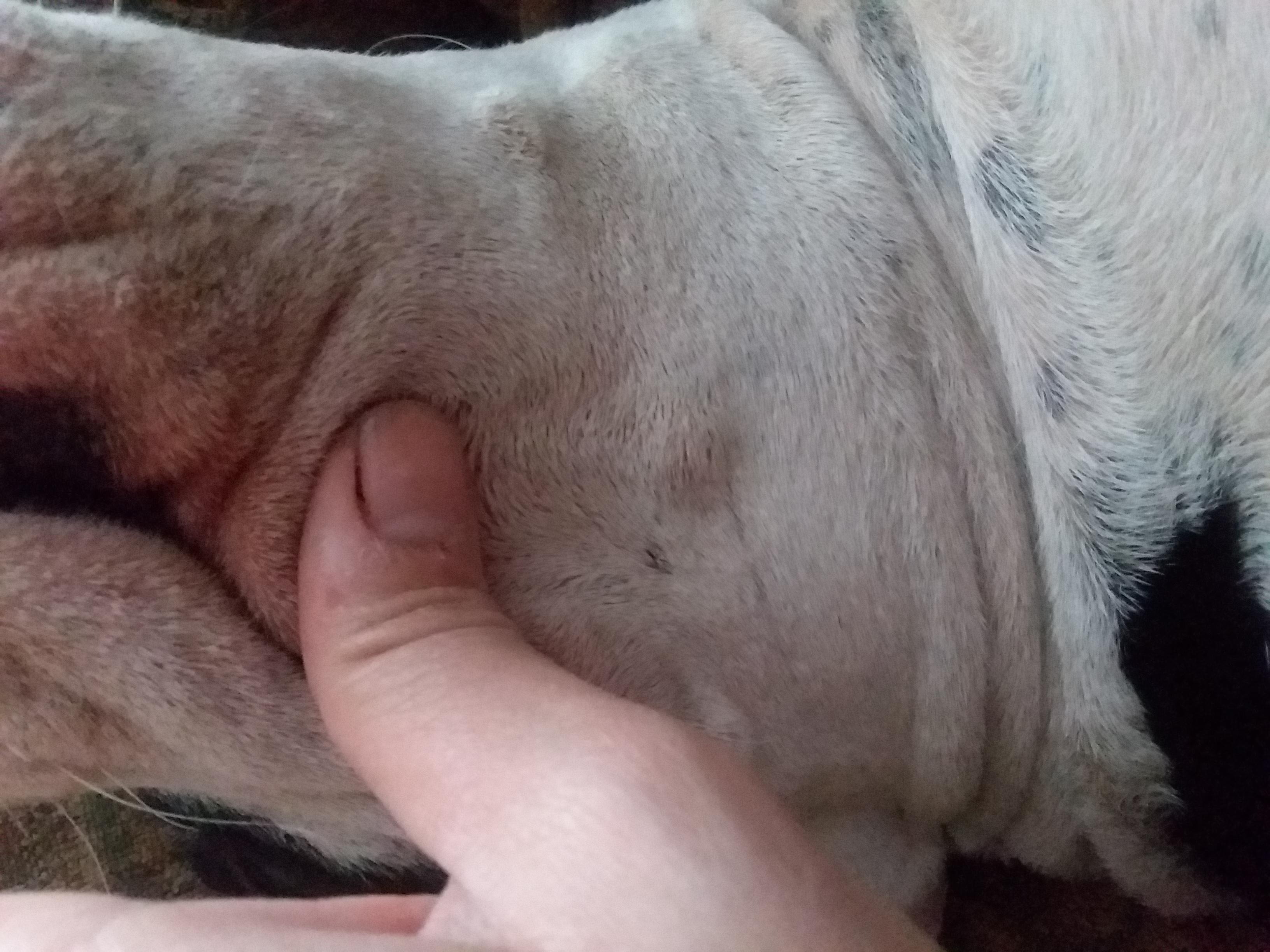
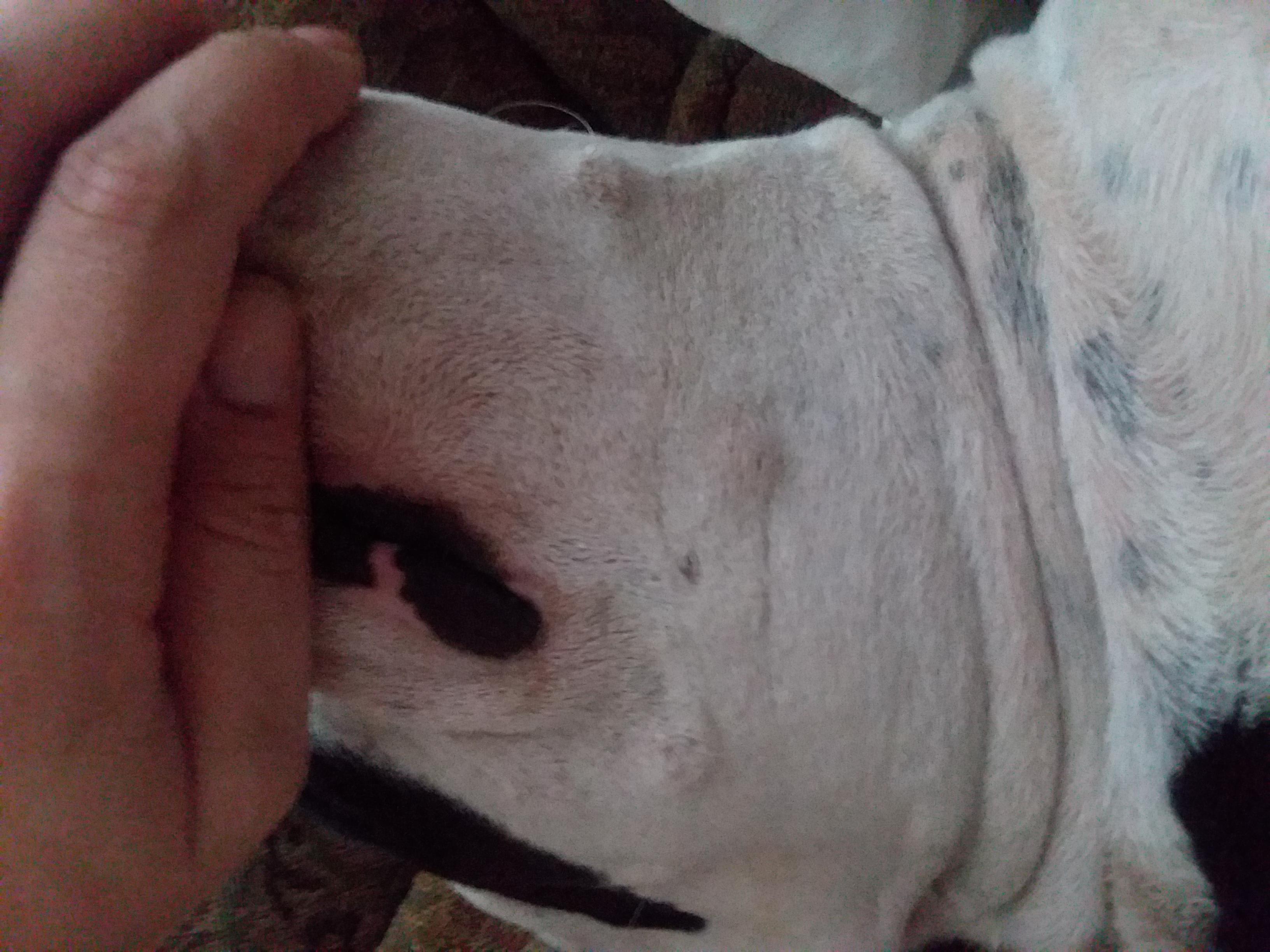
My dog has a hard lump under her chin near her jaw. Is it serious?
Updated On September 23rd, 2025
Pet's info: Dog | American Pit Bull Terrier | Female | unspayed | 3 years and 7 months old | 70 lbs
how do I know if the hard ball under my dogs chim/neck near the jaw is a boil, cyst, tumor etc? it feels like a hard boil or cyst, and about the size of a dime or smaller. doesn't appear to hurt her when I move between my fingers. she's a 4 yr old American bull dog/pitbull mix


2 Answers
Most Helpful Answer

Published on February 1st, 2018
Thanks for using Petco Pet Education Center, formerly Petcoach! This could be a benign or malignant growth. This is often differentiated by a test called a fine needle aspirate (FNA) which is a pain free, inexpensive and easy procedure which in most cases will help reach a diagnosis. Sometimes a biopsy is needed for a definitive diagnosis. I recommend that you have her evaluated by your veterinarian for further assessment and treatment. I am really hoping for something benign. Good luck and have a good night!

1Pet Parents found this answer helpful
Related Answers from Veterinarians
-
Published on November 21st, 2016
There are a couple of things this could be. Chamoy could have an enlarged lymph node that could be due to a dental problem such as an infected tooth. It could also be a cyst, an abscess, a benign tumor, or a malignant tumor (unlikely in a young dog). I recommend taking him into the vet tomorrow for an exam. Any suspicious lumps should be examined by the vet. The vet can perform a test called a fine needle aspirate on it. To do this, the vet sticks a small needle into the lump to get a sample of it's cells, and examines the cells on a slide under a microscope. It's usually painless to the animal, and relatively quick to perform.
1Pet Parents found this answer helpful


My valleybull dog 6 months old has a hard Boney lump under her chin / jaw I have a pic Unmovable no pain ...
My dog has a dime sized, raised about an inch or so lump on her chin. She is a 4 year old pit bull whose generally healthy. It started off looking like an inflamed zit, now it’s large extremely red and the top of its oozing, no pus. Just blood and th

my dog has an under the skin lump and it is hard what it is?

She has a small, hard mound just below her chin. It seems to have appeared over night. I should take her to the vet right?
I found what looks like a mass on my dogs. Do you think it’s cancer? I’m really worried..
I have a white 114-pound German shepherd. I have found a lump behind her jaw about 2 inches around, It is hard and can move around a little. It does not seem to give her any pain or discomfort.
My dog has thus bump on his chin I just noticed it in not sure what it is and I don't havr the money to bring him to the get rn .He got a bump like this on his lip a while ago but it went aeay he also got a bump on his penis that was red and swollen
Hi there my chiuahua is about 7yrs old or so and I just noticed there was a hard lump near her left arm pit area , I'm not sure how long it has been there . She doesn't show symptoms of being sick or in pain but I am worried. Is it something that a v
I just noticed this “lump” on my dogs chest. It isn’t hard, it seems to have fluid. She is not acting sick and has not been having any symptoms. Should I be concerned?
My 7 month old dog has been crying in pain occasionally. It seems to be painful on the left side of their head. They have soft lumps under their jaw on both sides, more so on the left side. That might be the cause of the pain they're experiencing. Wh

Book an appointment with the pros – our expert vets are here to help.
