Terrier Group
These are feisty, energetic dogs whose sizes range from fairly small, as in the Norfolk, Cairn or West Highland White Terrier, to the grand Airedale Terrier.
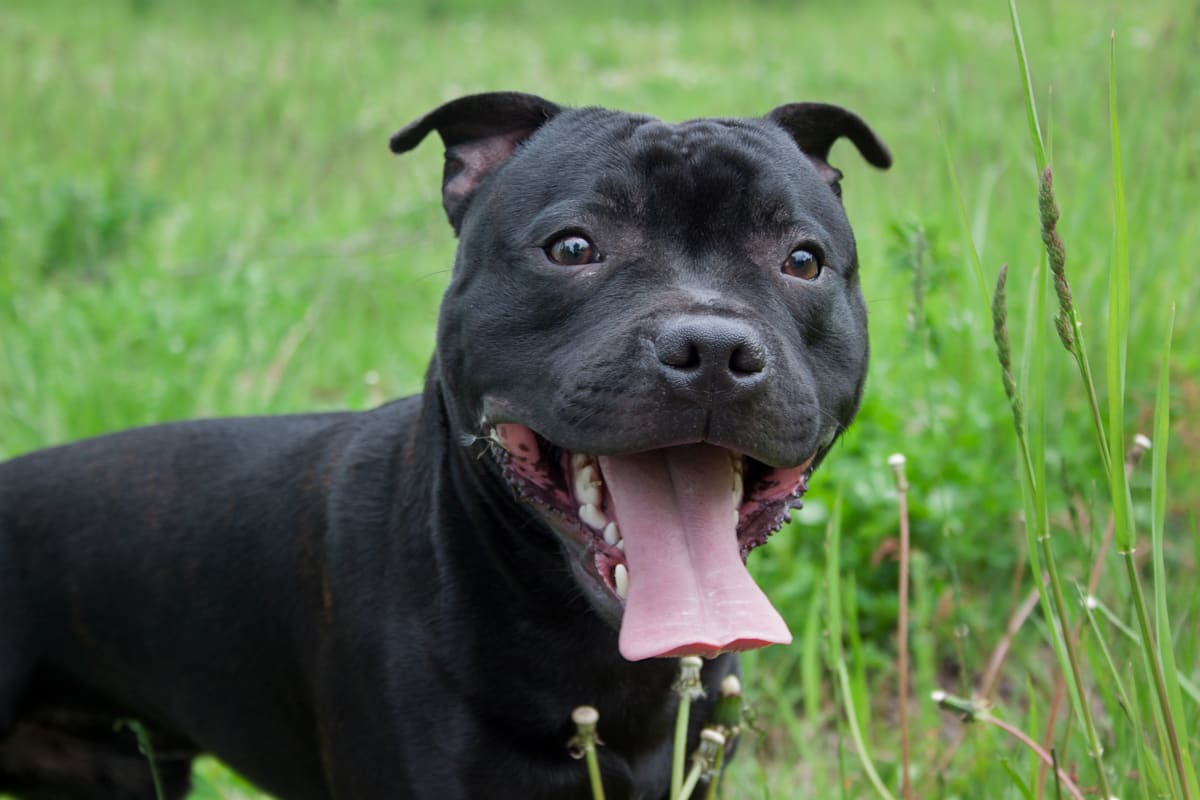
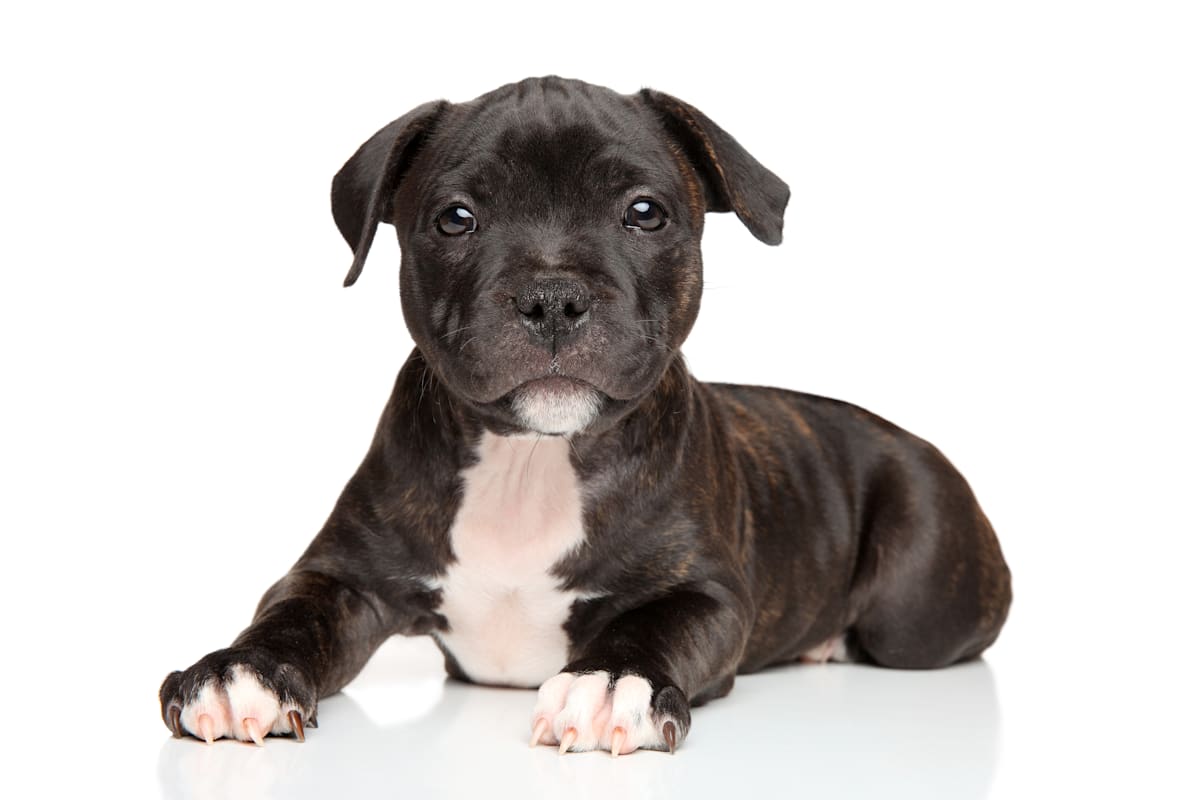
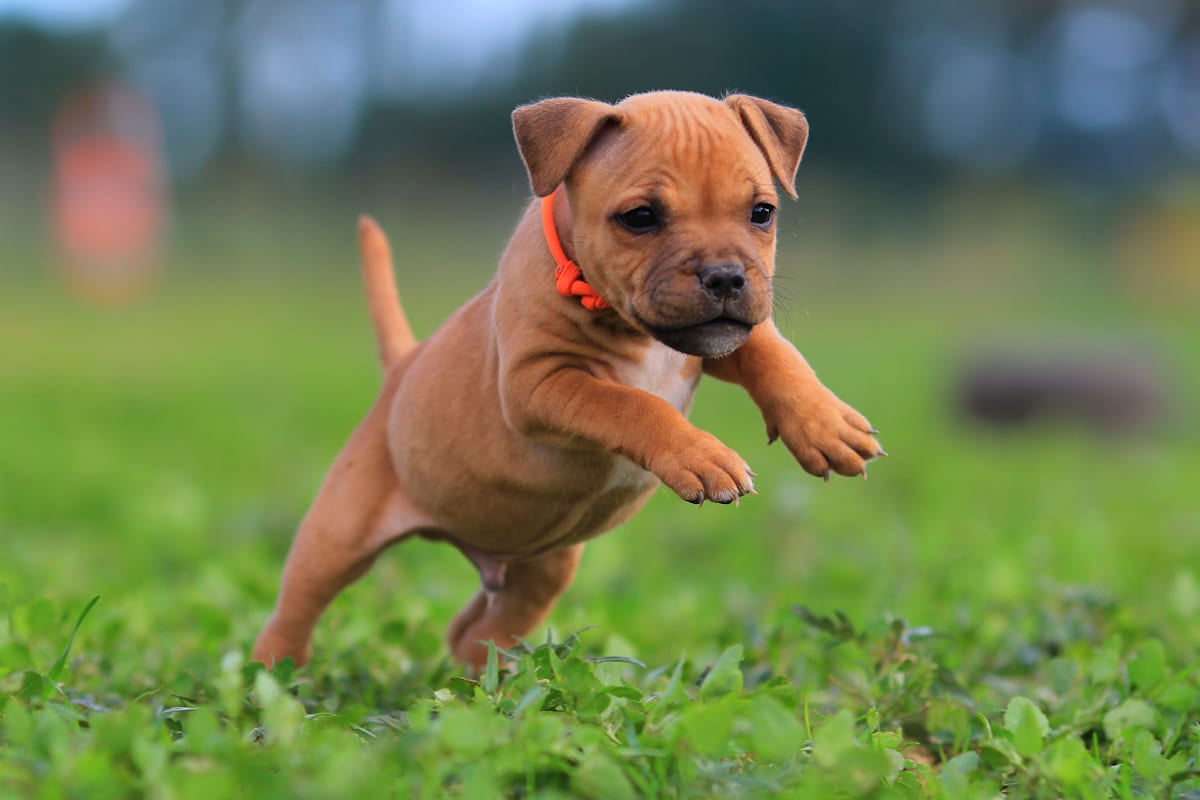
Living with a Staffordshire Bull Terrier is akin to living with a “love sponge,” says Dr. Jerry Klein, chief veterinary officer with the American Kennel Club. Staffies love attention and crave being with their family at all times. A muscular, energetic dog, the Staffordshire Bull Terrier may be a bit stubborn to train, but makes a great family pet.
Origin: England Other Names: Staffie, Stafford
These are feisty, energetic dogs whose sizes range from fairly small, as in the Norfolk, Cairn or West Highland White Terrier, to the grand Airedale Terrier.
People familiar with this Group invariably comment on the distinctive terrier personality. Terriers typically have little tolerance for other animals, including other dogs. Their ancestors were bred to hunt and kill vermin. Many continue to project the attitude that they're always eager for a spirited argument. Most terriers have wiry coats that require special grooming known as stripping in order to maintain a characteristic appearance. In general, they make engaging pets, but require owners with the determination to match their dogs' lively characters.
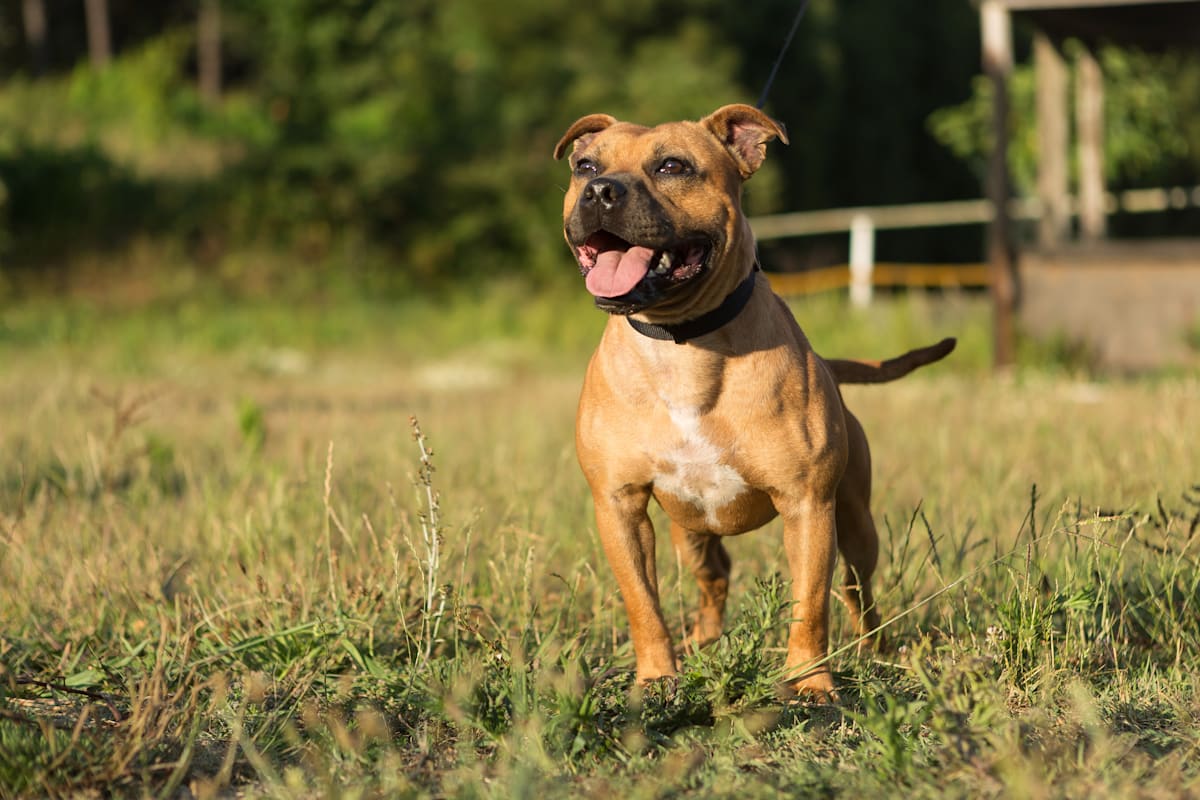
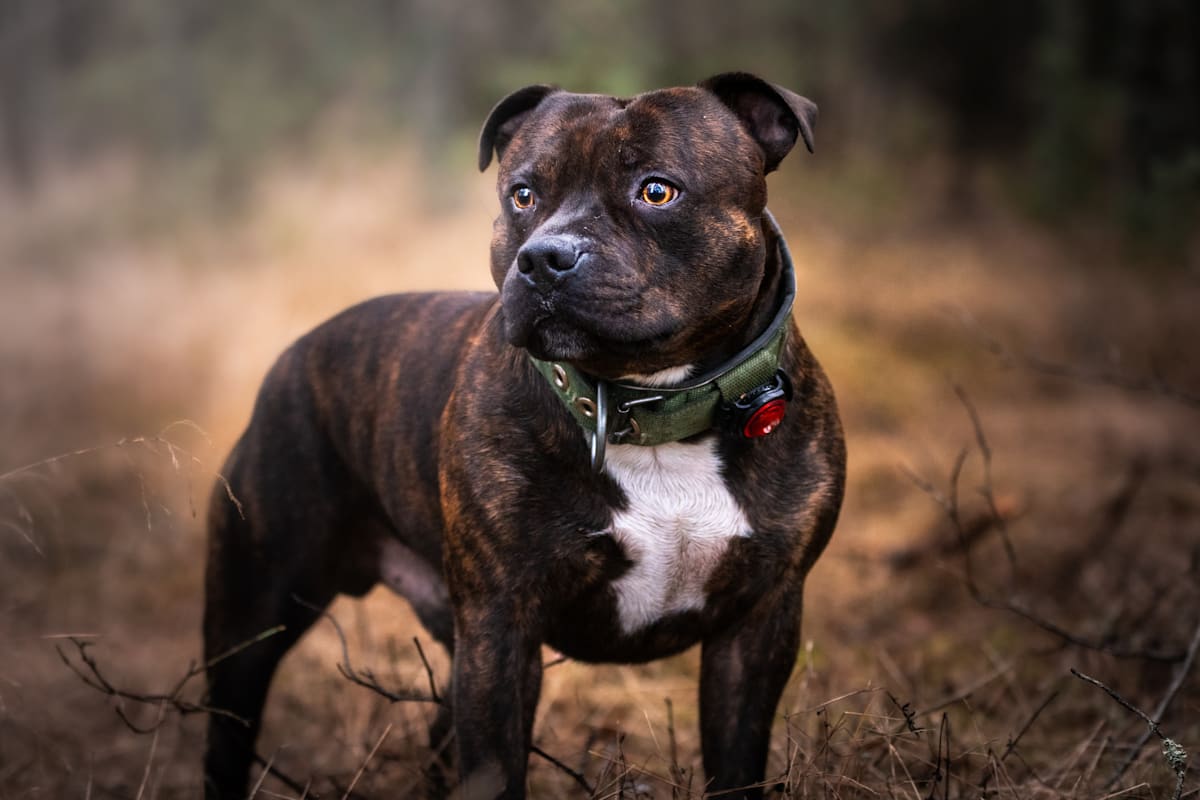
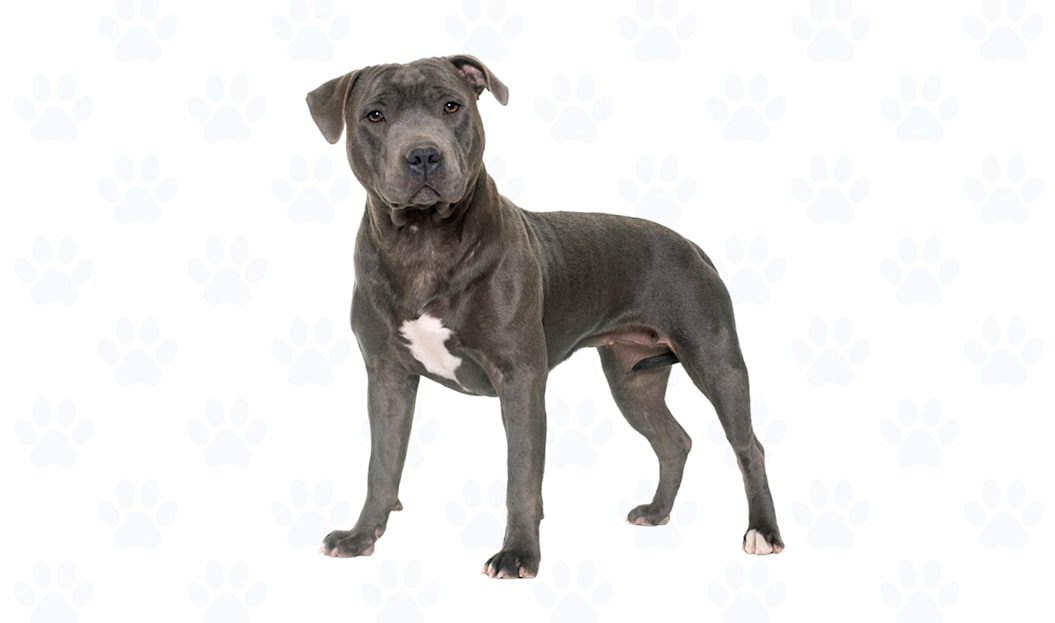
While not necessarily the biggest of breeds, Staffies tend to be about 14 to 16 inches in height and weigh between 24 and 38 pounds. This dog packs a lot of charm into its moderate stature. Solid and muscular by nature, the Staffie is a broad breed with a short and smooth coat that comes in many different colors.
The Staffordshire Bull Terrier is “a lot of dog in a small compass.” For a dog of relatively short height, standing 14 to 16 inches tall, they pack in a lot of muscle. Male Staffies weigh anywhere from 28 to 38 pounds, while females are a bit smaller, weighing around 24 to 34 pounds.
| Full Grown | |
|---|---|
| Female | 14 in. / 34 lbs. |
| Male | 16 in. / 38 lbs. |
Height is measured up to the shoulders.
Male and female Staffies stand 14 to 16 inches tall.
Male Staffies weigh anywhere from 28 to 38 pounds, while females are a bit smaller, weighing around 24 to 34 pounds.
Staffies are very energetic and athletic, says Klein. While they can make themselves comfortable in moderate-sized apartments if need be, they are better off in larger spaces.
This high-energy breed loves to exercise, but they can become fixated on a task. Providing them with a safe environment that they can’t dig out of or jump over is extremely important. “They’re pretty athletic, so provide them with an environment that’s safe and allows them to be happy and not destructive,” says Klein. He suggests long walks several times a day to keep them happy and in shape.
The Staffie makes a fantastic family dog. Since they love being with family and friends, they will happily run around all day with children. They don’t tend to be overly noisy, either, but they will let you know when something is amiss. Staffordshire Bull Terriers are protective of their family, but are often comfortable with strangers, provided that they are introduced properly. This breed craves attention, though, so if you don’t want to be followed around all day, this might not be the breed for you.
Staffies are protective of their families, but they aren’t overly noisy or suspicious of strangers.

Although friendly and loving by nature, Staffordshire Bull Terriers are very muscular and can be very rambunctious, so care should be taken when they are around younger kids. They aren’t aggressive, says Klein, but their eagerness can sometimes get the better of them. Otherwise, Staffies are affectionate, loyal and courageous, making them the perfect family pet.
Although the breed is eager to learn and please, they tend to have a little bit of an attention deficit condition, says Klein. As such, it’s important to be consistent with training this breed and the earlier you can start, the better.
The Staffordshire Bull Terrier is short coated, but they do shed seasonally. Groom them with a bristle brush weekly and give them an occasional bath to keep them looking their best.
Staffies do better in cooler weather and can be heat intolerant. Be sure to keep them in a cool spot with plenty of water when the temps get high.
Staffies tend to be a quiet breed, but they will bark occasionally should the need arise.
Staffies are energetic, athletic and they crave human attention, which makes them the perfect companion for anyone who desires constant company, says Klein. “If you have them in smaller spaces, be sure you can accommodate their energy requirements,” Klein says. “Though not a large breed height-wise, they are very muscular, and they are terriers, so they love to play and have they a lot of energy. More than the size of the apartment or house that they live in, the type of person who owns this dog will dictate their happiness.”
Eager to learn and please, the Staffordshire Bull Terrier makes a great choice for most families. However, those with small children should be sure to keep them supervised and train their Staffie early in life, because they can be rambunctious and overpowering.
Although Staffies are not known to be highly vocal, they may sound the alarm if something catches their interest
Although eager to learn and please, this breed can be easily distracted. As a result, training requires consistency and regularity with plenty of positive reinforcement. Training is a very important aspect of keeping a Staffordshire Bull Terrier well-adjusted, since their high energy level has a tendency to get them into trouble.
This high-energy breed requires plenty of regular exercise to keep them healthy and out of trouble. Never leave your Staffie unsupervised in the yard for too long since they can become fixated on a task, which might include digging out of the yard or jumping over a fence. Klein recommends several long walks each day to keep them happy, especially since they love to be outside.
Staffordshire Bull Terriers aren’t necessarily protective of their property, although they do tend to be protective of their family. Still, with proper training and socialization, they can do well with strangers, says Klein, and get along with other dogs. “They can have a prey instinct, though,” he added, “so train them to be tolerant of other small dogs or animals. It’s not impossible to bring one into a home with a cat, but make sure you have the right dog with proper training and that it stays properly supervised.”
Frisky, energetic breed that is always ready for action
Staffords should be fed portion-controlled meals of a good quality balanced diet. Commercial diets are most commonly recommended, but home-cooked meals of a carefully balanced recipe may be acceptable with the guidance of your veterinarian. Table scraps or excessive treats should be avoided, as they can quickly pack on excess weight.
Average daily consumption for an adult Staffie is 1-2 cups.
Staffies are generally a healthy breed, but still benefit from regular monitoring at home and a trip to the veterinarian for a physical exam once or twice per year. The goal is to detect any new problems or subtle changes before they become more significant.
Staffordshire Bull Terriers are prone to developing a variety of skin allergies, also referred to as atopic dermatitis or atopy. Intense itching, licking and other self trauma can result in the onset of bacterial skin infections, and can be very uncomfortable. Allergies can occur as a result of hypersensitivity reactions to flea bites, certain foods (protein sources are the most common culprit of food allergies) and environmental allergens. Flea bites can be prevented with the regular use of a high quality flea preventative medication. If your Stafford is itching or chewing on themself, they should be evaluated by a veterinarian, as matters can worsen rapidly.
Health conditions can occur in any breed of dog, and the Staffordshire Bull Terrier is no exception. Certain conditions may occur at an increased frequency within the breed or due to inheritance. Genetic testing is available for some conditions and is typically performed by responsible breeders prior to breeding in an attempt to decrease the incidence of some conditions within the Staffie breed. These conditions may include, but are not limited to, the following: Flank alopecia. Follicular dysplasia, Atopic dermatitis, Mast cell tumor, L-2-hydroxyglutaric aciduria, Cataracts, Distichiasis, Persistent hyperplastic primary vitreous, Cystine urolithiasis and Elbow dysplasia.
On average, Staffordshire Bull Terriers live between 12 and 14 years.

Although short-coated, Staffies still need occasional baths and weekly brushing. Proper grooming also requires monthly nail trimming and regular ear cleaning.
Short
Occasional
While they are short-coated, grooming your Staffordshire Bull Terrier with a bristle brush will help get rid of the excess hair that sheds seasonally.
Recognized by the American Kennel Club as part of the Terrier Group, the Staffie has a shorter history than many other breeds in the group. Bulldog ancestors to the modern day Staffordshire Bull Terrier were recorded as far back as the 16th century with their participation in gruesome bull-baiting sports. With the outlaw of these blood sports in the mid-19th century, the often ferocious Bulldog was crossed with a variety of terriers in England, resulting in a stocky muscular dog with the spunky disposition of a terrier. James Hinks of Birmingham, England is credited with refining the breed. The modern day Staffie arrived in North America in the 1880s and was recognized as a distinct breed by the AKC in 1975.