Herding Group
Created in 1983, is the newest AKC classification; its members were formerly members of the Working Group.
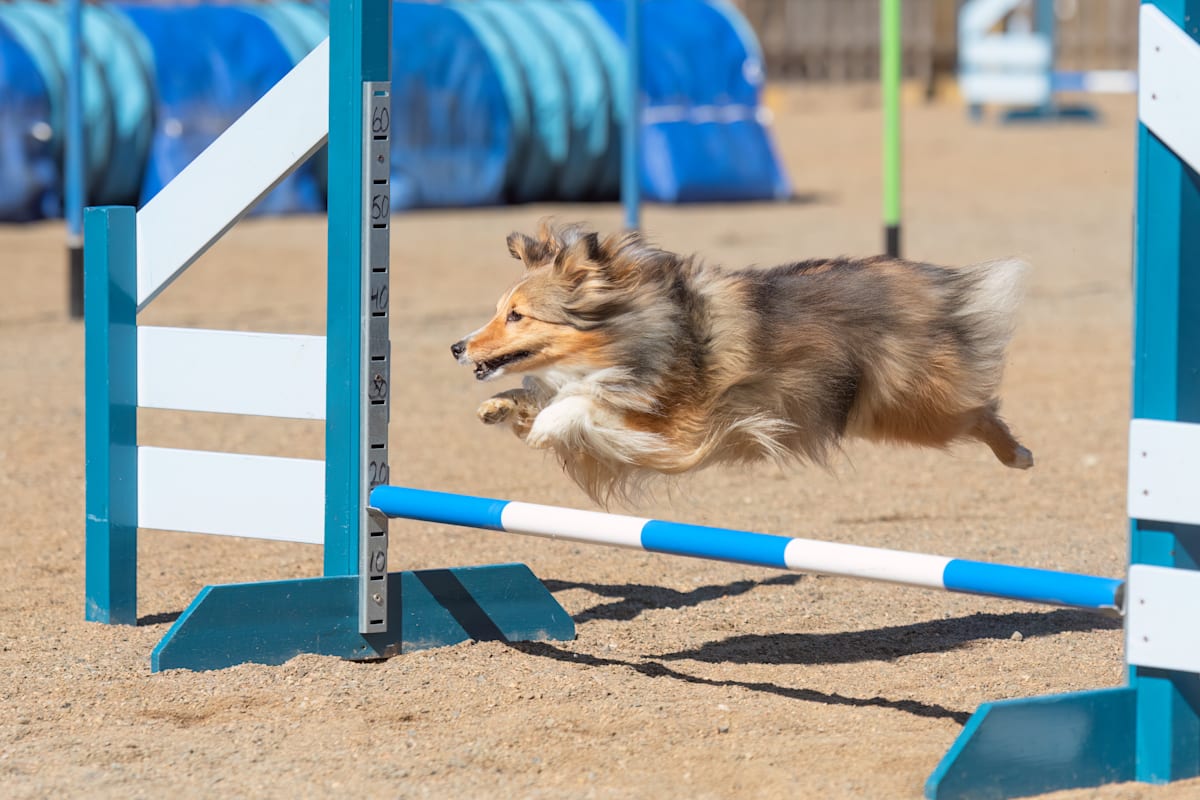
The Shetland Sheepdog, also known as the Sheltie, is a friendly, good-natured dog that is great with kids. This breed is very hairy with a dual layered coat, resulting in a lot of shedding. Shetland Sheepdogs are very intelligent and can learn commands quickly. They are natural herders, quite athletic and full of energy. Their good nature makes them a great match for families with children. Rarely aggressive, they can be gentle therapy dogs. Overall, the Shetland Sheepdog is a loyal, intelligent and energetic dog.
Origin: Scotland Other Names: Sheltie, Shetland Collie, Miniature Collie, Lilliputian Collie
Created in 1983, is the newest AKC classification; its members were formerly members of the Working Group.
The Herding Group, created in 1983, is the newest AKC classification; its members were formerly members of the Working Group. All breeds share the fabulous ability to control the movement of other animals. A remarkable example is the low-set Corgi, perhaps one foot tall at the shoulders, that can drive a herd of cows many times its size to pasture by leaping and nipping at their heels. The vast majority of Herding dogs, as household pets, never cross paths with a farm animal. Nevertheless, pure instinct prompts many of these dogs to gently herd their owners, especially the children of the family. In general, these intelligent dogs make excellent companions and respond beautifully to training exercises.
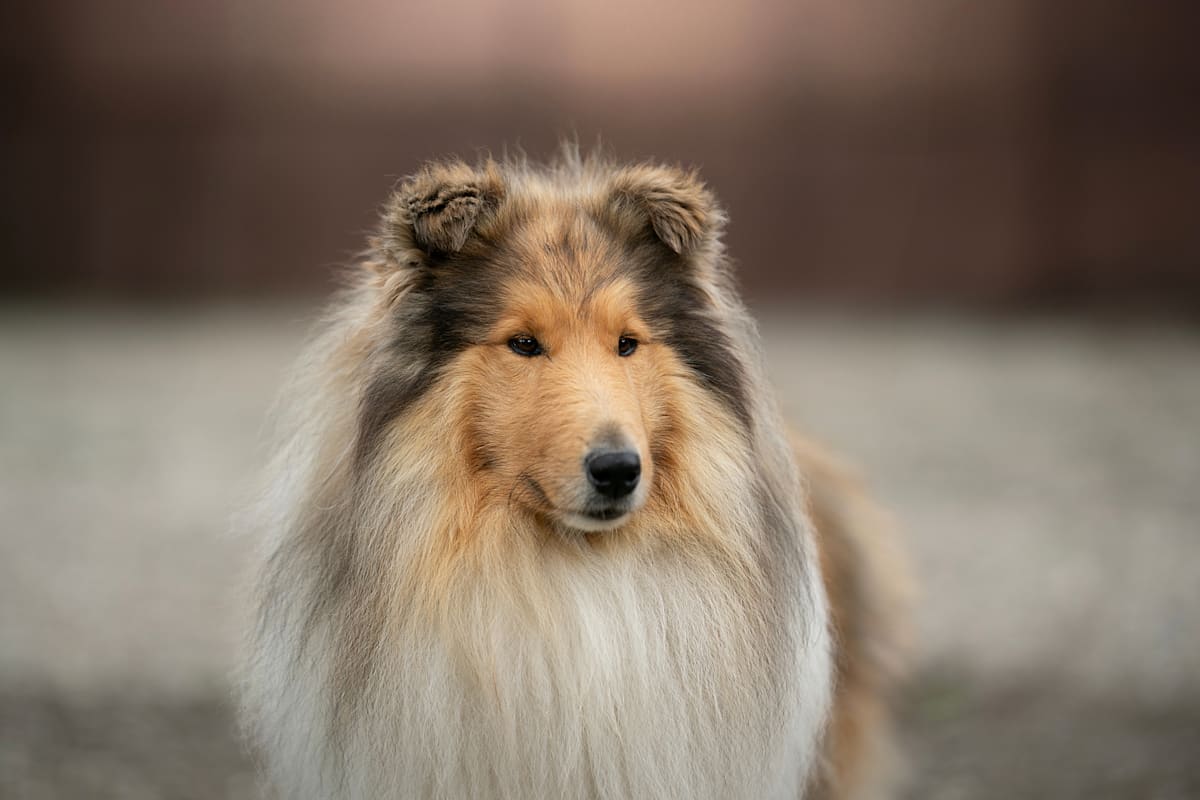
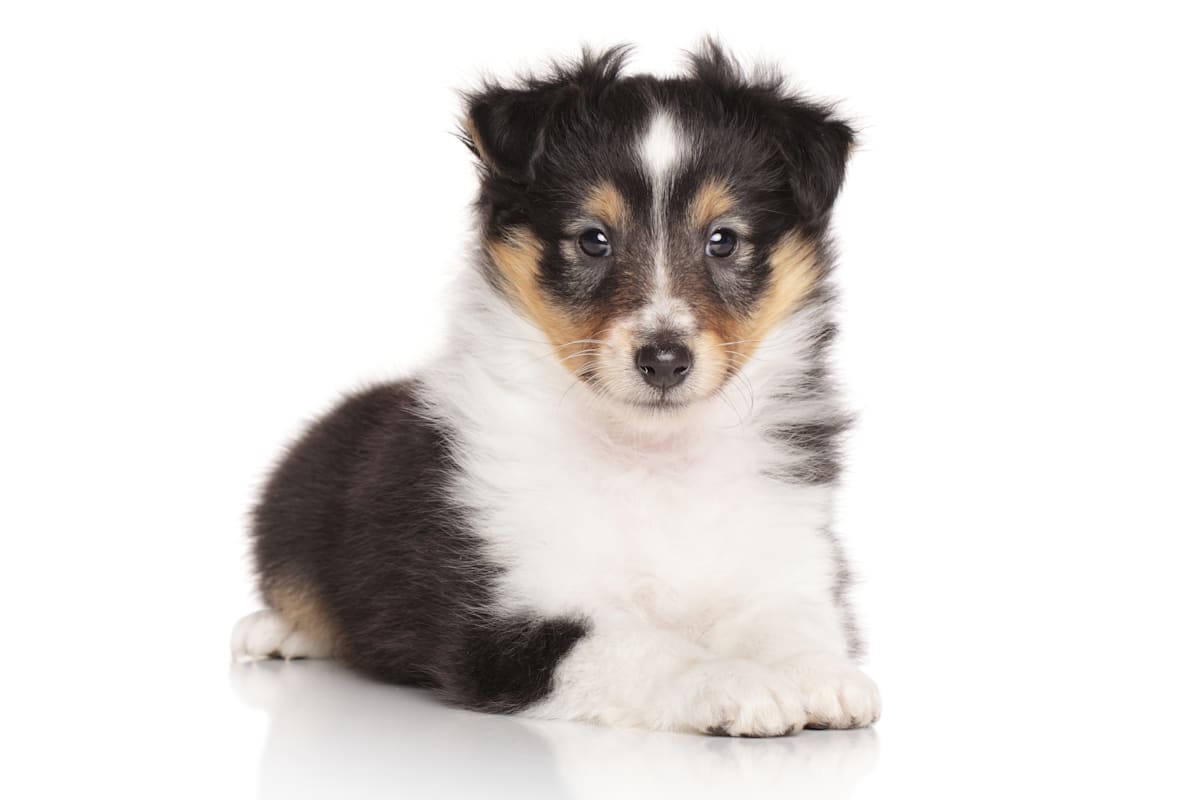
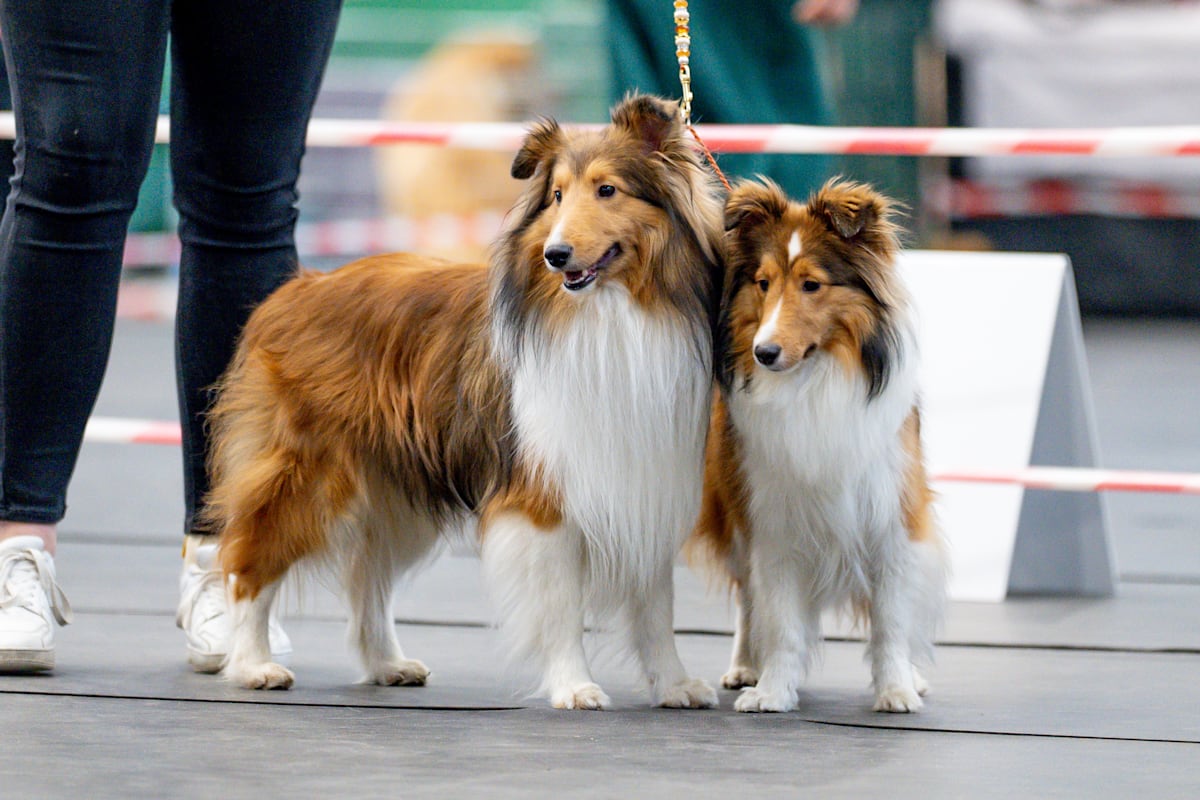
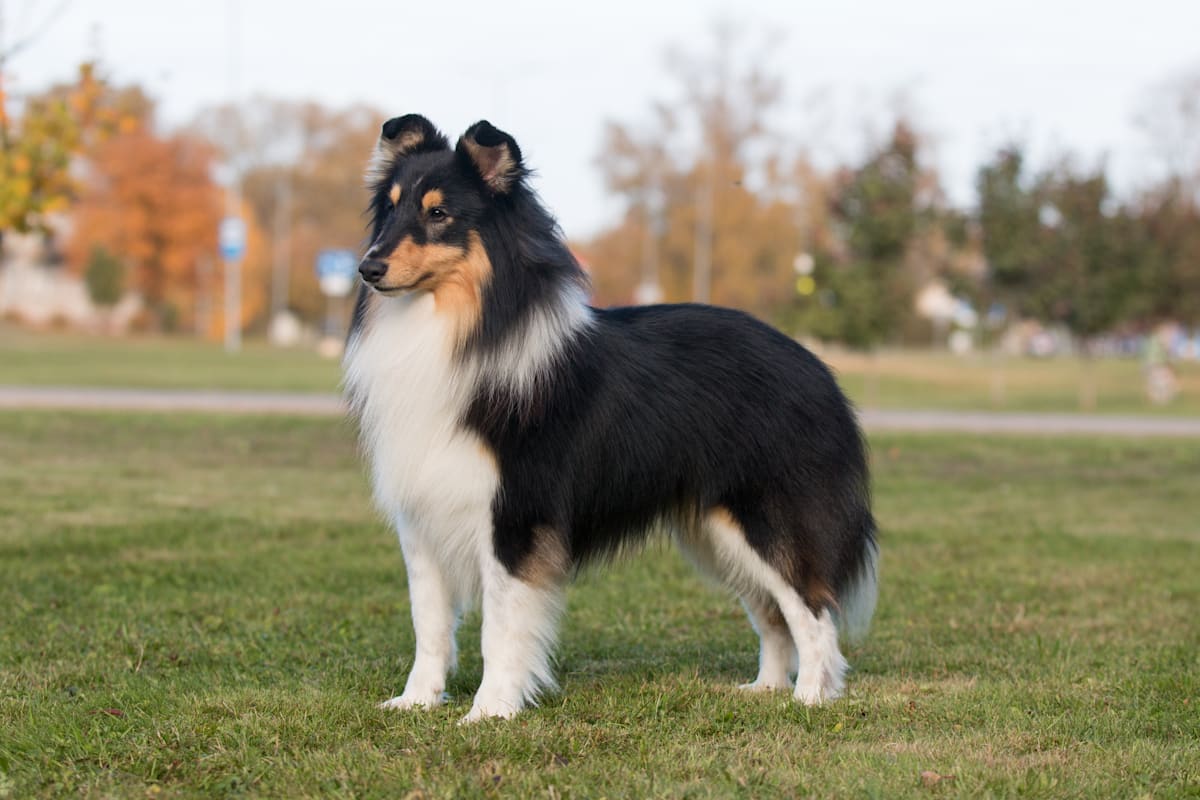
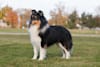
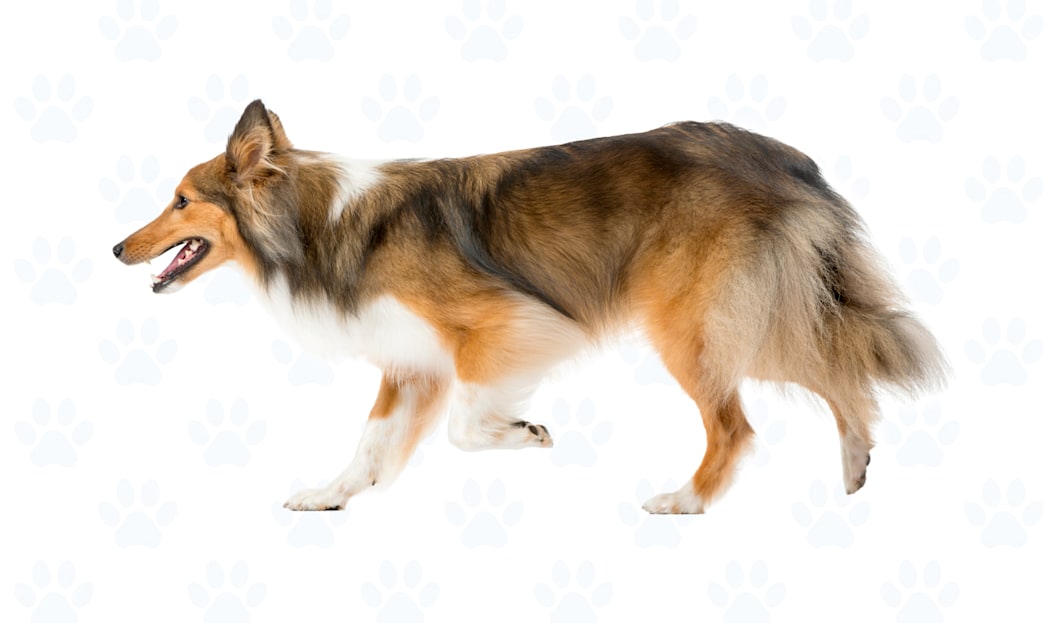
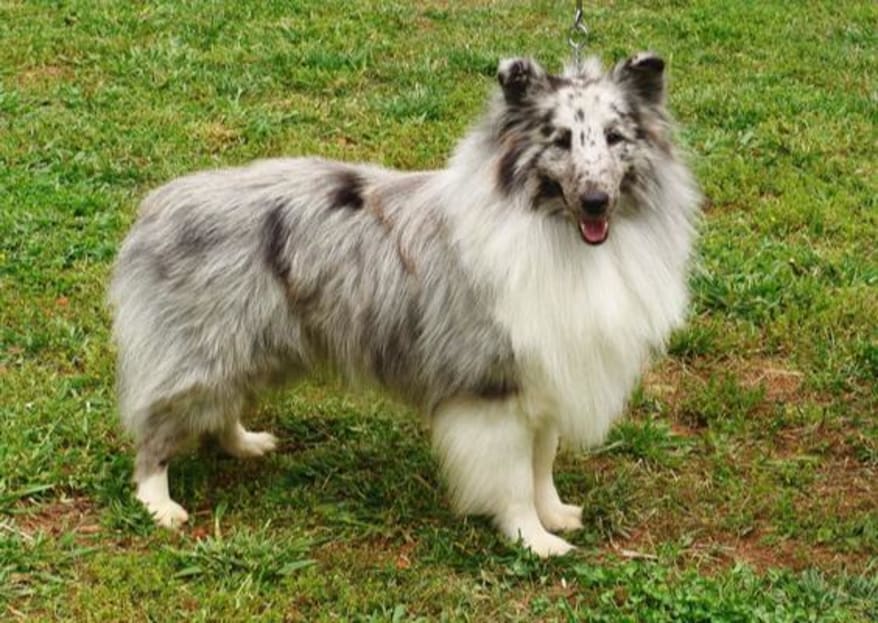
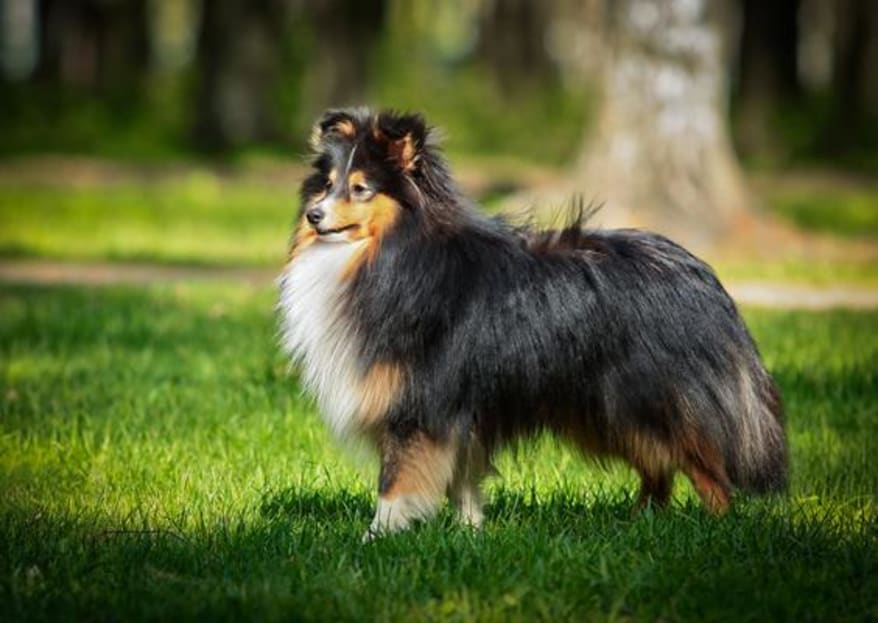
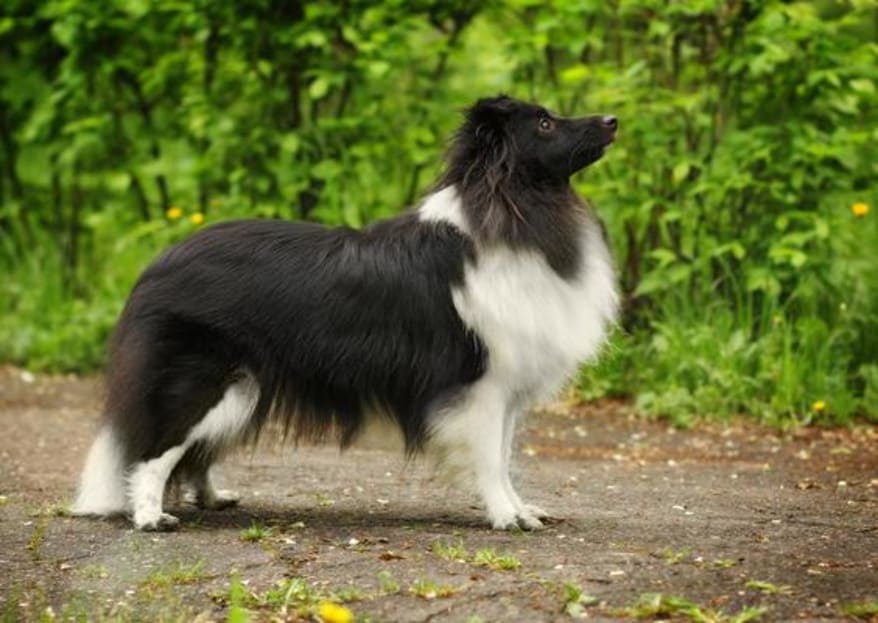
The AKC recognizes six variations in the Shetland Sheepdog’s substantial coat, but there are three main colors. Primarily, most are tri-color, blue merle, and sable, but variations are as follows: black, white, blue merle, tan, sable, and sable merle. Typically, the blue merle varieties have either one or both eyes blue, whereas all other coat variations have brown eyes. Shelties have relatively pointy ears with a slight forward bend in the point.
This breed can be found in a variety of colors. You can check them out below.
Shelties are smaller counterparts to the Rough Collie and typically weigh around 11-24 pounds. Adults stand between 13 and 16 inches tall. These fluffy pups are medium-sized, loud dogs.
| Full Grown | |
|---|---|
| Female | 13 in. / 11 lbs. |
| Male | 16 in. / 24 lbs. |
Height is measured up to the shoulders.
The Shetland Sheepdog stands between 13 and 16 inches tall.
Shelties are smaller counterparts to the Rough Collie and typically weigh around 11-24 pounds.
These medium sized dogs are full of energy and like to run around. Given their herding heritage, they should be kept in a house with a backyard. Daily trips to the park to run and play can suffice in place of a yard. Don’t leave them alone all day, as they like to bark, and want to plenty of attention.
This herding breed loves to run. Playing with your Sheltie, running and establishing a regular exercise routine will help to keep your Shetland Sheepdog physically and mentally healthy. Not to worry, your dog will let you know if they feel cooped up with plenty of barking.
Shetland Sheepdogs are very docile and friendly. They tend to be loyal and closely bonded to their family, but occasionally need to warm up to unfamiliar people.
Shetland Sheepdogs are highly loyal dogs and will watch out for their family. They tend to keep their tails in the air when on high alert. Shelties are not an attack dogs, but will bark if they sense that their family seems uncomfortable around certain people or situations.
Shelties make wonderful family dogs. With great temperaments and a strong sense of loyalty, they will instinctively make sure the family is together by herding children to their parents. As with any dog, be sure to supervise your Sheltie around children and unfamiliar adults.
Shetland Sheepdogs are very intelligent, and can learn a command very quickly. Being highly intelligent and quite agile, these dogs are apt to herd animals and can be competitively shown to be among the best.
The dual layered Sheltie is quite a hairball! Their topcoat keeps them waterproof and their undercoat keeps them warm. However, their undercoat sheds profusely, meaning that regular brushing and occasional baths are definitely required. As with any dog, be sure to regularly clip your Shetland Sheepdog’s nails, brush their teeth and clean their ears.
With their heavy coat, the Shetland Sheepdog is made for colder climates and outdoor ranges. Originally from Scotland as an outdoor dog, the Sheltie isn’t quite built to sit around the equator.
Shetland Sheepdogs are loud dogs that were originally bred to herd sheep. As a result, they are not afraid to vocalize when they want one thing or another. They are used to barking at a sheep, so they tend to sound the alarm if they are displeased, alarmed or feel the need to burn off energy.
Shetland Sheepdogs are a relatively energetic breed that needs consistent exercise to prevent the onset of anxiety or behavioral problems. A Sheltie is often highly attuned to their family's emotions and can become anxious or loud when they sense stress in their family members. Regular exercise and playtime helps to mediate some anxiety and provide a sense of routine, as well as allowing for bonding with your bright and playful pup. Shelties crave frequent interaction with their family and can act out or bark if they feel left out of the fun.
These highly intelligent dogs are generally trying to accomplish something with their relatively frequent barking. Sometimes they want to herd the family together, play outside, or they may sense danger. As herding dogs, Shelties likes to be agile and complete tasks for their pet parent, which can be the best way to play and tire them out. A tired dog is less likely to bark as a means of seeking attention.
Shetland Sheepdogs are incredibly loyal and intelligent dogs. They quickly learn new behaviors with a few repetitions. Shelties are itching to please their pet parent, so positive reinforcement is very important. Relative to other breeds, they are quite emotionally sensitive and will easily pick up on a small amount of negativity. Giving a treat and positive encouragement after completing a task is all your Sheltie needs!
Shetland Sheepdogs are competitive dogs that enjoy performing tasks, such as chasing a ball or herding sheep or children. They are relatively small in stature, but are full of spunk and ready to help their master at a quick call. A regular exercise regimen is beneficial for both your Sheltie’s mental and physical well-being.
Frisky, energetic breed that is always ready for action
Shetland Sheepdogs are high energy dogs and require proper nutrition to maintain their drive. With overfeeding or insufficient exercise, Shelties can easily become overweight. Be sure that you are feeding carefully portion-controlled meals of a balanced diet to keep your Sheltie at a healthy body weight.
Average daily consumption for an adult Sheltie is 1/3 -3/4 cups
Genetic testing is available for several of the health conditions found in Shetland Sheepdogs and is often performed by responsible breeders prior to mating dogs. In particular, testing for multidrug resistance genes (MDR1) is important for every Sheltie because this gene mutation can cause affected dogs to be much more sensitive to certain drugs, such as ivermectin.
Shetland Sheepdogs can develop several joint conditions and fish oil supplements can be helpful in decreasing the inflammation associated with signs of arthritis that may develop. Keeping your Sheltie at a healthy body weight is critical to overall joint health.

A number of health conditions have been recognized in the Shetland Sheepdog either through methods of inheritance or occurring at an increased frequency in the breed. They include, but may not be limited to, the following: Patent ductus arteriosus, Discoid lupus erythematosus, Uveodermatological syndrome, Cutaneous histiocytosis, Dermatomyositis, Systemic lupus erythematosus, Multidrug reactions, Gallbladder mucocele, Hemorrhagic gastroenteritis, Von Willebrand disease, Angular deformity of the tibia, Elbow luxation, Shoulder luxation, Superficial digital flexor tendon luxation, Nasal cavity tumor, Congenital deafness, Collie eye anomaly, Coloboma, Corneal dystrophy, Ectopic cilia, Progressive retinal atrophy and Cryptorchidism .
On average, Shetland Sheepdogs live to be about 12-14 years old.
Shetland Sheepdogs need to be brushed at least once a week to keep on top of their shedding. Before there are furry tumbleweeds around the house, invest in a sturdy brush for regular use and a good quality vacuum. Shedding tools can be beneficial to remove some of the excess undercoat before it is scattered across your house. Clipping your Sheltie is not typically necessary or recommended and can result in a patchy coat when it grows back.
Nail care is important for every dog, and the Shetland Sheepdog is no exception. Cutting them a little bit every few weeks is important to prevent overgrowth. Daily tooth brushing is extremely helpful in preventing dental disease.

Long
Frequent
Maintaining a regular brushing and bathing routine will help to reduce the amount of Sheltie hair that you find around the house, but will not eliminate it. Shetland Sheepdogs are full of hair, so invest in a good vacuum to keep up with your furball. Gentle use of shedding tools can help to remove some of the undercoat before it ends up around the house.
Originally known as the Shetland Collie, the breed that we now recognize as the Shetland Sheepdog came from the Shetland Islands in Scotland. These agile and intelligent dogs were bred to herd sheep on the rocky terrain of the Shetland Islands. Although they resemble miniature versions of the Rough Collie, the exact ancestry of this breed is unknown. There are thoughts that the Shetland Sheepdog was initially bred from some combination of the Rough Collie, Pomeranian, Greenland Yakki and King Charles Spaniel.
The AKC first registered the Shetland Sheepdog breed in 1911. Since then, Shelties have become a popular family pet and are often found excelling in agility, herding and obedience competitions.