







Non-Sporting Group
The breeds in the Non-Sporting Group are a varied collection in terms of size, coat, personality and overall appearance.
If you are looking for a dog with a mellow temperament and great protective instincts, a Shar-Pei might be right for you. Originating in southern China, Shar-Peis are a fairly rare breed known for their bristly hair, uniquely shaped head, and distinctive skin folds. These unique looking dogs are perfect for people who want a laid back companion that always has their back.
Origin: China Other Names: Sharpay, Chinese Shar-Pei
The breeds in the Non-Sporting Group are a varied collection in terms of size, coat, personality and overall appearance.
Non-sporting dogs are a diverse group. Here are sturdy animals with as different personalities and appearances as the Chow Chow, Dalmatian, French Bulldog, and Keeshond. Talk about differences in size, coat, and visage! Some, like the Schipperke and Tibetan Spaniel are uncommon sights in the average neighborhood. Others, however, like the Poodle and Lhasa Apso, have quite a large following. The breeds in the Non-Sporting Group are a varied collection in terms of size, coat, personality and overall appearance.
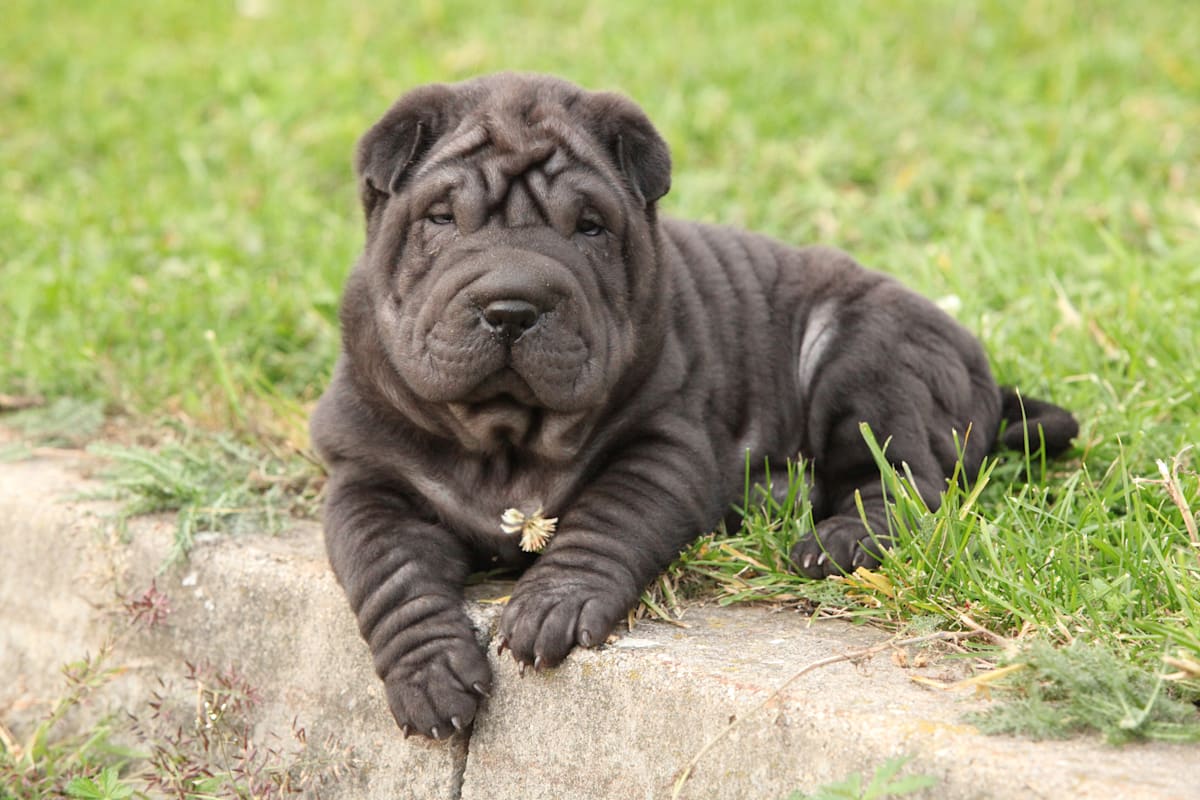
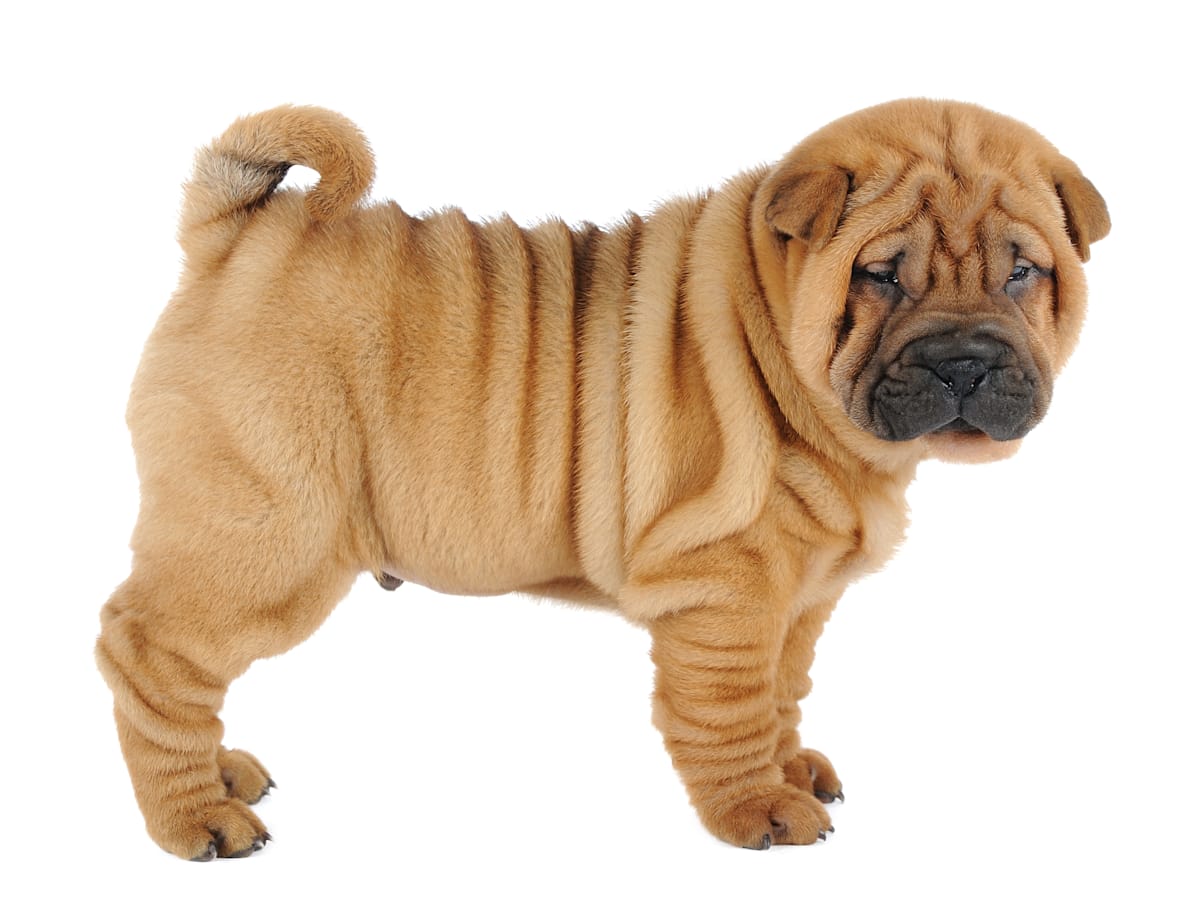
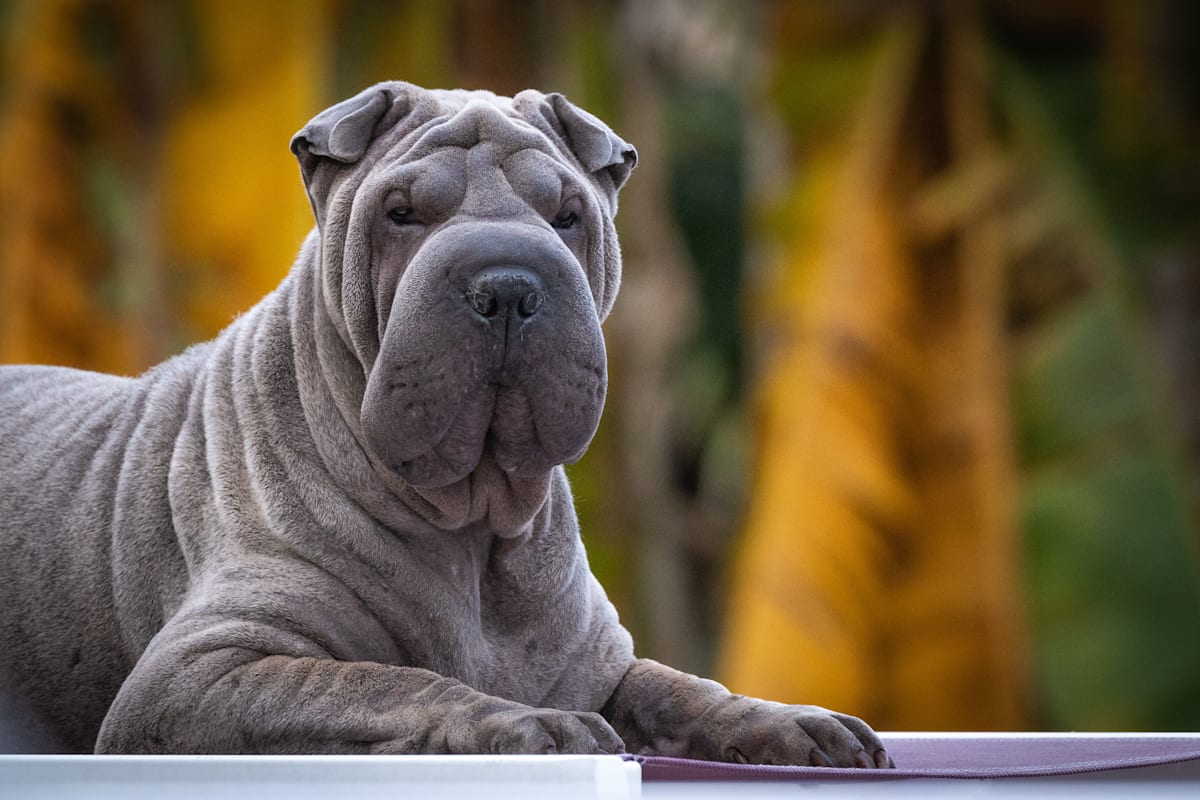
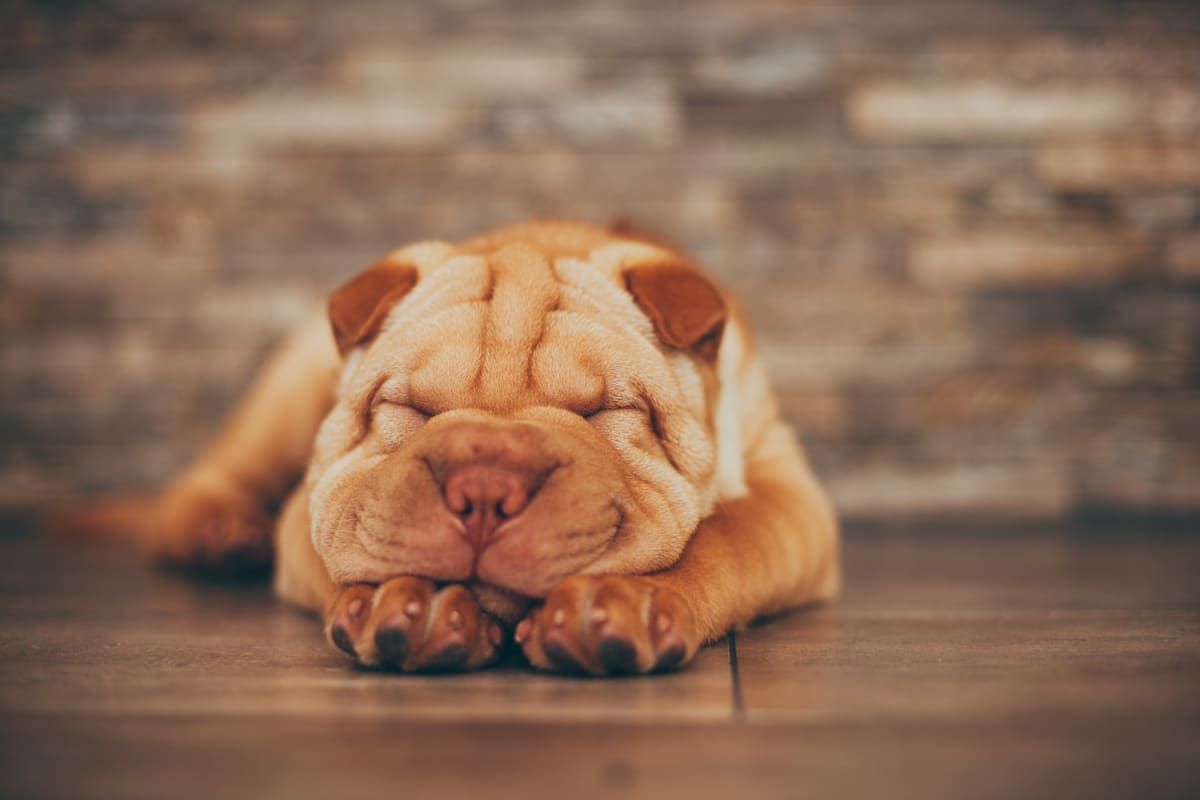
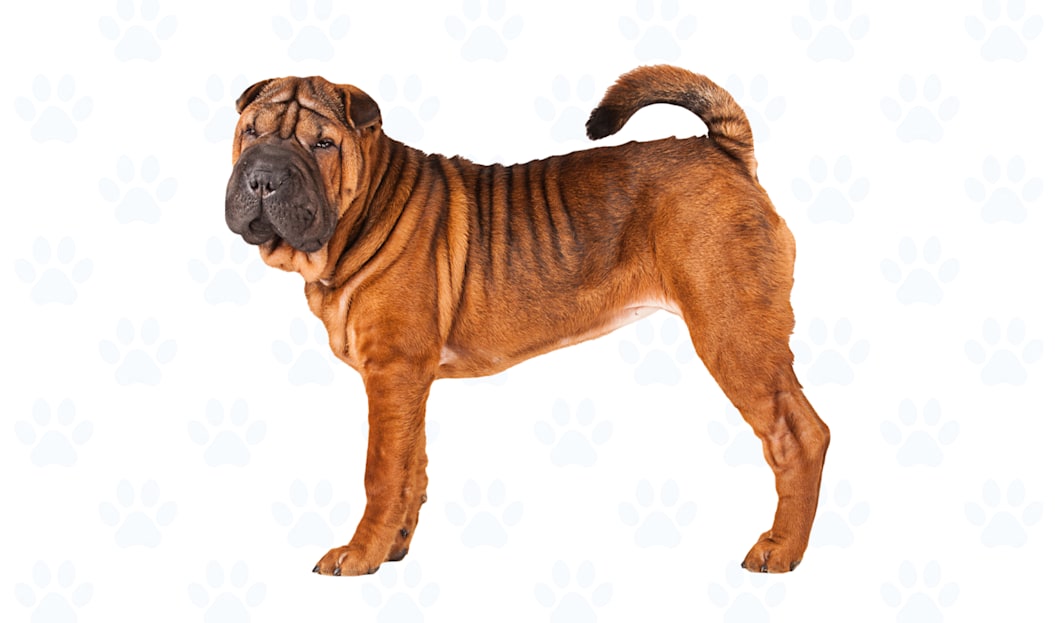
Shar-Peis have a unique appearance with with distinctive skin folds. Small, triangular ears and blackish-blue tongues complete a broad, wide head that is sometimes said to resemble that of a hippopotamus. Their bodies are fairly compact and powerful relative to their heads. Tails are high set and fold over the back.
The AKC recognizes 18 colors and 7 markings for the Shar-Pei. Acceptable colors include black, black sable, blue, blue dilute, brown, chocolate dilute, cream, fawn, red, and white. Acceptable markings include brindle, mask, pointed, and sable.
Male Shar-Peis are usually 18 to 20 inches tall at the shoulders and weigh 50 to 60 pounds. Females are usually 17 to 19 inches tall and weigh 45 to 55 pounds.
| Full Grown | |
|---|---|
| Female | 17 in. / 45 lbs. |
| Male | 20 in. / 50 lbs. |
Height is measured up to the shoulders.
Male Shar-Peis are usually 18 to 20 inches tall at the shoulders. Females are usually 17 to 19 inches tall.
Male Shar-Peis weigh 50 to 60 pounds, while females range between 45 and 55 pounds.
Though Shar-Peis are large dogs, they are usually fairly calm and docile. They can easily handle apartment living, but will still need moderate amounts of daily exercise.
When fully grown, Shar-Peis are fairly calm dogs who enjoy spending quiet time watching over their owner. In order to stay healthy they still require some exercise, but a casual daily walk or two are usually sufficient.
Shar-Peis develop a strong bond with their owner and can be quite affectionate towards them. However, they are suspicious of strangers and can be aggressive towards other dogs or people if they have not been properly socialized.
Shar-Peis were originally bred to work as guard dogs, so they have strong protective instincts. They are naturally suspicious of strangers, and will need to be trained to distinguish between friend and foe.
The same instincts that make Shar-Peis a great guard dog can get them into trouble elsewhere. If they are raised in a household with children, they can easily become accustomed to them, but interactions should always be closely supervised.
Shar-Peis are loyal and receptive to training, but they have a stubborn streak and can be dangerous if improperly socialized. Training needs to begin early and owners need to show strong leadership to succeed.
Shar-Peis have short hair and good self-cleaning habits, so shedding is usually fairly light.
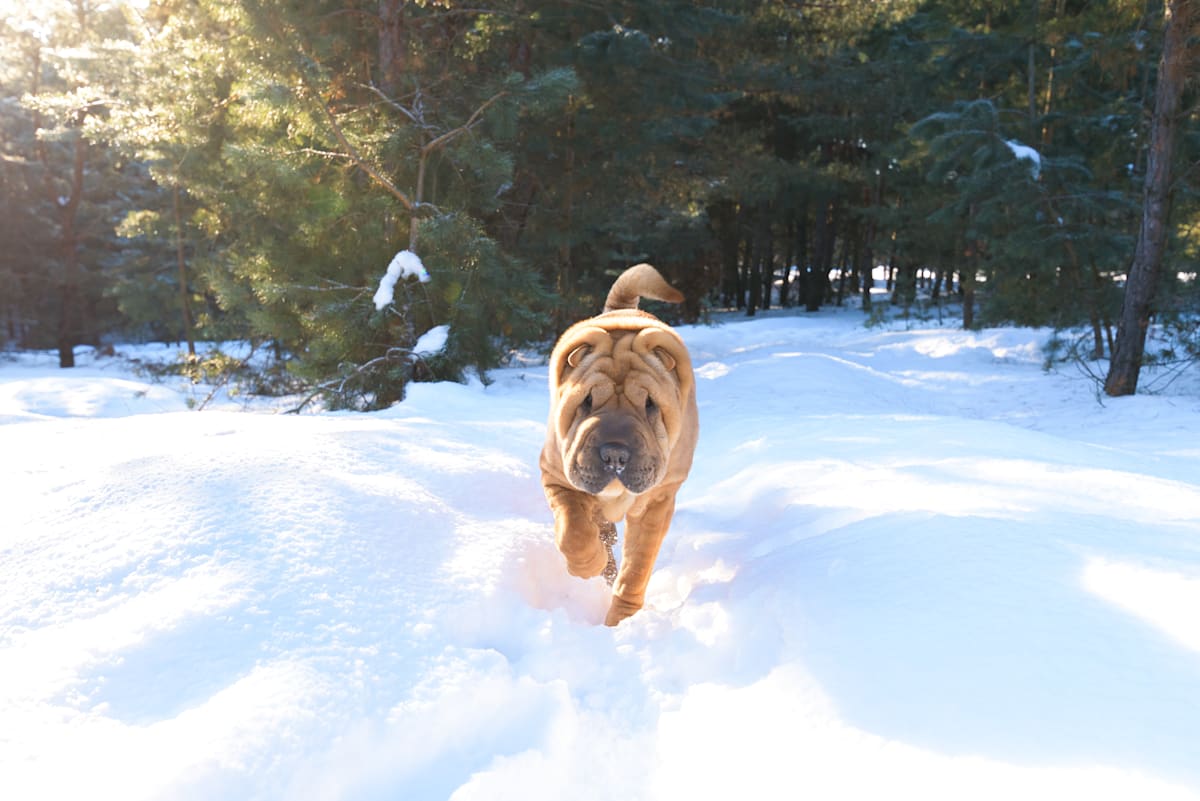
Shar-Peis are best suited for owners who live in places with a mild climate. Their short hair does not keep them warm during cold winters, and their short noses causes them to overheat in the summer.
Shar-Peis can be territorial, and will bark when alarmed. If everything is as it should be, a Shar-Pei prefers to keep silent.
Shar-Peis are calm, dignified companions who prefer to rest silently at the side of their beloved owner. They grow very close with their master, but can have trouble connecting with strange people and dogs. Early socialization and training is essential for Shar-Peis because it helps them properly calibrate their protective instincts. If they are exposed to a wide variety of people and other dogs as young puppies, they should be much less aggressive and excitable later in life. If you are ever in danger, expect your Shar-Pei to respond to the situation instinctively. Though some find these dogs to have a comical appearance, they can be quite frightening when provoked.
Shar-Peis are not known to be prolific barkers, but they have strong territorial and protective instincts, so they will bark when surprised. When they are properly trained, Shar-Peis will display a calm, confident demeanor, and are unlikely to be overly aggressive. They will never be the type of dog to run over to strangers and greet them happily, but they should have no trouble in most social situations.
Shar-Peis were once bred to guard farms from predators, so they can sometimes be aggressive towards other animals. When you walk your Shar-Pei, it is advisable to keep them leashed in case they meet another dog who seems threatening. At home, Shar-Peis are known to be fairly docile. They can tolerate being left alone better than many breeds, but they cannot reach their full potential if they do not feel included into the family. They are happiest when they are allowed to spend their time quietly watching over their owner.
Like other breeds with a guard dog's instincts, Shar-Peis can be a bit more of a challenge to train than the average dog. An improperly socialized Shar-Pei can be dangerous to people and pets, so owners will need to be prepared to dedicate themselves to a thorough training regimen from day one. Shar-Peis can be somewhat willful and stubborn, and they do not respond well to harsh scolding or cruelty. However, Shar-Peis are known to be incredibly loyal to humans that take the time to develop a special relationship with them. If you begin training early and expose a Shar-Pei to many different people and dogs while it is young, you should end up with a dog that is calm and protective; a true best friend.
Shar-Peis are not particularly active dogs. Their short snouts cause them to overheat if they run for too long without a rest, so they do not make very good jogging companions. If a Shar-Pei senses a threat to their owner, they can respond surprisingly quickly, but for the most part they are happy to spend their days lounging in the company of their human family.
Shar-Peis still need to go on daily walks to stay healthy and fit. One or two short daily walks of 15-20 minutes should be enough to keep a Shar-Pei satisfied. In hot weather, you will need to carefully monitor your Shar-Pei for any signs of exhaustion, and should ensure that they spend the majority of their time indoors in a cool place. They are also sensitive to cold, so walks might need to be shortened during the winter.
Enjoys some moderate exercise every now and then
Although Shar-Peis do not have an extensive exercise requirement, they can still become overweight if they receive insufficient exercise and too much food. Avoid offering table scraps or too many treats, since these goodies can quickly pack on the pounds. Instead, offer your Shar-Pei portion controlled meals of a high quality balanced diet.
Average daily consumption for an adult Shar Pei is 1.5 to 2 cups
Many of the more common health conditions in the Shar-Pei are associated both with their distinctive skin folds and being a brachycephalic breed with a compressed face, resulting in nasal abnormalities. While there is no definitive way to prevent most of these conditions, keeping your Shar-Pei at a healthy body weight can be beneficial in decreasing some of the respiratory problems associated with brachycephalic breeds.
Genetic screening tests are available for some of these conditions, and are typically performed by responsible breeders to decrease the incidence of some conditions within the Shar-Pei breed. However, not every health concern has a screening test available.
Even if your Shar-Pei seems to be in the peak of health at home, it is important to maintain routine visits to your veterinarian to detect subtle changes. Likewise, if you observe any changes or concerns in your Shar-Pei at home, including fevers, lameness, itching, skin changes, squinting, eye discharge, protruding eye(s), or breathing problems, be sure to consult your veterinarian urgently.
There are a number of health conditions that occur in Shar-Peis either due to inheritance or occuring at an increased frequency within the breed. Many of these conditions are associated with the Shar-Pei’s notable skin folds. These conditions may include, but are not limited to, the following: Atopic dermatitis, Demodectic mange, Cutaneous mucinosis, Congenital megaesophagus, Hepatic amyloidosis, Hiatal hernia, Patellar luxation, Hip dysplasia, Elbow dypslasia,Cutaneous histiocytoma, Entropion, Glaucoma, Lens luxation, Prolapsed gland of the third eyelid (cherry eye), Shar-Pei Fever and Brachycephalic airway syndrome.
On average, Shar-Peis live to be about 8 to 12 years old.
Shar-Peis have short, bristly hair that is fairly low maintenance. Brushing can be done once a week, and bathing only needs to be done occasionally. After a Shar-Pei has been washed, owners will need to take particular care to ensure that no water becomes trapped within the folds of their skin, or infections can develop. Shar-Peis are also prone to ear infections, so owners will need to check and clean this area regularly. Some Shar-Peis can be sensitive about being handled, so be sure to start a grooming routine while your dog is still young.
Short
Occasionally
Shar-Peis are not known to be prolific shedders. Their hair is fairly short, and they do not have a thick undercoat like some other breeds. As long as you make time for brushing once a week, the amount of hair that accumulates inside your home should be minimal.
The Shar-Pei breed originated in Southern China. The name “Shar-Pei” is derived from the Cantonese “Sa Pieh”, meaning “sand skin”, which refers to the breed's short, bristly coat. The ancient roots of the breed are uncertain; some statues of dogs resembling Shar-Peis have been discovered that date to 200 BC, but they could be depictions of other Chinese breeds. Shar-Peis traditionally worked as guard dogs on farms.
After the Communist Revolution in China, the breed nearly died out. Matgo Law, a businessman from Hong Kong, was instrumental in saving Shar-Peis from extinction. In 1973, he made a public plea to dog fanciers across the world asking for help. Dog lovers in America heeded Matgo Laws call, and the breed was brought to the United States that same year.
The Chinese Shar-Pei Club of America was established in 1974. Shar-Peis were accepted into the American Kennel Club Miscellaneous Class in 1988. In 1991, the AKC placed Shar-Peis in the Non-Sporting group.