Working Group
Dogs of the Working Group were bred to perform such jobs as guarding property, pulling sleds and performing water rescues.
St. Bernards hail from the Western Alps, a region encompassing parts of France, Switzerland, and Italy. Their lineage can be traced back to the ancient molosser dogs first brought into the region by the Romans. They became famous for their work as rescue dogs for the monks at the hospice of the St. Bernard passes, an inhospitable mountain region. The modern St. Bernard is a true “gentle giant”, a patient and good-natured companion for families around the world.
Origin: Switzerland, France, Italy Other Names: Saint, Alpine Mastiff
Dogs of the Working Group were bred to perform such jobs as guarding property, pulling sleds and performing water rescues.
Working Group dogs have been invaluable assets to man throughout the ages. The Doberman Pinscher, Siberian Husky and Great Dane are included in this Group, to name just a few. Quick to learn, these intelligent, capable animals make solid companions. Their considerable dimensions and strength alone, however, make many working dogs unsuitable as pets for average families. And again, by virtue of their size alone, these dogs must be properly trained.
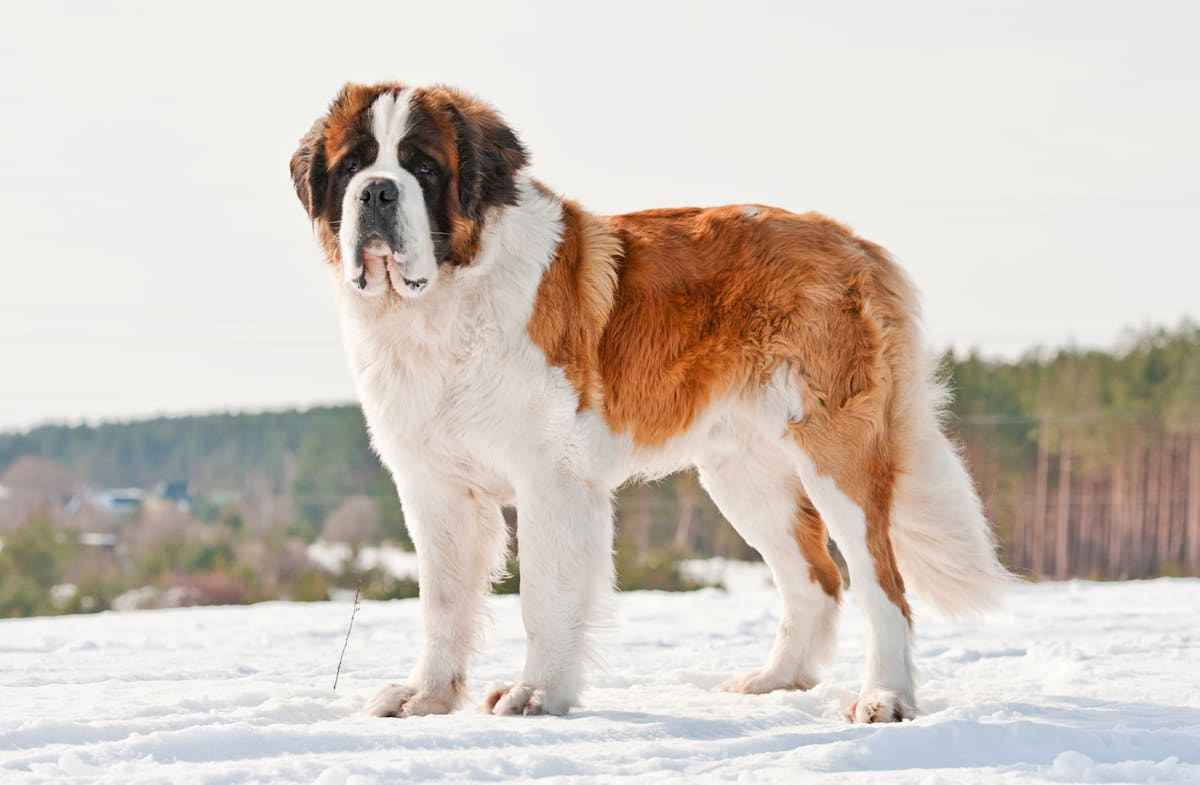
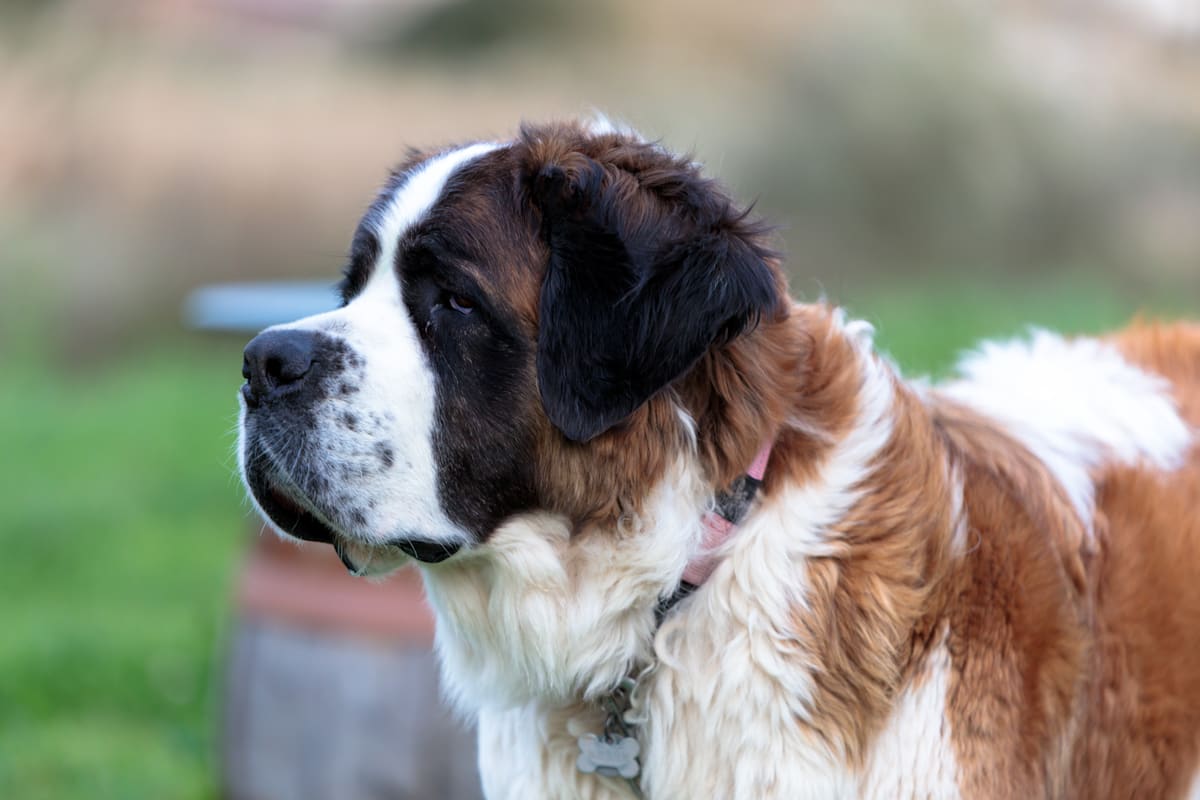
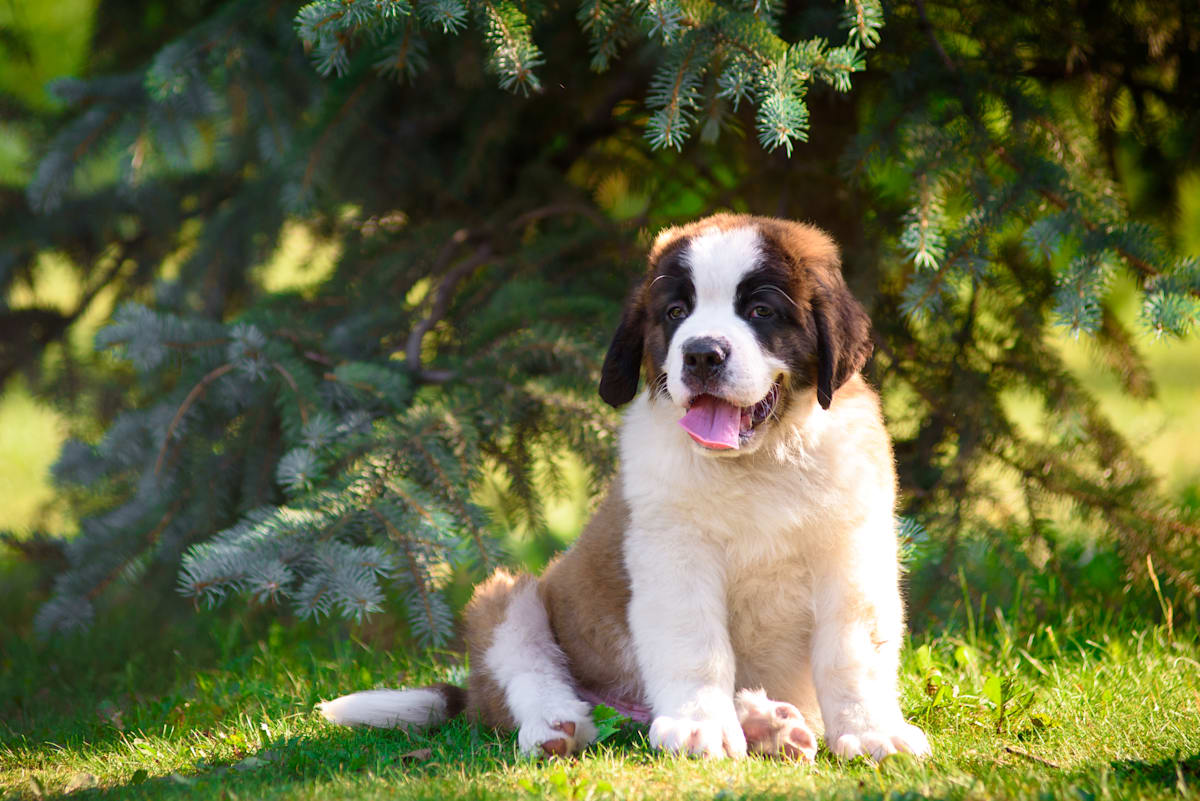
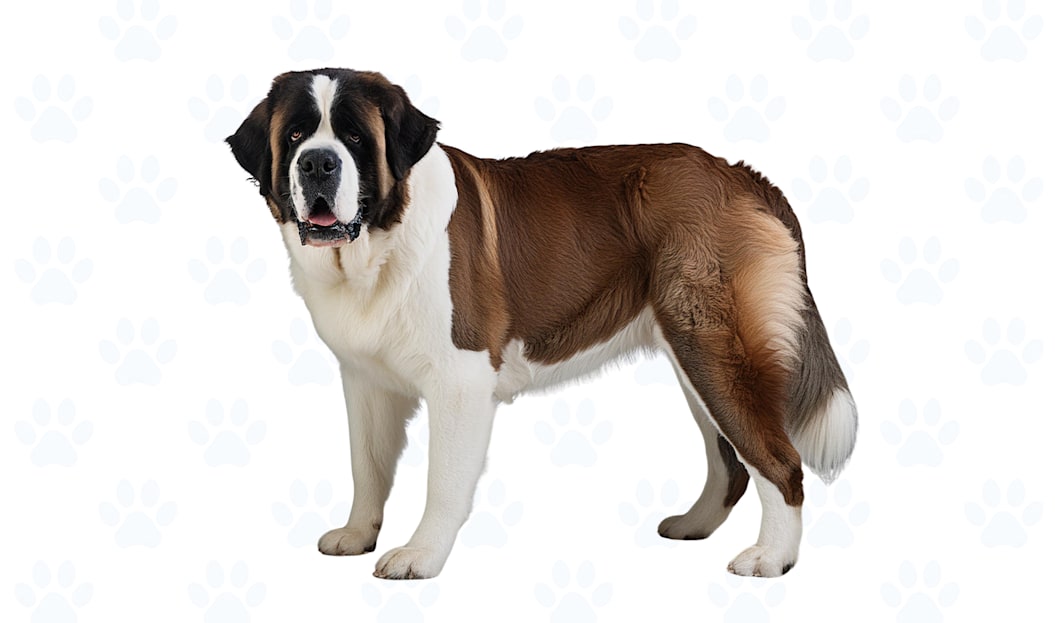
St. Bernards are tall and muscular. They have an intelligent, kind expression, large triangular ears that hang down beside the head, and a broad nose. Their neck, shoulders, and legs are robust and powerfully built.
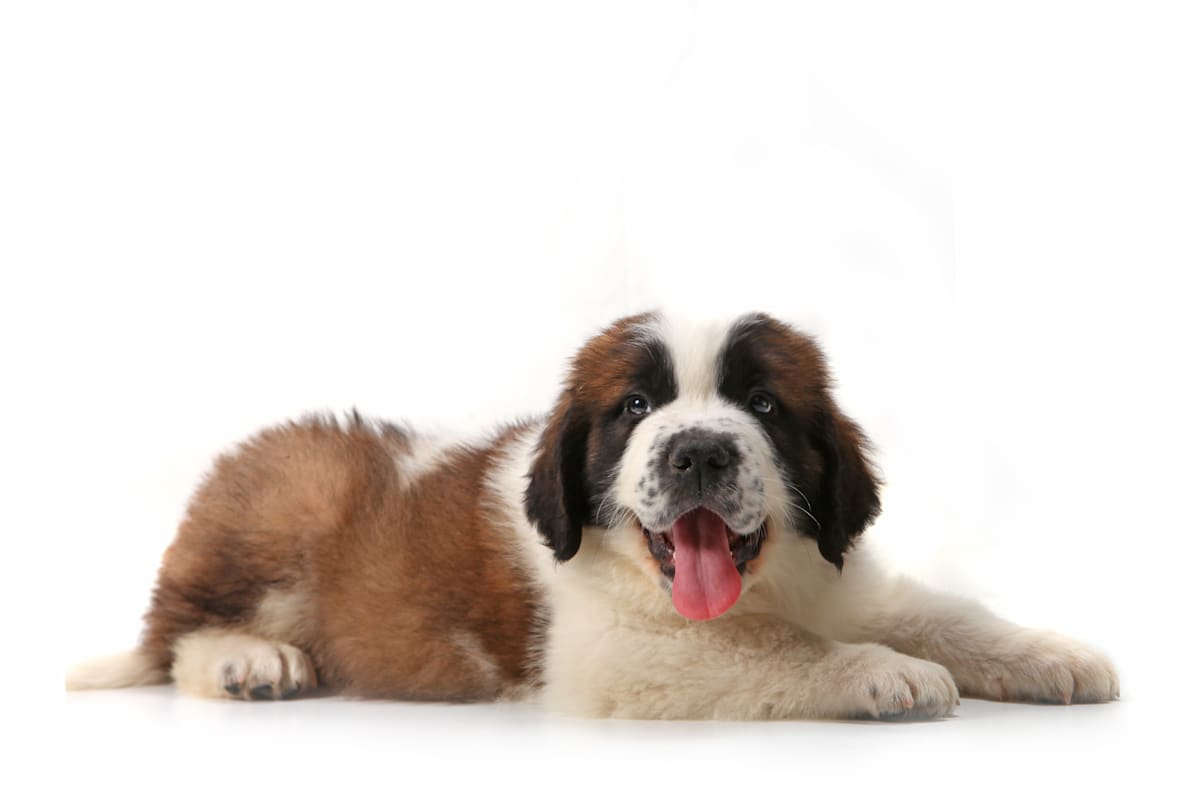
The AKC recognizes nine standard St. Bernard colors: brindle grizzle, brown and white, mahogany and white, orange and white, red and white, rust and white, white and brown, white and orange, and white and red. The black mask on the face is considered standard. St. Bernards can have short or medium length hair, with a coat that is always dense but never curly.
Male St. Bernards weigh between 140 and 180 pounds, and stand 27 to 30 inches tall at the shoulders. Females are slightly smaller, weighing in between 120 to 140 pounds and 26 to 28 inches tall at the shoulders.
| Full Grown | |
|---|---|
| Female | 28 in. / 120 lbs. |
| Male | 30 in. / 140 lbs. |
Height is measured up to the shoulders.
Male St. Bernards stand 27 to 30 inches tall at the shoulders. Females are slightly smaller, standing 26 to 28 inches tall at the shoulders.
Male St. Bernards weigh between 140 and 180 pounds. Females are slightly leaner, weighing in between 120 to 140 pounds.
St. Bernards are giant animals that naturally take up a considerable amount of space. When they are young, they can be fairly rambunctious, so they need plenty of space to romp. When they mature, St. Bernards mellow considerably, and are more capable of living in smaller spaces.
Young St. Bernards are full of energy and generally require more human companionship and playtime. Owners need to carefully monitor their activity level to prevent health problems. When they reach maturity, St. Bernards should be content with one or two moderately long walks per day.
St. Bernards are known for their sweet, gentle dispositions. They are intelligent and loyal, and wish to spend as much of their time as possible in the company of their owner. They are known to be extremely patient with children. If they are well socialized, they usually get along well with other pets.
The massive size of a St. Bernard is enough to act as a deterrent to most troublemakers. St. Bernards do not look for trouble and are not instinctively territorial, but if they feel like their owner is threatened, they will respond.
St. Bernards are renowned for their easygoing ways around children. Patient and affectionate, they are perfect family dogs. However, their sheer size means that they could accidentally hurt a child by stepping on them, so supervision is always necessary.
As with all large dogs, St. Bernards must be socialized and trained from an early age. As they grow to maturity, they can be somewhat willful, but they have a strong liking for human companionship and aim to please. If they receive proper guidance from their owner they mature into wonderful, obedient dogs.
St. Bernards can have short or medium length coats, but owners of both varieties need to be prepared to deal with a large amount of pet hair. Near daily grooming is a necessity for St. Bernard owners.
St. Bernards are mountain dogs, so they do very well in cold climates. However, they can easily become overheated in hotter locales, so owners in such places must be very careful to establish a routine that keeps their pet comfortable.
Most St. Bernards are fairly quiet animals who will only bark when alarmed. As with most breeds, early socialization and training is important to ensure that they are comfortable with strangers.
St. Bernards are known for their mild, gentle dispositions. They are not overly affectionate or attention seeking, but they will develop a deep bond with their owners and have a strong need for human companionship. They are sensitive to the feelings of their owner, and can display a wide range of emotions. Their lineage as a working dog means that St. Bernards love to participate in sports like tracking or cart pulling. When they are properly socialized, they are excellent playmates for children and are friendly towards strangers.
St. Bernards are usually fairly quiet dogs, but when they do bark, it is a deep, resounding sound that can disturb neighbors. Make sure that you expose your young St. Bernard to many different people and places to ensure that you do not raise a fearful animal prone to excess barking.
When they are young, St. Bernards need a structured environment and an owner who is not afraid to step up to take command of a situation. They can be somewhat stubborn, so consistent training is essential. If they are left to their own devices, their strength and size can make them a real handful. St. Bernards can become morose and destructive if they are left alone for long periods of time, and they can do serious damage to your home. St. Bernards are best suited for owners who have plenty of time to spend with them and enough energy to deal with their youthful rambunctiousness.
St. Bernards are intelligent and personable, and usually respond well to training. Starting from an early age is essential because once they are fully grown bad habits can have serious consequences. Exposure to many different people and places helps a St. Bernard grow up to become calm and confident. As they grow, some St. Bernards, especially males, can be somewhat willful, and will attempt to wrest control from their owner. Make sure to stay firm and consistent, and this stage will pass. St. Bernards can take longer to mature than other breeds, so don’t be alarmed at occasional misbehavior. Once they are fully grown, a properly trained St. Bernard should be a wonderful companion that fits seamlessly into your family.
Young St. Bernards can be quite excitable and require extra attention, so owners need to be prepared to commit even more time to their dog during this phase. Try to keep your dog from playing on slippery surfaces when they are young, as this can cause health problems later in life. St. Bernards grow very rapidly, so owners must strike a careful balance between sufficient exercise and rest as they mature.
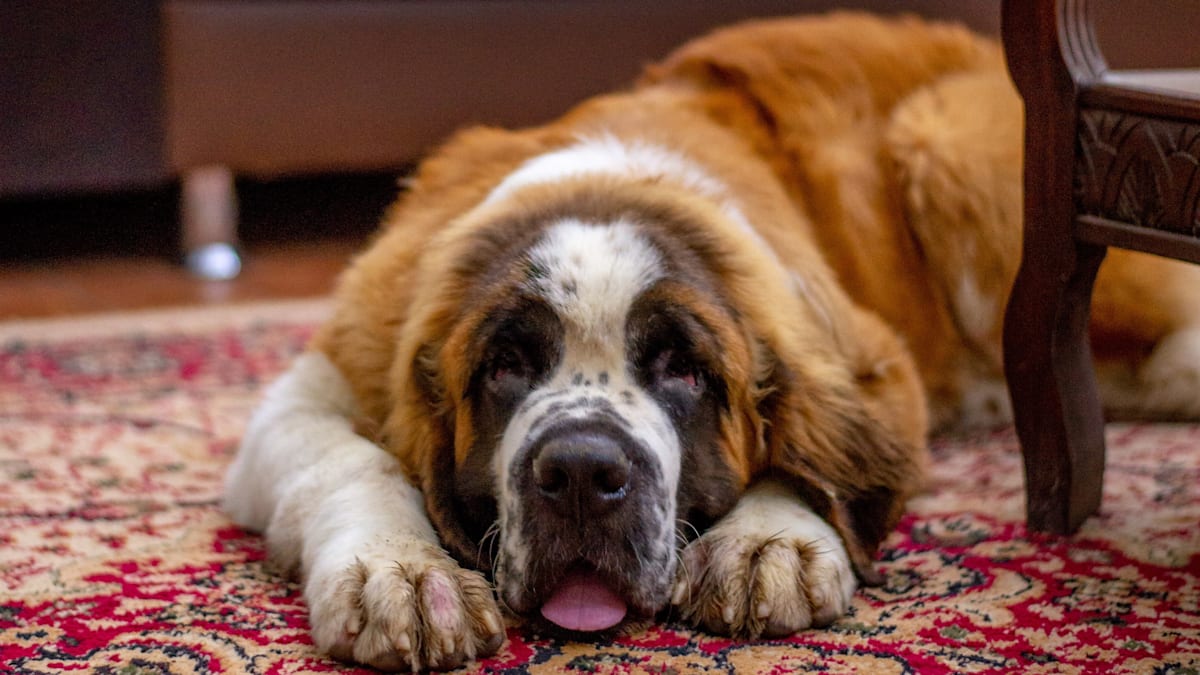
Once they are fully grown, St. Bernards usually become quite docile and gentle. They are happy to simply lie in the same room as their owner, keeping watch over everything. Left on their own, hey can be fairly lazy, so owners need to be diligent about taking them for walks to prevent weight gain.
Enjoys some moderate exercise every now and then
Weight management is particularly important for St. Bernards since they are prone to developing a variety of joint conditions. Foods designed for weight management may be helpful in this breed, but the most crucial step in maintaining a healthy body weight is by feeding carefully measured and portion-controlled meals. Avoid offering too many treats or table foods, and consider frequent weight checks to keep your St. Bernard in optimal condition.
Average daily consumption for an adult St. Bernard is 4-6 cups daily
Many of the common health problems found in the St. Bernard are related to the giant size of these dogs. Their huge size places additional strain on the joints, which can lead to problems both in young, growing dogs, and mature, adult dogs. It is important to strike a balance between sufficient amounts of exercise, while not overdoing things in growing St. Bernards. Maintaining a healthy body weight is of the utmost importance for these giants. Omega 3 fish oil supplements may also be beneficial for decreasing inflammation within the joints.
St. Bernards are more predisposed to developing a pyometra than other breeds, which is a serious uterine infection. Fortunately, this condition can be avoided by spaying female dogs.
As a deep-chested giant breed, St. Bernards are susceptible to developing gastric dilatation-volvulus (GDV), which is commonly known as bloat. With this condition, the stomach fills with air and/or food, and then flips on itself, preventing the contents of the stomach from emptying. This is a serious and life-threatening condition. A surgical procedure called a gastropexy can be performed to attach the stomach to the body wall, preventing it from twisting. Avoid exercise or any strenuous activity for at least 1-2 hours before or after meals. Feeding two smaller meals per day rather than one large meal can also be beneficial in decreasing the risk of a GDV.

There have been many health conditions associated with the St. Bernard that either occur at an increased frequency within the breed or have a genetic association. Many of these conditions are related to the giant size of these dogs, leading to a variety of orthopedic problems. These conditions may include, but are not limited to, the following: Dilated cardiomyopathy, Callus dermatitis, Pyotraumatic folliculitis, Primary hypoparathyroidism, Gastric dilatation-volvulus, Cranial cruciate ligament rupture, Elbow dysplasia, Hip dysplasia, Osteosarcoma, Panosteitis, Osteochondritis dissecans, Congenital deafness, Idiopathic epilepsy, Cataracts, Dermoids, Ectropion, Entropion, Eversion of the cartilage of the third eyelid, Macroblepharon, Multiple ocular defects with microphthalmia, Prolapse of the gland of the third eyelid and Pyometra.

On average, St. Bernards live to be about 8 to 10 years old.
St. Bernards have thick hair and they love to play outside in all conditions. This means that regular grooming is not optional. You should give your dog a thorough brushing at least three times per week. Sometimes a detangling solution will be necessary to remove mats from their hair. Extra sessions will be necessary during shedding season if you don’t want your house to fill up with hair. Drool is unavoidable with these gentle giants, so try to keep a towel on hand at all times. Sometimes the eyes need to be gently wiped with a warm washcloth to combat buildups. Ear cleaning and nail trimming is also an important part of a good grooming routine.
Short to Medium
Frequent
If you are considering a St. Bernard as a pet, you need to be prepared to deal with a certain amount of hair in your home. No matter how thorough your grooming routine may be, St. Bernards will manage to leave hair around the house. However, if you get your dog accustomed to grooming from an early age and follow a consistent schedule, you should be able to keep things under control.
St. Bernards are the descendents of large farm dogs in the Western Alps. It is thought that the Romans first introduced these dogs into the region. The first written records of the St. Bernard come from the monks at the hospice of the Greater St. Bernard Pass in the early 1700’s. The monks used this special breed of dogs for locating travelers lost in the pass during snowstorms. These older St. Bernards were smaller than the St. Bernards of modern times.
During a few particularly harsh winters in the 19th century, many of the original St. Bernards were lost to avalanches, so the remaining animals were crossbred with Newfoundland dogs in an attempt to preserve the lineage. This resulted in a larger dog with a longer coat that would become frozen in the snow, making them less useful in rescue operations.
The Swiss St. Bernard Club was founded in 1844. The breed soon became recognized as a Swiss national dog. Around 1883, a St. Bernard named Plinlimmon, owned by a famous actor of the day, was the first St. Bernard to become well known in America. The American Kennel Club first recognized the breed in 1885.