Hound Group
Most hounds share the common ancestral trait of being used for hunting.
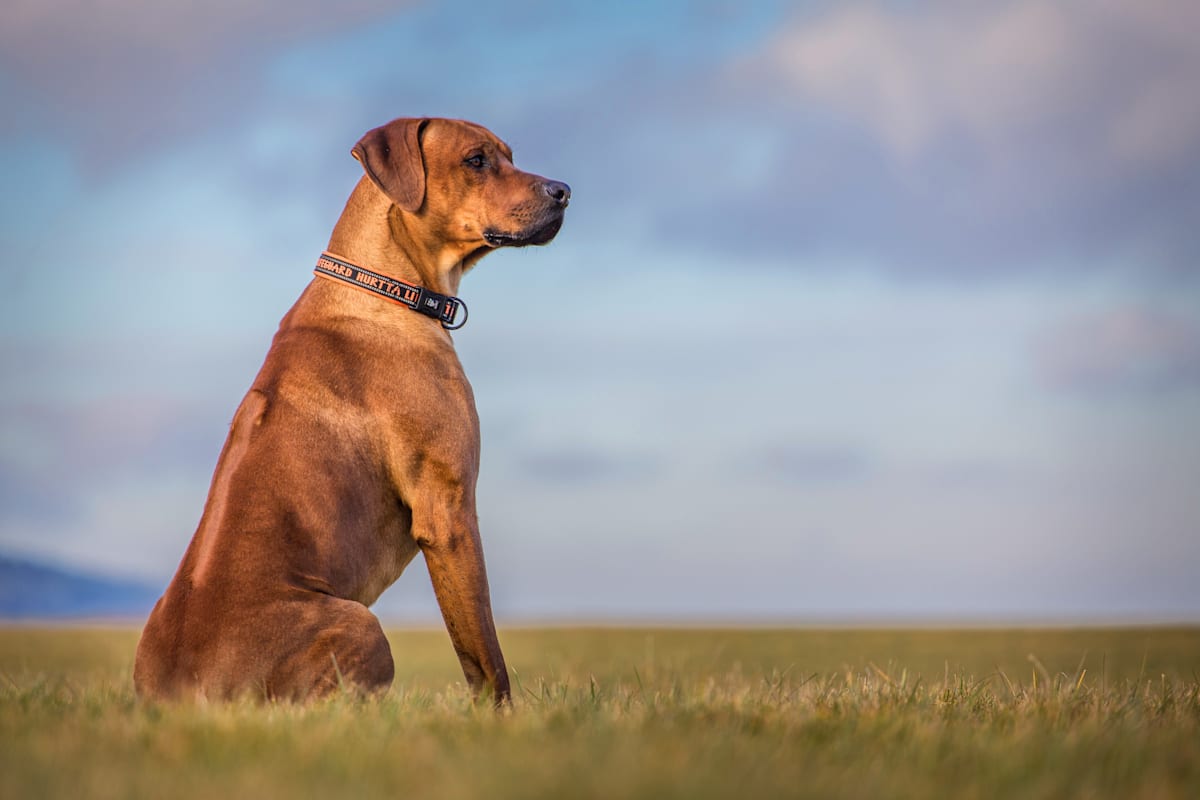
The Rhodesian Ridgeback is an active, courageous, and devoted large dog breed hailing from Zimbabwe and South Africa. The breed requires vigorous daily exercise and is well suited to active families able to devote plenty of time and space. They are intelligent, but independent, making them less-than-easy to train. Ridgebacks have a dense, short coat that is simple to maintain and sheds minimally. When well socialized, they can learn to cohabitate with other dogs and animals, and accept new people into their circle. If not socialized, the breed can become predatory and aggressive. Ridgebacks are not recommended for first-time dog owners, as they require confident and consistent leadership. With the right care and attention, the Ridgeback makes an admirable companion or working dog that is well adjusted to home and family life.
Origin: Zimbabwe, South Africa Other Names: Ridgeback, African Lion Dog, Simba Inja
Most hounds share the common ancestral trait of being used for hunting.
Most hounds share the common ancestral trait of being used for hunting. Some use acute scenting powers to follow a trail. Others demonstrate a phenomenal gift of stamina as they relentlessly run down quarry. Beyond this, however, generalizations about hounds are hard to come by, since the Group encompasses quite a diverse lot. There are Pharaoh Hounds, Norwegian Elkhounds, Afghans and Beagles, among others. Some hounds share the distinct ability to produce a unique sound known as baying. You'd best sample this sound before you decide to get a hound of your own to be sure it's your cup of tea.
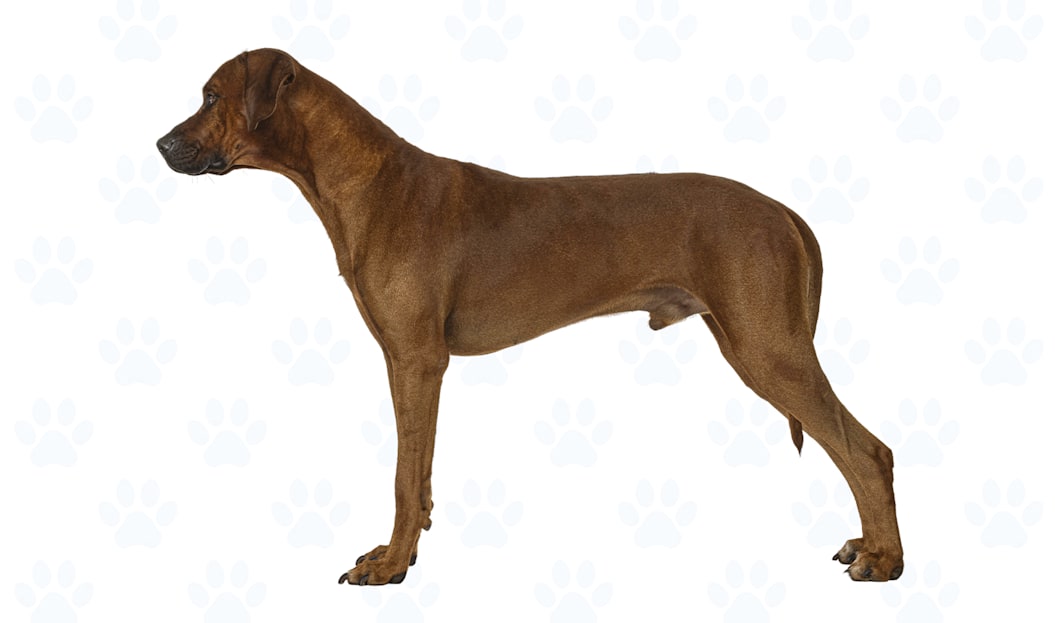
The Rhodesian Ridgeback is a large, muscular breed with a light tan or red colored coat, folded ears, and a long tail. The breed’s identifying characteristic for which it is named, is a ridge of hair that grows against the grain of the coat and runs along the spine. The ridge should be symmetrical and clearly defined from the shoulder blades to the hips.
Ridgebacks have a blocky head with wide-set eyes and a thick, long muzzle. Their expression is intelligent and steady. They are long legged and sturdily built – equipped for endurance and extreme conditions. The Ridgeback’s coloring includes many shades of tan, from light to red wheaten, with black or brown noses, and light markings. Their coat is short, sleek, and coarse.
Ridgebacks are a large breed, standing 24-27 inches tall at the shoulders and weighing between 70-85 pounds. Their build is thick-boned and muscular.
| Full Grown | |
|---|---|
| Female | 24 in. / 70 lbs. |
| Male | 27 in. / 85 lbs. |
Height is measured up to the shoulders.
Ridgebacks are a large breed, standing 24-27 inches tall at the shoulders.
Ridgebacks are thick-boned and muscular, weighing between 70 and 85 pounds.
Ridgebacks are large, active dogs. Although they can adapt to living in an apartment, an outdoor area with a high fence would be better for their high activity levels.
Ridgebacks need a considerable amount of daily exercise. Get your triathlon gear ready, because these dogs will eagerly run, swim, and chase a cycle.
The Ridgeback is a loving family companion, but is not particularly sociable. Around strangers, Ridgebacks are politely reserved, requiring more time to earn their trust and affection.
Because Ridgebacks are large, protective, aloof, and seldom bark, they can be counted on as watchful guard dogs. They should be well socialized in their early years to make sure their protective instincts don’t lead to aggression later in life.

Because of their high energy and ruggedness, the Rhodesian Ridgeback can be a great companion for older children. For the same reasons, they should be supervised around small children and toddlers.
Ridgebacks are intelligent and devoted, but also confident and independent. With proper training they make enjoyable, hard-working companions. Without training they can go rogue.

Ridgebacks have a low-maintenance, short-haired coat that sheds a minimal amount. Keep their skin healthy and grooming should be a snap.

Ridgebacks are bred to withstand extreme temperatures, and are tolerant of both heat and cold.
Ridgebacks don’t bark very often. If they’re suspicious or uneasy, they may growl instead.
The Ridgeback is a courageous, independent, hard-working breed. They seek the approval of their owners without being overly needy or driven to please. Their self-confidence can be attributed to hound heritage and their original purpose of cornering big game (like lions!) during long, cross-country hunts. Bred for hunting, the Rhodesian Ridgeback has retained a high prey drive, and their athleticism makes them expert escape artists. Any yard or enclosure meant to contain a Ridgeback needs to be securely fenced.
In the house, Ridgebacks are typically calm. They need strong leadership within the family and tend to be wary of strangers and unknown animals. For this reason it’s important they are well socialized and taught to follow the leader’s example when it comes to unfamiliar people and situations.
Ridgebacks rarely bark, raising the alarm only when they find a cause for concern. Instead, they’ll usually growl in warning and suspicion. Their bark is throaty and deep, attributed to their hound roots. If a Ridgeback is barking excessively, it is probably bored and suffering from a chronic lack of exercise or mental stimulation.
The Ridgeback is intelligent, independent, and confident, leaving the results of training to the determination and imagination of the trainer. There is no doubt that in order to become well behaved and trustworthy, they need consistent, firm leadership from an owner who is prepared to follow through. Training can be a challenge because Ridgebacks crave variety and don’t respond well to repetitive or heavy-handed techniques. Strong in body and mind, you can’t force them to do things your way. Instead, you’ve got to find a way to motivate them—a curriculum of short, challenging lessons punctuated by food is recommended.
Ridgebacks are an active, powerful breed that requires considerable amounts of daily exercise and challenge. This isn’t the kind of dog (in temperament or size) that’s satisfied with a couple of 10-minute walks around the block. Ridgebacks need plenty of opportunities to burn off steam and are best suited to active owners who are willing to run, swim, hike, and play with them. As a reward, the Ridgeback can be a calm couch potato after their physical demands have been met.
Ridgebacks have some common potential behavioral concerns and may not be ideal for the first-time owner. As large breeds, they enter adulthood later, slowly leaving behind an exuberant puppyhood and many destroyed items. They can be dominant towards dogs of the same sex, and predatory towards other animals. Like any other breed, they can become aggressive if not well socialized. However, any unwanted behavior is multiplied simply by the breed’s size and energy.
Frisky, energetic breed that is always ready for action
As an active breed, Ridgebacks are not overly prone to becoming obese unless they are overfed or under-exercised. Feeding portion-controlled meals of a balanced dog food will help to maintain a healthy body weight. Avoid feeding too many treats or table foods since these will quickly pack on excess weight.
Average daily consumption for an adult Ridgeback is 2.5 to 3 cups
The more common health conditions found in the Rhodesian Ridgeback cannot be directly prevented in an individual dog. Instead, responsible breeders typically perform genetic tests on their breeding dogs to decrease the incidence of conditions in future generations of Ridgebacks. Neurologic and skin conditions, such as dermoid sinus, can occur in dogs of any age.
Routine preventative veterinary care is crucial for all dogs, including the Ridgeback. This includes annual or semi-annual physical exams, vaccinations, deworming medication, flea and tick preventative medication, and heartworm prevention. Veterinarians have been extensively trained to pick up on subtle changes before they become more severe problems. Otherwise, maintaining a healthy body weight for your dog will place less strain on their joints.
Rhodesian Ridgebacks are generally a fairly healthy breed, but health conditions can occur through an inherited basis or at an increased frequency in the breed. Screening tests are available for some conditions and are typically performed in breeding dogs by responsible breeders in an attempt to decrease the incidence of these conditions in future generations. Conditions may include, but are not limited to, the following: Dermoid sinus, Atopic dermatitis, Cerebellar cortical cell degeneration, Congenital deafness, Cataracts and Entropion.
On average, Ridgebacks live to be about 10-12 years old.
The Ridgeback’s coat is short, glossy, dense, and easy to maintain. Once a week they should be brushed with a bristle brush, and perhaps given a once-over with a rubber curry brush. Their long ears should be kept dry and clean in an attempt to prevent infection. Nail trims every 2-3 weeks and daily tooth brushing help to maintain an overall good condition.
Short
Occasional
Ridgebacks shed lightly year round, although dogs that spend more time outside may blow their coats seasonally. Because their coat is virtually odorless, they only need to be bathed a few times per year.
The Ridgeback is a utility hound breed developed by the Khoikhoi people native to the area of South Africa and Zimbabwe, and European settlers. The breed is a mix of a smaller, native dog with a hair-ridged back and breeds brought from Europe, such as the Mastiff, Great Dane, Bloodhound, and Greyhound. Ridgebacks were used to fell and track large game (including lions!), keeping them at bay until the hunters arrived on the scene. Cornelius von Rooyen initiated the first formal breeding program in Zimbabwe (then known as Rhodesia). The breed standard was set forth in 1922, and hasn’t changed much since then. After World War II, the breed presence expanded globally and was recognized by the AKC in 1955.