Working Group
Dogs of the Working Group were bred to perform such jobs as guarding property, pulling sleds and performing water rescues.
Thought to share an ancestor with the Poodle, the first Portuguese Water Dogs worked on ships driving fish into nets, carrying messages between boats, and fetching broken tackle. This history of working closely with human companions has resulted in a breed that is prized for its obedience, willingness to please, and playful personality.
Origin: Portugal Other Names: Cao de Agua, Portuguese Fishing Dog, PWD
Dogs of the Working Group were bred to perform such jobs as guarding property, pulling sleds and performing water rescues.
Working Group dogs have been invaluable assets to man throughout the ages. The Doberman Pinscher, Siberian Husky and Great Dane are included in this Group, to name just a few. Quick to learn, these intelligent, capable animals make solid companions. Their considerable dimensions and strength alone, however, make many working dogs unsuitable as pets for average families. And again, by virtue of their size alone, these dogs must be properly trained.
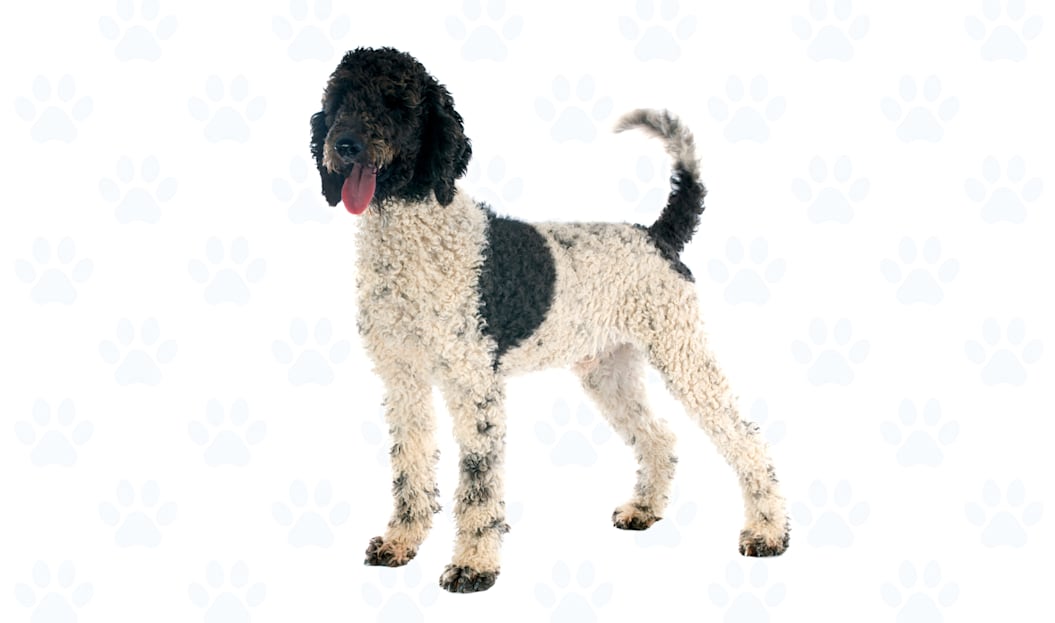
Portuguese Water Dogs should have a robust, medium-sized build. They look energetic and alert when standing, with intelligent, attentive eyes, and a large head. Their body should be muscular, with a broad chest and level back.
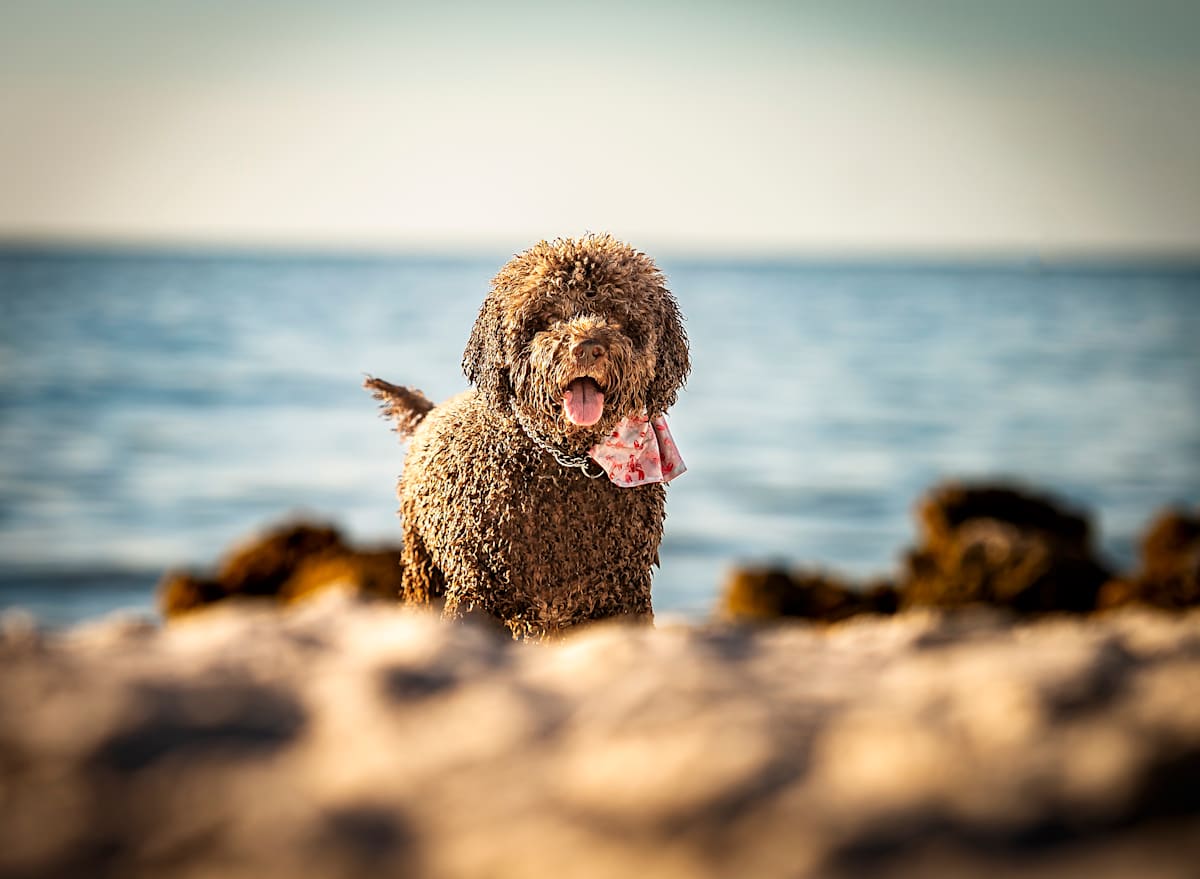
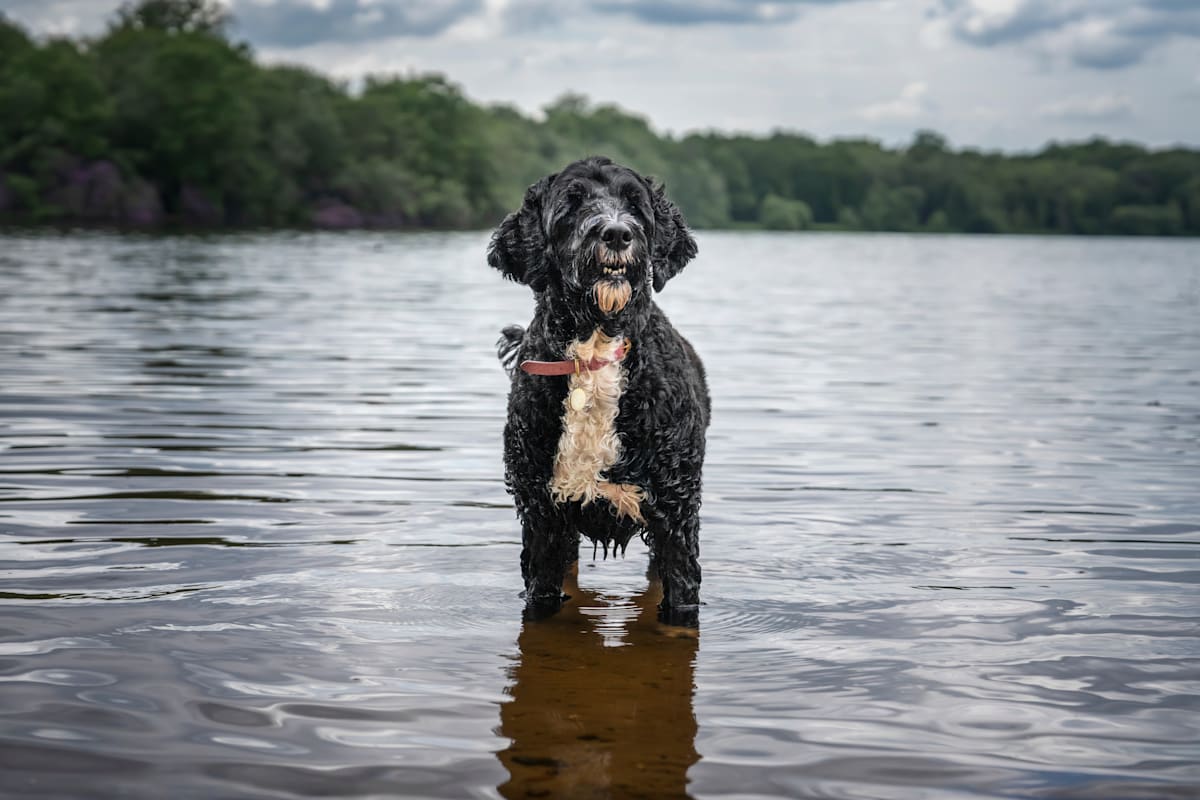
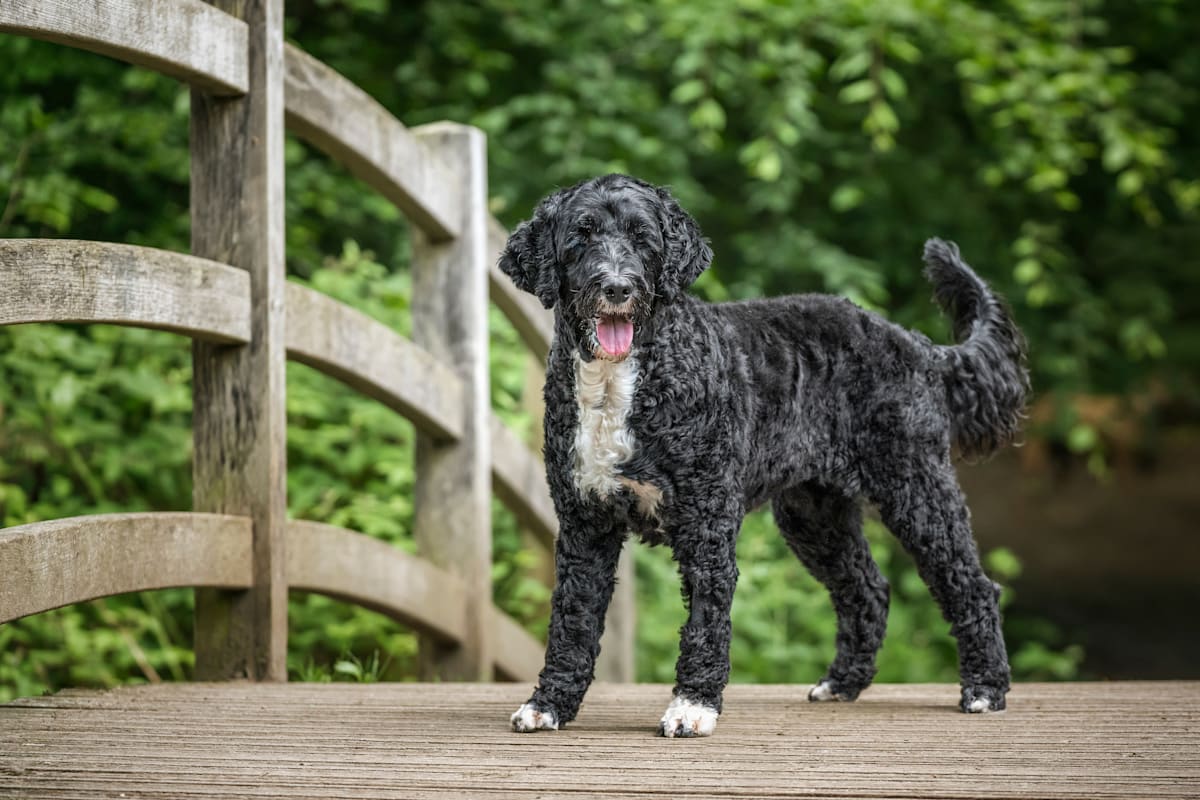
The AKC recognizes three colors for the Portuguese Water Dog: black, brown, and white. White markings on the body are acceptable. The coat can be either curly or wavy, and it can be trimmed in a lion clip, with only the lower body cut short, or a retriever clip, with the entire body shorn short.
This breed can be found in a variety of colors. You can check them out below.
Male Portuguese Water Dogs are typically 20 to 23 inches tall at the shoulders and weigh 40 to 60 pounds. Females are usually 17 to 21 inches tall and weigh 35 to 50 pounds.
| Full Grown | |
|---|---|
| Female | 17 in. / 35 lbs. |
| Male | 20 in. / 45 lbs. |
Height is measured up to the shoulders.
Male Portuguese Water Dogs are typically 20 to 23 inches tall at the shoulders. Females are usually 17 to 21 inches tall.
Portuguese Water Dog males typically weigh 40 to 60 pounds. Female PWDs weigh 35 to 50 pounds.
Portuguese Water Dogs are lively and love to play, but they are only medium-sized and often have a fairly laid back disposition. If they get enough exercise, they can be comfortable in an apartment.
Playful and energetic, the Portuguese Water Dog will usually need between 30 minutes to an hour of exercise per day. The amount can vary depending on the temperament of the individual dog.
Portuguese Water Dogs are energetic, eager to please, and quite friendly. They usually get along well with children and other pets.
Though Portuguese Water Dogs can be somewhat wary of strangers and will bark when alarmed, they are not particularly protective or aggressive.

The sunny disposition of the Portuguese Water Dog makes them a great choice for families. However, some Water Dogs can be a bit excitable, so they might be a bit overwhelming for young children.
Portuguese Water Dogs are intelligent and love to learn new commands. They can become bored with repetition, but owners often find that they are a pleasure to train.
Portuguese Water Dogs do not have an undercoat, so they do not shed as much as many other breeds. Though they are not quite hypoallergenic, they are a quite clean breed.
The thick, curly coat of the Portuguese Water Dog allows them to be fairly comfortable in colder climates. As long as their coat is kept short when the weather is warmer, they usually handle most temperatures well.
Like most breeds, Portuguese Water Dogs will bark when startled, but they are not excessively loud. They are known to make entertaining panting noises when they want to play or want to alert their owner to something.
Portuguese Water Dogs should have a cheerful, playful temperament. They are quite intelligent, so they need stimulation and entertainment to keep them from becoming bored and destructive, but they are usually satisfied simply spending time with their owner and family. The Portuguese Water Dog is quite a sociable breed that gets along well with other people and pets, but they can be somewhat reserved with strangers until they are properly introduced. These clever dogs are known as real entertainers who sometimes like to play tricks on their owners, but really they aim to please.
Like all breeds, Portuguese Water dogs need to be socialized and trained when they are young in order to mature into happy, healthy adults. A properly trained Portuguese Water Dog will usually only bark when surprised or excited, but their bark can be quite loud and has a range of tones. Portuguese Water Dogs are quite expressive, and will use other sounds to communicate with their owners when necessary.
Portuguese Water Dogs traditionally worked closely alongside their masters, so they do not do well when left alone. They are known to be a fairly jumpy breed, and can sometimes get in the habit of placing their front paws up on countertops, which can be either entertaining or aggravating, depending on the owner. Portuguese Water Dogs are usually very obedient and are smart enough to learn many commands, but they also enjoy clowning around and acting foolish to amuse their human companions.
Portuguese Water Dogs are quite intelligent and love to please, so they are fairly easy dogs to train. However, it will still take plenty of hard work to raise a dog that really stands out. Like any breed, Portuguese Water Dogs should begin their training early with exposure to many different places, people, and other dogs. They should be able to master simple commands fairly quickly, but their intelligence can sometimes make them a bit willful if training becomes too boring or repetitive. Most Portuguese Water Dogs naturally enjoy following their owner's instructions, but you should still give them plenty of praise and rewards. Owners should continue to challenge their dog to learn new things to keep them engaged. Portuguese Water Dogs excel at many dog sports including agility, obedience, and water work. They also make particularly good therapy dogs.

Portuguese Water Dogs will need between 30 to 60 minutes of exercise a day to keep them healthy and happy. However, they will also need plenty of extra human contact and attention to really thrive. This breed is not particularly well suited for busy owners who will leave them alone for much of the day.

Portuguese Water Dogs really love to swim and enjoy fetching things from the water. They are the perfect breed for a family that likes to spend time at the ocean or a cottage. They are tireless playmates that enjoy trying new things, so owners should not be afraid to take them on new adventures.


Enjoys some moderate exercise every now and then
Feeding properly measured portioned meals of a balanced diet is crucial to maintaining a healthy body weight for Portuguese Water Dogs. Avoid offering too many treats or table foods, since this can quickly pack on the pounds.
Average daily consumption for an adult PWD is 1-2 cups
Generally, the Portuguese Water Dog is a fairly healthy breed. However, health conditions can occur in any breed, and responsible breeders often perform genetic screening tests to decrease the incidence of genetically linked conditions in future generations of Portuguese Water Dogs.
Routine veterinary care is critical for Portuguese Water Dogs, as with any breed, so that any subtle problems can be diagnosed and treated before they become bigger and more serious issues. Regular flea and tick prevention, heartworm prevention, and intestinal parasite deworming are also used to keep all of these parasites away. Maintaining a healthy body weight through regular exercise and portion-controlled feeding is crucial to keeping your Portuguese Water Dog in great shape.
Several health conditions have been identified in the Portuguese Water Dog as occurring through an inherited or genetic basis, or occurring at an increased frequency within the breed. Genetic testing is available for many of these genetic conditions so that responsible breeders are able to screen their breeding dogs in an attempt to decrease the incidence of these conditions in future generations. These conditions may include, but are not limited to, the following: Dilated cardiomyopathy, Follicular dysplasia, Pattern baldness, Hypoadrenocorticism, GM1 gangliosidosis, Progressive retinal atrophy, Cataracts, Microphthalmia and Persistent pupillary membranes.
On average, Portuguese Water Dogs live to be about 11 to 13 years old
Portuguese Water Dogs have a thick coat that can be curly or wavy, so it can easily become matted or tangled. A grooming routine should be established when the dog is young, as this will help strengthen the bond between dog and owner. The coat will need to be brushed around three times per week, and the coat will need to be trimmed around once a month. If a Portuguese Water Dog spends a lot of time in the water, it should get a quick rinse with fresh water to keep the coat healthy. Nails should be trimmed around once a month, and the teeth should be brushed as often as possible.
Medium
Occasional
Portuguese Water Dogs are sometimes said to be hypoallergenic because they shed a surprisingly small amount of fur. While this is somewhat of an exaggeration, the Portuguese Water Dog can be an excellent choice for allergy sufferers who still want a canine companion. Brushing the coat a few times a week should help reduce the amount of hair that falls in the home even further.
Portuguese Water Dogs may have descended from the dogs of the ancient Goths. They certainly share some characteristics with the modern Poodle. One of the first accounts of the Portuguese Water Dog appeared in 1297 in the writings of a monk describing a black dog with curly hair who saved a man from drowning. Early Portuguese Water Dogs worked on board ships, bravely jumping into the sea to assist with all manner of tasks.
In the 1930’s, a wealthy merchant named Vasco Bensaude took an interest in the Portuguese Water Dogs and began to breed them in earnest. A particularly prolific stud dog named Leao is particularly responsible for the modern lineage. From this point on, the breed became more and more popular in their native Portugal.
The Portuguese Water Dog Club of America was formed in 1972, but at this point there were only 14 known examples of the breed in the United States. The pleasant temperament and intelligence of the breed helped it quickly grow in popularity, and the American Kennel Club (AKC) first recognized it in 1983.