Hound Group
Most hounds share the common ancestral trait of being used for hunting.
Norwegian Elkhounds are known to be as friendly as they are fluffy, and their smarts (combined with a natural wariness of strangers) make them excellent watchdogs. This strong and confident breed is also known for its hunting instinct and enjoys being active through exercise that includes swimming, agility and herding.
Origin: Norway Other Names: Elkhound
Most hounds share the common ancestral trait of being used for hunting.
Most hounds share the common ancestral trait of being used for hunting. Some use acute scenting powers to follow a trail. Others demonstrate a phenomenal gift of stamina as they relentlessly run down quarry. Beyond this, however, generalizations about hounds are hard to come by, since the Group encompasses quite a diverse lot. There are Pharaoh Hounds, Norwegian Elkhounds, Afghans and Beagles, among others. Some hounds share the distinct ability to produce a unique sound known as baying. You'd best sample this sound before you decide to get a hound of your own to be sure it's your cup of tea.
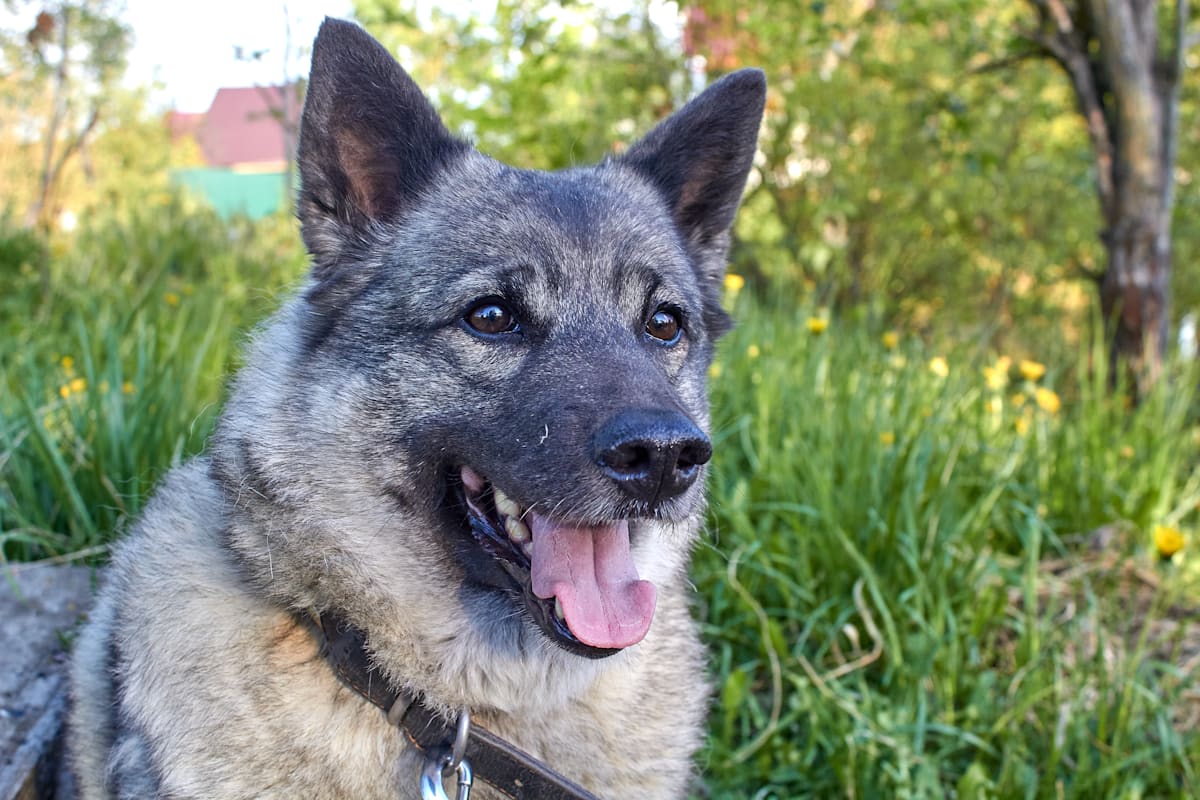
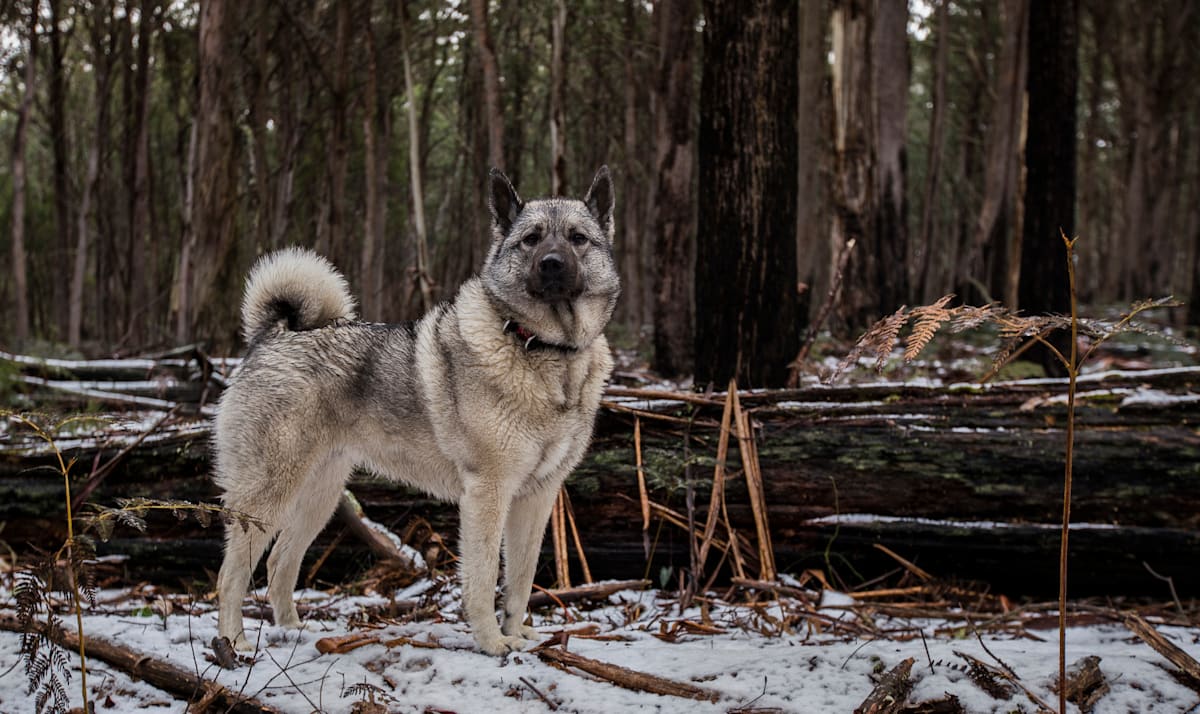
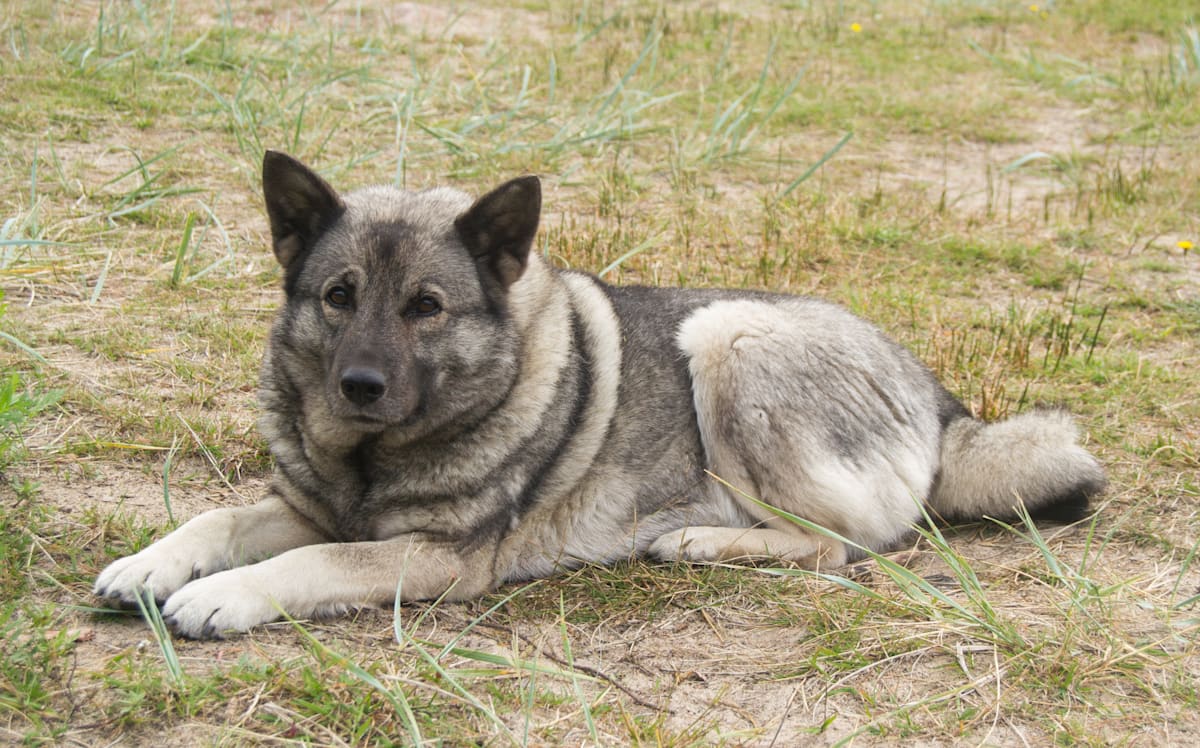
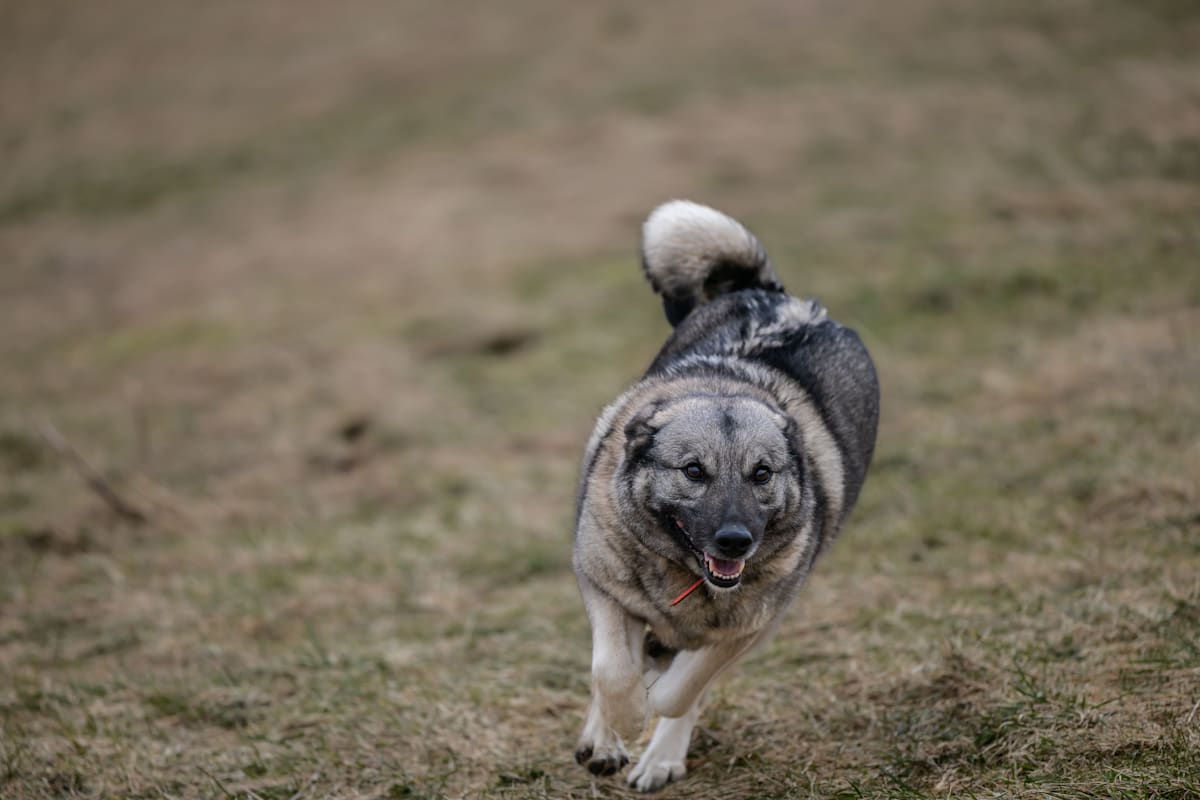
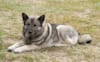
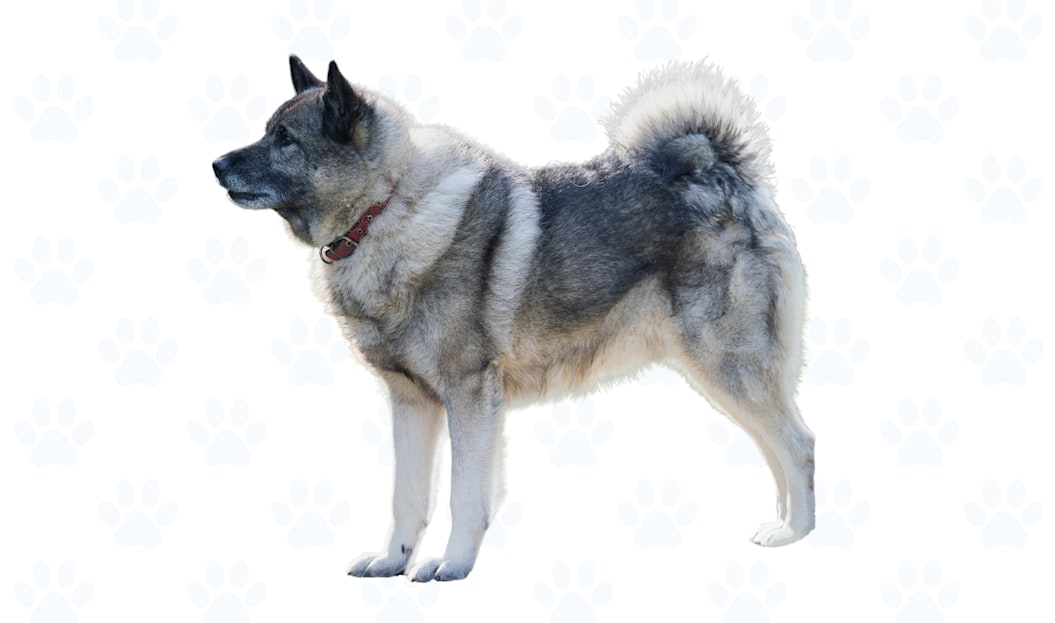
The fluffy Norwegian Elkhound has a thick double coat that’s made up of a top straight guard hair layer and a wooly undercoat. The heavy coat is usually a shade of silver-gray and their strong, bushy tail curves characteristically over their back. Their black ears are pricked straight up and they stand about 20 inches at the shoulder, making for a short but hardy appearance.
On average, the Norwegian Elkhound weighs between 48 and 55 pounds while standing about 20 inches at the shoulder.
| Full Grown | |
|---|---|
| Female | 20 in. / 48 lbs. |
| Male | 20 in. / 55 lbs. |
Height is measured up to the shoulders.
An adult Norwegian Elkhound stands about 20 inches at the shoulder.
A medium sized breed, the Norwegian Elkhound can weigh between 48 and 55 pounds.
A medium, short-bodied breed, the Norwegian Elkhound doesn’t need a ton of space to remain happy, although a place with an enclosed area for running and exercising is preferred.
Hunting dogs by nature, the Norwegian Elkhound enjoys activity and requires about an hour each day to remain happy and healthy.
Refined but friendly, intelligent and trustworthy, the Norwegian Elkhound makes a great companion pet.
Intelligent and loyal, Norwegian Elkhounds are reserved when they first meet strangers and tend to bark at unusual noises, which makes them a generally good guard dog.

While Norwegian Elkhounds do tend to strongly bond with their owners, they aren’t the most overly affectionate or playful breed.
The Norwegian Elkhound has the smarts to be easily trainable, but their independent nature can sometimes get in the way.
The undercoat of this breed tends to shed heavily, but usually only during shedding season if they are properly groomed.
The Norwegian Elkhound has a great tolerance for the cold but doesn’t tend to do well in the heat.
This breed tends to bark a lot, especially in new situations or when it hears strange noises.
The Norwegian Elkhound is mostly friendly, intelligent and dependable, but it can be reserved around strangers and it does have an independent streak, thanks mostly to its hunting ancestry.
“Norwegian Elkhounds are bold, energetic hunters with an independent nature,” says American Kennel Club executive secretary Gina DiNardo. “They are loyal, affectionate and friendly with their families, but can also be protective and possessive.”
They aren’t an overly playful breed, but they do require and enjoy daily exercise. With the right time and attention, a Norwegian Elkhound will bond strongly with its owner and will be a constant and loving companion. They also tend to make good family companions, DiNardo adds.
The Norwegian Elkhound tends to bark frequently, especially when it hears strange noises. Plenty of exercise and consistent training can help prevent your Elkhound from being overly loud or destructive.
When it comes to obedience, training can really go either way. While their intelligence makes them a good candidate for training, Norwegian Elkhounds also tend to be independent, which can get in the way of training.
“This breed has very keen senses and good problem-solving skills, therefore picking up on things quickly,” says DiNardo. “Their training should be consistent and requires patience, as their independent nature can make training harder.”

A working dog that was bred for hunting, the Norwegian Elkhound requires at least an hour of exercise each day to remain happy and healthy. Not a natural retriever, this breed instead enjoys activities that are more fast-paced — like a vigorous walk — or that revolve around their agility and herding expertise.
Frisky, energetic breed that is always ready for action
Most Norwegian Elkhounds think with their stomachs, and those big brown eyes can prompt many owners to give too many treats. Avoid offering table foods or excessive treats, since these can quickly pack on excess weight. Instead, feed your Elkhound a balanced high quality diet in portion controlled meals.
Average daily consumption for an adult Elkhound is 1.5 to 2 cups
Certain health conditions can occur at an increased frequency in Norwegian Elkhounds, but responsible breeders typically perform a variety of different screening or genetic tests prior to breeding in an attempt to decrease the incidence of these conditions in future generations. Owners of Norwegian Elkhounds should continue to monitor their dogs at home for any changes or concerns physically or behaviorally, as these could indicate the start of new health problems. As with all breeds, Norwegian Elkhounds should be examined by a veterinarian once or twice per year, and should receive regular vaccinations, deworming and preventative medications.
Although generally a healthy breed, Norwegian Elkhounds are still prone to a variety of health conditions that can occur at an increased incidence within the breed or due to genetics. These conditions may include, but are not limited to, the following: Intracutaneous cornifying epithelioma, Cataracts, Entropion, Progressive retinal atrophy, Glaucoma and Multifocal retinal dysplasia.
On average, Elkhounds live to be between 12 and 15 years old.
Norwegian Elkhounds have a thick double coat that requires brushing twice a week, says DiNardo. However, “during their spring and fall shedding seasons, they should be brushed daily,” she says.
Medium
Frequent
During the spring and fall shedding season, Norwegian Elkhound owners can expect to see quite a lot of excess silver undercoat, as it tends to shed heavily. To avoid excessive shedding during shedding season and year-round, consider brushing your Norwegian Elkhound daily.
The Norwegian Elkhound is synonymous with Nordic history. The breed was first formally established in Norway in 1877, yet dogs similar to the Norwegian Elkhound can be found in history books dating back to 4,000 and 5,000 BC, and in cave paintings dating back to the Stone Age. According the to AKC, the breed’s name comes from its ability to track giant elk or moose and hold them in place until huntsmen could catch up to make their kill.