Petco Text Logo
Petco Pet Logo
Author Profile Photo
Written by Cheryl Lock

About Greyhound

Although many people equate Greyhounds with the racetrack, this docile, gentle and loving breed is actually quite happy hanging out with their family. However, the instinct to hunt prey runs deep. In fact, if you take a Greyhound home, it will be important to make sure you have an enclosed area to keep him safe at all times, since your Greyhound is likely to chase after any small animal that catches his eye.


A clean, calm breed, the Greyhound makes a great family dog. However, training will be of the utmost importance, especially for households with other animals.


Origin: Egypt, England   

Hound Group

Most hounds share the common ancestral trait of being used for hunting.

Most hounds share the common ancestral trait of being used for hunting. Some use acute scenting powers to follow a trail. Others demonstrate a phenomenal gift of stamina as they relentlessly run down quarry. Beyond this, however, generalizations about hounds are hard to come by, since the Group encompasses quite a diverse lot. There are Pharaoh Hounds, Norwegian Elkhounds, Afghans and Beagles, among others. Some hounds share the distinct ability to produce a unique sound known as baying. You'd best sample this sound before you decide to get a hound of your own to be sure it's your cup of tea.

Petco Pet Education Center

General appearance

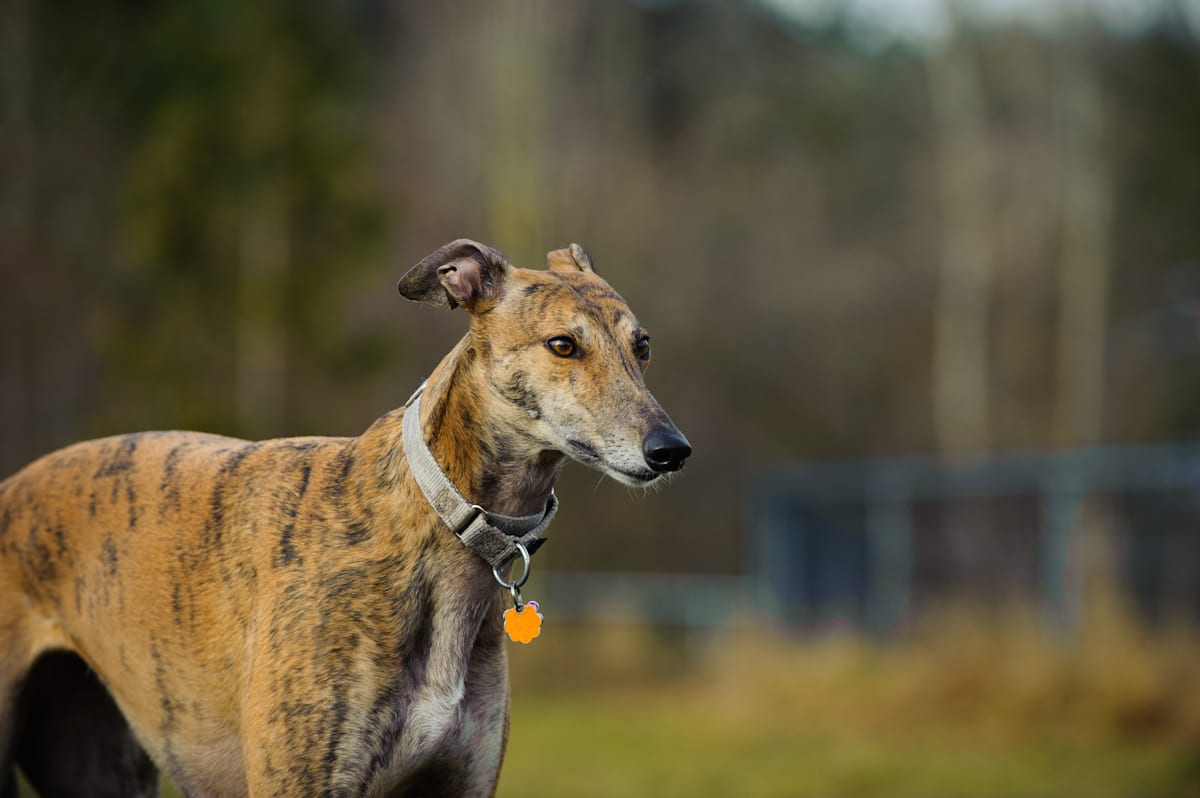
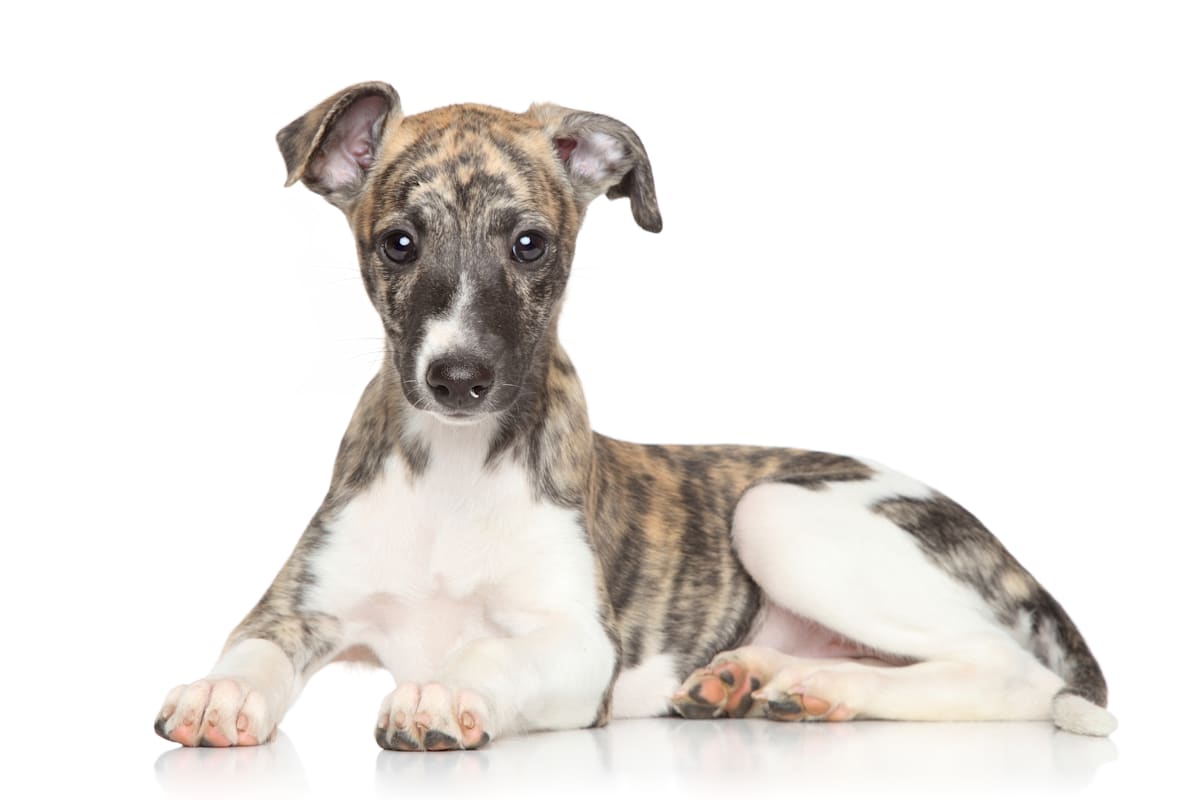
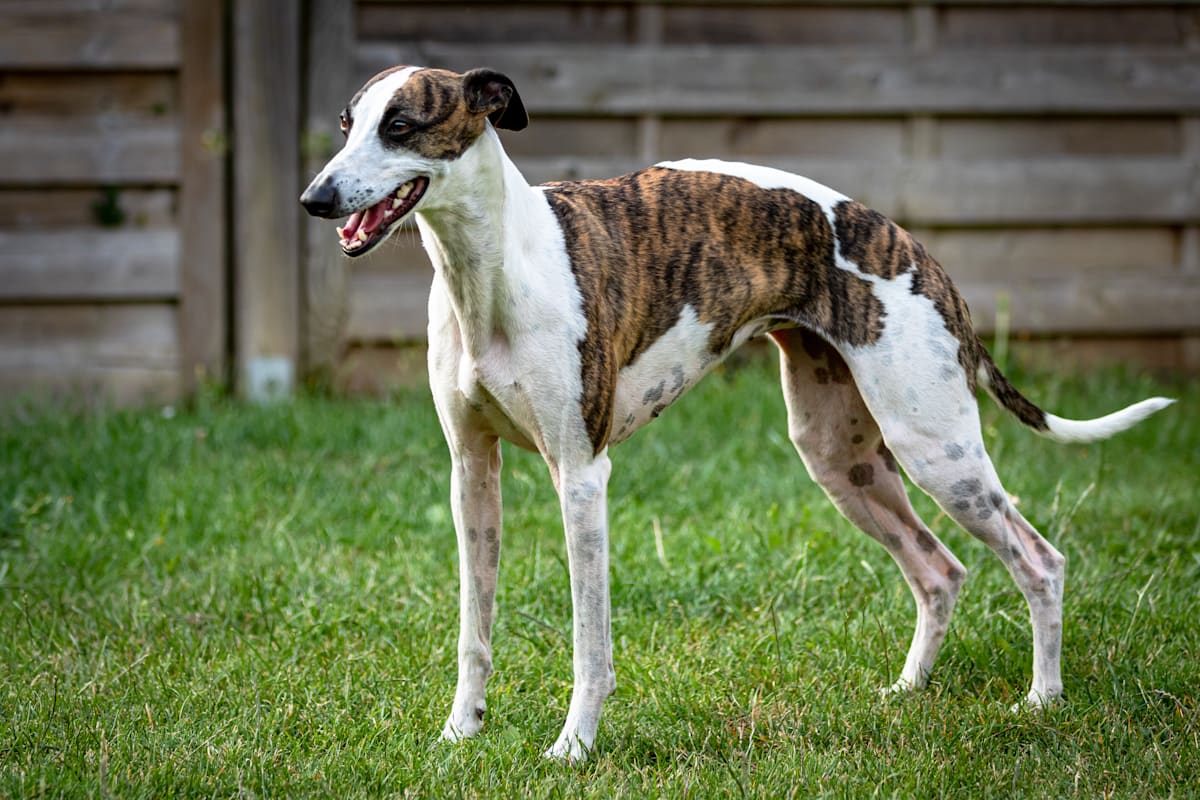
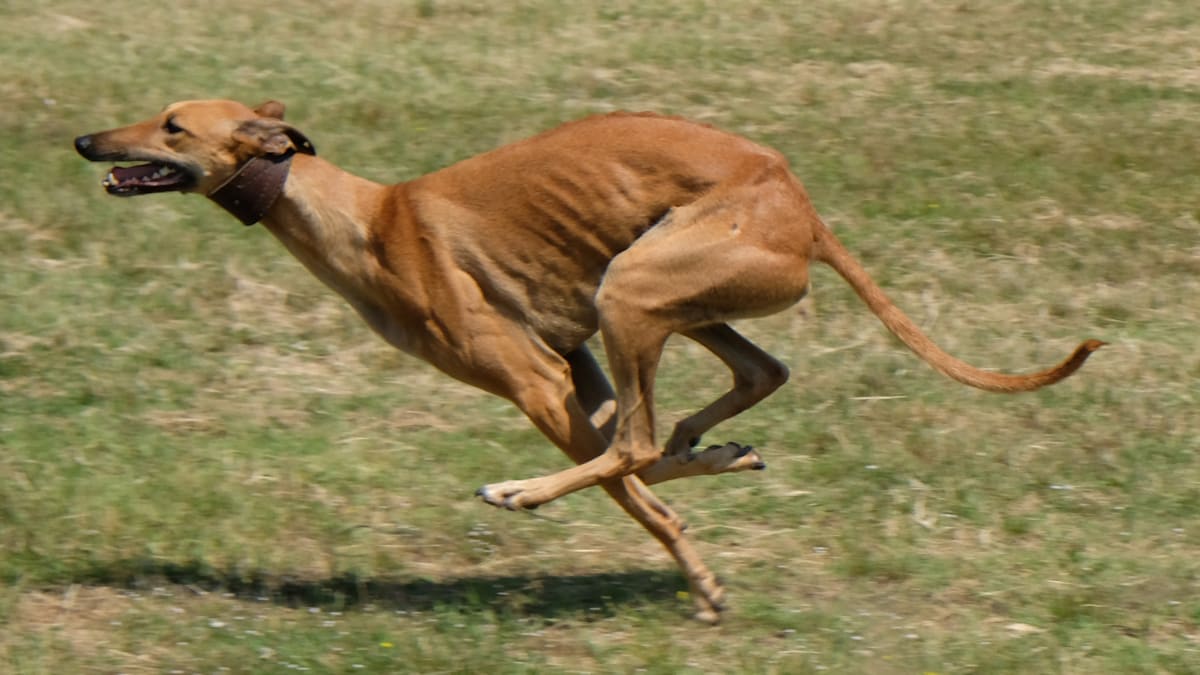
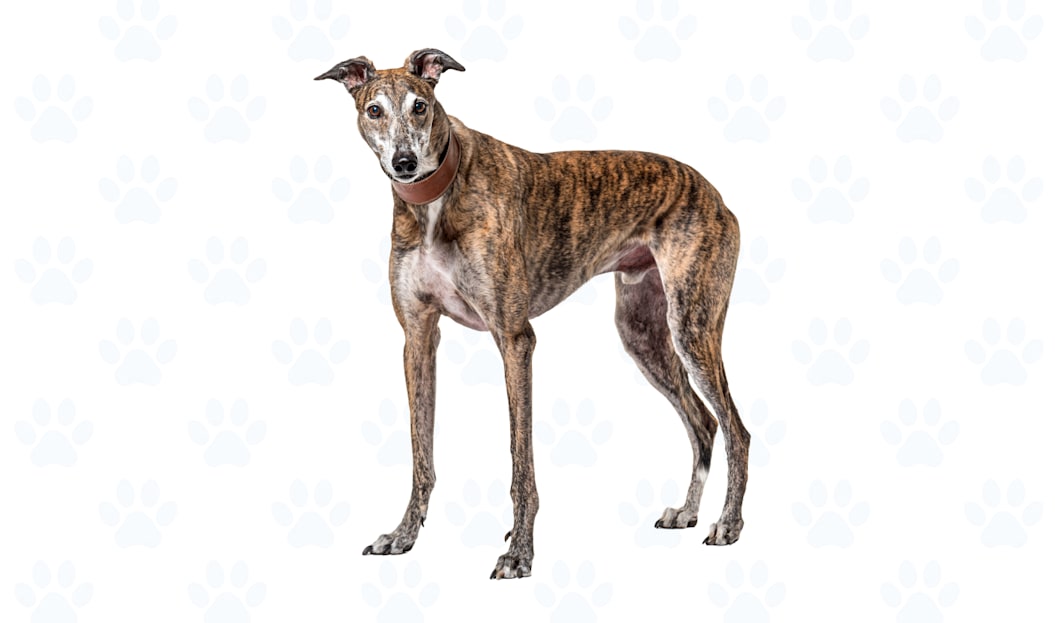
Long-legged and elegant, muscular and broad, many people expect every Greyhound to look like the retired racing hounds they might have seen on the track, but in fact this breed comes in a wide variety of appearances.


“The AKC Greyhounds at shows have a slightly different build than those from the track because those were bred strictly to run as fast as they can with no other criteria,” says Dr. Jerry Klein, chief veterinary officer with the American Kennel Club. “At the AKC, though, many are built for their original purpose, which was to chase game, so they’re a little bit larger.” As such, there can be quite a disparity in the height and weight parameters for Greyhounds. They can come in all different colors, although grey has been the predominant color of the breed in the past.


According to the AKC, Greyhounds will have a few characteristics in common, though, including narrow aerodynamic skulls and shock-absorbing pads on their feet. Small, folded ears and dark, bright eyes are also a trademark of the breed. They are also known to have an inverted “S” shape created from a deep curve in their chest and their tightly-tucked waist.

Size & Weight

Greyhounds stand anywhere from 26 or 27 inches at the shoulder in females and up to 30 in males. Weighing in at 55 to 75 pounds for males and 60 to 65 pounds for females, the Greyhound is long-legged and elegant.

Full Grown
Female 26 in. / 65 lbs.
Male 30 in. / 75 lbs.

Height is measured up to the shoulders.

Female Size Chart
Height Figure
Male Size Chart
6 ft. 4 ft. 2 ft.

Cost of Owning

On average, owning a middle-aged Greyhound costs around $1100 per year
$300
Vet Care
$200
Grooming & Boarding
$250
Others
$350
Food & Treats

Characteristics

Size

Greyhounds stand anywhere from 26 or 27 inches at the shoulder in females and up to 30 in males.

Tiny
Jumbo

Weight

An adult Greyhound tips the scales at 55 to 75 pounds for males and 60 to 65 pounds for females.

Light
Heavy

Living space

Greyhounds will take up as much space as you give them, and they love to sprawl out, says Klein. A larger breed, the amount of space that your own Greyhound needs will likely be determined by his own size.

City apartment
Ranch

Exercise

Greyhounds are happy with a couple of long walks a day, especially when they are younger. As with other sighthounds, you’ll need to supervise them closely because their instinct is to run when they spot something of interest. “The Greyhound is the prototype of a sighthound,” says Klein, “and when they see prey in the distance, they run after it. By the time they realize where they are, they could be a mile down the road.” When exercising your dog off-leash, be sure that they are in an enclosed area where they can’t hurt themselves or get away.

Couch potato
Bring it on!

Personality

The Greyhound varies in temperament from quiet and demure to happy and mischievous, says Klein. They tend to be devoted to their family, while not especially gregarious with strangers.

Antisocial
Outgoing

Protection

Greyhounds may sound the alarm if someone new comes into their home, but they are not known to be particularly noisy. Greyhounds are certainly not known as guard dogs by nature.

None
Bodyguard

Behavior with kids

Greyhounds are typically excellent with children. They are not overly rambunctious, so they don’t tend to overwhelm small children. They are pretty tolerant in general, making them a great companion for kids of all ages. As with any dog, be sure that all children are supervised and taught how to properly interact with dogs.

Always monitor
Babysitter

Training

If you’re looking for a dog that will perform tricks, this might not be the breed for you. “Greyhounds can be a little stubborn, and if something diverts their attention, that may be their first priority,” says Klein. However, with a little dedication, you can get your Greyhound to learn the basics.

Headstrong
Obedient

Shedding

Like other short-haired breeds, the Greyhound does shed noticeably, but regular brushing and periodic baths to get rid of excess hair should suffice, says Klein.

Minimal
Abundant

Climate

Warmer weather is better for this breed, which tends to get cold in chilly climates. That’s not to say you can’t have a Greyhound if you live in a cooler climate. When the temperature drops, simply bundle your Greyhound up in a sweater and avoid spending too much time outside.

Warm
Cold

Barking

Greyhounds aren’t known to bark a lot, but they may bark or "roo" if something interests them.

Mute
Loud

Temperament & Behavior

Greyhounds can go from sprinting after whatever catches their eye to lazing happily on the couch with their owners. As a typical sighthound, there are some things to keep in mind when it comes to this breed. “Scent hounds, like Basset Hounds, Beagles and Bloodhounds, hunt by scent,” says Klein. “Sighthounds, like the Greyhound, hunt because of sight. They see prey in the distance and they run after it. Their sense of sight is very keen.”


While the breed is known to be very sweet and docile with families and usually dogs as well, if these dogs are not properly trained and socialized with smaller animals from a young age, they may consider them prey. “You’ll need to supervise them and train them to prevent possible problems,” says Klein.

Barking: Understanding your dog

If you’re in the market for a watchdog, the Greyhound should not be your go-to choice. This breed doesn’t tend to bark much unless something catches its eye. While Greyhounds also aren’t known for being overly destructive or anxious when left alone as some other breeds, certain individuals—especially those with negative past experiences—may need to be more carefully monitored, says Klein.

Training

While trainable to a certain extent, the Greyhound can also be stubborn, so persistence and patience are key. It’s also very important to train your Greyhound from an early age to be around any smaller animals or pets, since they have impeccable eyesight and their urge to hunt prey is very strong.

Habits and Exercise

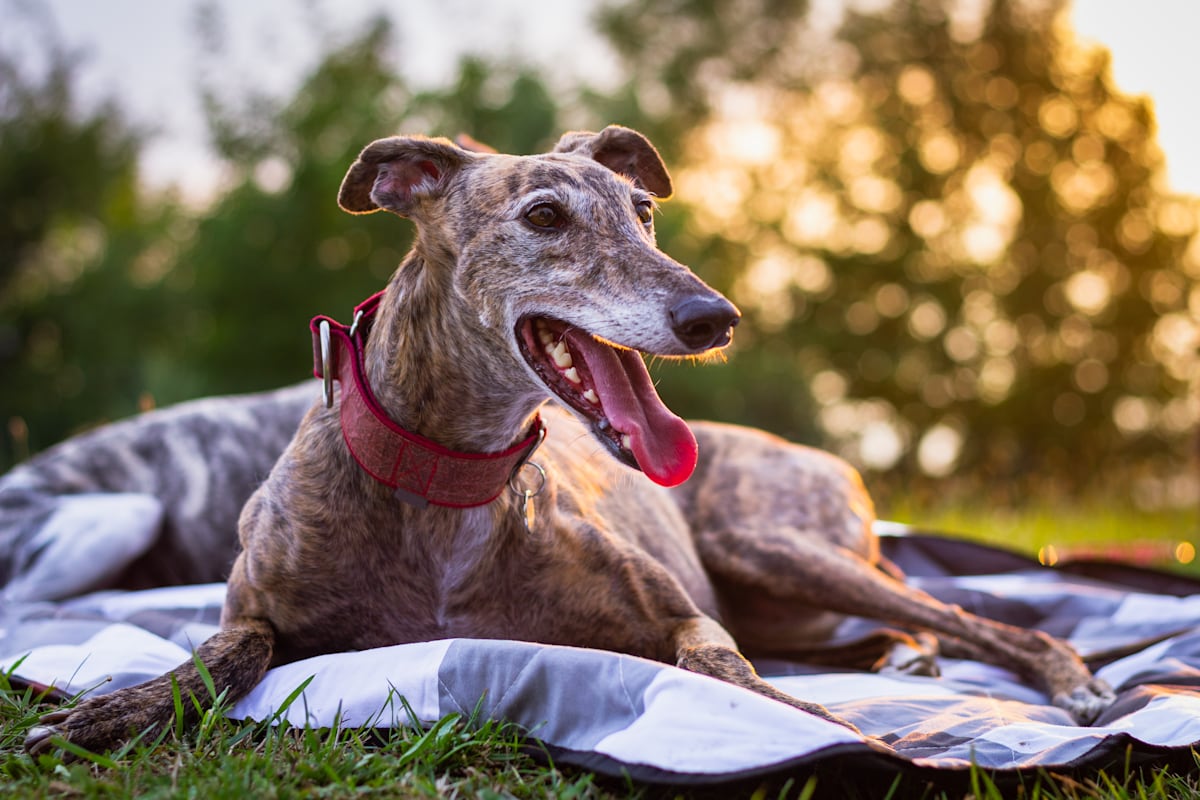
You’re likely to find that after a bout of extensive exercise, your Greyhound is just as happy to lounge around on the couch and sleep. “They’re the biggest couch potatoes you could ever want,” says Klein. “If you are quiet and at home, Greyhounds are incredibly quiet and clean — they’re almost cat-like.”

Energy Level

Enjoys some moderate exercise every now and then

Energy Level

Nutrition

As with any dog, Greyhounds can become overweight if they are fed too much and exercised too little. As a fairly high energy breed, Greyhounds do have a slightly higher calorie requirement than some other dogs. Feed your Greyhound portion-controlled meals of a high quality diet and avoid offering table scraps or too many treats.

Daily Consumption

Average daily consumption for an adult Greyhound is 2-2.5 cups.

Daily Consumption

Preventive care

Although certain conditions can occur at an increased frequency in Greyhounds, none of these conditions can be definitively prevented. Responsible breeders perform a variety of screening tests prior to breeding in an attempt to decrease the incidence of some conditions within the breed.


Maintaining regular visits to the veterinarian is the best way to detect any new changes or concerns before they become more significant. Additionally, Greyhounds are more susceptible to developing lacerations or wounds due to their thin skin. These wounds can be difficult to heal and often require veterinary attention.

Inherited health issues

Greyhounds are a generally healthy breed, although certain conditions can occur at an increased frequency within the breed or through genetics. Greyhounds have some unique “normal abnormalities,” meaning that some changes that are abnormal in other breeds are normal in Greyhounds. This includes larger and fewer platelets, increased red blood cell counts, and a slightly increased blood pressure. Although outside of the “normal” range for most dogs, these changes are not typically of concern in Greyhounds. Other conditions affecting Greyhounds at a higher rate than other breeds may include, but are not limited to, the following: Cutaneous and renal glomerular vasculopathy, Pattern baldness, Symmetric lupoid onychodystrophy, Adverse drug reaction to thiopentone, Vascular ring anomaly, Polyarthritis of Greyhounds, Cutaneous hemangiosarcoma, Congenital deafness, Greyhound meningoencephalitis, Chronic superficial keratitis (pannus), Progressive retinal atrophy and Polyneuropathy of juvenile Greyhounds.

Life Span

On average, Greyhounds live to be about 10-13 years old.

Life Span

Did you know?

  • According to the AKC, the Greyhound is the fastest breed of dog.
  • Greyhounds have an unusual eye placement which gives them 270 degree vision, meaning they can see some of the back of their head. In comparison, humans can only see 180 degrees, with very little peripheral vision.
  • Greyhounds are the only breed of dog mentioned by name in the bible.

Coat and Grooming

Since the Greyhound has a short, smooth coat, you’ll find that this breed requires little care when it comes to grooming. Provide regular baths and brush them weekly to maintain coat health, says Klein. The Greyhound’s fast-growing nails will also need to be trimmed regularly, according to the AKC, and regularly brushing your dog’s teeth can also help to minimize gum or tooth problems.

Coat length

Short

Coat length

Grooming

Occasional

Grooming

Shedding

Greyhounds shed minimally, so weekly brushing should help to maintain the coat.

History

According to the AKC, the Greyhound first appeared in Egypt about 5,000 years ago, where the pharaohs kept hounds specifically for chasing and capturing wildlife. Their sleek and agile appearance has made them a prime subject for artists and poets for centuries since.