












Sporting Group
Naturally active and alert, Sporting dogs make likeable, well-rounded companions.
Highly energetic and young at heart, the Flat-Coated Retriever is a loving and fun breed that can be full of mischief. The Flat-Coated Retriever is a generally happy dog, but they are their happiest with plenty of exercise and being surrounded by their people.
Origin: United Kingdom Other Names: Flatties
Naturally active and alert, Sporting dogs make likeable, well-rounded companions.
Dog breeds in the Sporting group are usually remarkable for their instincts in water and woods, and many of these breeds actively continue to participate in hunting and other field activities. Potential owners of Sporting dogs need to realize that most require regular, invigorating exercise.
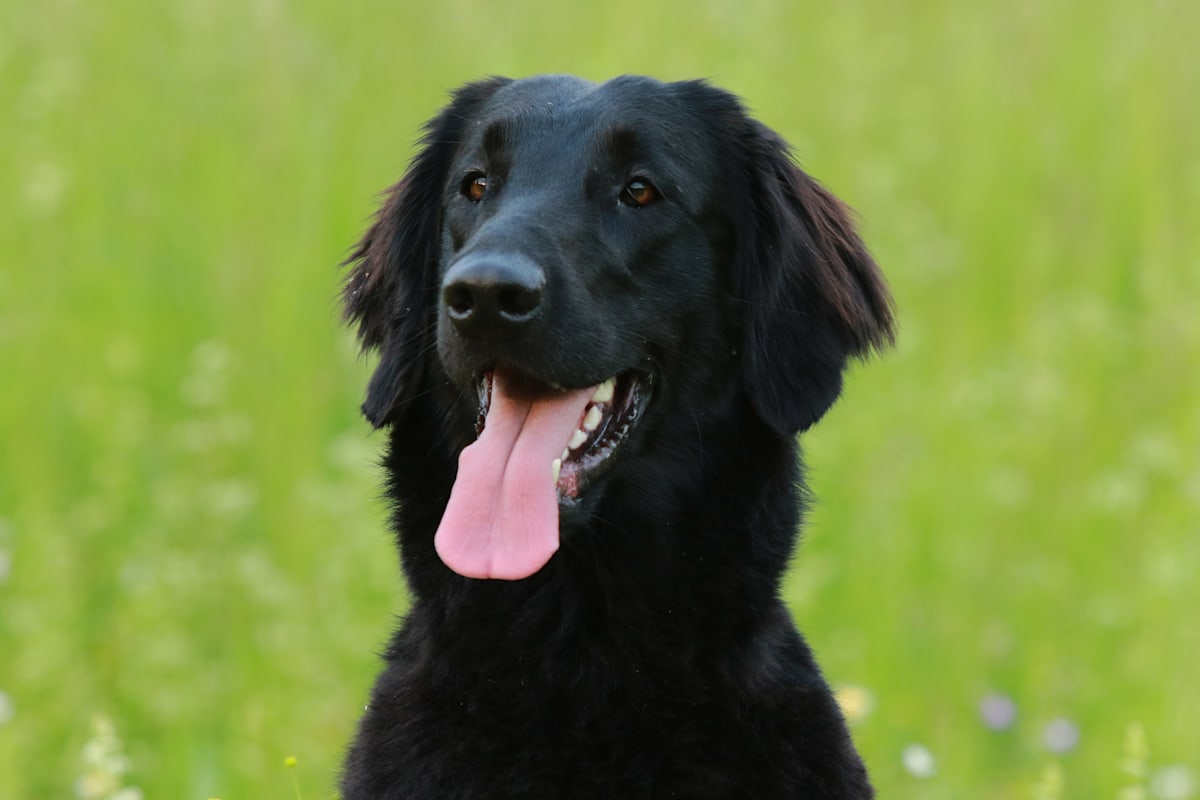
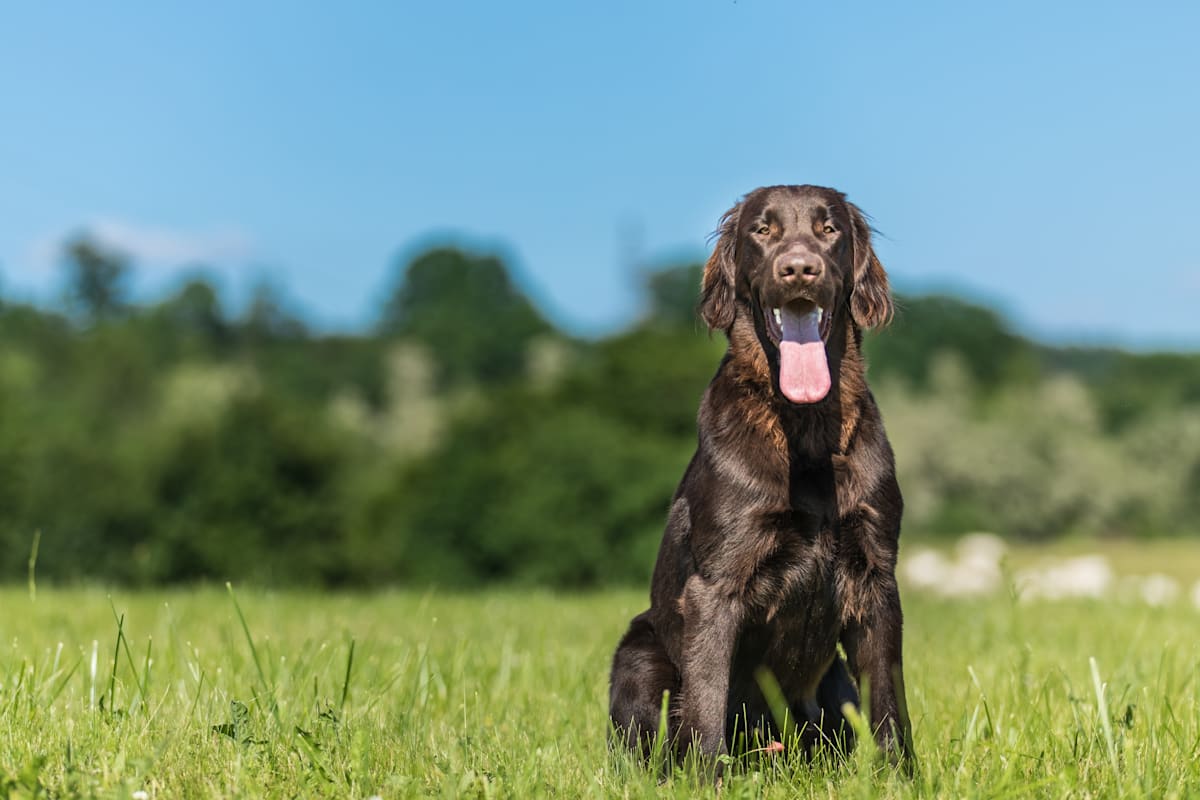
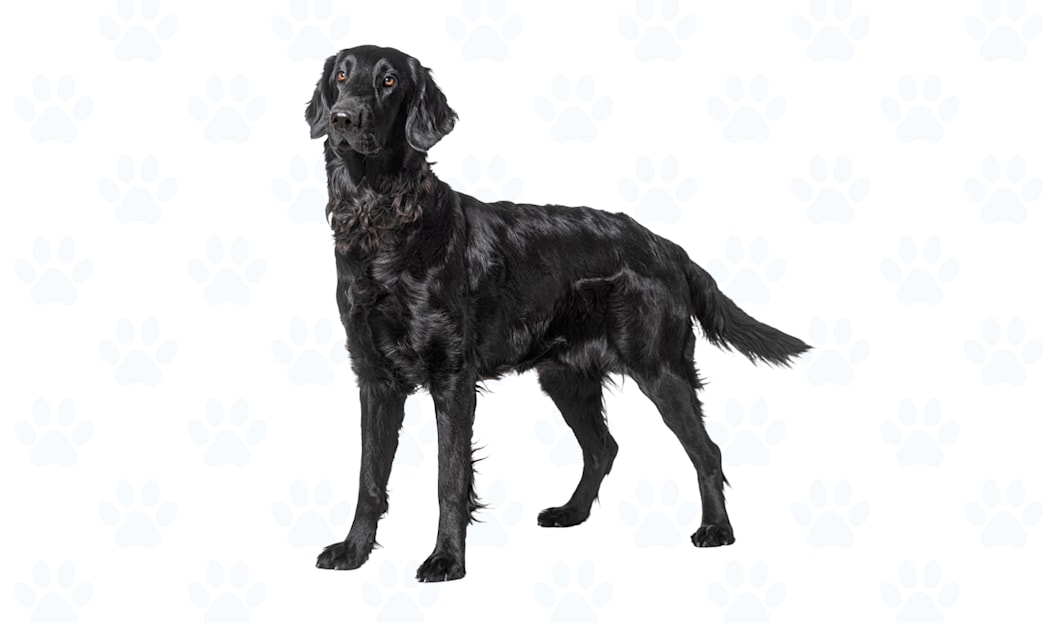
The Flat-Coated Retriever has a flat-lying, moderately long coat that comes in either black or liver with feathering at the tail and legs. Generally lean dogs, males tend to weigh between 60 and 75 pounds and females tend to weigh between 55 and 70 pounds, says Kurt Anderson, a long-time Flat-Coated Retriever owner, breeder and leader of judge education for the Flat-Coated Retriever Society of America.
“The Flat-Coat head is unique in the sporting breed,” he adds, “[it is] an elegant ‘one-piece’ head with a long muzzle and fill under the eyes.” The breed is tall as well, usually standing between 22 and 25 inches at the shoulder, depending on the gender.
Male Flatties tend to weigh between 60 and 75 pounds and females tend to weigh between 55 and 70 pounds. The breed is tall as well, usually standing between 22 and 25 inches at the shoulder, depending on the gender.
| Full Grown | |
|---|---|
| Female | 22 in. / 60 lbs. |
| Male | 25 in. / 75 lbs. |
Height is measured up to the shoulders.
Flat Coated Retrievers are tall, usually standing between 22 and 25 inches at the shoulder, depending on the gender.
Males tend to weigh between 60 and 75 pounds and females tend to weigh between 55 and 70 pounds.
A medium-sized breed with ample energy and high exercise needs, the Flat-Coated Retriever does best with plenty of space to run and play.
As a medium to large-sized sporting dog, the Flat-Coated Retriever requires plenty of daily exercise to stay fit and happy.
Eager to please, fun-loving and happy are a few of the words often used to describe this sociable and active breed.
Although the Flat-Coated Retriever may bark to let you know a stranger is approaching, they tend to befriend nearly everyone.
A friendly, gentle breed that loves its people, the Flat-Coated Retriever provides endless entertainment for children. Because of their size and rambunctious nature, though, they should be watched closely with small children.
Intelligent and loving, the Flat-Coated Retriever is generally a pleasure to train. However, their penchant for mischief and sensitive nature may make training trickier, depending on the individual dog.
The Flat-Coated Retriever’s medium-length coat requires weekly grooming to stay in top shape.
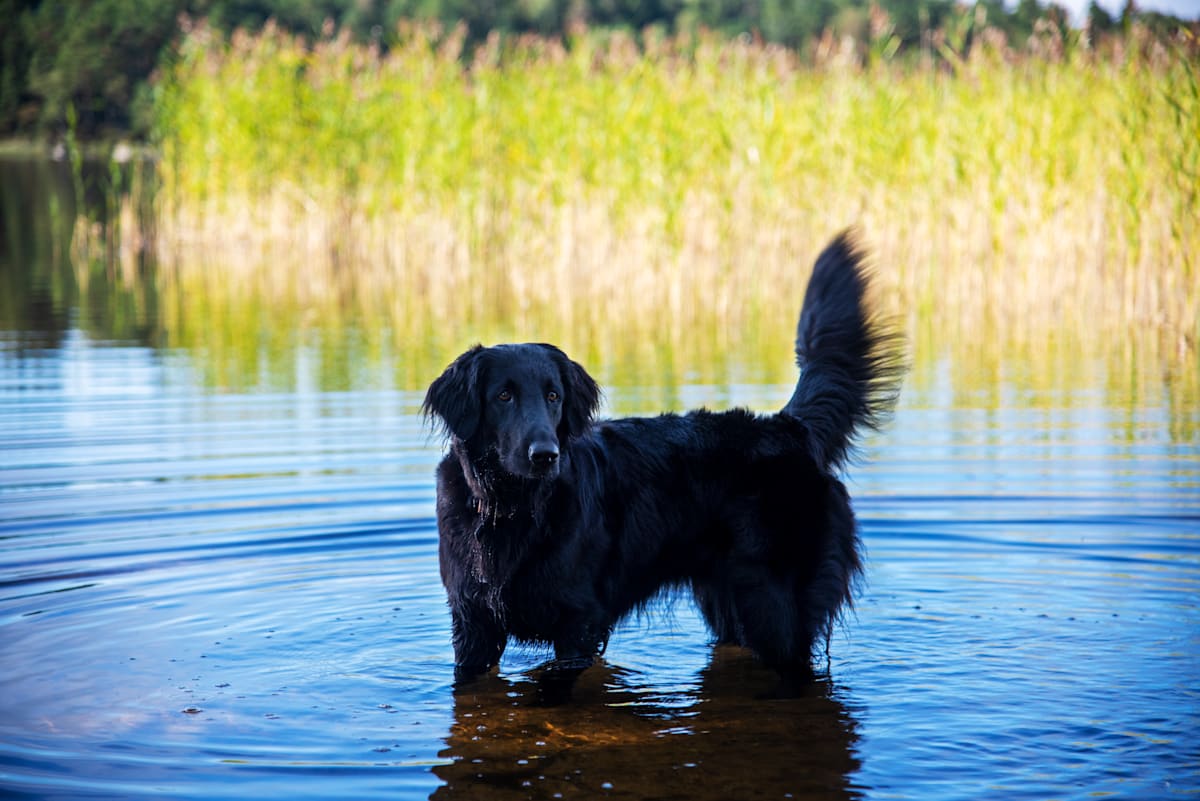
With a thick coat and the ability to swim and retrieve in frigid waters, the Flat-Coated Retriever can handle the chill.
Although not an overly noisy breed, the Flat-Coated Retriever may bark when strangers approach or when they become nervous.
The Flat-Coated Retriever is a generally happy breed that enjoys being with his people, exercising and mischief. These dogs are often a friend to all, making them the perfect pet for families with children and other animals, too. In addition, the Flat-Coated Retriever tends to mature slowly, sometimes never quite losing all of their puppy behavior.
As long as you properly and regularly exercise your Flat-Coated Retriever, they will be happy and loving pets. Although the breed doesn’t tend to be overly noisy, they may bark to alert you when people are approaching or if they become nervous or anxious.
The Flat-Coated Retriever is a smart and ready-to-please breed, which makes them great candidates for training. On the other hand, their sensitive nature means that they don’t respond well to harsh reprimands, and their young-at-heart personality can make it a bit more difficult to keep their attention. Since this breed loves to be with people, they can get into mischief when left alone for too long. As such, early training and socialization is highly recommended.
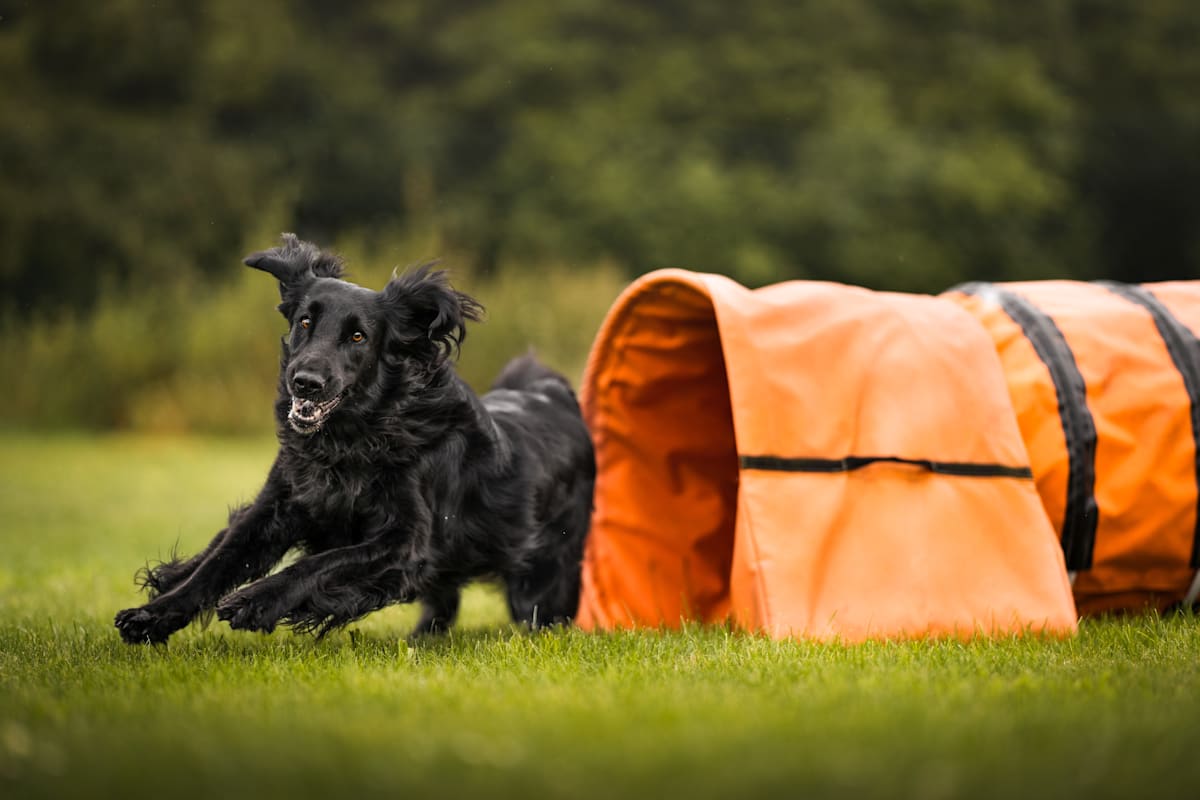
Prone to mischief and hijinks at any age, the Flat-Coated Retriever is generally easy to please, but proper exercise is a must. As a member of the sporting group, this breed needs a lot of daily exercise for both physical and mental health. They love any play that involves their people, like fetch, or activities that work their mind and body, such as agility and obedience work. The Flat-Coated Retriever is also a dog that thrives and loves to be with people. When left alone for too long, they often get into trouble.
Frisky, energetic breed that is always ready for action
Flat-Coated Retrievers should be fed a high-quality diet in portion-controlled meals. Avoid offering table scraps or too many treats, as these can quickly pack on unwanted weight.
Average daily consumption for an adult Flattie is 2 to 2.5 cups.
Generally speaking, Flat-Coated Retrievers tend to be healthy dogs. However, it is still important to monitor them at home for any new changes and to take them to the veterinarian for regular exams. Preventive care is an important step in the early diagnosis and treatment of many health conditions, which often results in a better (and less expensive) outcome. The regular use of flea, tick and heartworm preventive medications can keep your Flat-Coated Retriever free of many common, disease-transmitting external parasites.
Even though Flat-Coated Retrievers are known for having plenty of energy to burn, they can still become overweight or obese. As in people, obesity is associated with an increased risk of developing diabetes, heart disease or the exacerbation of existing arthritis issues. It is extremely important to keep your Flat-Coated Retriever at a healthy body weight through proper diet and exercise.
Several conditions appear at an increased frequency in Flat-Coated Retrievers and some may have a genetic association. Responsible breeders generally perform a variety of screening and genetic tests prior to breeding in an attempt to decrease the incidence of some of these diseases in future generations. These conditions may include, but are not limited to, the following: Patellar luxation, Cutaneous histiocytoma, Soft tissue sarcoma, Distichiasis, Entropion and Glaucoma.
On average, Flat-Coated Retrievers live to be between 8 and 10 years
The Flat-Coated Retriever has a medium-length, moderately well-feathered coat, says Anderson. It requires weekly grooming to remain shiny and healthy, and to keep shedding at bay.
Medium
Frequent
The Flat-Coated Retriever sheds, but weekly grooming can help to keep strays at bay.
A relatively new breed, the Flat-Coated Retriever was developed as a mix between various types of Setters, Sheepdogs, Newfoundlands and Water Spaniels. While different varieties of Flat-Coated Retrievers existed from the beginning — they were originally known as a Wavy-Coated Retriever — breeders J. Hull and Sewallis E. Shirley are credited with helping to create the ultimate appearance and personality traits characteristic of today’s breed.
Although the American Kennel Club recognized the breed in 1915, Labrador and Golden Retrievers remained the more popular dogs, and by the end of World War II, Flat-Coated Retrievers were almost wiped out as a breed. Today the Flat-Coated Retriever has a trail of devoted followers, although they remain one of the lesser-known retriever breeds.