







Herding Group
Created in 1983, is the newest AKC classification; its members were formerly members of the Working Group.
While their name may sound snooty, the Bouvier des Flandres is anything but. Often called ‘Gentle Giants’ by their adoring fans, Bouviers are intelligent, sweet natured, and hardworking dogs that make great additions to any family, especially those with children.
Origin: Belgium Other Names: Cow Herder of Flandres, Toucheur de Boeuf, Vlaamse Koehond
Created in 1983, is the newest AKC classification; its members were formerly members of the Working Group.
The Herding Group, created in 1983, is the newest AKC classification; its members were formerly members of the Working Group. All breeds share the fabulous ability to control the movement of other animals. A remarkable example is the low-set Corgi, perhaps one foot tall at the shoulders, that can drive a herd of cows many times its size to pasture by leaping and nipping at their heels. The vast majority of Herding dogs, as household pets, never cross paths with a farm animal. Nevertheless, pure instinct prompts many of these dogs to gently herd their owners, especially the children of the family. In general, these intelligent dogs make excellent companions and respond beautifully to training exercises.
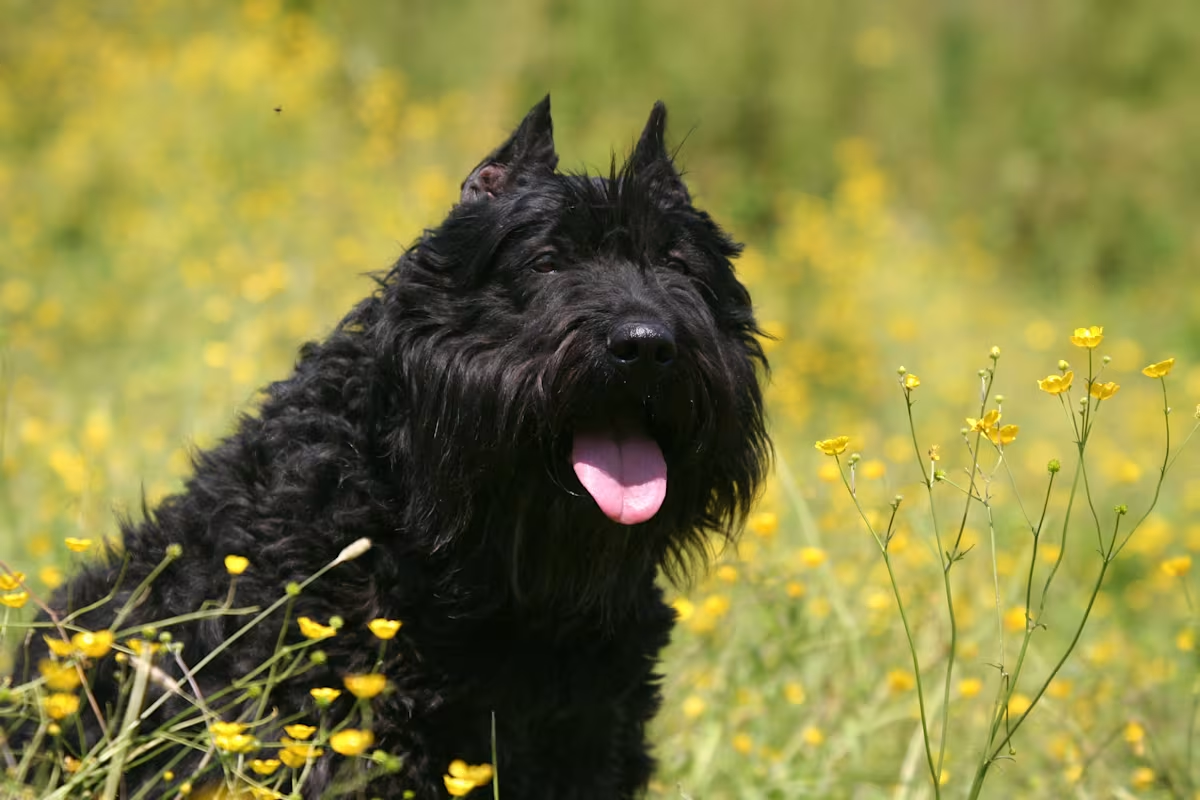
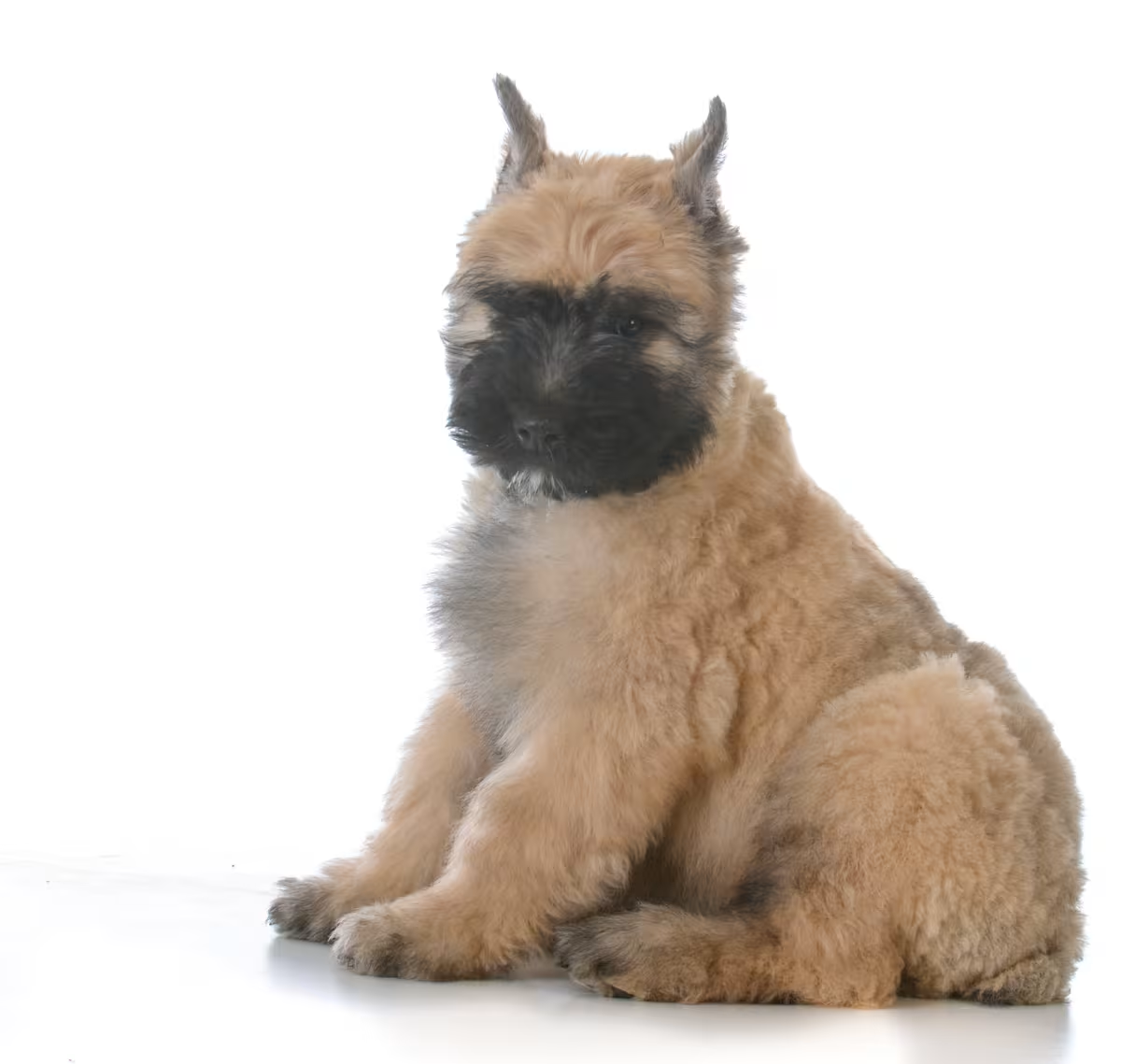
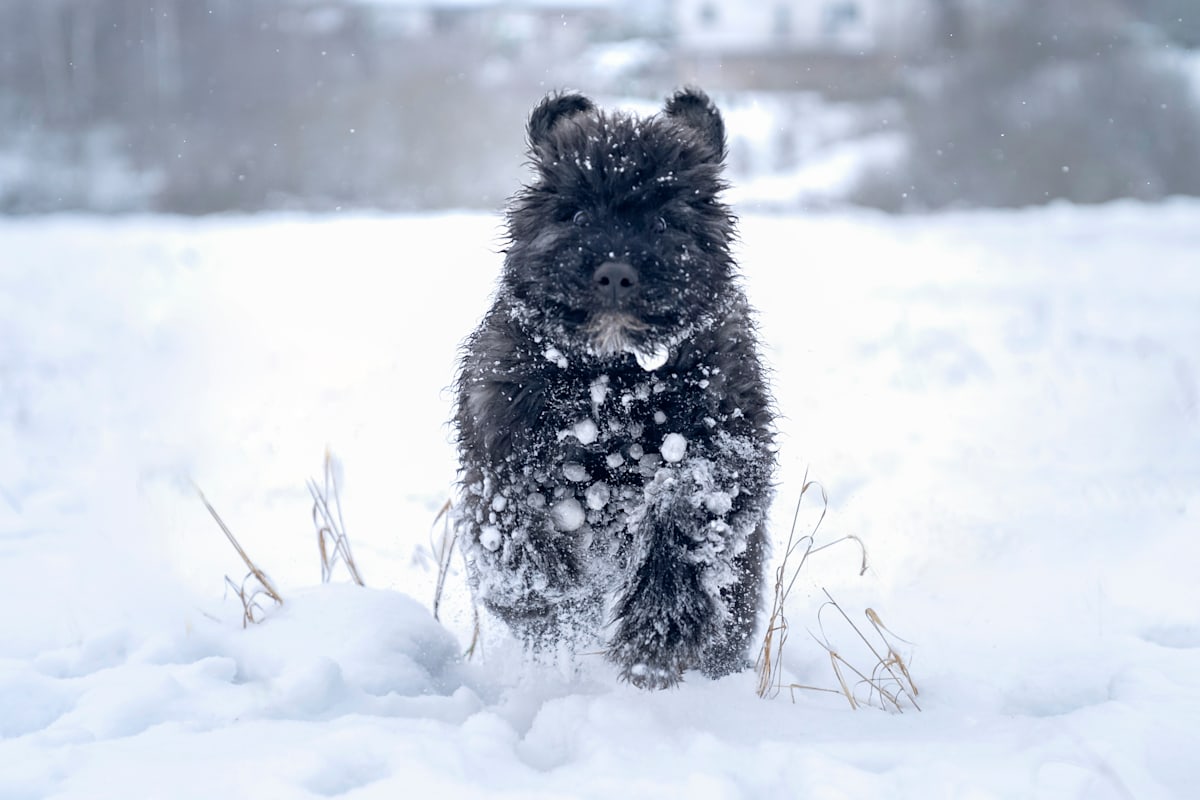
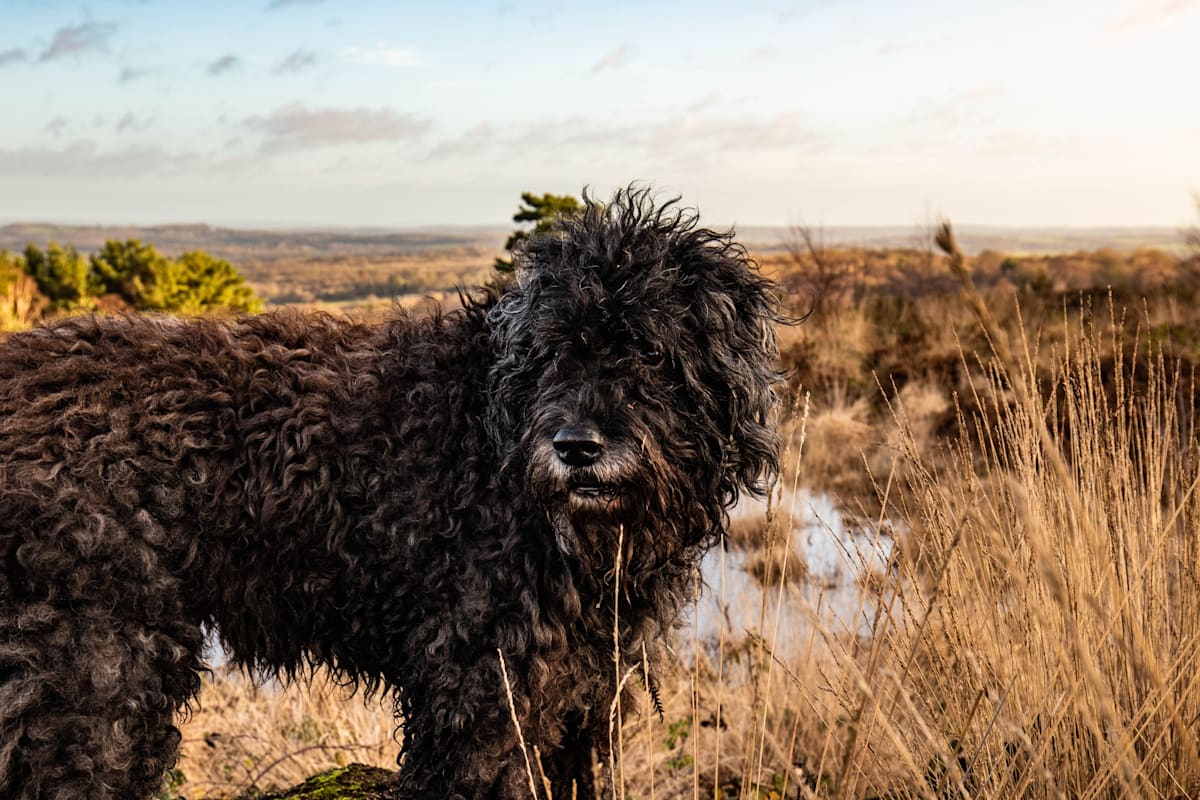
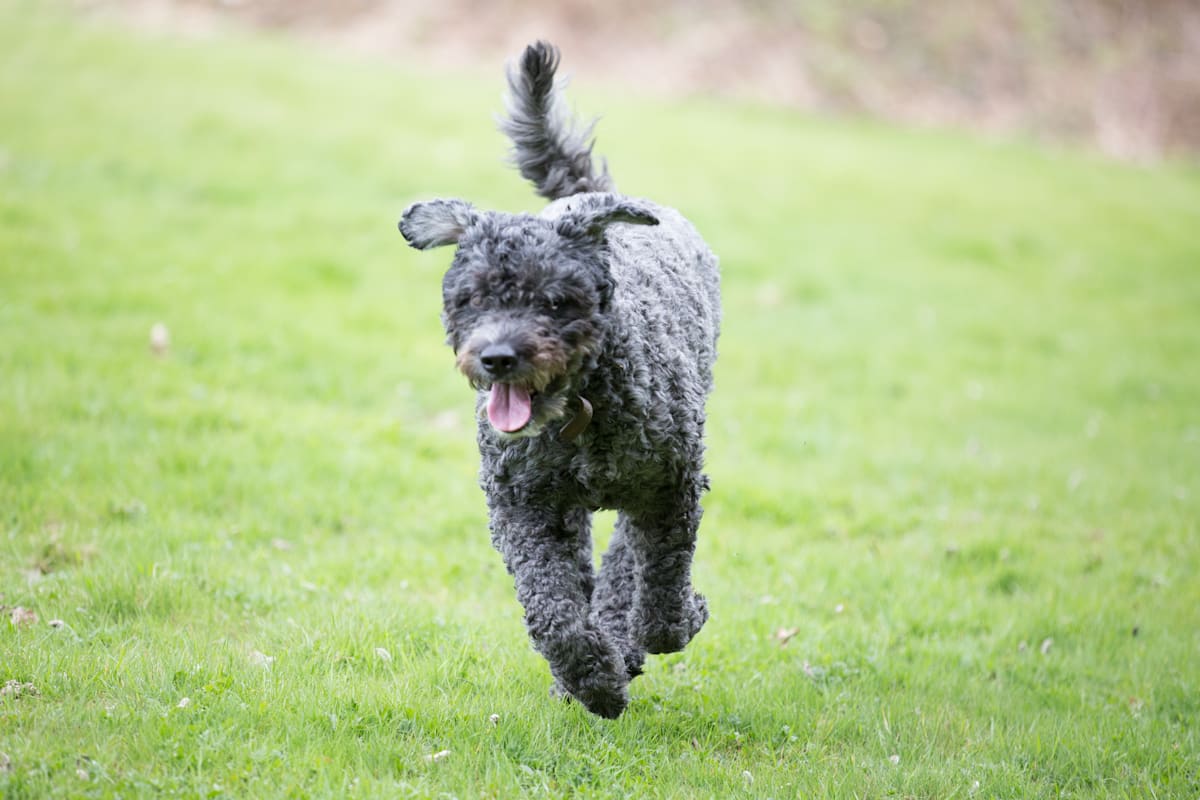
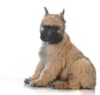
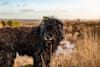
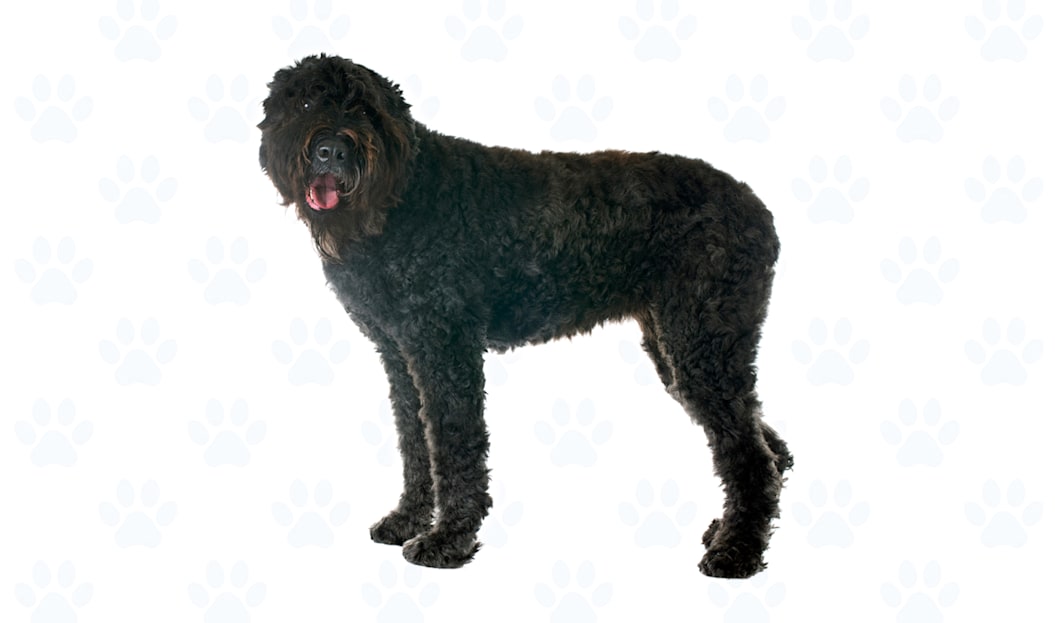
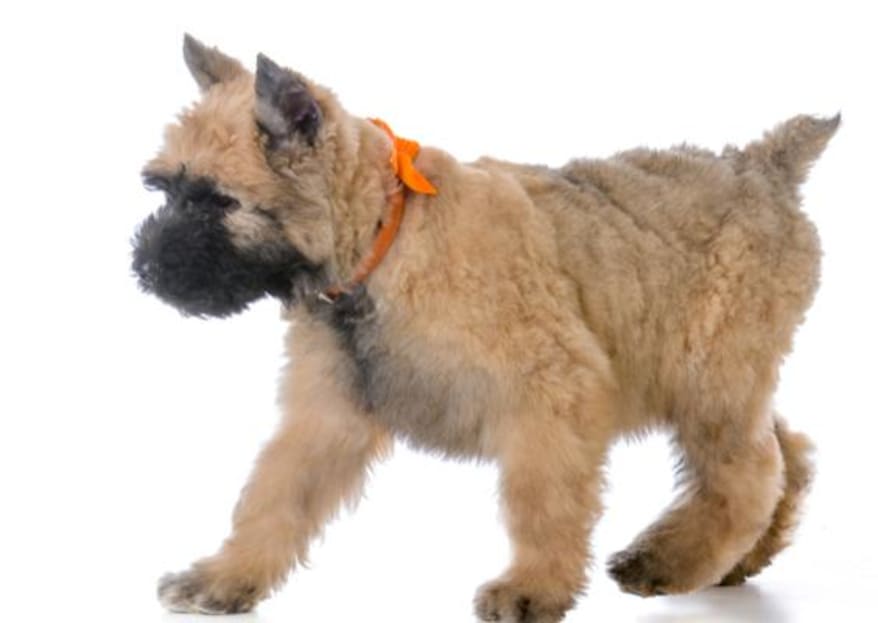
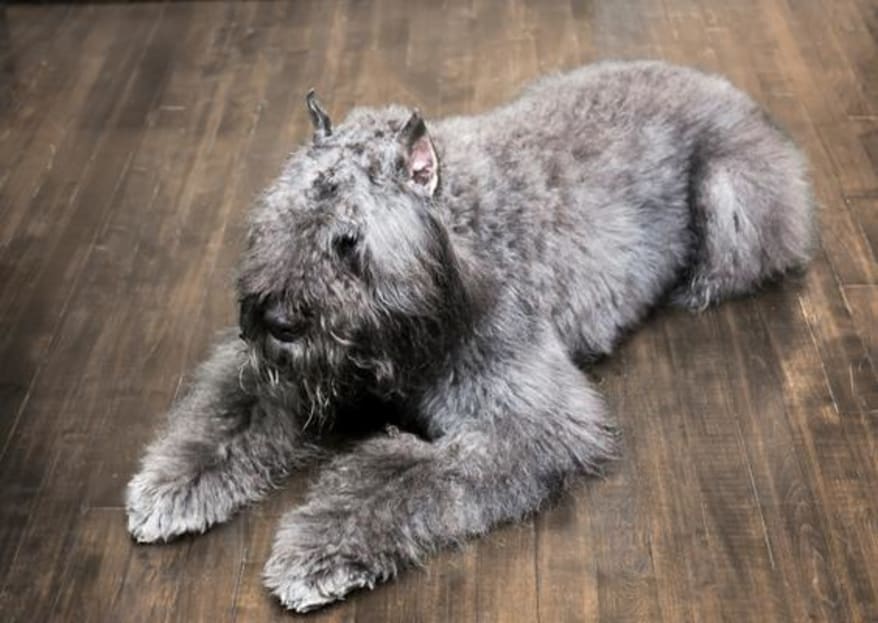
Bouvier des Flandres are powerfully built, rough-coated dogs. They are large and strong, but are surprisingly graceful. The Bouvier’s most notable feature is his impressive head, complete with a heavy beard and mustache. Their coats are generally cropped quite short to their bodies, with shaggy hair left around the eyes and mouth. Bouviers used to have their tails docked to prevent injury on farms, and it eventually became a cosmetic preference among breeders and owners of show dogs. Now the practice is outlawed in many places and their large tails are left as nature intended. The most popular color for this breed is black, or black with white accents, but Bouviers also come in fawn, brindle, grey, or blond.
Bouviers des Flandres are famously large dogs, with some males of the breed reaching two and a half feet at the shoulders and weighing in at 120 pounds. The weight for the Bouvier typically varies between 60 and 80 pounds for females and a whopping 80 to 120 pounds for males. The height for the breed ranges from 22 to 28 inches at the withers (shoulders).
| Full Grown | |
|---|---|
| Female | 22 in. / 70 lbs. |
| Male | 28 in. / 110 lbs. |
Height is measured up to the shoulders.
Bouviers des Flandres are famously large dogs. The height for the breed ranges from 22 to 28 inches at the shoulder.
The weight for the Bouvier typically varies between 60 and 80 pounds for females and a whopping 80 to 120 pounds for males.
With their large size, you may think that this breed is best suited to only living on farms. However, the Bouvier des Flandres is more than happy as a family pet in any sized home, so long as there is ample space for him to stretch his legs in a backyard or a nearby park.
The Bouvier des Flandres loves to keep busy, and thrives in an active household. He will enthusiastically follow you on long hikes and jaunts around the neighborhood. This breed is a great choice for agility training, as Bouviers love to stay active, but also bore easily and love to be challenged. Ideally, 90 minutes of exercise a day should be plenty to keep your Bouvier happy and healthy.
Bouvier des Flandres have a reputation as sweet family pets that love to please their owners and interact with people and children. They also have a distinguished reputation as valued working dogs who perform tirelessly alongside their handlers. This dog is the type that will happily roll over for belly rubs from strangers.
Bouviers are frequently trained as police dogs and served as trench dogs in both world wars. They are keen guard dogs and the trait comes naturally to most of them without training.
With early socialization, Bouviers prove to be devoted and beloved family pets, and can often be found minding children like a four legged nanny. Due to their size and enthusiasm, it's always best to supervise your Bouvier with young children.
Lovers of this breed know that as long as you keep them entertained, they will thrive with any obedience or specialty training. Bouviers are whip smart and love to keep their owners happy, but it’s best to remind your Bouvier frequently who’s the boss.
The Bouvier’s rugged double coat sheds a surprisingly scant amount, but you will still find fur around your home. Due to their sheer size, they track in much larger quantities of mud and dirt from outside.
These rugged dogs are hearty stock with a thick double coat and thrive in a cold or seasonal climate. It’s important to make sure you have ways to keep your Bouvier cool in hot and humid weather.
The Bouvier des Flandres’ booming bark is his first line of defense when guarding your home, and without proper training, there is a risk that you could have a loud and intimidating dog on your hands.
Bouviers really are gentle giants, and are usually very devoted and sweet with their owners. They still make excellent guard dogs, and unlike other large breeds that are bred for aggression, the Bouvier des Flandres is incredibly rational and complex, and displays great restraint and intelligence when it comes to knowing its own strength. They strike a great balance when it comes to being a fierce and loyal guard dog, but also a kind and sweet playmate with young children. Some breeders feel that a contributing factor to the breed’s love of children is that they are slow to develop. Bouviers take about 2-3 years to mature, and it’s assumed that being a puppy for so long gives them a lot of time to bond with the children of their family.
Not chatty by nature, the Bouvier tends to only bark when he’s in guard dog mode or if something grabs their attention. Like most dogs, it’s important to curb excessive barking with training, or you can easily be overwhelmed by this breed’s booming voice.
The Bouvier des Flandres is a serious dog for serious owners. Simply put, this breed can be a challenge for novice dog owners, but with patience and a firm and consistent hand, Bouviers are sharp dogs and make an excellent pet and companion. Just remember to keep them active and entertained, or they can develop destructive behavioral problems, such as excessive barking or chewing. Bouviers also tend to be naturally territorial, so early socialization is very important in their development. This is a great dog to enroll in agility training or herding workshops. They are also ideal for use in dog carting events.
Bouviers des Flandres have been used for generations as cattle driving and sheep herding dogs, and were sometimes even hitched up to carts. They possess a great work ethic and love to work alongside humans, whether it be herding cattle or hiking in the woods. Bouviers are intelligent dogs and need constant stimulation. This is a great asset when it comes to agility training, as Bouviers love to stay active and challenged, but also bore easily. They love long daily walks and make great jogging companions. If they get sufficient exercise outdoors, they are usually happy to be couch potatoes while relaxing with their family.
Frisky, energetic breed that is always ready for action
Bouvier des Flandres are large breed dogs and should be fed accordingly. This means that young, growing puppies should be fed a large breed puppy food for the first 12-18 months of life. As an adult dog, Bouviers should be fed good quality balanced diets in portion-controlled meals. Too much dog food, too many treats, or too many table scraps can all quickly pack on the pounds.
Average daily consumption for an adult Bouvier is 2-4 cups
An active and healthy lifestyle is the most important way to keep your Bouvier in tip top condition. Routine veterinary care is a crucial step in catching smaller problems before they become more significant.
As a large breed dog, the effects of osteoarthritis or elbow dysplasia are more pronounced in the Bouvier des Flandres. Keeping your dog at a healthy body weight will help to minimize these effects by feeding portion-controlled meals and maintaining an active lifestyle. If osteoarthritis or elbow dysplasia develop, fish oil supplements can be beneficial to decrease inflammation.
As with any breed, several health conditions occur more frequently in the Bouvier des Flandres than other breeds. This can be either due to a genetic predisposition or simply at an increased frequency within the breed for other factors. Genetic screening tests are available for some conditions, and responsible breeders often perform testing on their dogs prior to breeding. These conditions may include, but are not limited to, the following: Muscular dystrophy, Elbow dysplasia, Prostatic carcinoma, Glaucoma, Persistent hyperplastic primary vitreous and Laryngeal paralysis.
On average, Bouviers live to be about 10-12 years old.
Bouviers have a very thick double coat, and require intense twice or thrice weekly brushings to prevent knots and mats from forming in their coat. His fur should be also be trimmed every 3 to 5 weeks if you want to maintain the standard Bouvier des Flandres silhouette. Their nails should also be trimmed every other week.
Medium
Frequent
It is often thought that this is a dog that doesn’t shed. In actuality, as their hair falls out naturally, it tends to get caught in the secondary layer of the coat and causes it to become matted. For that reason, you should brush your Bouvier regularly.
It is believed that the Bouviers that we know and love today are the descendants of dogs bred for farm work by monks in Medieval Flandres. This principality encompassed what is now modern day France, Belgium, and The Netherlands. It’s thought that the early breeders crossed Irish Wolfhounds and Scottish Deerhounds with local farm dogs to get what would eventually be a hearty, strong and loyal work companion.
By the start of the 20th century people were starting to take notice of this striking breed. Unfortunately with the outbreak of the First World War, the Bouvier des Flandres breed was almost completely wiped out due to battles fought on former farms, which displaced whole farming communities, causing their dogs to become lost or destroyed. It was the Belgian army that kept the breed alive, as they proved to be invaluable and courageous service dogs, locating wounded soldiers and pulling wheeled stretchers. In peace time, they expanded their resumes as police and seeing eye dogs.
The Second World War almost saw the breed extinct again, but European immigrants brought the breed to North America and solidified its popularity abroad. The American Bouvier des Flandres Club was founded in 1963.