Hound Group
Most hounds share the common ancestral trait of being used for hunting.
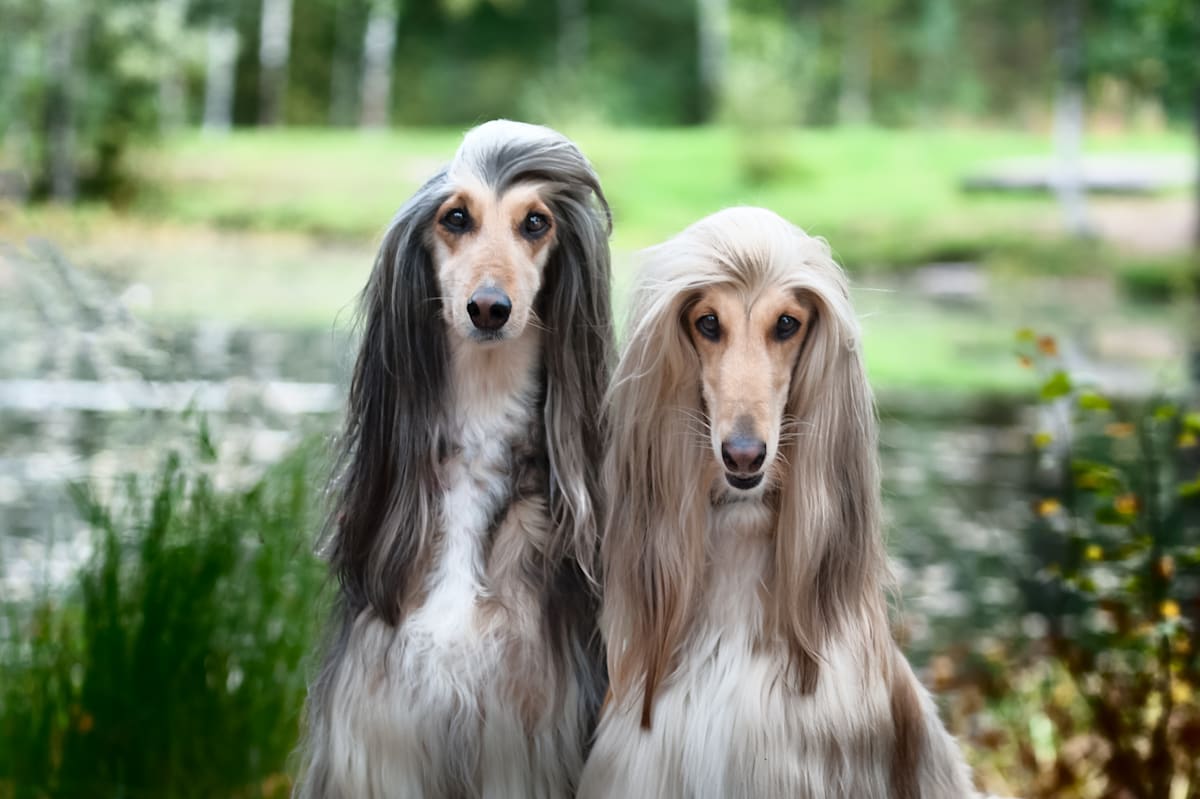
To the untrained eye, the Afghan Hound might appear enigmatic, but real breed aficionados know the truth. Afghan Hounds are aloof and dignified but have a silly streak and are known for their loyalty. This breed is affectionate towards their people and require plenty of entertainment and space to run in order to stay happy and fit.
Origin: Afghanistan
Most hounds share the common ancestral trait of being used for hunting.
Most hounds share the common ancestral trait of being used for hunting. Some use acute scenting powers to follow a trail. Others demonstrate a phenomenal gift of stamina as they relentlessly run down quarry. Beyond this, however, generalizations about hounds are hard to come by, since the Group encompasses quite a diverse lot. There are Pharaoh Hounds, Norwegian Elkhounds, Afghans and Beagles, among others. Some hounds share the distinct ability to produce a unique sound known as baying. You'd best sample this sound before you decide to get a hound of your own to be sure it's your cup of tea.
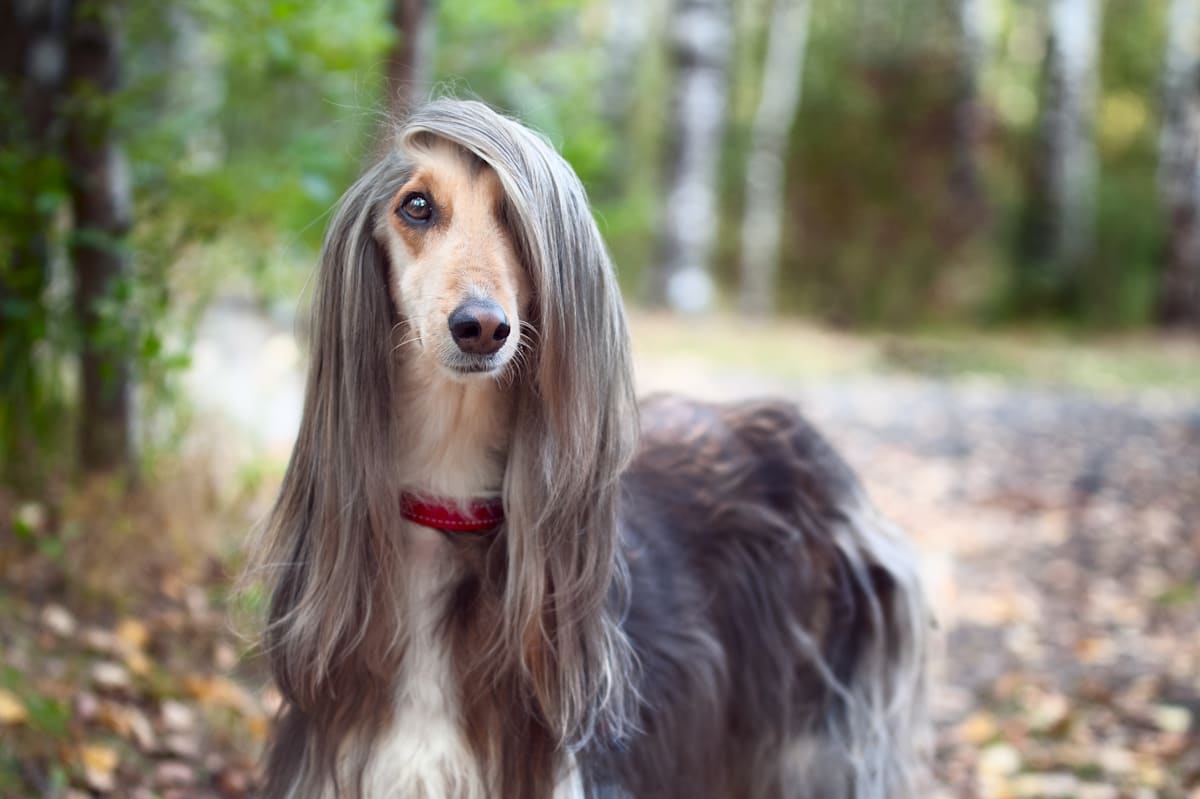
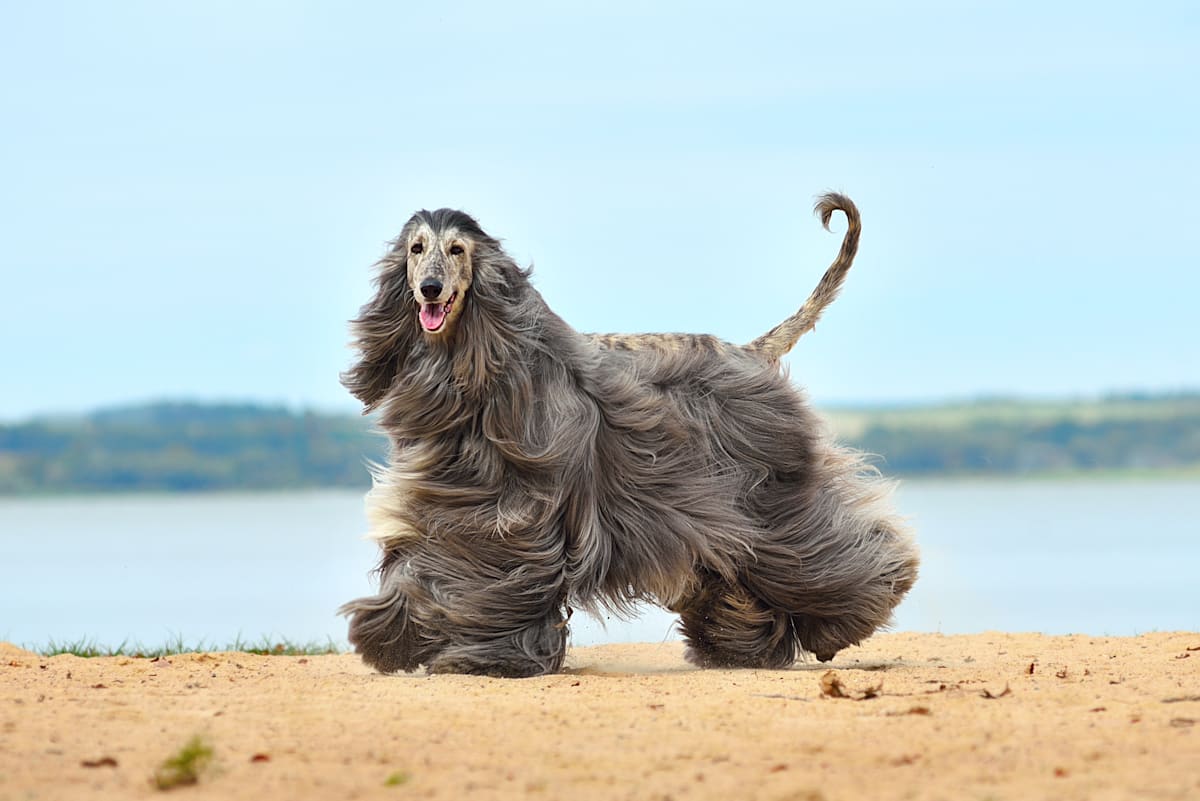
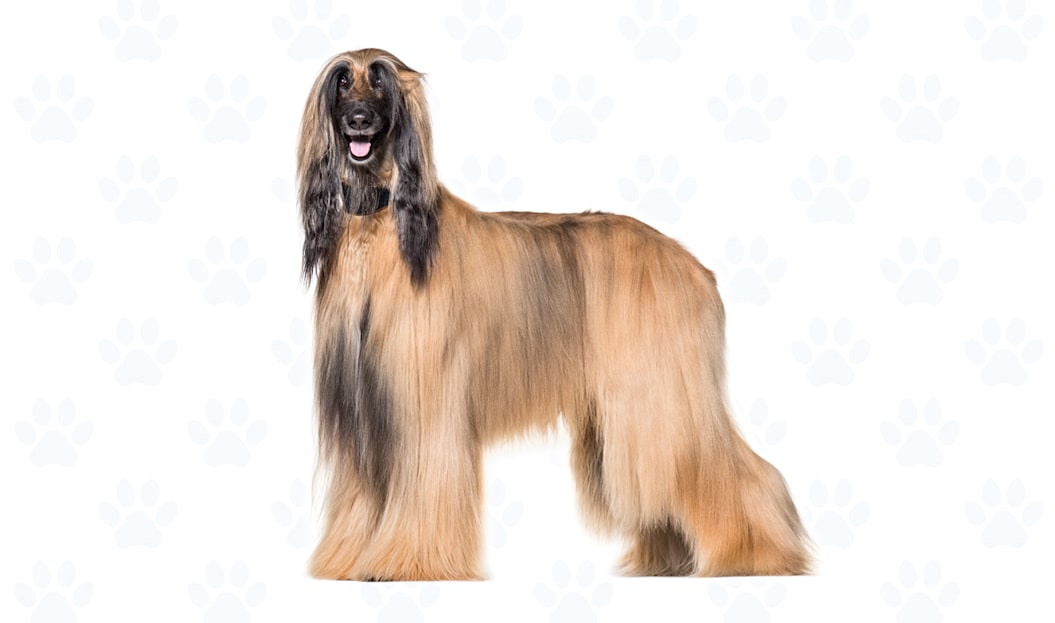
“The most striking and obvious characteristic of this breed is its long and beautiful coat, which can be any color or combination of colors,” says Dr. Jerry Klein, the [American Kennel Club’s](https://www.akc.org/) chief veterinary officer. They are a medium to large breed, standing between 25 and 27 inches tall at the shoulders and weighing between 50 and 60 pounds.
While the Afghan Hound may be stunning in appearance, underneath that glorious and glamorous exterior is a strong and agile breed that was developed for hunting. Afghan Hounds require generous daily exercise to stay fit and happy.
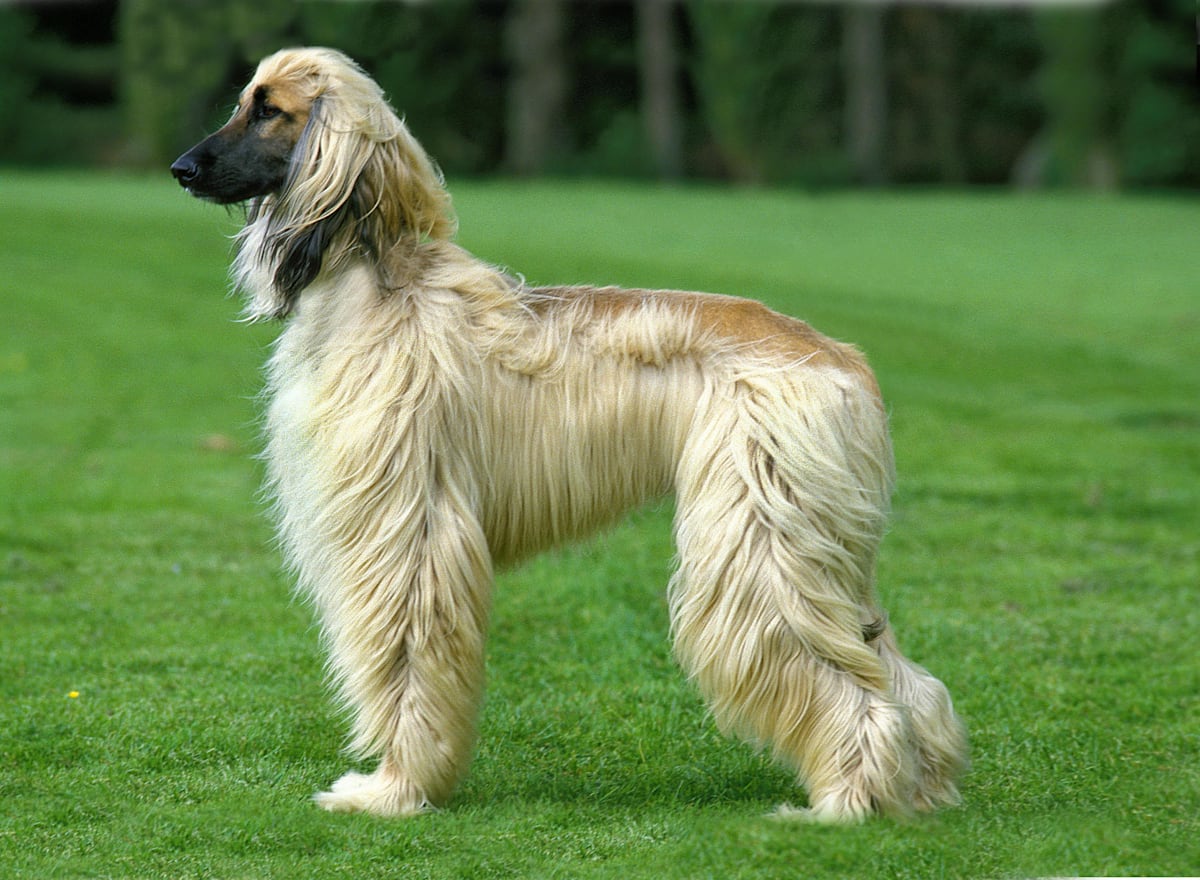
On average, Afghan Hounds weigh between 50 and 75 pounds. A tall breed, they can measure 25 to 27 inches high at the shoulder.
| Full Grown | |
|---|---|
| Female | 25 in. / 60 lbs. |
| Male | 27 in. / 75 lbs. |
Height is measured up to the shoulders.
A tall breed, Afghans can measure 25 to 27 inches high at the shoulder.
On average, Afghan Hounds weigh between 50 and 75 pounds.
As a larger breed of dog, Afghan Hounds require plenty of space to explore, lounge and run, both indoors and out.
This agile breed was built for a long day of hunting and, as sighthounds, they are very likely to run after anything they consider to be prey.
The Afghan Hound has a wide array of personality characteristics ranging from loyal, friendly and affectionate, to aloof, stubborn and wary. This isn’t necessarily a great breed for first-time dog owners.
Afghan Hounds may bark when encountering new people in their home, but they are more aloof than they are interested in strangers.

Although Afghan Hounds are very friendly with their families and have a fun-loving side, they are also very sensitive and don’t love to roughhouse. They do best in homes without children or with older, less rambunctious kids.
Afghan Hounds are loyal and have an innate need to please their owner, yet they are also known to be very independent and aloof. This stubborn streak means that training often takes a lot of patience and dedication.
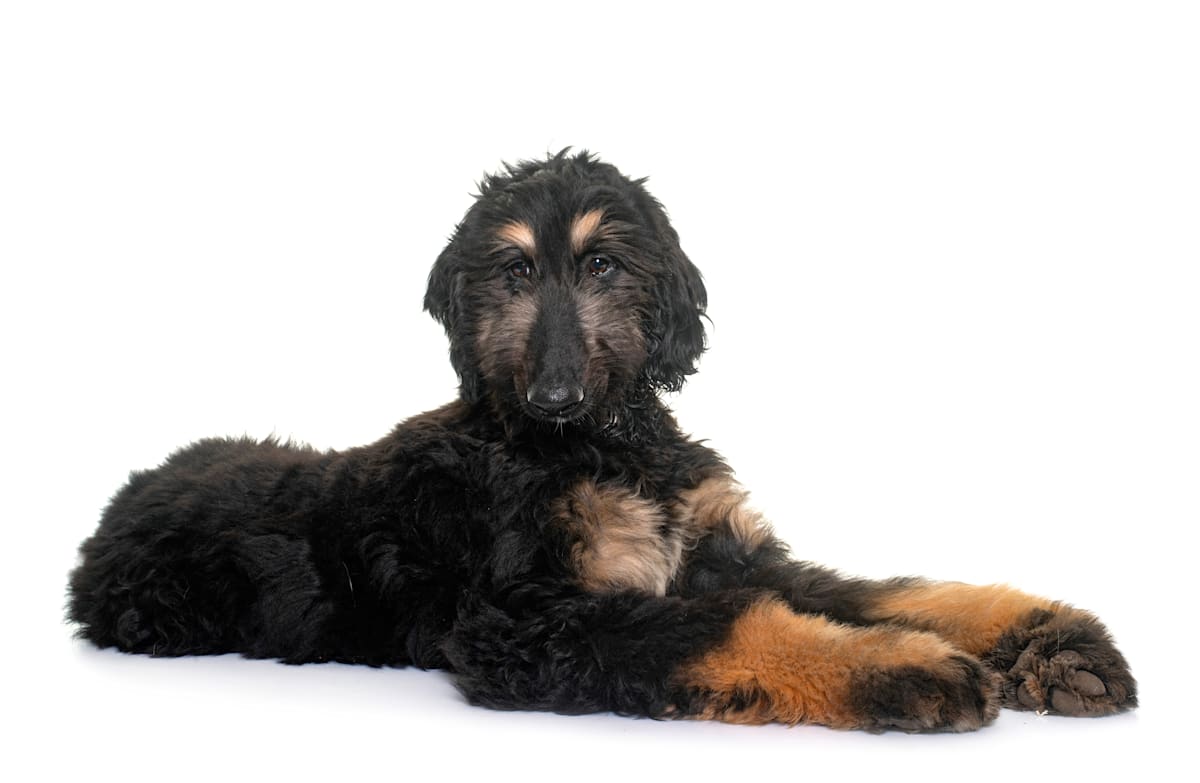
Afghan Hound puppies have short coats, but as they get older, their long, silky adult coats require regular grooming. However, they tend to shed very little.
The Afghan Hound was bred to handle the frosty climates of mountainous Afghanistan, and as such, they typically do well in colder weather. Like most other breeds, they can become overheated in excessively warm environments.
Afghan Hounds may bark when they meet new people in their home, but they aren’t known to be an overly noisy breed.
Aloof, strong-willed, sensitive and funny are a few of the words that have been used to describe the Afghan Hound. While this breed tends to be very loyal to its people, when it comes to strangers and other visitors, don't expect much from your Afghan Hound. They are more likely to ignore guests than to greet them at the door.
“An Afghan Hound is a bit like a cat,” says Klein. “They are clean, keen and loyal, and will train you just the way they want you, if you’re not careful.”
“Afghan Hounds bark when encountering new people in their home, so they are good watch dogs but will not attack,” says Klein. “They were used in their native country to watch and guard their owner’s tent, along with being a hunter.”
While your Afghan Hound may bark a few times when encountering new people in his home, he may instead prefer to lounge alone rather than alert you to the presence of welcome or unwelcome visitors.
Afghan Hounds have a number of competing factors that will help determine each individual dog’s trainability. For example, the breed is loyal to a fault, which means they could be eager to please and therefore may try very hard when training. On the other hand, this breed can also be stubborn and aloof, characteristics that might make training more difficult.
Additionally, there is little any owner can do to train an Afghan Hound to stay put once their hunting instinct takes over. As such, it’s a good idea to always keep your Afghan Hound on a leash while walking outside.
The Afghan Hound is a highly-energetic breed that does best with multiple bouts of exercise each day. The breed loves to run and jump, so any exercise or entertainment that includes those activities are sure to be a hit.
When exercising your Afghan Hound, keep in mind that they have a strong prey drive and are excellent jumpers, so any outdoor exercise should be done on a leash or in safely-enclosed areas with high, secure fences.
Frisky, energetic breed that is always ready for action
Afghan Hounds are active dogs and should be fed a high quality, balanced diet with portion controlled meals. Although they are not predisposed to obesity, overfeeding or insufficient exercise can still lead to this problem. On the other hand, care should also be taken to assure that an Afghan Hound is receiving sufficient quantities of food to maintain their energy expenditure.
Average daily consumption for an adult Afghan is 2-2.5 cups.
Although certain conditions occur more frequently in Afghan Hounds than in some other breeds, none of these conditions can be definitively prevented. Afghan Hound owners should be sure to take their four legged friend to the veterinarian once or twice per year for wellness exams and should monitor their dog at home for any changes in their habits or behavior. Veterinarians have been extensively trained to detect subtle changes before they become more significant problems.
As with all deep chested dogs, Afghan Hounds can experience gastric dilatation-volvulus (GDV), also commonly known as bloat. With this life-threatening condition, the stomach fills with air and ingest, and twists on itself so that this material is unable to pass through the remainder of the digestive tract. As this occurs, blood supply to the stomach is compromised and pressure is placed on the vena cava, which returns blood to the heart. Emergency surgery is required to correct this condition, but is not always successful if significant damage has already occured. A surgical procedure is available to prevent the stomach from twisting. To minimize the likelihood of GDV occuring, it is best to avoid offering food or large quantities of water following exercise.
As with all breeds of dogs, certain health conditions can occur at an increased frequency in Afghan Hounds or can be inherited. Responsible breeders perform a variety of screening tests prior to breeding in an attempt to decrease the incidence of many conditions in future generations of Afghan Hounds. These conditions may include, but are not limited to, the following: Hereditary myelopathy of Afghan Hounds, Cataracts, Chylothorax, Laryngeal paralysis and Lung lobe torsion.
On average, Afghan Hounds live to be between 12 and 18 years old.
While Afghan Hound puppies have short coats that don’t require much care, adult Afghan Hounds are known for their long, silky coats which require quite a bit of care and attention. Thorough brushing should happen multiple times a week to avoid tangling and matting. Regular baths, ear cleaning and nail trims are also necessary for both health and hygiene.
Long
Frequent
Although the Afghan Hound has a characteristically long, flowing outer coat, they tend to shed very little, especially with regular grooming and bathing.
The Afghan Hound breed was originally developed in the mountains and deserts of Afghanistan with the purpose of hunting for large prey. Their long, flowing coat helped keep them warm in those cold climates, while their large paw pads helped to absorb the shock of the terrain. As a sighthound, the Afghan Hound’s speed, agility, vision, independence and fearlessness made them excellent co-hunters.

The breed began gaining popularity when they were introduced to Britain in the late 1800s and early 1900s by army officers who were returning home from Afghanistan. The AKC registered the first Afghan Hounds in 1927.