Two Easy Ways to Start Earning Rewards!
Become a member today! Members-only pricing and offers, personalized care notifications, Vital Care points back on every purchase and more!
 Become a credit card member today!
Earn 2X Pals Rewards points at Petco
when you use Petco Pay!APPLY NOWLearn More About Petco Pay Benefits


My Dog Won’t Eat: Helping Picky Eaters
Published on October 21st, 2025
Updated on October 21st, 2025

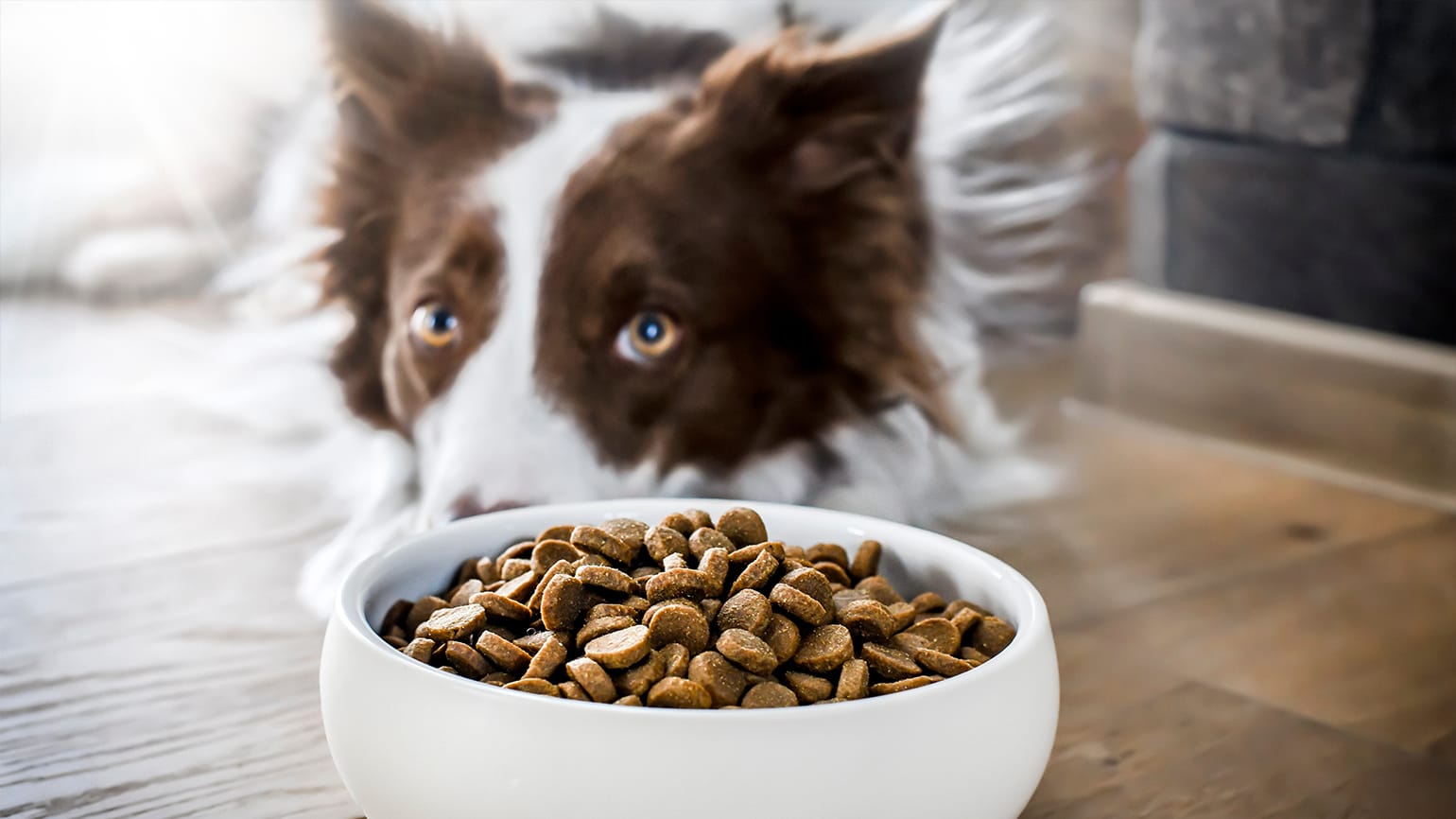
If your dog turns up their nose at mealtime, you’re not alone. Picky eating is a common challenge, and in some cases fur kids can be just as selective as human ones! This can make things “ruff” for dedicated pet parents. While mealtime struggles may seem like a simple quirk, finicky eating can affect both your pet’s behavior and overall health. Understanding why your dog is hesitant to eat and knowing when to involve a veterinarian are key first steps. Petco experts explore the causes of picky eating, signs to watch for, ways to improve your dog’s environment and routine, strategies to entice appetite, safe food transitions and lifestyle tips.
Why dogs become picky eaters
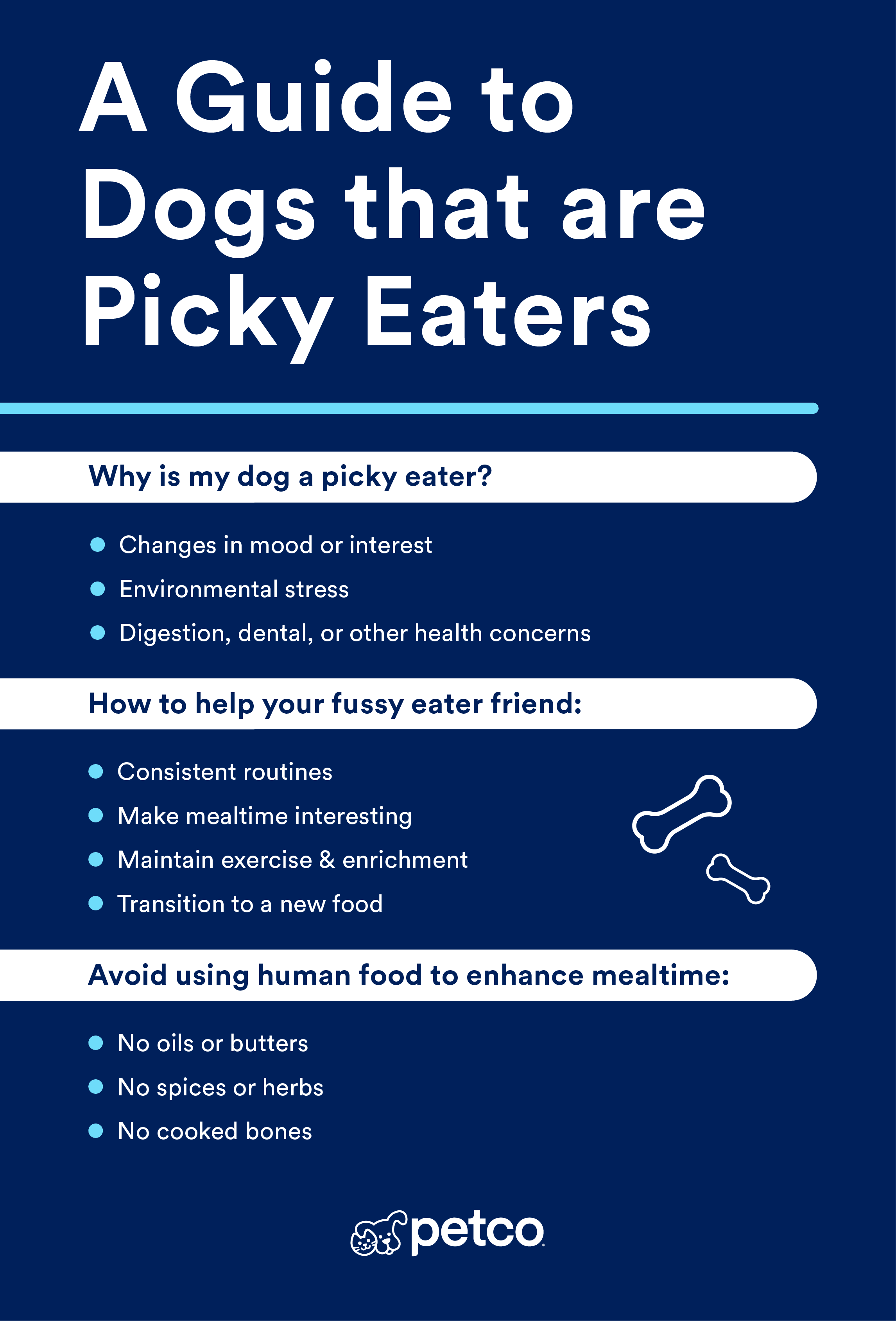
If you find yourself wondering, “Why won’t my dog eat?” the possible answers might surprise you. A fussy eater isn’t being stubborn. There are common drivers behind picky eaters, and recognizing whether your dog’s habits stem from behavior, environment or health is essential before deciding how best to support them.
Behavioral drivers: Many dogs quickly learn that skipping their regular food might earn them tastier rewards like table scraps or special treats. What’s happening, though, is your dog is training you.
Breed: Small breed dogs can be more picky and less voracious than large dogs. They seem to also like different flavors and textures. Try a diet specific for small dogs and see if this helps!
Environmental stress: Stressful situations, including noisy households, sudden schedule changes and the presence of other pets, can make a dog too anxious to focus on eating. You can monitor your dog's body language for signs of stress.
Health concerns: Dental pain, gastrointestinal upset, kidney disease and other underlying medical issues can make eating uncomfortable or unappealing. Even minor discomfort like nausea or a sore mouth can lead to food refusal.
Food for thought: Keep in mind that age, medications, recent vaccinations and changes in activity level can also influence appetite.
When to contact your veterinarian
While occasional pickiness is common, it’s important to know when it signals something more serious. If your dog refuses food for more than 12 to 24 hours, especially if paired with vomiting, diarrhea or unusual lethargy, call your veterinarian right away. Puppies under 6 months and senior dogs are especially vulnerable to appetite changes and should never go without food for long. Likewise, pets with chronic health conditions and those showing sudden behavior shifts warrant prompt attention. A quick check-in with your vet can rule out medical issues and help ensure your dog stays on a healthy track.
Food for thought: As always, it’s a good idea to have the number of a 24-hour clinic programmed in your phone just in case.
Establish a consistent feeding routine
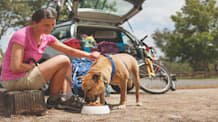
Dogs thrive on structure, and feeding schedules are no exception. Offer meals at set times each day, leaving the bowl down for only 10 to 20 minutes before removing uneaten food. This routine teaches your dog who’s a picky eater that mealtime is their chance to eat and can help reduce pickiness over time. Free feeding—leaving food out all day—can dull natural hunger cues and make training harder. This can be especially problematic in multi-dog households. If your dog is newly adjusting to set mealtimes over free feeding, be sure to give them multiple opportunities to eat their meal within a set time at first as it may take a few sessions for them to understand the food will be taken away. It is imperative that puppies, seniors and those with special medical conditions do not skip meals entirely.
Keep treats under 10% of daily calories so they don’t replace real nutrition. This also helps your dog look forward to mealtimes since they won’t get overly full on snacks.
Food for thought: One study found dogs ate 88% more when given larger portions, a reminder that serving size influences appetite, just like in humans.
How to enhance meal appeal
You know the expression, “We first eat with our eyes”? Well, it’s the same for dogs, but instead it’s their powerful noses.
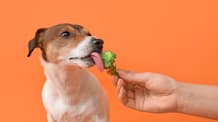
Warming or softening food helps release aromas and make meals more inviting. Adding broth, a spoonful of wet dog food or another dog-safe topper can spark interest without overwhelming the diet. Other than dog-safe fruit and vegetables, people food should be mostly avoided as they can have additional fats, sodium, seasonings and ingredients that can be harmful to your pet. Petco carries a variety of convenient food toppers, from powders to liquids to wet food. Just make sure to factor those in with your pup’s daily calories. Water from low-sodium canned tuna can also sometimes entice picky eaters to eat.
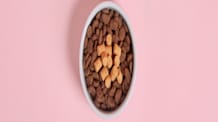
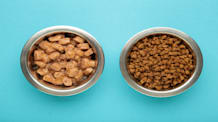
Some dogs also appreciate different textures to make meals more interesting. Mixing kibble with wet food also introduces a satisfying texture and moisture contrast. Sometimes a simple change in the setup makes a difference, too. Switch to ceramic or elevated bowls, and feed in a calm, quiet space. These small adjustments can make meals feel special, helping your dog associate food with comfort and reward.
Food for thought: This one is literal! For mental stimulation, try puzzle feeders or slow-feed bowls to make mealtime more engaging.
Transitioning foods
When introducing a new food, go slow. Blend 80 to 90% of the old diet with 10 to 20% of the new, then gradually adjust over 7 to 10 days. This helps prevent digestive upset and allows your dog to adapt to flavor and texture.
Rotating between flavors or formulas on occasion can also help keep meals interesting. Avoid switching your dog's food too often, however, so your dog doesn’t learn to expect constant variety. If your dog is prone to tummy issues, you may prefer to keep the main diet the same but rotate between some treats or toppers. If you suspect sensitivities or allergies, ask your veterinarian about a structured elimination diet to identify safe, enjoyable options.
Food for thought: Dogs can have sensitivities to specific ingredients, which can cause them to refuse to eat and also lead to itchy skin, vomiting or diarrhea. Ingredient sensitivities are usually diagnosed by a veterinarian who will prescribe a special diet for a food trial. During the trial your dog should not eat anything else, including treats or toppers.
Tips to boost appetite
Exercise
Daily habits play a huge role in appetite. A little exercise before mealtime can naturally stimulate hunger, but be cautious with too much exercise around mealtime, especially with large breed and deep-chested dogs as they are at an increased risk of bloat. Don’t forget to remove uneaten food after 10 to 20 minutes to help build a healthy routine.
Limiting treats
Limiting treats to less than 10% of daily calories also helps ensure your dog keeps looking forward to their main meals. Most importantly, stay patient and consistent. Improvements happen gradually, but with time and steady habits, your dog can learn to love mealtime again.
Mealtime
Create a relaxed mealtime environment. No, this doesn’t mean candlelight and soft music, although your dog might enjoy some soothing sounds. This is more about avoiding distractions or extra pressure during feeding. If your human kids are playing, feed your furry one away from them so they have a bit of quiet time. Dogs should always have a quiet, secure place away from other animals and people during mealtime.
Takeaways
Helping a picky eater thrive takes patience, structure and a little creativity. By ruling out health issues, sticking to a routine and using strategies like toppers, texture mixing and calm environments, you can make meals more appealing. Observe your dog’s preferences, experiment thoughtfully and celebrate successes along the way; after all, this is a process. Petco’s expert staff can help guide you through the many food options, toppers and feeding tools available to suit your dog’s needs.

My dog is a picky eater. How can I ensure he gets enough nutrition?

My dog is uninterested in food. How to get a picky eater to eat?
My picky dog won't eat dog food. How can I increase his appetite?
My 5-month-old puppy is a picky eater. How can I get him to eat?
Picky dog won't eat? Should I schedule meals or leave food out?
My dog won't eat. What home remedies can I try for picky eaters?
My healthy dog is a picky eater and won't eat her food. What to do?
My dog won't eat for days and is a picky eater. How can I help her?
My dog is a picky eater. How can I get her to eat her food?
How to get my picky dog to eat dog food instead of human food?