Why Dogs are Afraid of Thunderstorms & How to Help
Published on July 30th, 2025
Updated on July 30th, 2025



While you may enjoy the pattering of rain and the booms of thunder, there’s a good chance your dog doesn’t feel the same way. But why are dogs scared of thunder? The reasons aren’t always so obvious.
Sudden, booming sounds can trigger noise aversion, a form of anxiety that’s especially common in dogs with past trauma. Some dogs are also highly sensitive to environmental changes such as shifts in air pressure or humidity that signal an approaching storm. When dogs sense these changes, they may begin to take steps to find protection. Additionally, static electricity in the air may be physically uncomfortable for them, making the entire experience both confusing and distressing. This can be especially common in dogs with particularly long or fluffy coats. While some dogs may never completely stop being scared of thunder, consistent management—including desensitization, calming tools and a safe environment—can significantly reduce their fear over time. Read on for behavioral tips and some recommended calming products (all available at Petco) that may help.
Dog storm anxiety symptoms
The good news is thunder doesn’t typically hurt dogs’ ears, but their hearing is much more sensitive than ours, so loud, low-frequency sounds like thunder can be overwhelming or uncomfortable. Some dogs may scratch at or cover their ears as a reaction to the intensity of the noise or due to anxiety. This behavior is usually more about fear or sensory overload than physical pain.
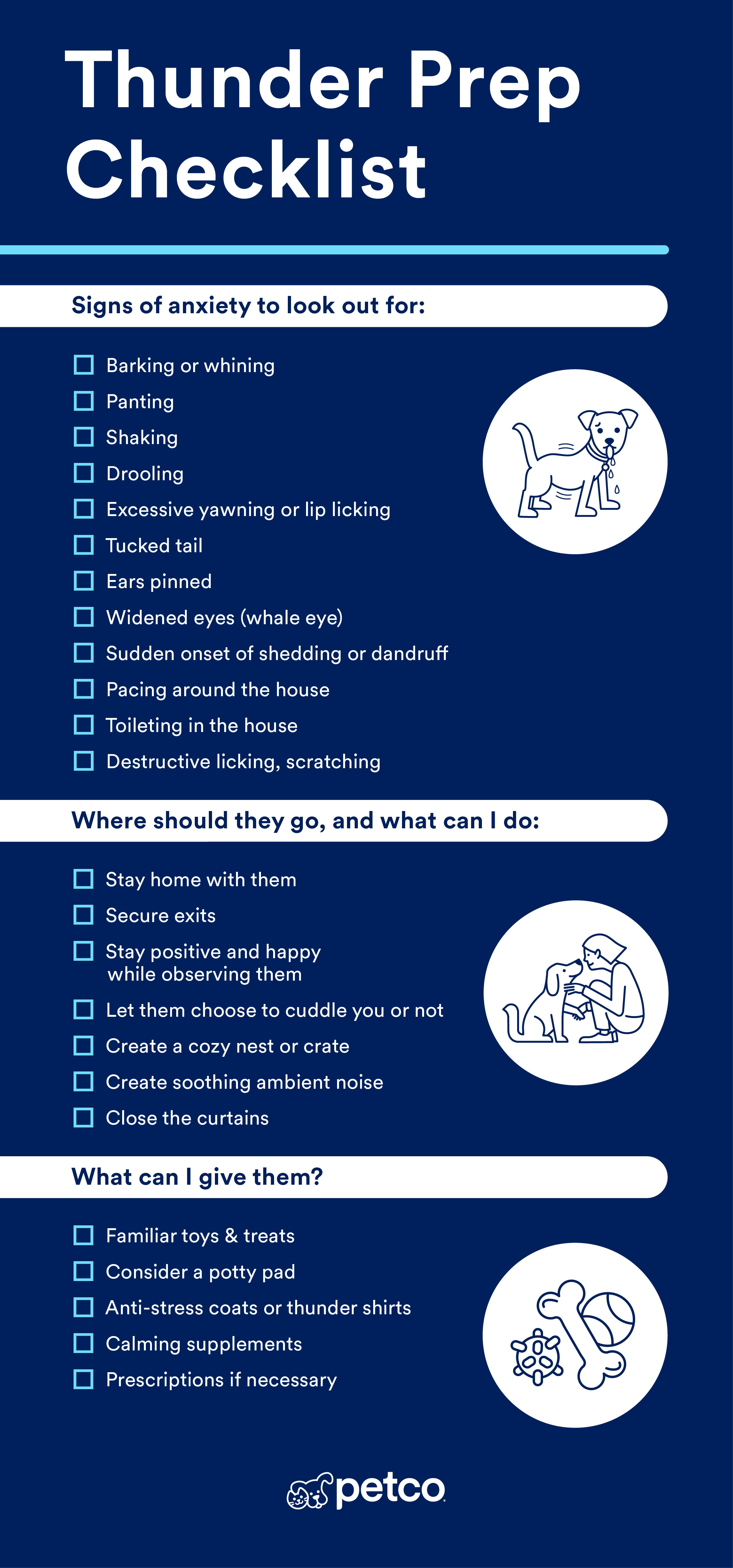
That doesn’t mean your dog isn’t extremely uncomfortable. There are other body language cues that indicate the thunder is making your dog anxious. These include:
- Barking or whining
- Panting
- Shaking
- Drooling
- Excessive yawning or lip licking
- Tucked tail
- Ears pinned back to the head
- Widened eyes (whale eye)
- Sudden onset of shedding or dandruff
- Pacing around the home or general unrest
- Toileting in the home
- Destructive licking, scratching or chewing to try to relieve their stress
How can I prepare my dog before a thunderstorm comes?
If you know a thunderstorm is rolling in, here are 5 ways you can help your dog prepare.
- When a thunderstorm is approaching, try to stay home with your dog and skip walks. Storms—and even subtle weather changes—can make them anxious or prone to running off. Make sure your dog is microchipped with up-to-date contact info, just in case they get out and lost.
- Create a safe, cozy space with familiar blankets, toys and something that smells like you to help them feel secure. This can be a crate or a makeshift tent. For additional noise muffling, cover the crate or area with a blanket.
- Use calming tools such as pheromone diffusers or sprays and turn on soothing music or talk radio to provide background noise and help mask the sound of thunder.
- Create some ambient noise. Desensitization involves gradually exposing your dog to low levels of storm-like sounds to help reduce fear over time. Environmental management, like playing loud movies, using box fans or calming music, and closing curtains, can help block out thunder and visual cues that cause stress. Running sneakers in the dryer is a simple way to get your dog used to unpredictable noises in a controlled setting.
- For more serious cases, working with a veterinary behaviorist is highly recommended to develop a personalized treatment plan.
Bonus: If you live in an area where thunderstorms are common, you may even look into installing acoustic tiling or other soundproofing in at least one room in your home.
How can I calm my dog down during a thunderstorm?
If a thunderstorm hits without time to prepare, there are other ways to help your dog cope. First, start by letting them choose where they feel safest; you may want to cuddle your dog on the couch, but don’t force this. Make your dog’s chosen space as comfortable as possible with familiar items and white noise to mask the thunder as listed above.
Lead by example.
Staying calm and carrying on can help reassure your dog that everything is OK. It’s also up to you to remain “pawsitive” if you come home and find your dog has had an accident or been destructive out of fear and anxiety; we know cleanup is no fun, but your dog shouldn’t be punished. (This is always the case but even more crucial when your dog’s emotions are already running high.)
Many dog parents feel overwhelmed when their pets feel overwhelmed—either unsure where to start or like they’ve tried everything without success. The key is to observe your dog’s behavior closely, as it can guide you toward the most effective calming strategies tailored to their specific triggers and needs. As with many things, there are multiple levels of anxiety, with different tools for each.
Mild anxiety:
Try distracting your dog with dog toys, games, treat puzzles or training activities. You can also use treats as positive reinforcements, giving your dog something yummy, praise, play or any combination of those when the thunder booms to create a positive association. (Depending on how long the storm lasts, you may need to steal kibbles from their next meal or work in some low-calorie treats such as baby carrots, cucumber or green beans along with some of the high-value, higher-calorie treats.)
Medium anxiety:
This is a good time to enlist some wardrobe options. An anti-static coat, ThunderShirt or other garment can be comforting in times of stress. You can also start with some over-the-counter calming supplements containing ingredients such as L-theanine or chamomile. If those aren’t effective, you can explore dog calimg aid options like CBD or melatonin, which some pet parents find useful for mild to moderate anxiety—though it's important to consult your vet first. (A note about CBD gummies and tinctures: This is NOT the time to share your “medicine” with your dog. CBD products for humans can contain THC or flavorings, such as peppermint oil, that are unsafe for pets.)
Significant anxiety:
If your dog shows more serious signs of fear or noise phobia, consult your veterinarian about options such as anti-anxiety prescriptions or canine noise aversion medications. For more severe cases, prescription medications such as trazodone, alprazolam or Sileo may be necessary to provide relief. Finding the right solution often takes some trial and observation, so work closely with your veterinarian to determine what’s safest and most effective for your dog.
Secure your home and yard
There are some additional steps to take to keep your house “home, sweet home” for your dog during storms. Scared dogs may try to run or hide, so check your home and yard for potential escape routes and secure any exits. If you expect your pet to have an accident inside, consider laying down some potty pads in areas that are frequented by your dog or most likely to be near a hiding spot. Closing blinds or curtains can also help reduce the stress of flashing lightning.
Conclusion
While thunderstorm fears can be tough to manage, being proactive—by creating a safe space, using calming tools and working on desensitization—can make a real difference. Don’t hesitate to talk to your vet or a behaviorist, especially if your dog’s anxiety is severe or persistent. With patience and the right support, including tools available from Petco in store and online, many dogs can learn to feel safer and weather the storms.

My dog is afraid of loud noises. How can I help with noise anxiety?
How to calm my dog barking at thunder during storms without a crate?

Dog scared of thunder? Thunder shirt failed. What else can help?
My dog is severely afraid of thunderstorms. What else can I try?
How can I help my dog who is terrified of fireworks and loud noises?
My dog's storm anxiety makes her frantic and aggressive. What to do?
My dog is scared of thunder. How to calm her without a Thundershirt?
My dog is scared of thunderstorms and has a bloody nose. What to do?
How to help my dog with noise anxiety and fear-induced shutdowns?