Related Articles


Does my dog or cat need a coat? Do they even like them?
Published on October 6th, 2025
Updated on October 6th, 2025


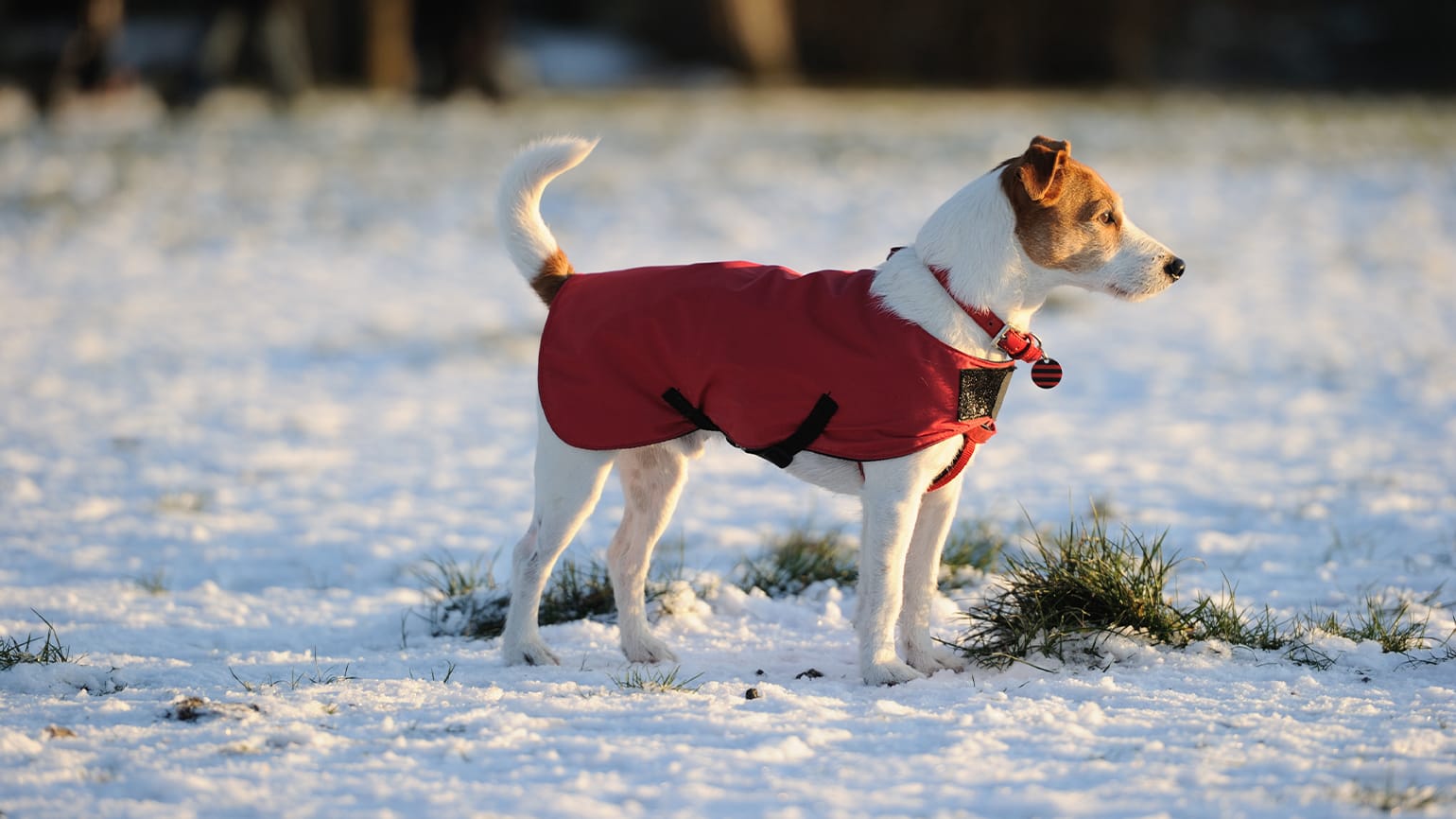
As pet parents, we want to do what’s best for our pets. But sometimes the line can blur between what they may prefer and what we prefer. Sweaters and coats in chilly weather can “fall” under that category. When temperatures dip and we put on a jacket to go for a walk, do our dogs need coats, too?
The most accurate answer is maybe. Read on to learn which animals and breeds can benefit from an extra layer and under which circumstances. Petco is here to help with the expertise you need and the products you trust.
When is it “coat weather?”
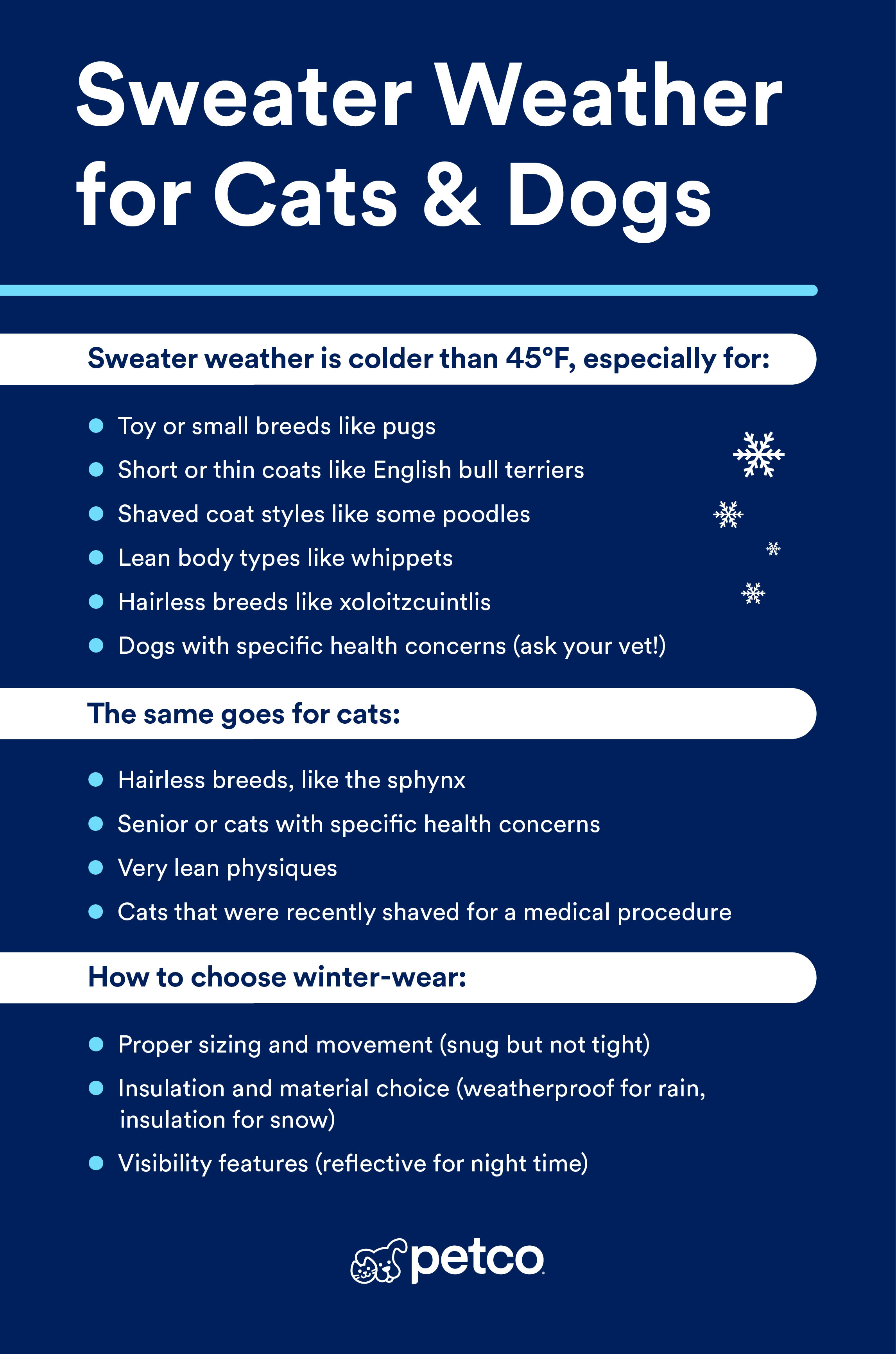
First, 45°F and colder is the general guideline for sweater weather for healthy adult dogs. If your dog meets one of the following criteria, however, that temperature range may be too cool for them to be comfortable for even short periods of time:
Very small
Short or thin hair
Senior
Puppy
If you’re in an area that experiences extreme wind or rain or you and your dog spend extended time outside, that lower temp is likely the sweater target for your dog.
What about feline friends? Do cats need coats? Generally, just their own coat is fine, especially since it’s recommended that pet cats stay indoors. Cold-weather risks for cats who spend time outside include frostbite and hypothermia. Additionally, adding a coat or sweater can both restrict movement, including during grooming, and cause overheating. Possible feline exceptions include:
Hairless breeds, such as the Sphynx
Senior or ill cats
Very lean physiques that don’t regulate body temperatures as well
Cats who were recently shaved
Also, if your cat has health concerns and your vet recommends a sweater, always follow their specific instructions. Remember to opt for a style that doesn’t restrict your cat’s tail, since it helps them balance.
Additionally, because most cats don’t typically wear clothes, they can become stressed when cat moms and dads try to dress them. Unless your cat falls under one of the exceptions above, a collar or harness is typically the only wearable they need.
Petco offers cozy solutions to help keep cats comfortable during colder months. Soft cat caves and blankets provide warm, snug spots for lounging, while heated pet beds with thermostat control give extra warmth and allow for safe, adjustable heat throughout the day.
“Weather” or not: Which dogs need a jacket?
Some breeds can benefit from wearing a coat or sweater in cold weather because their body or fur type means they feel the chill. These include:
Toy and small breeds, especially those with thin coats: Chihuahuas, Boston Terriers, Pugs
Short or thin coats: Boxers, Dalmatians, Bull Terriers
Stripped or shaved coat styles: Cocker Spaniels, Poodles, Schnauzers
Lean body types: Greyhounds, Salukis, Whippets
Hairless breeds: American Hairless Terriers, Chinese Cresteds, Xoloitzcuintlis (Mexican Hairless)
Additionally, seniors of many breeds, as well as dogs with health concerns such as endocrine or cardiac issues, can also benefit from the extra warmth a sweater can provide.
Speaking of outside, what your dog does outside and how long they are exposed to cold weather can also determine if additional layers are needed. Let’s take Ruffles, for example. She’s an Australian Cattle dog who lives with her family on a large property. Her coat isn’t very long, but she’s used to being outside for large amounts of time and staying active during the day so she doesn’t need anything additional. On the other hand, city slicker Monty is a French Bulldog who mostly gets outside for quick potty breaks and dog park visits. He benefits from sweaters and enjoys the extra attention they get him, too!
No matter what the thermostat says, your dog can communicate if some extra warmth is needed. If your dog displays any of these signs, inside or out, add a layer:
Shivering (dogs, they’re just like us!), especially a trembling tail (OK, not just like us)
Curling up in a ball, seeking warmth via blankets or buddies
Not moving as much or moving very slowly
Restless or anxious
Additionally, if you touch your dog and feel a cold nose, paws or ears, it’s likely your dog is cold all over. That’s a good indication your dog needs a sweater or should be moved to a warmer area for comfort. If your dog continues to shiver or display restless behavior once warmed up, reach out to your veterinarian as these can also be symptoms of an underlying health concern.
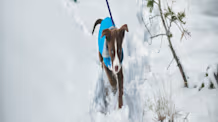
Petco carries a selection of winter essentials to help keep dogs warm and safe. Insulated jackets provide extra warmth on cold days, while water-resistant shells protect against snow and rain. Reflective vests help ensure your pet stays visible even during early morning and evening walks.
When to skip the coat
Remember Ruffles, the outdoorsy Australian Cattle dog? There are some other breeds and situations where that healthy adult dog’s built-in coat is plenty.
Double-coated breeds: German Shepherds, Golden Retrievers, Shih Tzus
Active dogs: Extremely physical dogs, whether it’s from participating in agility or getting the zoomies, can overheat, so they definitely don’t need a sweater when performing activities. Signs of overheating include panting and restlessness; if you suspect your dog may be overheating, immediately contact your veterinarian.
For pets who mostly stay indoors, it can be easier to keep the room temperature comfortable instead of adding garments. This is preferred for many pets, especially cats.
Fit & fabric: choosing the right gear
When selecting a coat or sweater for your dog, proper fit is just as important as warmth. According to the American Kennel Club, a good fit allows full movement of the shoulders and hips, with no rubbing or chafing at the chest or underarms. The garment should be snug but never tight and ideally feature harness-compatible openings so you can leash your dog comfortably for walks.
Fabric choice depends on the weather. Fleece is ideal for crisp, dry days, offering lightweight warmth without bulk. For frigid conditions, an insulated quilted coat provides superior protection. On wet, windy or slushy days, a soft shell or rain shell helps block wind and repel moisture, keeping your pet dry and comfortable.
Other features can make a big difference in daily use. Reflective trim improves visibility during dark winter walks, while easy on/off closures help reduce stress for anxious pets.
Petco offers a variety of winter gear to help keep your pet safe and comfortable. Adjustable dog coats with built-in leash portals make walks easier. Lightweight rain shells help keep dogs dry on wet days, while reflective accessories, including collars, leashes and clip-on lights, improve visibility during dusk or foggy outings.
Help your pet like wearing a coat
Remember Monty, the Frenchy who liked the extra attention from his sweaters? Not every pup is quite the fashionista, so you may need to encourage your dog to embrace their wardrobe. Like all training, it starts with patience and pawsitive reinforcement. The American Kennel Club recommends desensitization: start by showing your pet the garment and pairing it with treats, then try short sessions of wearing it around the home. Gradually increase the duration, always rewarding calm behavior. If your pet shows stress—such as freezing, crouching, lip licking or pawing at the garment—pause, remove the clothing and try again later.
Pay attention to body-language cues that signal discomfort. Signs like pinned-back ears, tucked tail, refusal to walk and repeated attempts to wriggle out mean your pet isn’t ready yet. The goal is to build a positive association so the garment feels safe, not scary. With consistency and patience, most pets learn that wearing a sweater or coat means good things—comfort, attention and outdoor adventures. And it won’t hurt if you point out your cute dog looks even cuter in their finery.
Paws, skin & grooming in winter
Winter means extra grooming to keep your pet comfortable and healthy. If your doggo regularly wears sweaters, it can be easy to lose focus on their natural coat, but regular brushing remains essential because clean, unmatted fur provides the best insulation. After baths, keep your dog indoors and dry them thoroughly to help avoid chills. Trimming the fur between paw pads can also help prevent painful ice balls from forming during outdoor play. If you prefer to leave the scissors to the experts, the dedicated grooming team at Petco can help!
There are some paw treatments you can, and must, still do at home, especially if you and your pup walk in snow or ice. Wipe your pet’s paws with a damp cloth or pet-safe wipe to remove residue that could irritate the skin or be ingested, such as salt or de-icers.
Dry, flaky skin is another common winter issue; using a humidifier indoors and gently towel-drying your pet after time outside can help. With consistent care, your pet’s skin, paws and coat will stay healthier and more comfortable through the cold months. If your pet is experiencing excessive flaking, itching or irritation, reach out to your veterinarian.
Petco provides products and services to protect pets during winter. Paw balm and dog booties help shield paws from ice, salt and harsh conditions, while winter grooming appointments help keep coats clean, healthy and free of mats.
Cold-weather safety tips for dogs and cats
When temperatures drop, both dogs and cats need extra protection. Limit outdoor time, especially in extreme cold or damp conditions, and steer clear of icy water and areas treated with antifreeze, which is toxic if ingested. For those evening walks, add visibility with reflective collars, leashes or LED clip lights. Indoors, make sure your pet has a warm, draft-free spot to sleep.
Petco offers useful gear such as reflective accessories, ID tags and visibility lights to help keep pets safe on winter walks. For senior pets and those with chronic conditions, consult Vetco before planning strenuous outdoor activities such as winter hikes. With the right precautions, you can help your pet stay safe, warm and comfortable all season long.
FAQs about Pets Wearing Jackets
At what temperature should I put a coat on my dog?

Start considering layers when the temperature drops below about 45°F. That’s a good rule for most dogs, but the exact temperature will vary depending on their health, activity level, coat type and cold acclimation. Below 32°F, be extra cautious, factoring in wind, wetness, size and overall health.
Are cat sweaters safe?
Most cats don’t need them, and sweaters can interfere with grooming or movement. Exceptions include hairless and shaved cats, or if recommended by a veterinarian. Keep sessions brief and supervised.
Does my double-coated dog (like a Husky) need one?
Generally not, especially during active outings. Monitor for overheating. A lightweight shell may help in cold rain or wind when your dog is inactive.
How should a dog coat fit?
It should allow full shoulder and hip movement, fit snugly around the torso without pinching, include harness or leash openings and be removed if chafing occurs.
What are signs my pet is too cold?
Watch for shivering, hunching, slowing down or trying to turn back. If you see these, head indoors and warm your pet gradually.
What to buy (only if it applies to your pet)
Not every pet needs winter gear, but the right items can make a big difference. The following items are possible wardrobe additions that can help make the cold weather a winter “funderland” for your dog or cat.
Dogs
Insulated jacket or fleece for warmth
Rain shell for wet or windy days
Reflective collars, leashes and clip lights for visibility
Cats
Heated bed or cozy cave
Soft blankets for added warmth
Sweaters only in special cases, such as for hairless breeds or per veterinary guidance
Services
Winter grooming to help keep coats clean and prevent matting
Vetco check-in for seniors and pets with medical conditions before winter outings
Does my small dog need a winter coat and boots for cold weather?

How cold is too cold? Does my dog need a coat for winter walks?
Does my small puppy need a winter coat and booties for cold winters?

How to keep my thin-coated dogs warm in cold weather and indoors?

What temperature is too cold for my dog without a coat and booties?
Is a cold nose normal for my dog in winter? Should he wear a coat?
My Doberman has a single coat. How to keep him warm in a cold tent?
How accurate are dog cold weather charts for winter outdoor play?
My dog won't walk in cold rain. Should I force him? What clothes help?