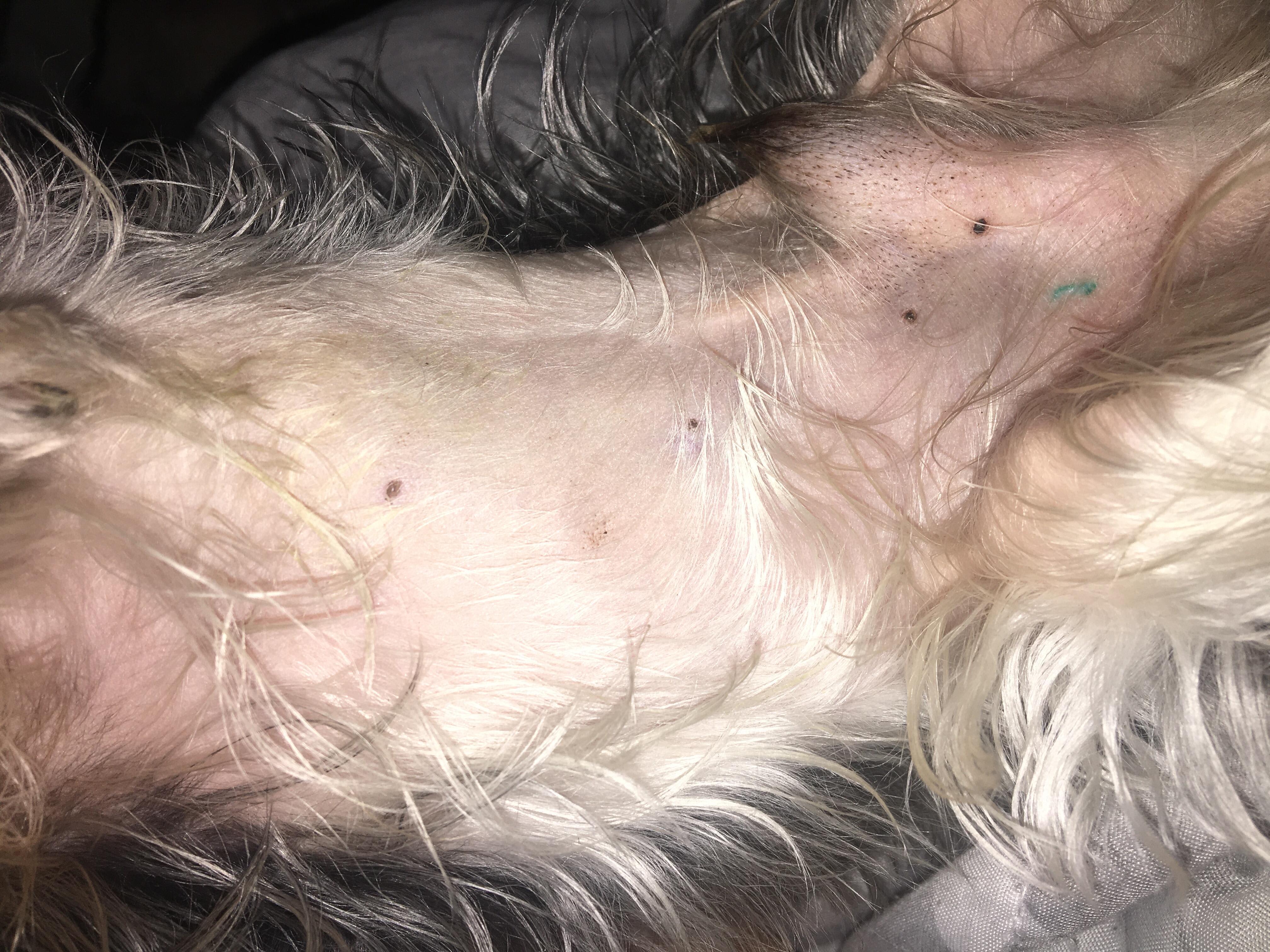
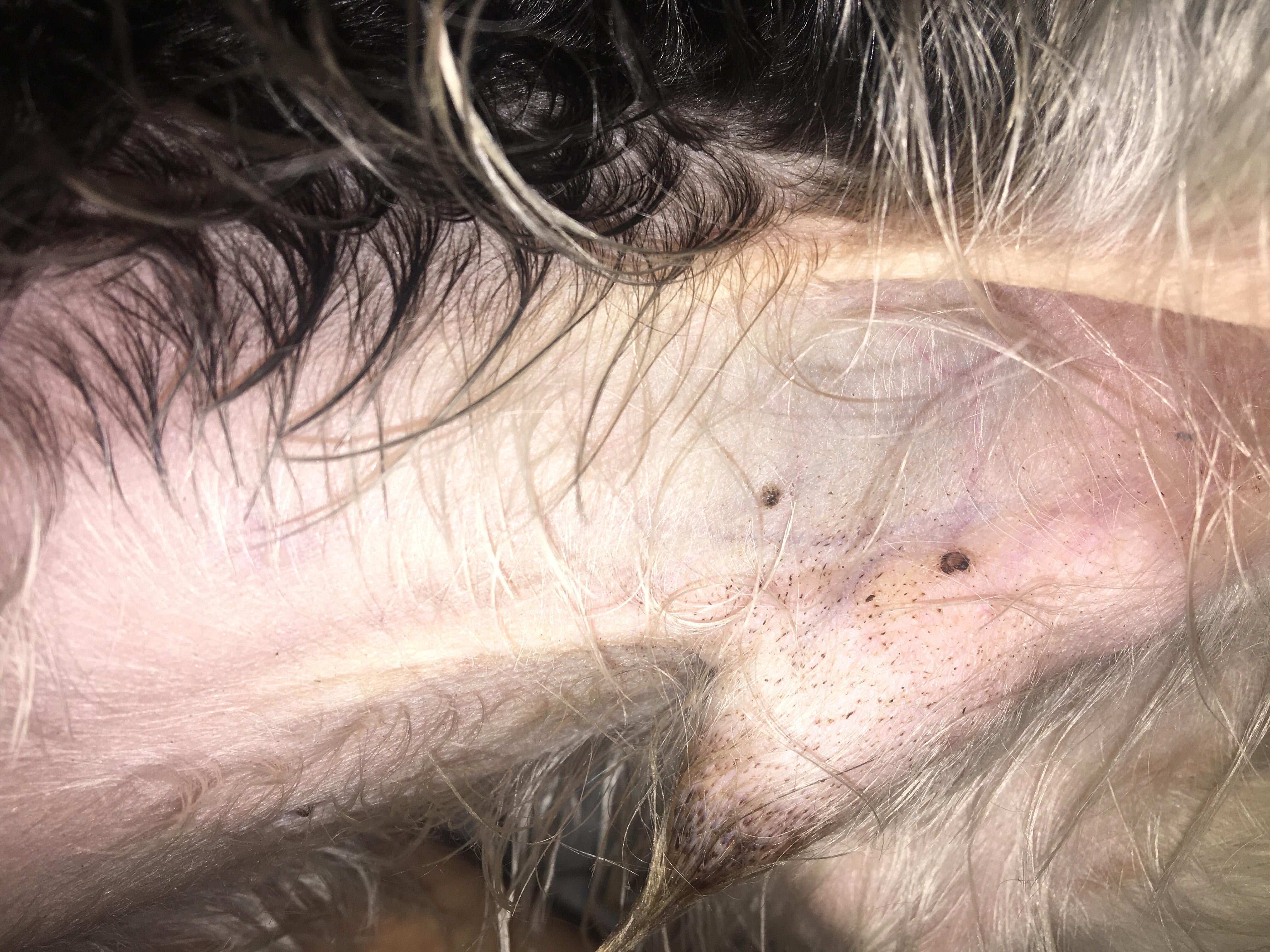
My dog has new black spots on his belly. Are they normal or flea dirt?
Updated On September 23rd, 2025
Pet's info: Dog | Yorkshire Terrier | Male | neutered | 4 lbs
My dog has some black spots noted on his belly. I’m not sure if I just did not notice them before, but they seem recent. They also don’t seem to bother him at all, he’s not itching or scratching, I’m just nervous they might me flea dirt or ticks


4 Answers
Most Helpful Answer

Published on May 17th, 2020
Hello and thank you for contacting Petco Pet Education Center, formerly Petcoach. These dots are not flea dirt or ticks and most likely they are not related to any diseases. Many dogs develop black dots like these on the abdomen and in axial and inguinal areas. As long as there are not many of them and they do not bother Kobe, there is nothing to worry about. However, if larger part of his skin becomes black, dry or thickened you should take him to your local vets to test his thyroid gland.

1Pet Parents found this answer helpful
Related Answers from Veterinarians
-
Published on August 2nd, 2018
Thanks for using Petco Pet Education Center, formerly Petcoach! This is most likely allergies with a secondary infection which may be bacterial, yeast or most likely a combination. It really comes down to figuring out what is causing her allergies so that they can be treated or the specific allergen avoided. A secondary infection is likely and also needs to be addressed. The hydrocortisone is not likely to help much in this case as the inciting factor would not be dealt with that way. There are many things that can cause allergies though in most cases they can be broken down into 3 big categories: flea, food and environmental allergies. Allergies are usually worked up in a stepwise fashion starting with flea allergies as this is the easiest and cheapest to take care of. If not on a flea preventative, then it would be a good idea to get started on one. If already on one then it would be a good idea to change to something else (there are many new products out in the market). If not improved in 1-3 months then it is time to move on and check for food allergies by switching to a novel diet (new protein and new carbohydrate). If that does not seem to be the issue then you are left out having to check for environmental allergies which require blood and/or skin tests. Allergies can be very frustrating to deal with at first but so rewarding at the end when we are able to treat them effectively!
4Pet Parents found this answer helpful
-
Published on July 1st, 2019
Thanks for using Petco Pet Education Center, formerly Petcoach! This is classic for flea allergy dermatitis. However, it could also be due to other types of allergies such as environmental allergies or food allergies. For that reason, I recommend you consider having him evaluated by a veterinarian for further assessment. They may check for these possibilities and treat accordingly. Best of luck!
1Pet Parents found this answer helpful
-
Published on September 30th, 2019
This is probably caused by an allergic reaction. first of all make sure you de-flea Lucky regularly every month with a high quality spot on (ex. Advantage) as fleas are by far the most common reason for these reactions. If the fleas are not the problem, it could be an allergic reaction to food or an environmental factor. this is more complicated to treat and will sometimes require medications such as Steroids, anti histamines or cyclosporin in order to stop the allergy.
1Pet Parents found this answer helpful



Hi, can advise what is the tiny black mark at her belly ? Thank you .

My dog has tint black dots all around her belly. She does no scratch and there are no traces of fleas. What could it be?
I've been treating my dog for a tick infestation. I noticed she has these brown and black spots on her skin, that are not ticks or fleas. This largest area is her belly (first pic) but she also has smaller patches like this on her chest (second pic)
My 7 year old chiweenie has all these black specks on his stomach. They have been there for about a month. I don't know if it has something to do with his dandruff skin that I been trying to maintain. I have switch his food to Science Hill sensitive

My dog honey has suddenly gotten this on her belly! I have no idea what it is please help me figure it ou?
My seven-year-old Chiweenie has all these black specks on his belly. I know he's allergic to fleas and I did not buy flea medicine this month, so I figured it was that or hyperpigmentation not really sure. Please help thank you.

My dog has a few black dots on his belly and one is a red on his skin and a black pimple that is black

My dog has all of these little dots all over her lower stomach, do you know what they are?

I have been getting bit by something and just a few minutes ago Lilly rolled on her back so I pet her stomach. Then I saw these reddish blackish spots everywhere. I have never seen this on her before and I gave her a bath a few weeks ago and pulled o

My animals have fleas, but Toby has they the worst they lay all there eggs on him and they are all near the crotch. We can’t comb them out and they seem to be in the skin. Do you know anyway we can get them out?

Book an appointment with the pros – our expert vets are here to help.
