


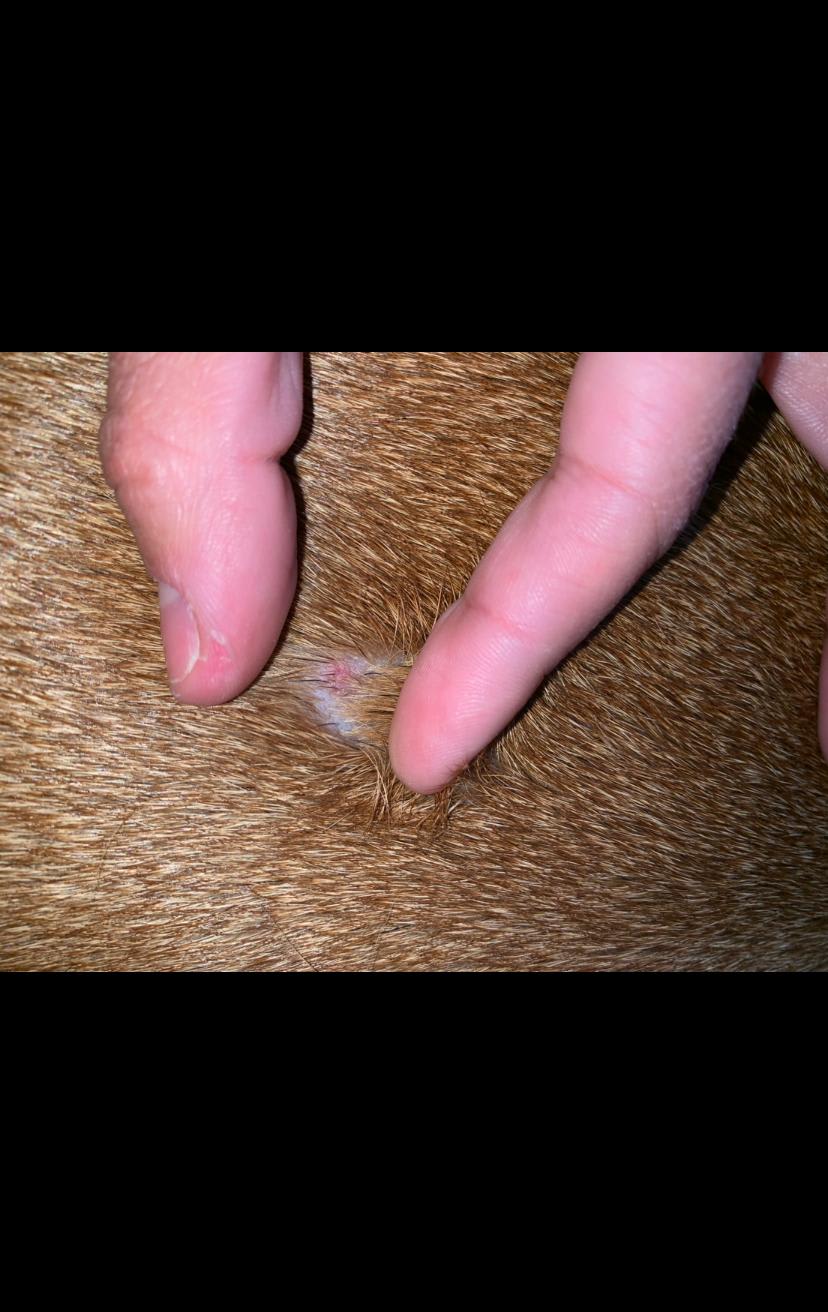
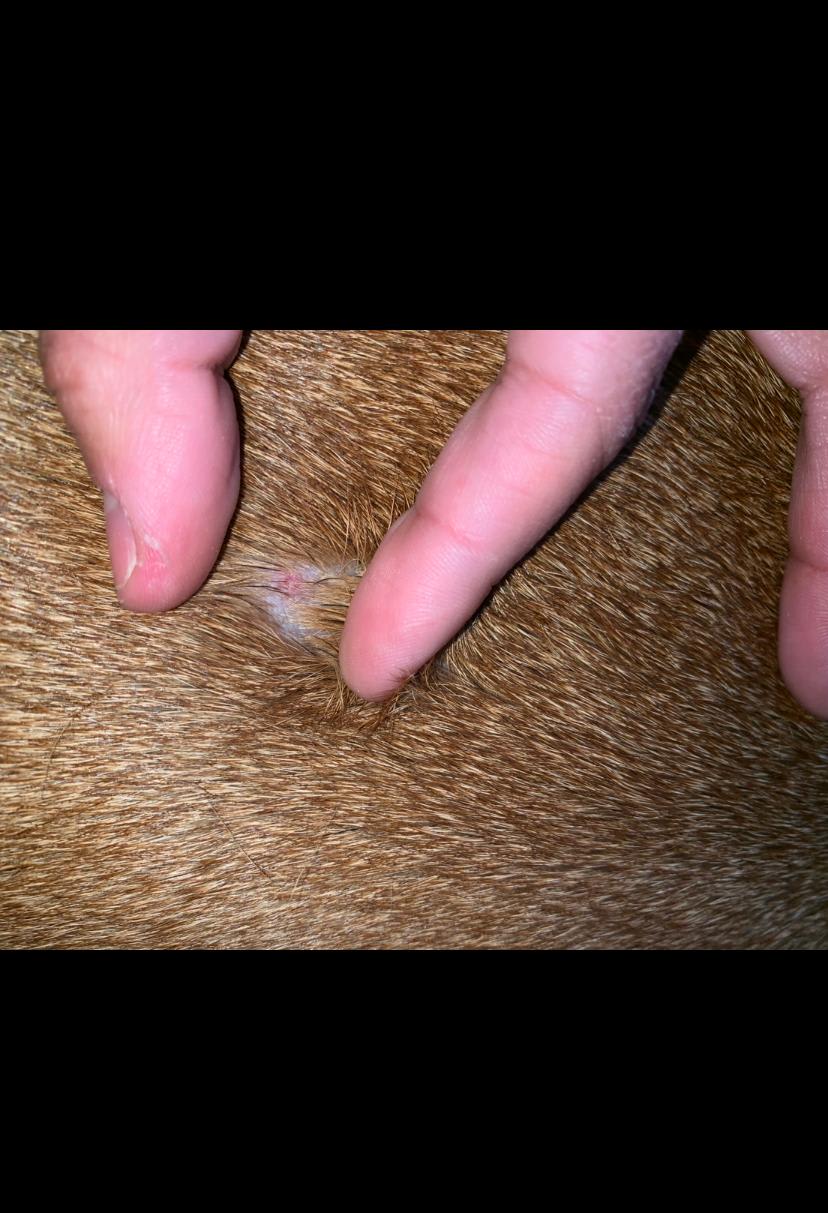
My dog has red bumps on his back. What's causing this skin issue?
Updated On September 23rd, 2025
Pet's info: Dog | American Staffordshire Terrier | Male | 9 years and 3 months old | 178 lbs
Hi I’m curious what these red bumps are or what they could be from? I noticed them again after I gave him a bath with very mild and natural shampoo. I also changed his food a few months ago and have seen these bumps for a long time but they recently broke out again. Majority of them are on his back closer to his hind legs and tail. If I scratch him or brush him he really enjoys it but they get red and irritated if I do.


2 Answers
Most Helpful Answer

Published on October 29th, 2019
Chronic skin problems could be several things including allergies to fleas, allergies to something in the environment, food allergy or endocrine disease. Each one of these problems is detected and addressed differently and I recommend to discuss with your veterinarian which one to start hunting down first. Parasites are often ruled out with an oral medication like Simparica. Food allergy is best ruled out with a diet trial using a hydrolyzed protein. Endocrine diseases are detected with blood work. Environmental allergies are a little more difficult to detect but a response to therapy or a blood test can give an indication. Once you figure out and address the underlying cause, the lesions should not come back. There are a couple things you can do at home and they can help but they may not address the underlying cause. You can try adding in an omega 3 fatty acid supplement for dogs, this can help improve the skin health. You may also try changing his diet to something like Royal Canin or Nutro as they are aimed at skin health. Also protect the area from trauma by having Simba wear an elizabethan collar at all times to prevent licking if needed. I hope this helps and please feel free to post any additional questions.

1Pet Parents found this answer helpful
Related Answers from Veterinarians
-
Published on March 26th, 2017
It sounds as though you're doing everything you can for your pup! Since your vet could not find signs of fleas and your dog is receiving Advantage one a month, it is unlikely that fleas are involved in your dog's skin condition. Allergies to food or environmental conditions seem more likely in this case. That said, some dogs are highly allergic to fleas and one bite can make them really itchy. Since you are describing lesions on his back with pus, I'm wondering if your dog has a skin infection as a result of itching. If your vet started him on antibiotics, some dogs can experience mild GI upset as a result of medications. Try offering a bland diet of boiled white meat chicken and white rice for a few days to see if that helps. If he continues to vomit by tomorrow, call your vet.
1Pet Parents found this answer helpful


My dog has been really biting his paws a lot as well as his back and nothing seems to stop him, what can I do to help him?

My german shepard has three little pimples about 8 inches apart on his back that he scratches they don't look red
Tigre has bumps on skin. Some of it is just raised bumps, some is like dried skin and some is a little red/moist which looks like it’s from scratching off the dried skin. it seems like it feels good when I scratch it for him. He’s still acting comple
Hi, my dog has been suffering from a skin allergy for a very long time now. We have consulted almost all the vets in our city but nobody is able to solve this problem. Please help me

Hunter has had these red bumps for about 2 days. Doesn’t seem to bother him, I’ve tried home remedies to calm them down as far as oatmeal bath, apple cider vinegar nothing seems to help it. I’ve also looked for ticks and fleas don’t seem to see any

My dog has always had irritated skin I’ve changed his diet which helped a bunch and a hot spot and itch relief but sometimes it just flares up so much and i get really overwhelmed & I bet he does too. He gets really red and itchy and i just don’t kno

I took my dog to the vet a week ago, after noticing small bumps that were black and flaky randomly appear on the sides of his body a week prior to visiting the vet, with two or three more towards his back. The vet said it was allergies and gave him a

My corgi x lab has bumps between his back legs see attached photos

My dog keeps getting spots(like bumps), last time I took to vet was given an injection and cefabactin. All cleared up but after another month they seem to come back again. Giving him a wash with a medicated shampoo as well. He suffers from environmen
My fur baby has had a skin condition..it's now bothering her tummy..Ive done some things to sooth her..can you help me with what's wrong? Thankyou

Book an appointment with the pros – our expert vets are here to help.
