


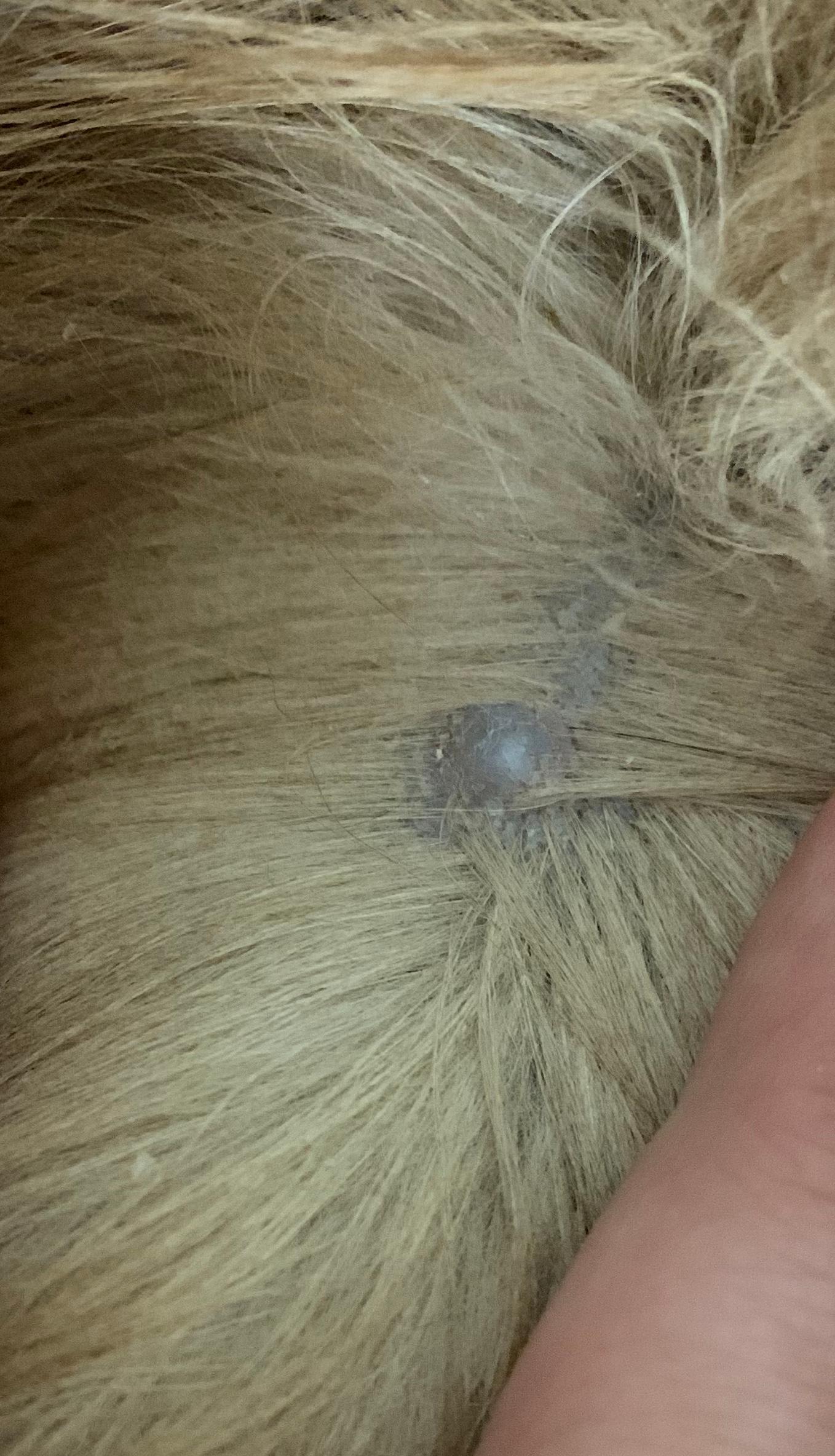
My cat has a hard lump on his back. Could it be a cyst or a tumor?
Updated On September 23rd, 2025
Pet's info: Cat | Mixed Breed | Male | neutered | 8 years and 1 month old | 13 lbs
My cat has a hard lump on his back. I am going to make an appointment at our vet but i am concerned. It doesn’t cause him any pain and he is acting normal. Could it just be a cyst?


3 Answers
Most Helpful Answer
Published on February 22nd, 2019
It could be a cyst or a small abscess, but it can also be a tumor. take Leo to the vet, they will perform a fine needle aspiration on the growth and send it to the lab for analysis. when the result comes, the vet will advise what needs to be done according to the diagnosis.

1Pet Parents found this answer helpful
Other Answers
-
Published on December 3rd, 2019
Hi, and thanks for your question. This lump/bump/growth should be ideally examined by your local vet to have a diagnosis established. Your vet may want to perform an FNA (fine needle aspiration) or a biopsy to sample the bump and determine its underlying nature. Differentials would include skin cysts, infections, benign or more malignant type of tumors. Hope this answer was helpful, but please do not hesitate to contact us again on the forum or by requesting a consultation if you have any more questions or to discuss it any further. If this answer was helpful please let us know, this will be used to improve our service!
1Pet Parents found this answer helpful
-
Published on September 3rd, 2017
Without any diagnostics, one can only say for sure that a lump is one of the following: a mass, a cystic structure, an abscess, or an inflammatory reaction such as a bug bite or allergic reaction. In order to determine more information, needle aspirates of the affected area or biopsies are required. A vet may be able to make an educated guess as to the affected area's origin based on its appearance, location, rate of growth, and several other factors. Hope this helps.
1Pet Parents found this answer helpful




Book an appointment with the pros – our expert vets are here to help.
