


My dog has a hard lump with a black tip on its paw. What is it?
Updated On September 23rd, 2025
Pet's info: Dog | Mixed Breed Small (up to 22lb) | Female | spayed | 8 lbs
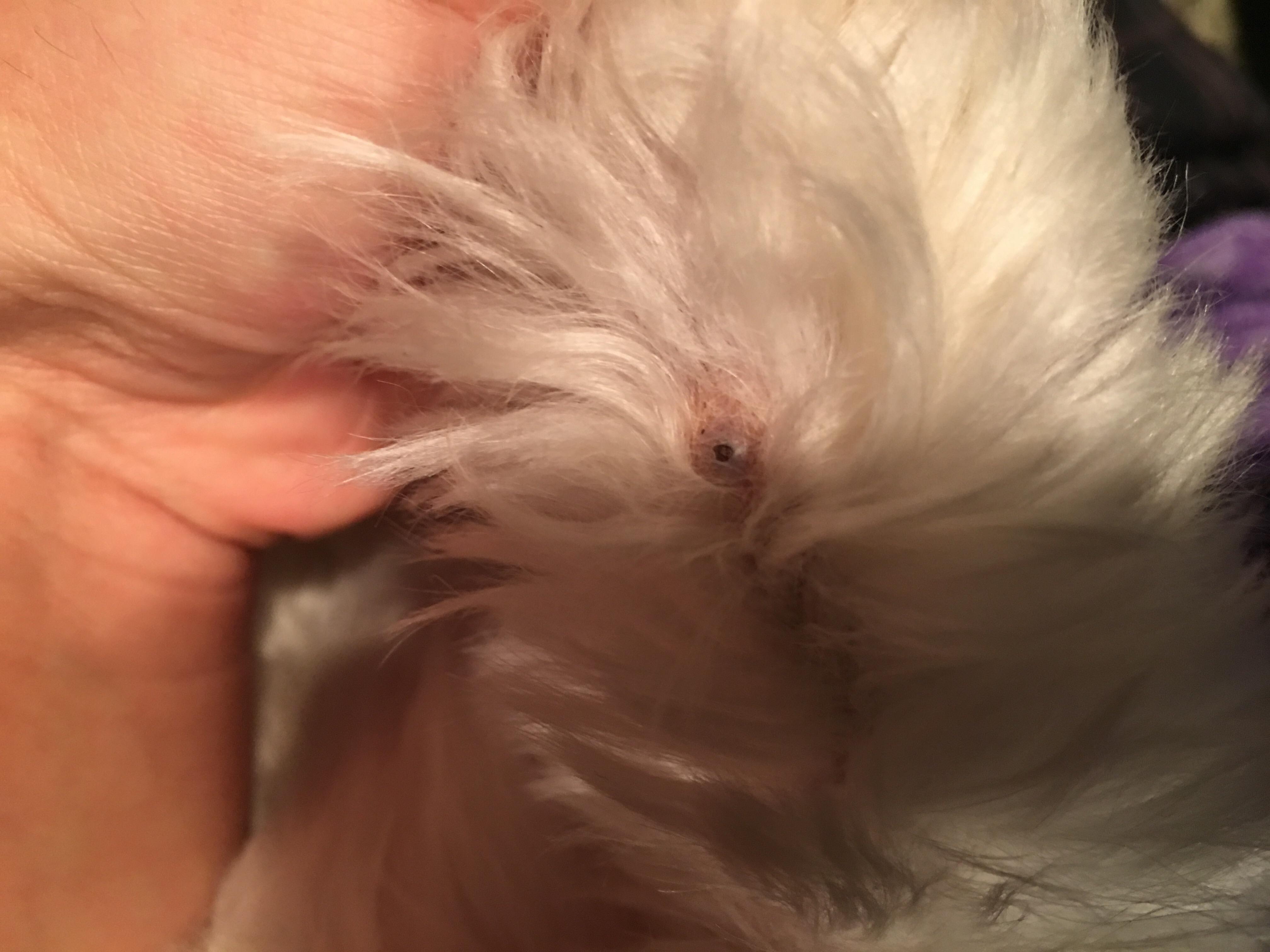
My shih tzu has a very small and dry hard lump on the front of her paw with a black tip in the middle of the lump, what do you think it is? She doesn't like when I try to look at it close up or irritate it.


3 Answers
Most Helpful Answer

Published on August 23rd, 2017
This looks like it may be a blood blister or possibly an insect bite. It does not appear very irritated and appears to have ruptured in the center. This will likely go away on its own within a couple of weeks. In the meantime keep it clean by flushing with water (only water - no soap or antiseptics) for one minute once a day. If the bump increases in size, gets red, or starts to have pus or bloody discharge, then take her to the vet.

2Pet Parents found this answer helpful
Related Answers from Veterinarians
-
Published on
Hi and thanks for using Petco Pet Education Center, formerly Petcoach! Sorry to hear about Bella. It's very difficult and almost always impossible to tell what skin growths are unless you run some tests. My rule is this- any new skin mass should be evaluated right away by your veterinarian unless they get smaller and resolve on their own in a few days to a week or so. Skin growths can be solid masses or tumors (benign or malignant), granulomas (a collection of inflammatory cells), cysts, etc. They are especially important down on the legs or in areas where removal can be challenging due to lack of excess skin. In these places, removal is much more important early when they are small. I would advise going to your veterinarian and letting them examine the growth. They can then discuss a good diagnostic plan which could include a fine needle aspirate, biopsy, cytology, histopathology, etc. They may advise removal or excision and then submitting to a pathologist for a diagnosis. Good luck and I wish you the best with Bella.
0Pet Parents found this answer helpful
-
Published on January 16th, 2018
Thanks for using Petco Pet Education Center, formerly Petcoach! This could be a benign or malignant growth. This is often differentiated by a test called a fine needle aspirate (FNA) which is a pain free, inexpensive and easy procedure which in most cases will help reach a diagnosis. Sometimes a biopsy is needed for a definitive diagnosis. I recommend that you have her evaluated by your veterinarian for further assessment and treatment. I am really hoping for something benign. Good luck and have a good night!
1Pet Parents found this answer helpful


My puppy has a black lump on his paw. His walk, appetite, etc is completely normal though. Is this something that I should be worried about?
We found a bump on the back of our French Dog’s paw. It looks like a blister or pimple. . It could be a splinter or small torn that has lodged in the paw. We used a small needle to pop out and have the fluid ooze out. Can you determine what this coul

My dog has a bump in between the pads on her paws it's slightly red and has a brownish black center
I found a small pimple looking pump on my dog’s paw, and I don’t know what it is. I check his paws regularly and this was never there.
All of a sudden I noticed a bump on my dogs paw. Not sure where it came from. What do I do?

My dog has a big bump on top of his paw and it looks like it popped. The top of the bump looks bald and there's a huge hole on top of it. I cleaned it with hydrogen peroxide and put Neosporin and wrapped it for now? But I still don't know what it is.
My dog has a big bump on her foot. It’s been getting scraped up when she plays. What can we do to help?
My dog has a mass on her paw
My dog has a bump/blister on his paw
My dog developed a blister like bump on her paw. I just noticed this yesterday. She is 6 years old has skin allergies and gets hotspots but I never seen this before, so I am worried. It doesn’t seem to bother her but it doesn’t look good.

Book an appointment with the pros – our expert vets are here to help.
