


What causes bald spots and pimple-like bumps on my dog's skin?
Updated On September 23rd, 2025
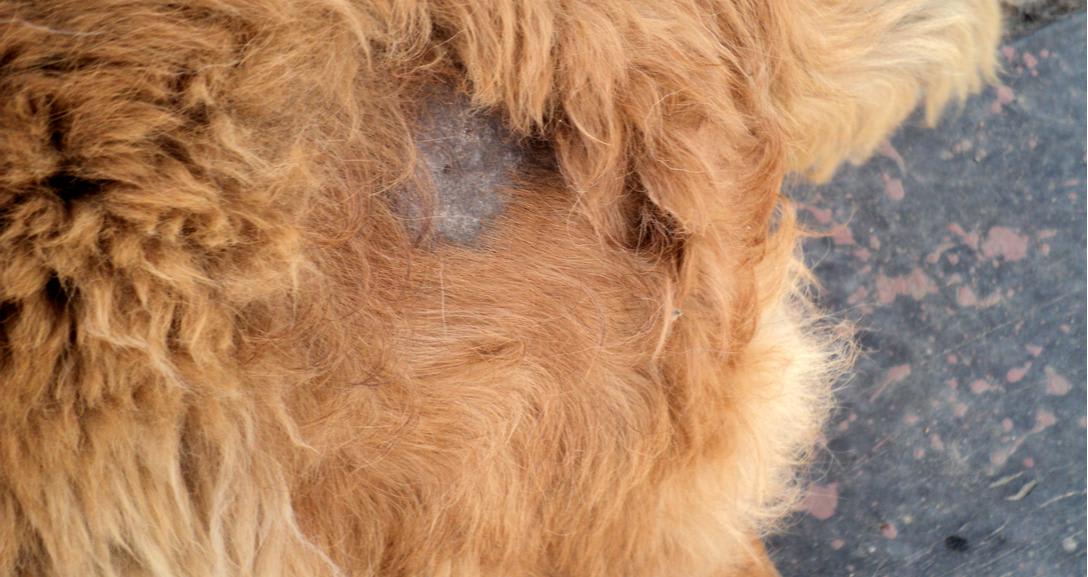
What are these bald spots with small pimple-like bumps on my dog's skin?


3 Answers
Most Helpful Answer

Published on May 7th, 2015
The bald spots and pimples may indicate minor infection or may be a symptom of a broader underlying condition. Skin problems can have a variety of causes, sometimes more than one. It is important to have the condition addressed by your veterinarian to determine if there is a medical cause for your pet’s skin issues and treat accordingly. Young dogs can get skin infections, commonly referred to as 'puppy pyoderma'. This usually occurs on the belly and inside the hind legs. This type of infection usually resolves without treatment as the puppy gets older. [*Staph* infections](https://www.petcoach.co/dog/condition/staphylococcal-pyoderma-1/) are common in dogs of all ages and may requires antibiotic therapy to treat. In pets of all ages, [fleas](https://www.petcoach.co/dog/condition/flea-allergy/), [food allergies](https://www.petcoach.co/dog/condition/food-allergies/) and [environmental allergies](https://www.petcoach.co/article/food-allergies-vs-environmental-allergies-whats-the-difference) (contact or inhaled) can be a cause. Any one of these may not be enough to trigger the breakouts, depending on how sensitive your pet is, but a combination can be enough to start the itch-scratch cycle. Finding out the cause and eliminating it is the best course of action. With flea allergies, if your pet is sensitive enough, a single bite can cause them to break out scratch enough to tear their skin or cause a [hot spot](https://www.petcoach.co/dog/condition/hot-spots/). Diagnosing the cause of allergies may require [allergy testing](https://www.petcoach.co/article/allergy-testing-immunotherapy-in-dogs) and [food elimination trials](https://www.petcoach.co/article/food-trials-for-allergies-in-pets-what-to-expect). [Check for fleas](https://www.petcoach.co/article/how-to-check-your-pet-for-fleas-and-ticks) with a flea comb. Look for fleas and/or tiny black granules, like coarse black pepper. This is flea feces, consisting of digested, dried blood. You may find tiny white particles, like salt, which are the flea eggs. Applying a good topical monthly flea treatment and aggressively treating your house and yard will help break the flea life cycle. If you use plastic bowls, this is a possible cause for hair loss, though this tends to be on the chin, where their skin touches the bowl while they eat. If you suspect this to be the culprit, try changing the bowls to glass, metal or ceramic. Food allergies are often caused by sensitivity to a [protein in the food](https://www.petcoach.co/article/all-about-protein-in-pet-food). Hill's Science Diet offers some non-prescription options for sensitive skin as well as [prescription hypoallergenic foods](https://www.petco.com/shop/en/petcostore/category/dog/dog-food/prescription-dog-food-and-treats) for more severe cases. Royal Canin carries limited protein and [novel protein](https://www.petcoach.co/article/what-is-a-novel-protein-pet-food) diets that may also offer some relief. Your vet can recommend a specific diet that will help.

17Pet Parents found this answer helpful
Related Answers from Veterinarians
-
Published on December 5th, 2016
Skin problems can have a variety of causes, sometimes more than one. Allergies, parasites, bacterial or fungal infections, even contact with some surfaces or substances will cause itching, rash and/or hair loss. It is important to have the problem checked by your vet to determine if there is a medical cause for your pet’s skin issues and treat accordingly. In young dogs, a skin condition called 'puppy pyoderma' in common. It's roughly equivalent to acne in teenagers, and most grow out of it, but some, like people, have more serious cases that need veterinary treatment and antibiotics to clear up completely. In pets of all ages, fleas, food allergies and exposure to chemical irritants such as cleaners and soaps can be a cause. Any one of these may not be enough to trigger the breakouts, depending on how sensitive your pet is, but a combination can be enough to start the itch-scratch cycle. Finding out the cause and eliminating it is the best course of action. With flea allergies, if your pet is sensitive enough, a single bite can cause them to break out scratch enough to tear their skin. Check for fleas with a flea comb. Look for fleas and/or tiny black granules, like coarse black pepper. This is flea feces, consisting of digested, dried blood. You may find tiny white particles, like salt, which are the flea eggs. Applying a good topical monthly flea treatment and aggressively treating your house and yard will help break the flea life cycle. If you use plastic bowls, this is a possible cause for hair loss, though this tends to be on the chin, where their skin touches the bowl while they eat. If you suspect this to be the culprit, try changing the bowls to glass, metal or ceramic. Food allergies are often caused by sensitivity to a protein in the food. Hill's Science Diet offers some non-prescription options for sensitive skin as well as prescription hypoallergenic foods for more severe cases. Royal Canin carries limited protein diets that may also offer some relief. Your vet can recommend a specific diet that will help. If there is no relief or not enough, consider getting your pet checked by a veterinary dermatologist and having allergy testing done.
1Pet Parents found this answer helpful
-
Published on May 22nd, 2017
Harley looks like she might be having allergic skin disease issues, especially if she is itchy. This problem can show up with all kinds of bumps, rashes, and pimple-like cysts as well. She may need to be on antibiotics and anti inflammatory allergy medication like apoquel to heal her skin and feel better. Schedule a visit with your vet to ask if these meds would be appropriate.
1Pet Parents found this answer helpful



Hi I have a 6 month old female Blue Doberman I have been having issues with her skins since I got which then she was 7 weeks old down the middle of her lower back area the fur is really thin also recently she has been getting thin small patches, bald

I have a 3 year old, female Bishon Fries. She has developed bald spots on her back side upper thigh and back by the tail area. She is not scratching or licking. One balding patch has on the skin has a tiny red raised pimple. The back has a tiny wh
What are these two bump type pimples?

My 9 months old dog have lots of pimples/bumps at his right leg and neck and screeching a lot at those areas. What is the primary reasons and why all this happens kindly tell me!!!!! I am attaching some photos of affected areas
My dog has pimple like bumps under the skin on her back and a black like fungus on jer belly what is this

my dog has kinda like bald spots that are red. She can't sleep at night. She wakes up scratching herself. Before being bald spots they're like small puss filled pimples.
Hi i have a 5 month old bulldog and it becomes full of bumps and the fair alwaus falling down. What isvthe cause pls?

How to treat canine skin pimple

My dog has bumps in her fur started off just on her back now they have grown everywhere. She just had puppies and one of them have some in his coat as well. Just wondering on what I should get them?
My one year old male golden retriever Buddy has been itching his body and his fur is falling off too much. No shampoo suits his skin. We changed so many shampoo but he itches his skin too much and some pimple like thing appears on his skin after few

Book an appointment with the pros – our expert vets are here to help.
