


What's the potty schedule for a 10-week-old puppy, day and night?
Updated On September 23rd, 2025
How often would a 10 week old puppy need to go out to pee, especially at night? When could the time be extended?
5 Answers
Most Helpful Answer

Published on March 5th, 2015
You can reasonably expect a puppy to hold its bladder and bowels for as many hours as they are months old. Keep your puppy on a consistent daily feeding schedule and remove food between meals. Keep the puppy on a consistent schedule. Puppies should be taken out every hour, as well as shortly after meals, play and naps. All puppies should go out first thing in the morning, last thing at night and before being confined or left alone. Know where your puppy is inside at all times. Watch for early signs that he needs to eliminate so you can prevent accidents. These signs include pacing, whining, circling, sniffing or leaving the room. If you see any of these, take your puppy outside as quickly as possible. If you can’t watch your puppy, he must be confined to a crate or a small room, door closed or with a baby gate. Gradually give more freedom, starting with a small area, and gradually increase it. If he eliminates outside, give him some free time in the house (about 15 to 20 minutes to start), and then put him back in his crate or small room. If all goes well, gradually increase the amount of time he can spend out of confinement. Accompany your puppy outside and reward him whenever he eliminates outdoors with praise, treats, or play. Take your puppy to the same place each time because the smells often prompt puppies to eliminate. If you catch your puppy in the act of eliminating inside, clap sharply twice, just enough to startle but not scare him. Immediately run with him outside, encouraging him to come with you the whole way. Allow your pup to finish eliminating outside, and then reward him with happy praise and a treat. If he has nothing to eliminate when he gets outside, don’t worry. Just be more watchful of him inside. If your puppy has an accident but you don’t catch him in the act and only find the accident afterward, do not punish him. He cannot connect the punishment with something he did minutes, let alone hours ago.

37Pet Parents found this answer helpful
Related Answers from Veterinarians
-
Published on March 1st, 2015
You can reasonably expect a puppy to hold its bladder and bowels for as many hours as they are months old. Keep your puppy on a consistent daily feeding schedule and remove food between meals. Keep the puppy on a consistent schedule. Puppies should be taken out every hour, as well as shortly after meals, play and naps. All puppies should go out first thing in the morning, last thing at night and before being confined or left alone. Know where your puppy is inside at all times. Watch for early signs that he needs to eliminate so you can prevent accidents. These signs include pacing, whining, circling, sniffing or leaving the room. If you see any of these, take your puppy outside as quickly as possible. If you can’t watch your puppy, he must be confined to a crate or a small room, door closed or with a baby gate. Gradually give more freedom, starting with a small area, and gradually increase it. If he eliminates outside, give him some free time in the house (about 15 to 20 minutes to start), and then put him back in his crate or small room. If all goes well, gradually increase the amount of time he can spend out of confinement. Accompany your puppy outside and reward him whenever he eliminates outdoors with praise, treats, or play. Take your puppy to the same place each time because the smells often prompt puppies to eliminate. If you catch your puppy in the act of eliminating inside, clap sharply twice, just enough to startle but not scare him. Immediately run with him outside, encouraging him to come with you the whole way. Allow your pup to finish eliminating outside, and then reward him with happy praise and a treat. If he has nothing to eliminate when he gets outside, don’t worry. Just be more watchful of him inside. If your puppy has an accident but you don’t catch him in the act and only find the accident afterward, do not punish him. He cannot connect the punishment with something he did minutes, let alone hours ago.
70Pet Parents found this answer helpful
-
Published on August 22nd, 2020
You can reasonably expect a puppy to hold its bladder and bowels for as many hours as they are months old. Keep your puppy on a consistent daily feeding schedule and remove food between meals. Keep the puppy on a consistent schedule. Puppies should be taken to the pad every hour, as well as shortly after meals, play and naps. All puppies should be encouraged to eliminate first thing in the morning, last thing at night and before being confined or left alone. Know where your puppy is inside at all times. Watch for early signs that he needs to eliminate so you can prevent accidents. These signs include pacing, whining, circling, sniffing or leaving the room. If you see any of these, take your puppy to the pad as quickly as possible. If you can’t watch your puppy, she must be confined to a crate or a small room, door closed or with a baby gate. Gradually give more freedom, starting with a small area, and gradually increase it. If she eliminates on the pad, give her some free time in the house (about 15 to 20 minutes to start), and then put her back in her crate or small room. If all goes well, gradually increase the amount of time she can spend out of confinement. Accompany your puppy to the pad and reward her whenever he eliminates there with praise, treats, or play. Take your puppy to the same place each time so she learns to associate that area with the act of elimination. If you catch your puppy in the act of eliminating inside not on the pad, clap sharply twice, just enough to startle but not scare her. Immediately run with her to the pad, encouraging her to come with you the whole way. Allow your pup to finish eliminating on the pad, and then reward him with happy praise and a treat. If she has nothing to eliminate when he gets to the pad, don’t worry. Just be more watchful of him inside. If your puppy has an accident but you don’t catch her in the act and only find the accident afterward, do not punish her. She cannot connect the punishment with something she did minutes, let alone hours ago.
1Pet Parents found this answer helpful
-
Published on May 5th, 2018
First, giving Oreo treats rewards him for going, but he does not differentiate between indoors and outdoors. He only knows that he peed or pooped and got a goodie for his efforts. Also, you say you "walk him" 2-3x/day. Are you actually taking him for a walk? If so, he may incidently do his business somewhere along the way, but he does not know that this is why he is walking. Designate a "bathroom spot" in your yard. Put him on a leash and take him directly to it. Do not walk around! Stand still and let him have only the length of the (six foot) lead. When he starts to circle or sniff, say a phrase such as "go pee!" and repeat every few seconds until he starts to go. While he is going, say the phrase with "good dog!." Then bring him directly back into the house. This way, he will know specifically why he is out there. This last part is the toughest. If he was not trained to go outside by his former owner, how would he know enough to do it now? This is not knowledge that automatically comes with age and maturity. He needs to be taught. Further, every time he goes inside and is not IMMEDIATELY (that is, within one second of the act) corrected, he will not realize that he is doing wrong. This means that he must be watched or confined at all times at home for the time being. When you are home, keep him on a leash and secure the end to your belt loop. This will keep him with you but keep your hands free as you go about your day. As soon as he starts to circle, sniff, or lift his leg, say a sharp "NO!" and go out with him to his spot right away. Do as suggested above. DO not take him off-lead just because he has gone. You don't want to allow him to make any mistakes. When you are not at home, or are unavailable to watch him, he should be confined to a crate (such as overnight). He should not automatically know enough to do his business outside, especially if he wasn't trained by his former owner. Dogs need to be taught what to do. The knowledge does not automatically come with age and maturity. Once you start his training, you may have additional questions. If so, you can click on the prompt to start a consult, where we can discuss the situation. Good luck with this! One last thing: do not ever, ever scold him for mistakes he's made while you've been out. As I said above, corrections must be given within one second of the error. He will not remember what he did (even if, heaven forbid, you bring him over and show him or, worse, put his nose in it--please don't ever do that). If you come home, see a mess, and scold him, he will start to connect a scolding with your coming home, and may even pee or poop out of anxiety. He will think he is being scolded because you came home, and get anxious every time you go out. Good luck with this!
2Pet Parents found this answer helpful
-
Published on May 20th, 2017
You need to be very consistent in terms of when you feed him, when you walk him, and when you let him outside. The key is to take him for a walk after every feeding, and feed him at the same time every day. This way, his system will get used to having to go at the same time every day (ie after he eats), and you can count on this and reward him when he goes. If he is feed and walked at random times during the day it is much harder to get him potty trained. Also, make sure he goes outside for a pee break as soon as he wakes up in the morning, right after he plays EVERY TIME, and right before you put him to bed at night. If you are this consistent, you should have no trouble potty training him very quickly. Then you won't have to wonder if he is trained correctly or not. Good luck!
1Pet Parents found this answer helpful



Hi, I have 2 puppies that are 5 weeks old. They are completely on puppy food because the mom refuses to feed them. We are trying to potty train them but it seems like they have to pee like every 10 mins. Is that normal?

Hey! My german shepard lab mix is 3 months and still peeing in the house even though I take her outside, can someone help me make a food/bathroom schedule for her?
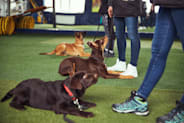
My four month old puppy was pretty much potty trained when suddenly she started peeing every where again.

When I brought dog home, he would go about 4 hours in crate at night before needing to go out. Now it's every 2-3 hours. I've been feeding 3 times a day and removing food in between before it was unlimited water and food 3 times a day until about 8 p

How many times should I be taking a 6 week old puppy out to do his buisness? I read that they can hold it for up to 2 hours so I plan on setting an alarm for every 1 and a half hours to take him out. If he's asleep, should I wake him to go do his bui
My daughters puppy a 12 week old Huskey mix is hard to potty train. Does go outside but goes in the house it seems every few minutes, almost immediately upon taking him out of the crate. Any pointers?
I am potty training my gsd from 1.5 months,now he knew that he should go out for potty,but still sometimes(especially at night,when leave alone in porch).goes inside...how to perfect trained that he didn't go inside I don't have crate...I make him go
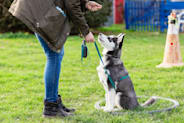
Any tips for house training a 4-5 month old border collie pup? She's ok until about 5pm and then she won't tell us when she wants to go out.
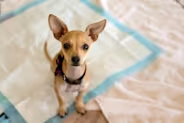
Here's the thing, my puppy can hold her pee for maximum 2-4 hrs. But when she is out of her cage or leash she pees every 15 min and she pees a lot. How do i train her?
Is there any full proof method of potty training a 3 month old puppy quickly?
Book an appointment with the pros – our expert vets are here to help.
