


















Petco Text Logo
Petco Pet Logo
Jump To Section

    About West Highland White Terrier

    West Highland White Terriers are a fun-loving and affectionate breed. Living with them is easy. They make good roommates since they are clean, alert, and easy to please. They can get animated when the moment calls for it, but Westies are generally happy to relax and spend time with their family. West Highland White Terriers need exercise but can easily thrive in a small apartment as a lapdog, provided that you stay committed to a regular fitness regimen. Westies retain some of their stubborn terrier traits and proper training can help them to become polite and obedient household companions.

    Origin: Scotland   Other Names: Westie, Roseneath Terrier, Poltalloch Terrier

    Terrier Group

    These are feisty, energetic dogs whose sizes range from fairly small, as in the Norfolk, Cairn or West Highland White Terrier, to the grand Airedale Terrier. People familiar with this Group invariably comment on the distinctive terrier personality. Terriers typically have little tolerance for other animals, including other dogs. Their ancestors were bred to hunt and kill vermin. Many continue to project the attitude that they're always eager for a spirited argument.

    West Highland White Terriers Appearance

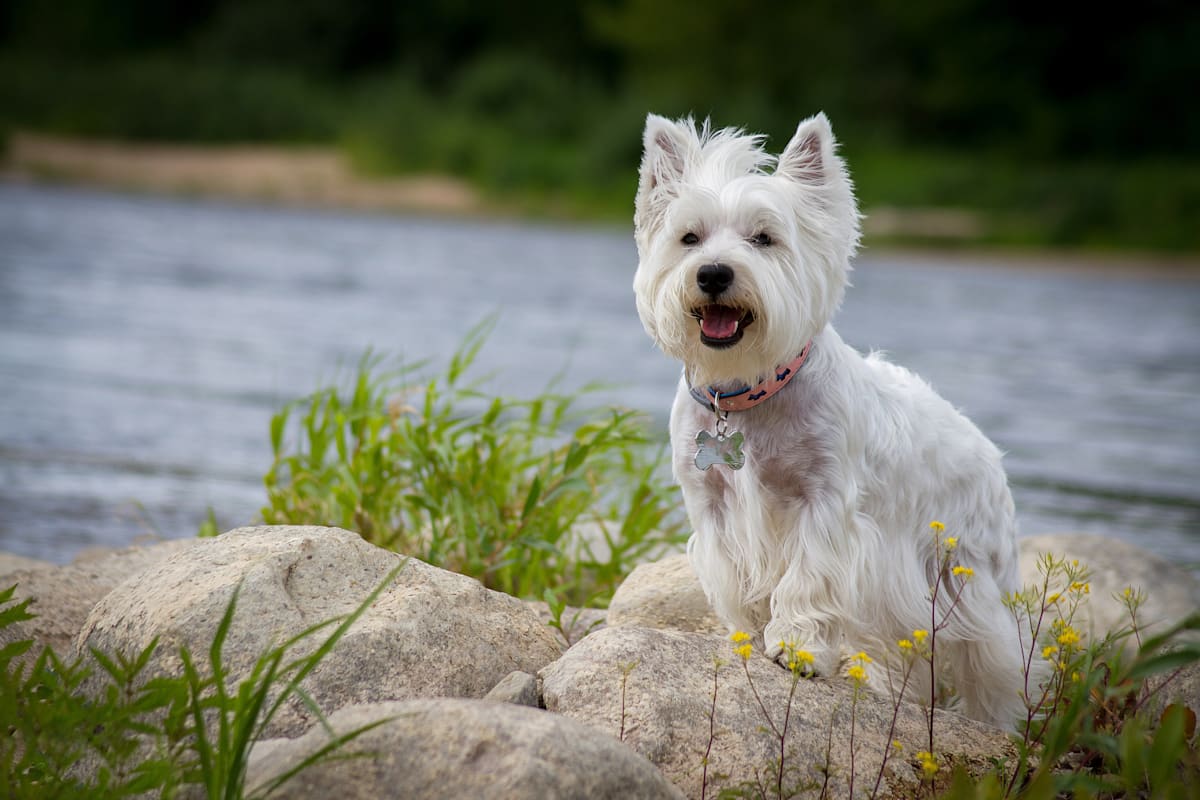
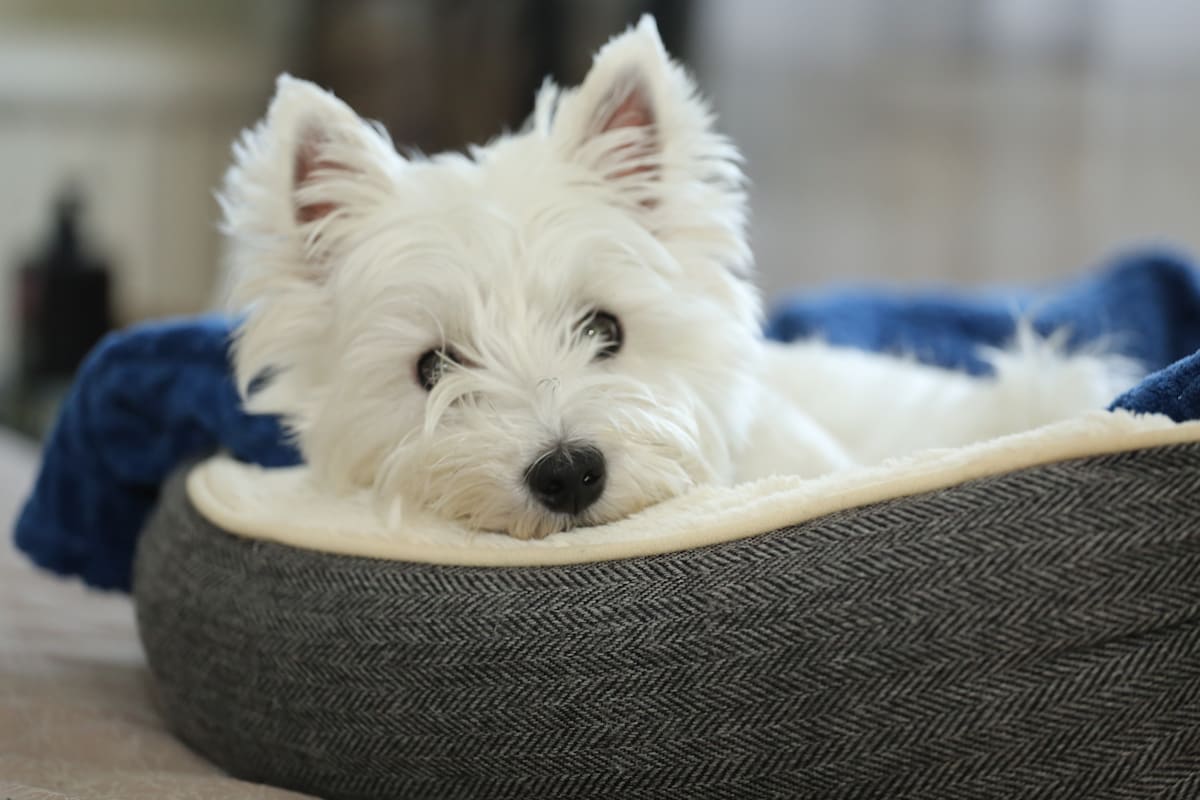
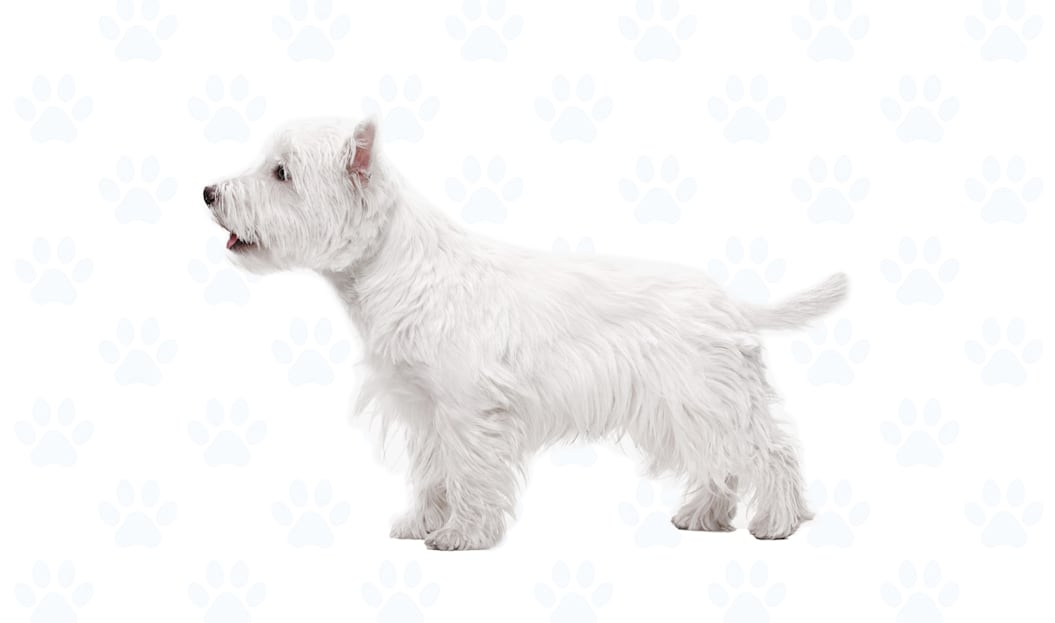
    West Highland White Terriers have pure white fur and an iconic face known the world over. They are muscular and deep-chested, perfect for the rough-and-tumble world of Scottish farm duty. White fur and a double coat protect the Westie from the elements. They have dark and impressive eyes set in a very expressive face. Their jaw is tight and close-fitted, a desired trait for hunting vermin.

    Westies in AKC (American Kennel Club) events must follow strict guidelines for color. Only white dogs may compete in the West Highland White Terriers category.

    Size & Weight

    West Highland White Terriers are typically around 10 to 11 inches tall with a standard weight of 15 to 20 pounds.
    Full Grown
    Female
    10 in. / 15 lbs.
    Male
    11 in. / 20 lbs.
    Height bar
    Female Pet
    Height Figure
    Male Pet
    Height is measured up to the shoulders.

    West Highland White Terrier Characteristics

    Size

    Tiny

    Jumbo

    Weight

    Light

    Heavy

    Shedding

    Minimal

    Abundant

    Living Space

    City apartment

    Ranch

    Exercise

    Couch potato

    Bring it on!

    Climate

    Warm

    Cold

    Personality

    Antisocial

    Outgoing

    Protection

    None

    Bodyguard

    Behavior with Kids

    Always monitor

    Babysitter

    Training

    Headstrong

    Obedient

    Barking

    Mute

    Loud

    How to Care for a West Highland White Terrier


    Coat & Grooming: West Highland White Terriers have a white double-coat of bright white fur that is pretty easy to maintain. Weekly brushing and the odd bath are often enough to maintain a healthy coat. They are very clean dogs in general. West Highland White Terriers don’t need much pampering, but they will take as much as you give them! They tend to bond closely with their human family, and a good grooming session can be a powerful bonding experience for companions and their owners. Don’t overdo it, but a gentle wipe-down and brushing will leave them feeling loved and secure.

    Shedding: West Highland White Terriers don’t tend to shed a lot, even though their white hair tends to stand out. It varies from dog to dog, but they are typically a low maintenance breed for indoor living. Seasonal shedding may be worse, but it really depends on your hair care regime and the individual genetics of your companion. It pays to invest in the right grooming products for your dog. A Furminator and special shampoos can make the job a lot easier.

    Training: When it comes to training, West Highland White Terriers are good students. With the right instruction style, they are very attentive and eager to learn. Positive reinforcement, food rewards, and a consistent regimen will help you to develop a winning personality in your Westie. If you are partial to harsh training methods, don’t even bother trying them on this breed. Not only are they ineffective – they will often produce the opposite results desired. West Highland White Terriers are proud and full of self-esteem. It’s better to appeal to their good nature than to go up against their stubborn streak.

    Barking: Barking is often an issue with small terriers such as the Westie, but they are one of the best-behaved terrier breeds with proper training. The key to understanding your pet is to link their behavior with environmental conditions. If you provide an active lifestyle with lots of love and affection, your Westie will reward you with obedience and happiness. The West Highland White Terrier isn’t known for separation anxiety, but this can become an issue under the right conditions. Don’t let them spend too long at home alone without some extra stimulation.

    Temperament & Behavior: These dogs are no sleepy lapdogs, despite their appearance. Some West Highland White Terriers live happy lives on the couch, but they were bred to be working farm dogs. They maintain strong terrier traits – proper training is key to avoid behavior problems. Westies are generally joyful and pleasant companion animals. They don’t suffer from a lack of self-esteem, and can develop an independent streak without proper instruction from their owner.

    Life span: On average, West Highland White Terriers live to be about 13-15 years.

    Inherited Health Issues: A number of health conditions have been identified in West Highland White Terriers that are either inherited or occurring at an increased frequency in this breed. Responsible breeders typically perform a number of screening genetic tests to decrease the incidence of many of these conditions. They may include, but are not limited to, the following: Pulmonic stenosis, Sick sinus syndrome, Generalized demodicosis, Malassezia dermatitis, Primary seborrhea, Chronic hepatitis, Pyruvate kinase deficiency, Aseptic necrosis of the femoral head, Craniomandibular osteopathy, Cutaneous histiocytoma, Congenital deafness, Globoid cell leukodystrophy, Congenital cataracts, Keratoconjunctivitis sicca, Persistent pupillary membranes, Retinal dysplasia, Microphtalmia and Ectopic ureters.

    Preventive Care: Many of the health conditions that occur most commonly in West Highland White Terriers are related to heart, eye, and skin issues. Responsible breeders perform genetic testing when available in an attempt to decrease the incidence of many of these conditions. If you observe any changes or concerns with your Westie, be sure to contact your veterinarian.

    Even if your Westie seems to be healthy at home, maintain regular wellness visits with your vet. Veterinarians have been extensively trained to pick up on subtle changes that could indicate larger underlying problems. Earlier diagnosis and treatment of problems will benefit both your Westie and often your wallet as well.

    With overfeeding and insufficient exercise, Westies can easily become overweight. Be sure to feed your Westie a balanced diet with measured, portion-controlled meals. Avoid offering too many treats or table scraps because these goodies can easily pack on the pounds.

    Daily Consumption: Average daily consumption for an adult Westie is 1/4 to 2/3 cup.

    Energy Level: Frisky, energetic breed that is always ready for action

    Exercise: Westies are built for long days of running around the dark corners of Scottish farmhouses on the hunt for rats and other vermin. They are dutiful and energetic, so it’s up you to provide the proper outlet for their energy and drive. Fetch and other skill games are easy to teach a West Highland White Terrier. They enjoy running, hiking, and pretty much any activity you can offer. A brisk daily walk or two along with some general playtime is plenty to keep a typical Westie happy, but your specific dog might need more or less exercise depending on their individual habits.

    Cost of Owning

    On average, owning a middle-aged Westie costs around $950 per year
    $250
    Vet Care
    $250
    Grooming & Boarding
    $250
    Food & Treats
    $200
    Other

    Unlock exclusive rewards with Vital Care, or enjoy up to 35% off essentials when you subscribe with Autoship.

    Enjoy exclusive rewards every time you shop. Get member-only deals, points, and special offers designed to help you save more on what your pet needs.

    Never run out of the essentials. Subscribe and get your pet’s favorites delivered on schedule—with up to 35% off plus the convenience of automatic refills.

    Cross Breeds

    Select a Breed to Cross

    Choose a breed from the dropdown to see potential crosses.

    Dropdown Icon

    Your love story starts here.

    Find adoptable pets near you with a simple search.

    Fun Facts

    The author of the Harry Potter series, J.K. Rowling, is an avid Westie fan and proud owner of a West Highland White Terrier.

    The author of the Harry Potter series, J.K. Rowling, is an avid Westie fan and proud owner of a West Highland White Terrier.

    The pet food brand Cesar uses a West Highland White Terrier as its mascot and advertising model for television. An Australian pet food company called Mars Incorporated also uses a Westie for its ad campaigns and packaging.

    The pet food brand Cesar uses a West Highland White Terrier as its mascot and advertising model for television. An Australian pet food company called Mars Incorporated also uses a Westie for its ad campaigns and packaging.

    Westies appear in many television shows and films: Lethal Weapon 3, Hamish Macbeth, and Jeeves & Wooster, to name a few.

    Westies appear in many television shows and films: Lethal Weapon 3, Hamish Macbeth, and Jeeves & Wooster, to name a few.

    History

    Scottish terriers appear in the early history of the Northern British Isles. King James IV of Scotland was known to give them as gifts to dignitaries in the 16th century. The West Highland White Terriers came from a long line of Scottish Terriers owned by the chief of Clan Campbell and later refined by Edward Donald Malcolm, an avid sportsman and Laird of Poltalloch. Malcolm developed the breed but was adamantly against naming the breed after himself. In 1903, he declared the breed must be renamed (many called them Poltalloch Terriers at the time). The West Highland White Terrier name came into popular use around 1900, and it’s been here ever since.

    The first breed organization began in 1904, and registration at the AKC followed soon after in 1908. The West Highland White Terriers had a popular following on both sides of the Atlantic at the outbreak of WWI. As the twentieth century rolled on, the Westie continued to find loyal fans around the world. It seems like the popularity peaked in 2001, when it had the highest terrier registrations at the AKC.


    Read More

    Sponsored