


















Petco Text Logo
Petco Pet Logo
Jump To Section

    About Weimaraner

    These all-purpose sporting dogs have a royal lineage. The Weimar royals, in what is now present-day Germany, prized Weimaraners for their hunting abilities. With tons of energy, a resilient body, and a loyal affection, the Weimaraner is a great dog for someone with an active lifestyle. They can be a bit difficult to train, but a properly socialized Weimaraner is an exceptional companion for anyone.

    Origin: Germany   Other Names: Weim, Weimaraner Vorstehhund, Grey Ghost

    Sporting Group

    Naturally active and alert, Sporting dogs make likeable, well-rounded companions. Dog breeds in the Sporting group are usually remarkable for their instincts in water and woods, and many of these breeds actively continue to participate in hunting and other field activities. Potential owners of Sporting dogs need to realize that most require regular, invigorating exercise.

    Weimaraner Appearance

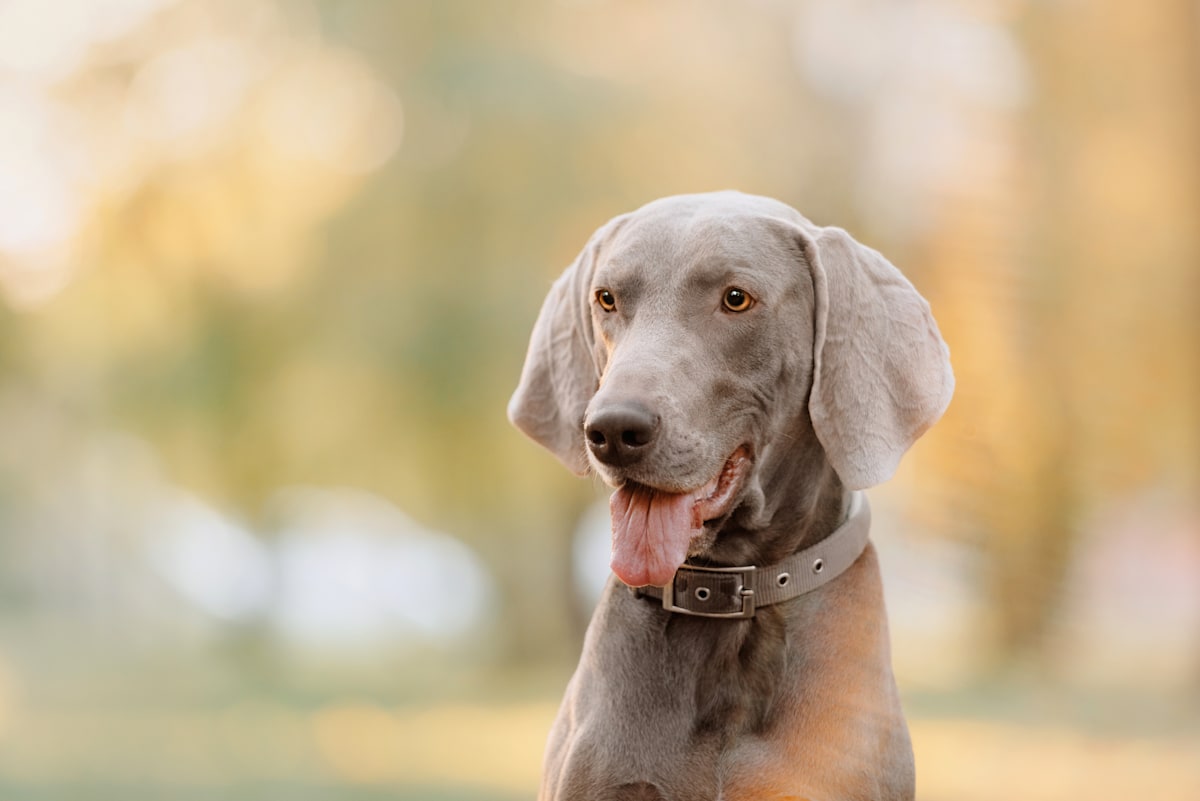
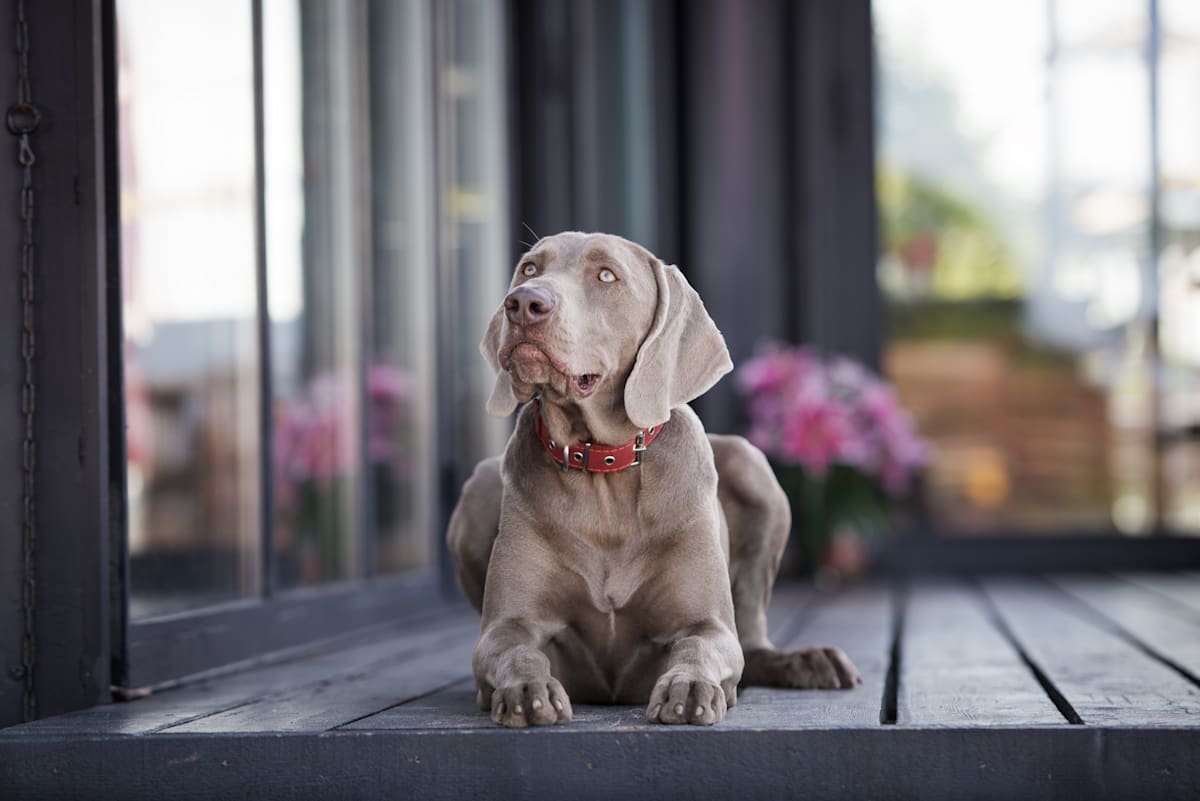
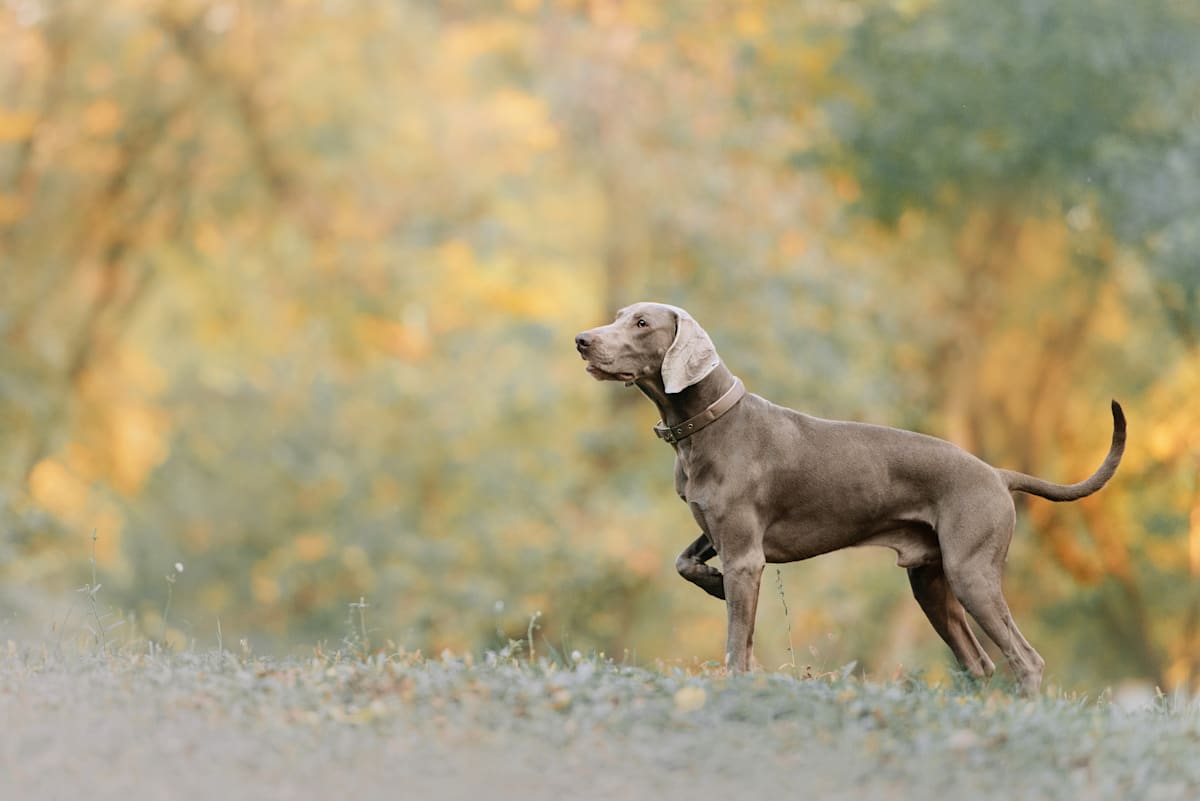
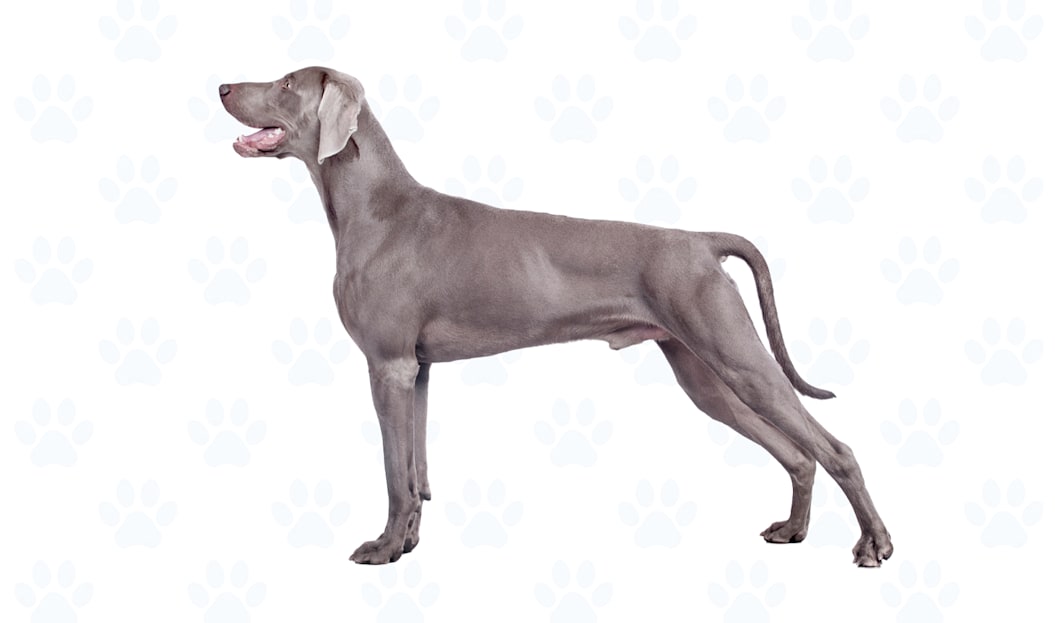
    A few things typically stand out when you first lay eyes on a Weimaraner. The first is their coat –the smoky blue, gray, or silver gray coat has a beautiful shade. Short fur highlights their muscular and powerful body. Ears frame a curious and wise face, but the next thing you’ll likely notice is their eyes. Whether they are blue, gray, or light amber, the Weimaraner’s eyes are deep and brilliant against their fur. This is an impressive-looking animal with a loyal following and growing popularity.

    The AKC recognizes three standard colors: gray, blue, and silver-gray. There are no standard markings for Weimaraners in competition.

    Size & Weight

    Weimaraners are a medium-sized breed. The adult males typically weigh between 65-85 pounds, and they grow to be roughly 22-28 inches tall. They aren’t huge dogs, but they have a stout muscular frame and long lanky legs.
    Full Grown
    Female
    23 in. / 65 lbs.
    Male
    28 in. / 85 lbs.
    Height bar
    Female Pet
    Height Figure
    Male Pet
    Height is measured up to the shoulders.

    Weimaraner Characteristics

    Size

    Tiny

    Jumbo

    Weight

    Light

    Heavy

    Shedding

    Minimal

    Abundant

    Living Space

    City apartment

    Ranch

    Exercise

    Couch potato

    Bring it on!

    Climate

    Warm

    Cold

    Personality

    Antisocial

    Outgoing

    Protection

    None

    Bodyguard

    Behavior with Kids

    Always monitor

    Babysitter

    Training

    Headstrong

    Obedient

    Barking

    Mute

    Loud

    How to Care for a Weimaraner


    Coat & Grooming: The Weimaraner coat is short and easy to maintain. Weekly brushing and the occasional bath is plenty to keep them looking healthy and clean. Don’t forget to trim their nails at least a couple of times per month. If you let their nails grow too long, you risk painful breaks, cracks, and infections. When you settle down to do your regular grooming sessions, take a few moments to check out their ears, eyes, teeth, and skin for any signs of blockage or irritation.

    Shedding: The Weimaraner is a moderately heavy shedding machine. They tend to shed the most in the spring and fall, but they also drop a fair amount of fur year-round. If you want to be proactive in the fight to keep the hair at bay, it’s worth investing in the proper tools. A grooming glove or shedding tool is helpful to make the job easier, as well as buying a good vacuum.

    Training: Weimaraners can require a bit of effort to train – the problem is usually social anxiety and separation problems from too-strong bonds with their human companions. They have a very strong prey drive that poses problems for obedience and safety. Always use a leash, rely on positive reinforcement, and don’t be too forceful with your training. Early socialization is key, and consider puppy kindergarten for your new dog.

    Barking: Weimaraners are well known for their barking and howling. They quickly suffer from separation anxiety, so be warned if you plan to leave them alone at home all day. Your neighbors won’t appreciate it, and your Weimaraner may chew up your favorite shoes in an effort to deal with the stress of isolation. They form very close bonds to their human family, and they need your love and affection to stay happy and healthy.

    Personality: Pomeranians are proud and extroverted. They can display great intelligence and loyalty to their extended family. They are curious and like to be the center of attention. They are very friendly and playful. With poor training and a lack of obedience lessons, Pomeranians can develop aggressive tendencies and excessive barking problems. A little defensiveness is okay, but don’t let your Pomeranian become a nuisance for everyone around you. They respond well to obedience and agility training, so it’s up to you to show them the right way.

    Temperament & Behavior: Like many sporting dogs, Weimaraners can form incredibly strong bonds with their owners. Unfortunately, this trait often manifests itself through separation anxiety and other behavioral problems. If you must leave your Weimaraner at home alone for long stretches during the workday, it’s worth considering the services of a mid-day dog walker. Without enough social interaction during the day, Weimaraners can easily develop stress conditions and anxiety.

    Life span: On average, Weimaraners live to be about 12-14 years old.

    Inherited Health Issues: Several health conditions appear more commonly in the Weimaraner breed as a result of inheritance or occurring at an increased frequency. These may include, but are not limited to, the following: Tricuspid dysplasia, Blastomycosis, Histoplasmosis, Muzzle folliculitis and furunculosis, Gastric dilatation-volvulus, Hypertrophic osteodystrophy, Mast cell tumors, Hypomyelinogenesis, Spinal dysraphism, Corneal dystrophy, Distichiasis, Entropion and Third eyelid cartilage eversion

    Preventive Care: Weimaraners are at an increased risk of developing gastric dilatation-volvulus (commonly known as bloat) as a result of the deep chest in their conformation. With this condition, the stomach fills with air and food, and then twists upon itself, preventing the emptying of the stomach’s contents and creating a life-threatening situation. Avoiding exercise for an hour or two prior to meals and keep your Weimaraner’s food and water bowls on the ground rather than in a raised stand. A surgical procedure (gastropexy) is available to prevent the stomach from twisting.

    Regular veterinary care is crucial to diagnosing problems before they become more severe. Even if your Weimaraner seems to be healthy at home, don’t skip routine visits to your veterinarian.

    With insufficient exercise and overfeeding, Weimaraners are prone to becoming overweight. Feed your dog portion-controlled meals of a high quality balanced diet. Avoid feeding table scraps or treats in excess, because these goodies quickly pack on the pounds.

    Daily Consumption: Average daily consumption for an adult Weimaraner is 2 to 3 cups.

    Energy Level: Frisky, energetic breed that is always ready for action

    Exercise: Since they were bred for long days on the hunt, these dogs have a big gas tank. It’s up to you to help them burn it off with vigorous daily exercise. Don’t be shy when it comes to walking and running with your dog. If you can’t provide an active lifestyle for your dog, you should consider the services of a willing dog walker. Rely on your family to help you spread out the burden of getting your Weimaraner enough daily exercise. Failure to do so risks an unhappy, unhealthy, and badly behaved companion.

    Cost of Owning

    On average, owning a middle-aged Weimaraner costs around $1050 per year
    $300
    Vet Care
    $200
    Grooming & Boarding
    $350
    Food & Treats
    $200
    Other

    Unlock exclusive rewards with Vital Care, or enjoy up to 35% off essentials when you subscribe with Autoship.

    Enjoy exclusive rewards every time you shop. Get member-only deals, points, and special offers designed to help you save more on what your pet needs.

    Never run out of the essentials. Subscribe and get your pet’s favorites delivered on schedule—with up to 35% off plus the convenience of automatic refills.

    Cross Breeds

    Select a Breed to Cross

    Choose a breed from the dropdown to see potential crosses.

    Dropdown Icon

    Your love story starts here.

    Find adoptable pets near you with a simple search.

    Fun Facts

    On the popular Canadian comedy series “The Trailer Park Boys”, the character Julian famously dances with a large gray dog after enjoying one too many beverages at a party. That “dirty old dog” who danced the night away was a Weimaraner.

    On the popular Canadian comedy series “The Trailer Park Boys”, the character Julian famously dances with a large gray dog after enjoying one too many beverages at a party. That “dirty old dog” who danced the night away was a Weimaraner.

    The Weimaraner is a favorite breed of many celebrities and historical figures. Trent Reznor, Brad Pitt, Dwight D. Eisenhower, and Kate Bush all were proud Weimaraner owners at one time.

    The Weimaraner is a favorite breed of many celebrities and historical figures. Trent Reznor, Brad Pitt, Dwight D. Eisenhower, and Kate Bush all were proud Weimaraner owners at one time.

    William Wegman, a famous photographer, shot a series of exhibition photographs featuring his Weimaraners. The dogs, dressed in human clothes for the pictures, were named Man Ray and Fay Ray – a play on words from the famous King Kong actress.

    William Wegman, a famous photographer, shot a series of exhibition photographs featuring his Weimaraners. The dogs, dressed in human clothes for the pictures, were named Man Ray and Fay Ray – a play on words from the famous King Kong actress.

    History

    The Weimaraner of today owes it genetic heritage to the late 1700s in the Weimar region of modern-day Germany. The name Weimaraner likely came from the Grand Duke of Saxe-Weimar-Eisenach Karl August, a big fan of large game hunting. He developed the breed as the perfect hunting dog, well suited to the cold German climate. As big game hunting declined in popularity during the 1800s, the Weimaraner adapted to smaller game such as foxes, hares and fowl.

    German breeders were very protective of the breed at first. Rumor has it that any dogs sent abroad would be sterilized for fear of losing a tight grip on the breed. Eventually, the breed found popularity outside of Germany. The American Weimaraner Club began in 1929 after a breeder named Howard Knight imported a pair of fine Weimaraners. The AKC added the Weimaraner as an official breed later in 1943. Funny enough, the Weimaraner has seen more competition and broad popularity than those German breeders could have ever imagined!


    Read More

    Sponsored