












Petco Text Logo
Petco Pet Logo
Jump To Section

    About Breed

    Vizslas are very active and love the outdoors. From the hiking trail to the competition ring, these affectionate and athletic dogs enjoy any chance to burn off energy. If you can’t devote at least an hour per day to exercise with your Vizsla, this might not be the breed for you. For the right owner willing to train and take care of a member of this breed, the Vizsla offers a loyal companion on long walks, mountain paths, beach runs, or wherever you choose to take them.

    Origin: Hungary
    Other Names: Hungarian Vizsla, Magyar Vizsla, Hungarian Pointer

    Sporting Group

    Dogs of the AKV Sporting Group are naturally active and alert and make likeable, well-rounded companions. Dog breeds in the Sporting group are usually remarkable for their instincts in water and woods, and many of these breeds actively continue to participate in hunting and other field activities. Potential owners of Sporting dogs need to realize that most require regular, invigorating exercise.

    Breed Appearance

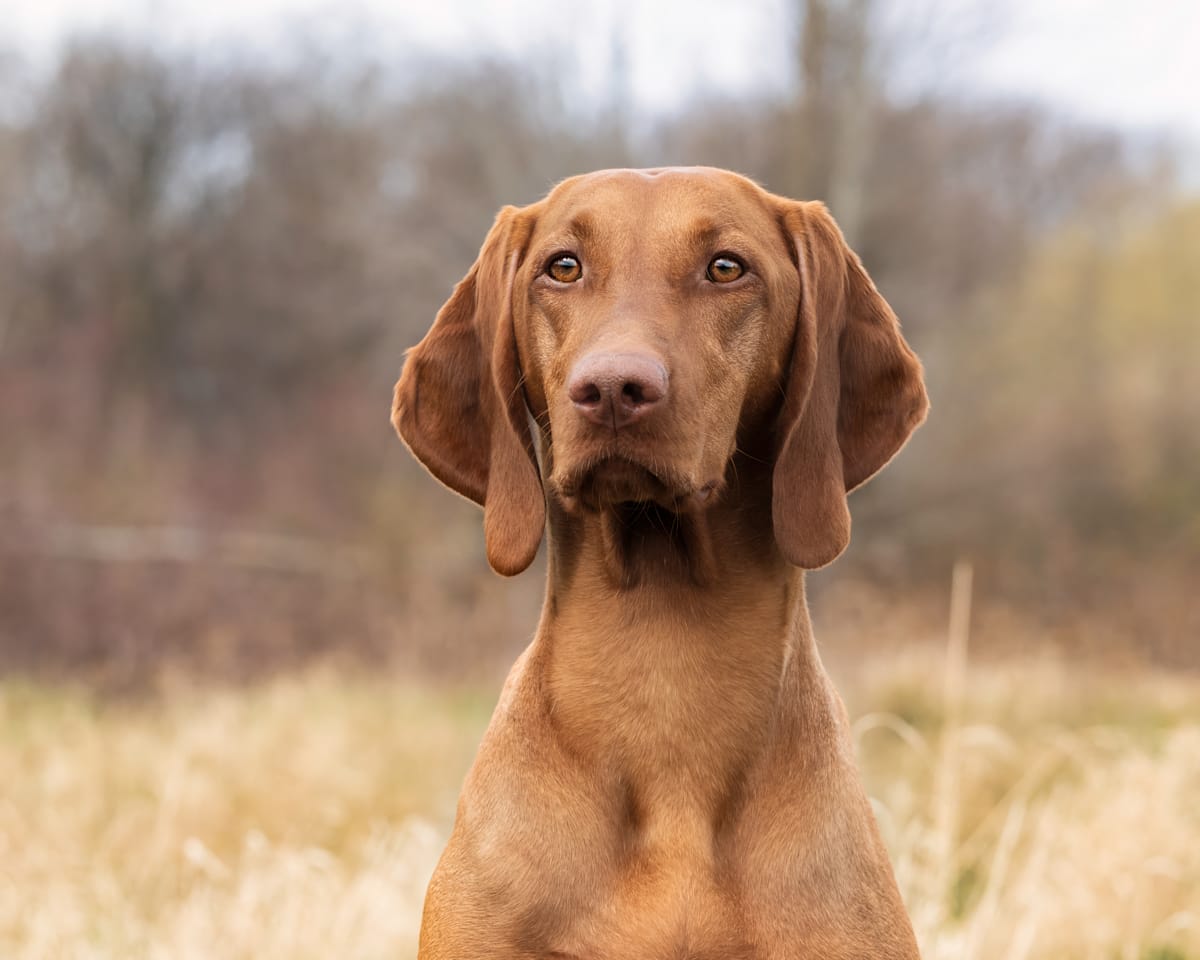
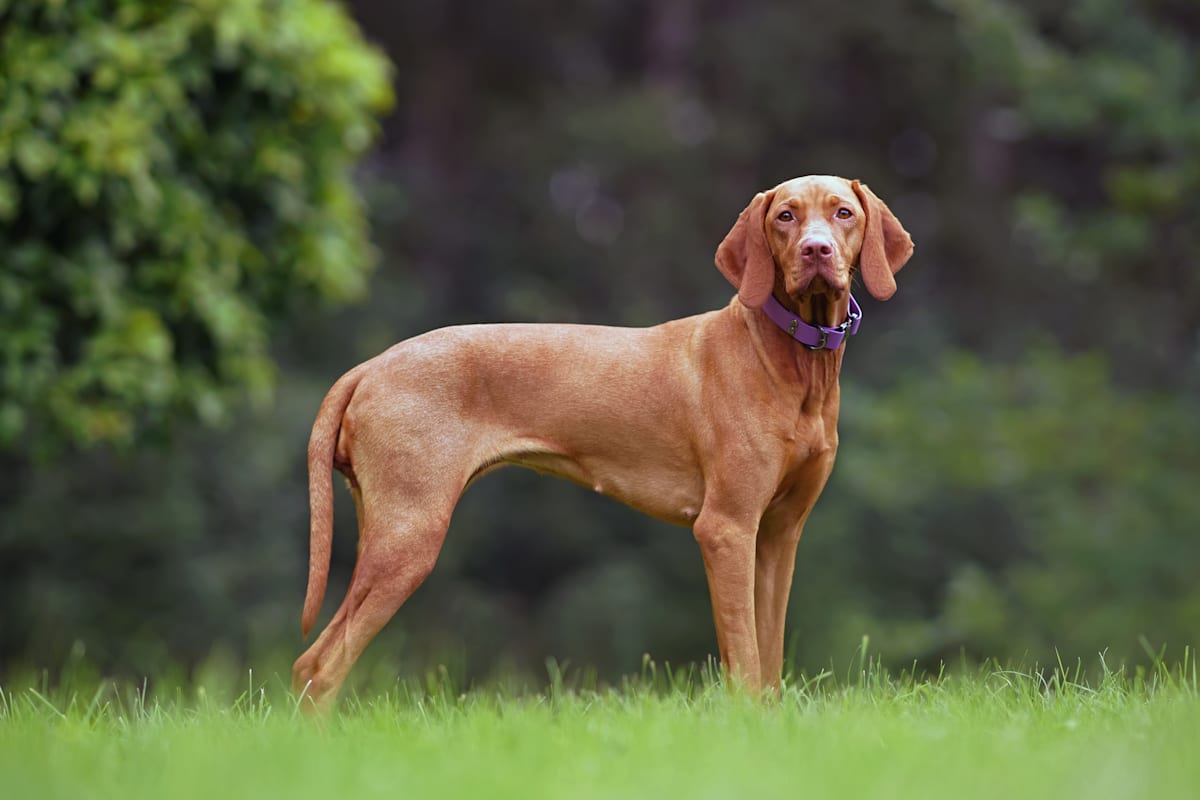
    Vizslas are short-coated and muscular dogs with a medium build. They are built light enough to travel long distances, but Vizslas have well-defined muscles and a strong body. Vizslas have a traditional pointer head with a golden rust coat. Some refer to the Vizsla coat as copper, brown, or sandy, but the American Kennel Club recognizes a single standard color, golden rust. Other non-standard colors often seen at breeders around the United States are golden, rust, red golden, red, rust golden, and sandy yellow. There are no standard markings, but white markings are common in non-standard Vizslas. The AKC standard defines their coat as smooth, short, dense, and lying close to the body. Vizslas usually lack an undercoat completely. Since they are self-grooming dogs, Vizslas don’t need much intervention on your part to maintain a healthy and clean appearance.

    Size & Weight

    The Vizsla is a medium-sized dog. Adult males can grow to be 60 pounds and measure 22-24 inches tall. They possess a strong, athletic body with a big heart and lots of energy to burn.
    Full Grown
    Female
    23 in. / 55 lbs.
    Male
    24 in. / 60 lbs.
    Height bar
    Female Pet
    Height Figure
    Male Pet
    Height is measured up to the shoulders.

    Vizsla Characteristics

    Size

    Tiny

    Jumbo

    Weight

    Light

    Heavy

    Shedding

    Minimal

    Abundant

    Coat Length

    Short

    Long

    Grooming Frequency

    Occasional

    Frequent

    Living Space

    City apartment

    Ranch

    Exercise

    Couch potato

    Bring it on!

    Climate

    Warm

    Cold

    Personality

    Antisocial

    Outgoing

    Protection

    None

    Bodyguard

    Behavior with Kids

    Always monitor

    Babysitter

    Training

    Headstrong

    Obedient

    Barking

    Mute

    Loud

    How to Care for a Vizsla

    Caring for a Vizsla means supporting their active body and deeply people-focused nature. With consistent exercise, positive training, balanced nutrition, and routine health and grooming care, these affectionate dogs can thrive as happy, engaged companions.

    Coat & Grooming: The Vizsla coat is short, dense, single-coated, and lays close to the body. They are self-cleaning, so they don’t need much in the way of grooming and maintenance. A weekly brushing session and a couple of nail trimmings per month are more than sufficient to keep them looking bright and beautiful.

    Coat length: Short
    Grooming: Occasional

    Shedding: Since they lack an undercoat, Vizslas are light shedders. They do a great job of self-cleaning with their paws and tongue. If you commit to a weekly brushing session and a general health inspection (ears, eyes, nails, mouth), your Vizsla will require minimal daily maintenance. In general, it is recomended that you trim their nails twice a month, brush their teeth daily, and keep an eye out for any ear, eye, or skin irritation.

    Training: Vizslas are very quick to learn and eager to please, but they don’t respond well to harsh training. Be patient, firm, and wield your authority carefully. Since Vizslas are so sensitive, it’s easy to cause permanent damage with forceful techniques. Positive reinforcement, early socialization, and constant praise are much more effective than shouting and punishing. Be firm, but also recognize you are dealing with a sensitive and emotional breed.

    Barking: Vizslas tend to bark relatively often. As hunting dogs, their sharp, loud bark was an asset, but your neighbors may not appreciate this fact. With proper socialization and a calm disposition, some Vizslas bark less than others. Don’t expect them to be “quiet dogs” without a huge training effort on your part.

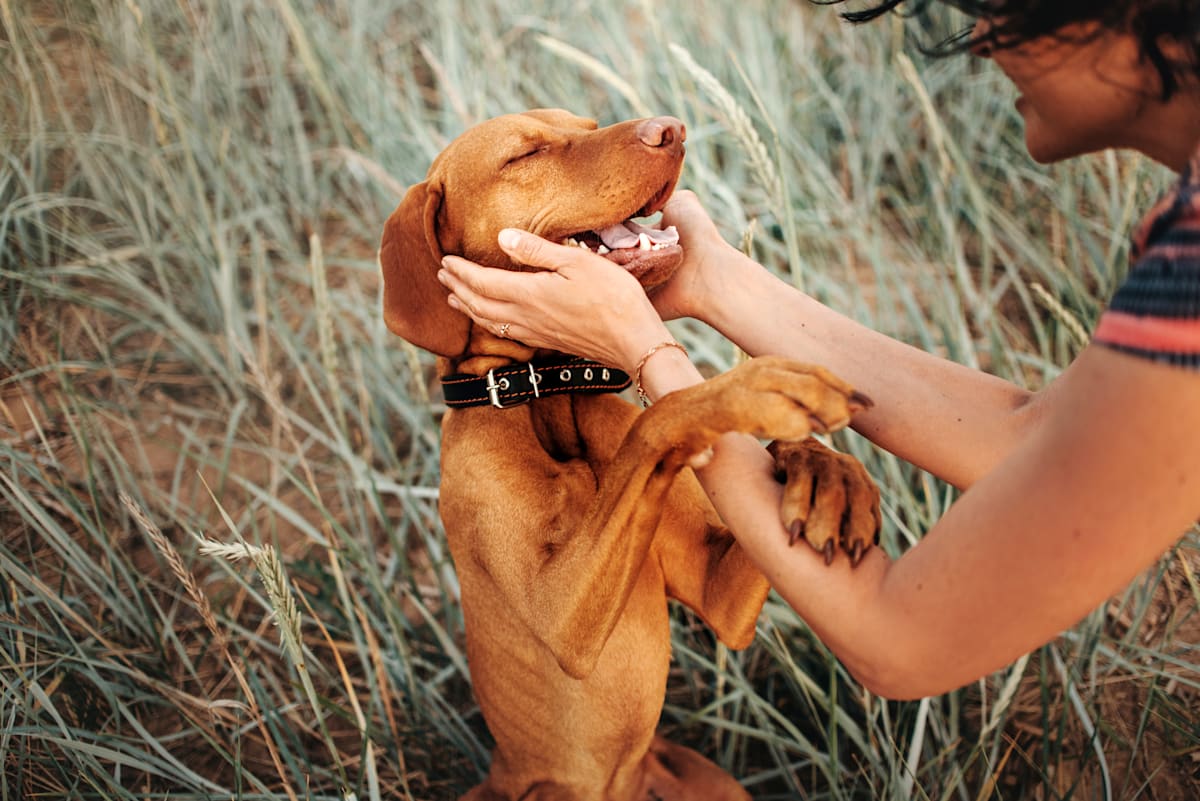
    Temperament & Behavior: Vizslas are gentle animals with a rare sensitivity for a dog. They are very aware and will connect with their family very closely. Some people refer to Vizslas as “Velcro dogs” since they bond so tightly with their owners. This dog is a great choice for someone looking for companionship and a loving dog in the home. It does come at a cost, however. Vizslas suffer from separation anxiety, boredom, and loneliness if left alone for too long.

    Behavior with kids: These lovable and gentle dogs are great around children. They are very permissive and playful with kids so long as you lay down some ground rules. Never be shy to instruct children on proper dog handling techniques, but rest assured that your Vizsla will generally be a calm and happy dog around the young ones. As with any dog, supervise your dog around children and unfamiliar adults.

    Protection: Vizslas are affectionate and easily befriended by strangers. They don’t make very good guard dogs since they are more likely to make friends. Other dogs and even cats can coexist peacefully with your Vizsla.

    Life span: On average, Vizslas live to be about 12-14 years old.

    Inherited health issues: All breeds of dogs can develop health problems either through inheritance or occurring at an increased frequency within the breed. Overall, the Vizsla has fewer implicated health conditions than many other breeds. These conditions may include, but are not limited to, the following: Sebaceous adenitis, Entropion and Idiopathic epilepsy.

    Preventive care: Even though your Vizsla may appear quite healthy at home, this is no reason to skip routine veterinary visits. Veterinarians have been extensively trained to pick up on some of the subtlest changes that can indicate bigger health problems. Early diagnosis and treatment of most conditions is beneficial for your dog and often for your wallet, too.

    Keep your four-legged friend at a healthy body weight by measuring your Vizsla’s meals and avoid giving too many treats or table scraps. Daily tooth brushing will help to prevent excessive tartar and plaque build up, which can lead to more significant dental disease.

    Vizslas are very active dogs that have fairly high-energy requirements. However, if they are overfed, they can still become overweight. Feed your Vizsla portion-measured meals and avoid offering too many treats.

    Daily Consumption: Average daily consumption for an adult Vizsla is 1.5 - 2.5 cups

    Energy Level: Frisky, energetic breed that is always ready for action.

    Exercise: Vizslas need a lot of exercise, so it’s up to you to provide enough opportunities to burn off their gas tank. Long walks, hiking up mountains, swimming, fetch– anything goes. The focus should be “how much” and “is this enough” when you look to exercise your dog. Schedule at least 60 minutes per day for Vizsla work-out time. A short walk around the block will not cut it here.

    Climate: Since Vizslas earned their keep as a hunting dog, they were built to be strong and resilient animals. Long days of cold, wet weather are no match for this sturdy outdoor companion. If you live in extreme cold climates, it’s worth giving them a jacket on a cold, wet day. Otherwise, they hold up well in most climates and weather conditions.

    Living space: Vizslas need some running room at home if you’ll have any chance of getting enough exercise into the day. A big backyard or back lot is ideal. Fences are a must if you want to provide a safe and secure place to play. Never let a Vizsla sleep outside – they suffer from separation anxiety easily.

    Cost of Owning

    On average, owning a middle-aged Vizsla costs around $1000 per year
    $300
    Vet Care
    $200
    Grooming & Boarding
    $300
    Food & Treats
    $200
    Other

    Unlock exclusive rewards with Vital Care, or enjoy up to 35% off essentials when you subscribe with Repeat Delivery.

    Enjoy exclusive rewards every time you shop. Get member-only deals, points, and special offers designed to help you save more on what your pet needs.

    Never run out of the essentials. Subscribe and get your pet’s favorites delivered on schedule—with up to 35% off plus the convenience of automatic refills.

    Your love story starts here.

    Find adoptable pets near you with a simple search.

    Fun Facts

    Vizslas have a close cousin called the Wire-haired Vizsla. They are a separate breed that came from a desire for a heartier cold weather version of the Vizsla. A Vizsla and a German Wire-haired Pointer mixed to form the new breed in the 1930s.

    Vizslas have a close cousin called the Wire-haired Vizsla. They are a separate breed that came from a desire for a heartier cold weather version of the Vizsla. A Vizsla and a German Wire-haired Pointer mixed to form the new breed in the 1930s.

    The Vizsla is one of the recognized national symbols of Hungary. Many Hungarians own Vizslas with a sense of national pride and deep respect for the storied history of the breed.

    The Vizsla is one of the recognized national symbols of Hungary. Many Hungarians own Vizslas with a sense of national pride and deep respect for the storied history of the breed.

    Radio personality Baba Booey and former White House Press Secretary Dana Perino own Vizslas.

    Radio personality Baba Booey and former White House Press Secretary Dana Perino own Vizslas.

    History

    The Vizsla comes from Hungary and in fact, outdated early Hungarian historical records. The breed is likely descended from the dogs of Magyar people in the Carpathian Basin of ancient history. Vizslas found work as war dogs, hunting dogs, and companion animals to wealthy barons and war lords. The purity of the bloodline was guarded closely by these early royal families. They truly loved their Vizslas and took great pride in their hunting abilities.


    Other European breeds and the World Wars caused the Vizsla to lose popularity and even threatened their existence in some cases. After WWII, Hungarian breeders searched the entire country for prime breeding dogs but only managed to find twelve remaining. Through a successful breeding program and surprise popularity in post-war America, the Vizsla came back to be one of the top thirty dog breeds today. From the first Vizsla arriving in 1951 to AKC recognition in 1960 and beyond, the Vizsla remains a popular breed here in the US and around the world.


    Read More

    Sponsored