Petco Text Logo
Petco Pet Logo
Jump To Section

    About Breed

    Shih Tzus are fun-loving dogs bred purely for companionship. They are a small breed with lots of personality, and typically follow their people from room to room as they move around the house. Shih Tzus are affectionate and outgoing. They are usually healthy dogs with some genetic predisposition to certain conditions. They enjoy being part of the family and have lots of love to give. While they are best known as companion dogs, many of them are making appearances on the agility and dog training circuits of late.

    Origin: Ancient China, many centuries ago   
    Other Names: Chinese Lion Dog, Chrysanthemum Dog

    Toy Group

    The diminutive size and winsome expressions of dogs in the AKC Toy Group illustrate the main function of this Group: to embody sheer delight. Don't let their tiny stature fool you, since many Toys are tough as nails! If you haven't yet experienced the barking of an angry Chihuahua, for example, well, just wait. Toy dogs will always be popular with city dwellers and people without much living space. They make ideal apartment dogs and terrific lap warmers on nippy nights.

    Breed Appearance

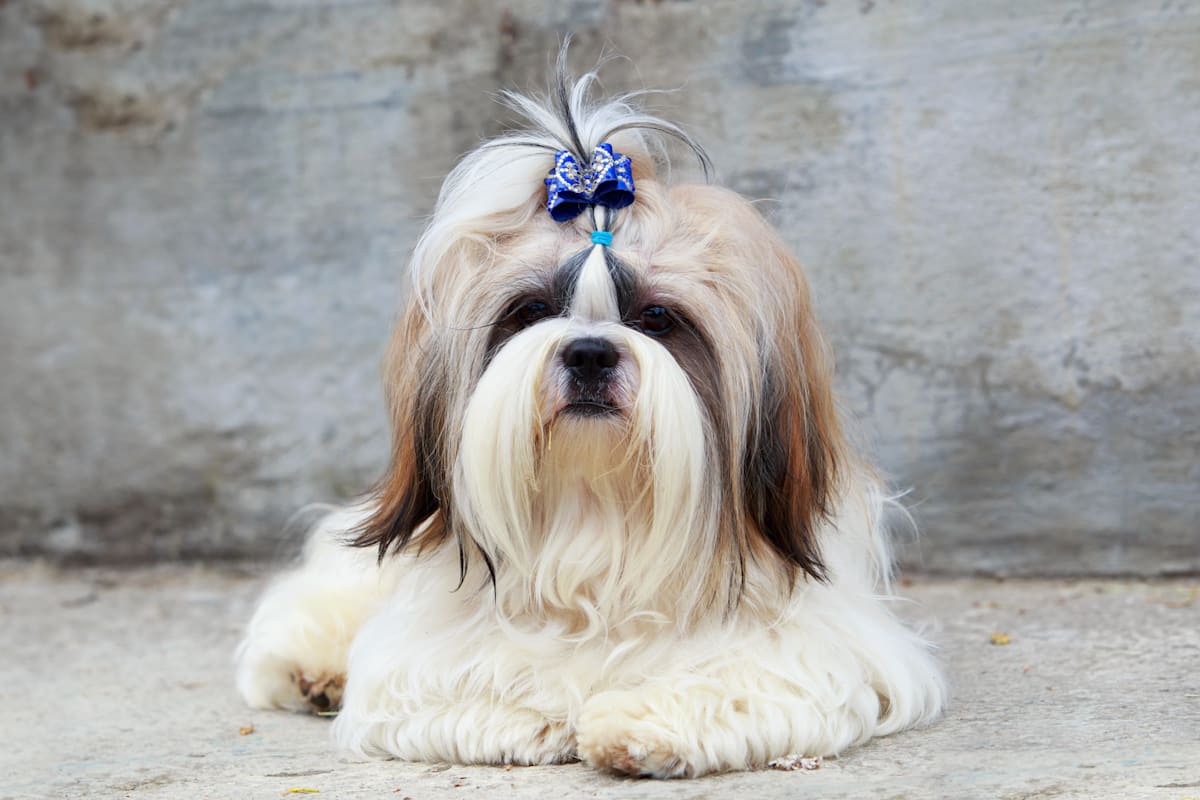
    The American Kennel Club (AKC) recognizes the Shih Tzu as a “sturdy, lively, alert toy god with long flowing double coat.” They have a distinct “arrogant” carriage with head held high, with big eyes and warm expression.


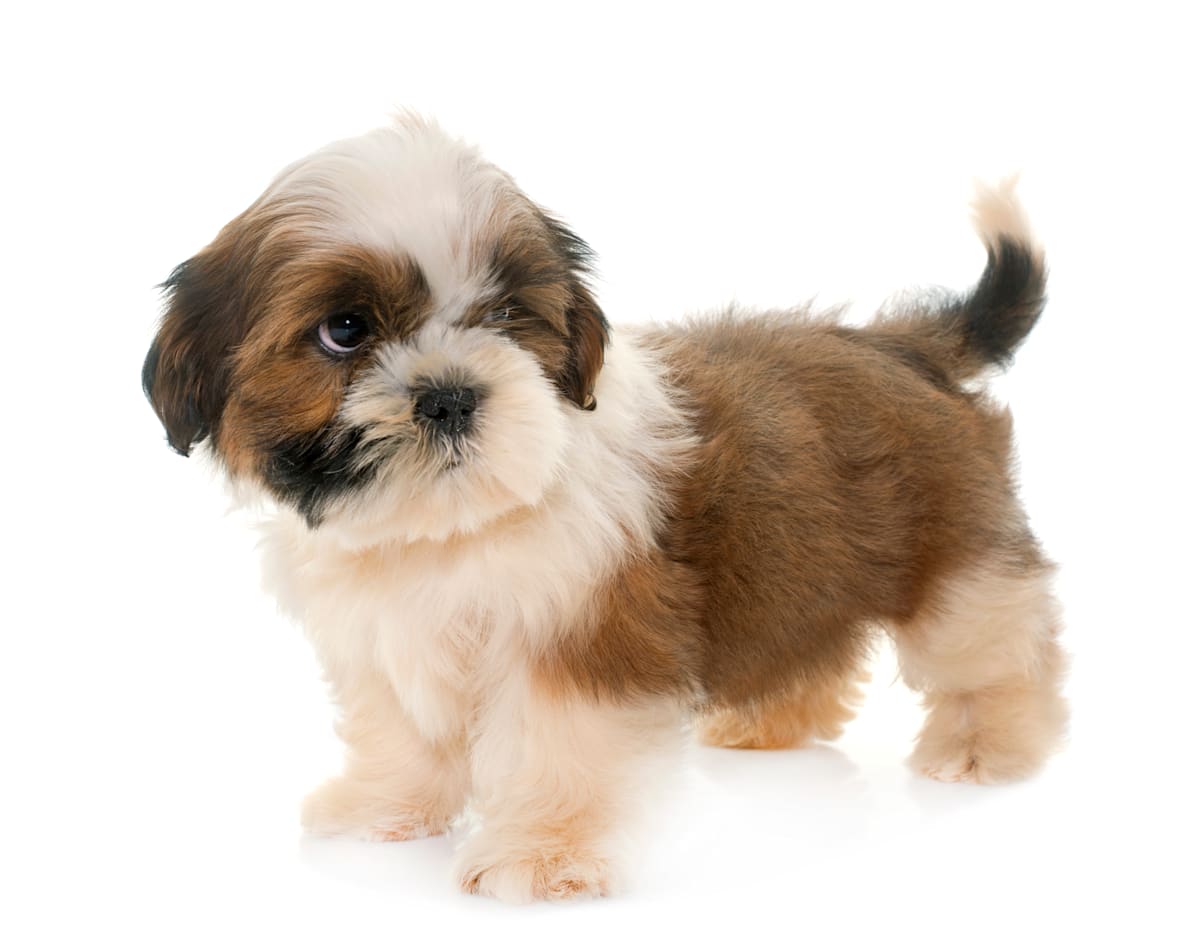
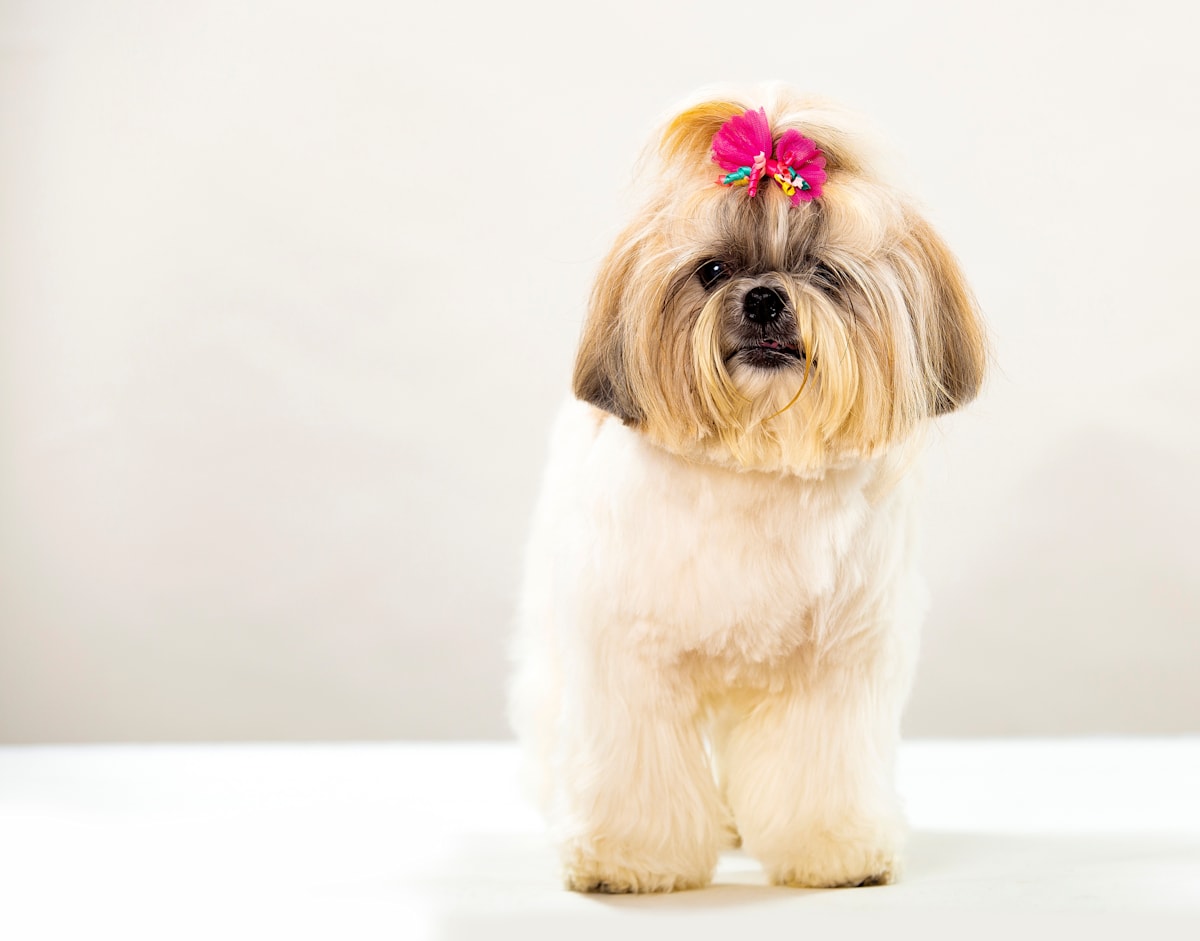
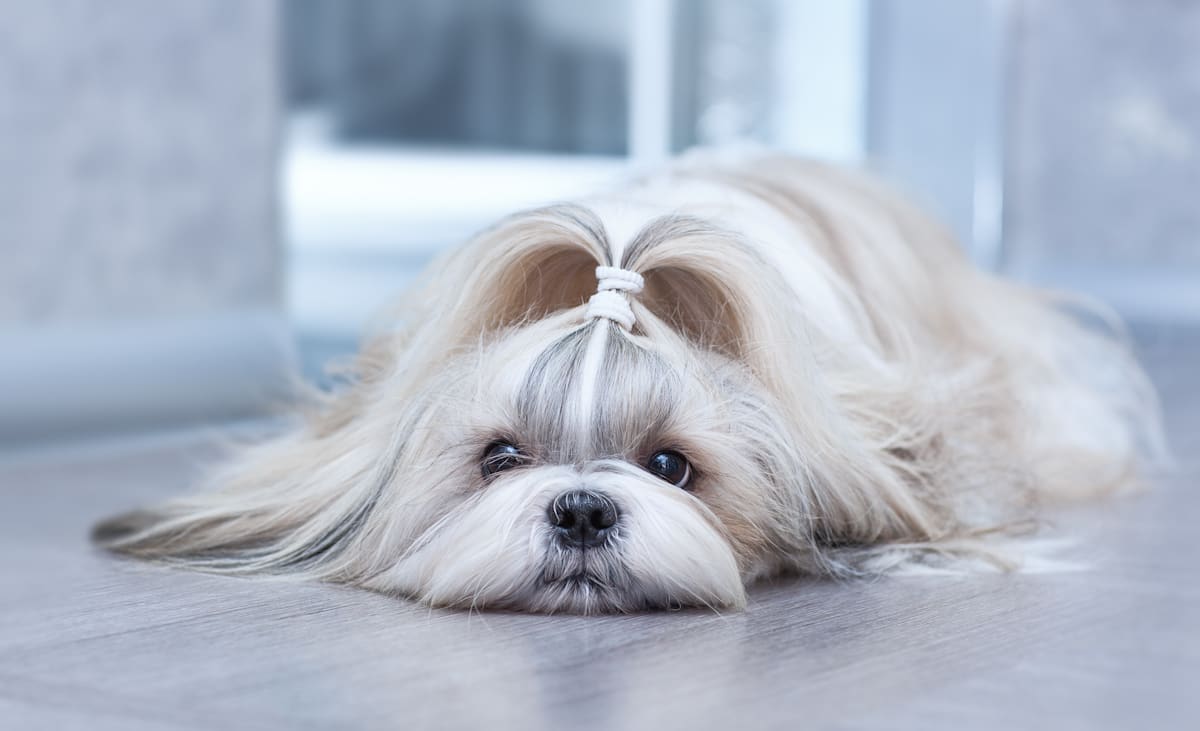
    The Shih Tzu coat is long and luxurious with dense, flowing hair. Some dogs have wavy hair while others are straight and coarse. The Shih Tzu comes in many colors and shades, and the AKC offers recognizes 14 colors as the official breed standard. 


    Shih Tzus will often sport a bow for the top of the head to gather their long hair into a fashionable crown.

    Size & Weight

    There is very little difference between adult males and females. They usually stand 9 to 10.5 inches tall and weigh 9 to 16 pounds.
    Full Grown
    Female
    10 in. / 16 lbs.
    Male
    10 in. / 16 lbs.
    Height bar
    Female Pet
    Height Figure
    Male Pet
    Height is measured up to the shoulders.

    Shih Tzu Characteristics

    Size

    Tiny

    Jumbo

    Weight

    Light

    Heavy

    Shedding

    Minimal

    Abundant

    Coat Length

    Short

    Long

    Grooming Frequency

    Occasional

    Frequent

    Living Space

    City apartment

    Ranch

    Exercise

    Couch potato

    Bring it on!

    Climate

    Warm

    Cold

    Personality

    Antisocial

    Outgoing

    Protection

    None

    Bodyguard

    Behavior with Kids

    Always monitor

    Babysitter

    Training

    Headstrong

    Obedient

    Barking

    Mute

    Loud

    How to Care for a Shih Tzu

    Caring for a Shih Tzu is all about supporting their affectionate, people-first nature while keeping them comfortable and healthy. With regular grooming, gentle training, balanced nutrition, and routine care, these charming companions can thrive as happy members of the family.

    Coat & Grooming: Shih Tzus have long and luxurious coats that were the pride of their ancient Chinese breeders. Regular brushing and combing, at least twice weekly, are necessary to keep them looking their best. Shih Tzus benefit from weekly bathing. This breed needs a lot of TLC to maintain its looks, so if you aren’t able to do the necessary beauty treatments, be sure to find a good local groomer to help you keep your Shih Tzu beautiful.

    Aside from the high-maintenance coat, the Shih Tzu needs the usual pet care on a regular schedule. Teeth brushing and nail clipping should be done regularly to promote good health and keep your pet feeling pampered.

    Coat length: Long
    Grooming: Frequent

    Shedding: Shih Tzus don’t shed very much, and some breeders list the dog as a hypoallergenic pet. The Shih Tzu hair doesn’t fall out often other than during combing and brushing or when it breaks. Don’t expect to see a lot of dog hair all over your apartment when you live with a Shih Tzu.

    Training: Shih Tzus are very intelligent and typically take to training very well. Some owners report difficulty with house-training, but if you use a crate and follow the training plan, it’s usually not a problem. When it comes to training your Shih Tzu, you should carefully supervise your pet when they are young. These curious animals will find trouble if left alone, but they are a smart and capable breed with lots of love to give if you teach them good manners.

    Barking: As with most dogs, early socialization and training make for a well-rounded companion. They can be timid and fearful without the proper instruction and confidence-building early in life. Excessive barking is a sign that you need to spend more time training your pet. The Shih Tzu bark is piercing, loud, and high. The bark often comes in a wave of short, sharp bursts.


    Ancient Chinese monks bred the Shih Tzu to resemble the lion, an important animal in Buddhist mythology. Their proud posture and curious demeanor doesn’t always match their size, so it’s up to you to foster good habits and proper discipline in your pet. They don’t know their size, so it’s important to keep them safe from big jumps from heights and larger aggressive dogs.

    Temperament & Behavior: Since the Shih Tzu was a royal palace fixture in ancient China, these dogs are great companions that don’t make a fuss. All they want to do is be with their family. They aren’t interested in hunting or guard duty, so don’t expect your Shih Tzu to replace your home monitoring security system.

    While they do love to spend time on the couch, Shih Tzus are alert and lively at times. They are very affectionate, and a Shih Tzu’s favorite place to sit is the lap of someone they love. Don’t be surprised when your Shih Tzu follows you around the house, close at heel. They love to be close to their family, so you might struggle to get some privacy from these curious and loving companions.

    Behavior with kids: Shih Tzus are wonderful as family pets. They play well with others, including small children and other pets. As long as kids are supervised, they don’t pose many risks to the delicate Shih Tzu frame. Shih Tzus are very friendly and don’t pose a risk to small children or pets with proper training and supervision.

    Protection: Shih Tzus are very friendly, even with strangers. The original Chinese breeders wanted a dog that would fit in with palace life without causing too much of a disturbance. They aren’t good sentinels or guard dogs because they make fast friends with everyone they meet.

    Life span: On average, Shih Tzus live to be about 12 to 15 years old.

    Inherited health issues: Shih Tzu dogs, like a number of purebred dogs, have inherited health conditions. Some are more common than others, and many are attributable to the conformation (anatomy) of the breed.

    Common health conditions in Shih Tzus include allergies, cancer, portosystemic shunt, patellar luxation, intervertebral disc disease, cataracts, distichiasis, glaucoma, keratoconjunctivitis sicca, pigmentary keratitis, urinary stones and tracheal collapse.

    Preventive care: Shih Tzu’s as a breed have a number of problems that can be prevented or effectively managed with care. Several of their problems can be directly tied back to their anatomy, especially their short snout and ever-present under bite. These features predispose them to the development of dental disease, so it’s important to get your Shih Tzu used to dental care from an early age. Use a small brush that fits over your finger and a good-quality animal-specific toothpaste.

    Shih Tzu’s are prone to a number of eye problems. Monitor your dog’s eyes for excessive discharge – especially green or yellow – as well as cloudiness. These are often early signs of problems that can be easily treated.

    Make sure you have an adequate supply of fresh water present in several locations, and encourage frequent drinking to reduce the chance of urinary stone formation. It’s also a good idea to fit your Shih Tzu with a harness, as so many of these dogs have tracheal collapse, which is exacerbated by pulling on a collar.

    Feed your Shih Tzu a good quality small breed dog food, and closely monitor his weight, to limit problems associated with obesity.

    Daily Consumption: Adult Shih Tzus eat ¾ to 1 cups of dry food per day

    Energy Level: Enjoys some moderate exercise every now and then.

    Exercise: Shih Tzu habits are often comical given their size, but they take themselves very seriously. They are alert, active, and curious in their environment. When it comes to finding a place to sit, the Shih Tzu has a favorite spot: your lap. The affectionate and loving Shih Tzu needs to be around people because they thrive as close companions. These little lions like to be the center of attention, so it’s important to develop good habits early in life with proper training and discipline.
    Since they are happy to run around a small apartment and then sit on your lap, you don’t need to worry about getting out for long walks or having a big backyard for them to play. Shih Tzus are happy with minimal walking and only a bit of exercise, so they make great pets for people in apartments without a lot of room to move around.

    Climate: When it comes to inclement weather, your Shih Tzu would rather be inside. They don’t like wet or cold weather very much, and their coat can pick up a lot of snow as it drags along the cold ground. They can manage in the cold without shivering, but make sure to put a coat on them in the coldest climates. Watch out for heatstroke, as their short snouts predispose them to overheating.

    Living space: Shih Tzus don’t need much in terms of space or exercise. They thrive in a small apartment since they only need a bit of running around every day. With a Shih Tzu at home, you won’t notice that you’re sharing your space with a dog. They fit into any environment. They were bred to lounge around royal palaces, so Shih Tzus are fairly low-maintenance when it comes to getting out for exercise.

    Cost of Owning

    The average cost of owning a Shih Tzu is $900 per year
    $250
    Vet Care
    $200
    Grooming & Boarding
    $300
    Food & Treats
    $150
    Other

    Unlock exclusive rewards with Vital Care, or enjoy up to 35% off essentials when you subscribe with Repeat Delivery.

    Enjoy exclusive rewards every time you shop. Get member-only deals, points, and special offers designed to help you save more on what your pet needs.

    Never run out of the essentials. Subscribe and get your pet’s favorites delivered on schedule—with up to 35% off plus the convenience of automatic refills.

    Cross Breeds

    Select a Breed to Cross

    Choose a breed from the dropdown to see potential crosses.

    Pug
    Dropdown Icon

    Your love story starts here.

    Find adoptable pets near you with a simple search.

    Fun Facts

    Shih Tzus are sometimes called “Chrysanthemum dogs” because their hair grows out around their face, resembling the flower’s petals.

    Shih Tzus are sometimes called “Chrysanthemum dogs” because their hair grows out around their face, resembling the flower’s petals.

    The proper pronunciation is “sheed zoo” based on the Chinese name.

    The proper pronunciation is “sheed zoo” based on the Chinese name.

    While the Shih Tzu was seen as a spiritual protector in ancient Chinese temples, they were also used as foot warmers and bed companions in the cold Chinese winters.

    While the Shih Tzu was seen as a spiritual protector in ancient Chinese temples, they were also used as foot warmers and bed companions in the cold Chinese winters.

    Nicole Ritchie is a famous Shih Tzu owner, often sporting her dog in a designer handbag.

    Nicole Ritchie is a famous Shih Tzu owner, often sporting her dog in a designer handbag.

    History

    Some historians trace the Shih Tzu all the way back to Ancient China as one of the oldest dog breeds in the world. Evidence of the Shih Tzu’s existence comes from paintings and documents from as early as 800 B.C. The name comes from Chinese, meaning “lion dog.” The dogs were an important fixture in the royal palaces, and some believe that Tibetan monks bred the Shih Tzu to resemble the lions from Buddhist mythology. Shih Tzus made great gifts for a Chinese emperor or royal family member. They were likely bred from Lhasa Apso and Pekingese breeds, but the exact origins are lost to time.

    The American Kennel Club first recognized the breed in 1969 as part of the Toy group. The first European standards were earlier in the 1930s, and American soldiers likely brought home Shih Tzus after the Second World War. Today, the Shih Tzu is the 20th most popular breed in America, according to the AKC.

    Read More

    Sponsored