








Petco Text Logo
Petco Pet Logo
Jump To Section

    About Breed

    Built for a life of chasing vermin and fighting badgers in “Auld Scotland”, the Scottish Terrier is a feisty and lively breed with a storied history. Living with a Scottie has its challenges since they love to bark, chase, and dig. For the owners with the patience and training ability to bring out the best in the breed, Scottish Terriers are a delight for the whole family. It’s not a great breed for a highly-active lifestyle, but your Scottie will love sharing long walks punctuated by some healthy barking at squirrels and other small animals.

    Terrier Group

    AKC Terrier Group are feisty, energetic dogs whose sizes range from fairly small, as in the Cairn or West Highland White Terrier, to the grand Airedale Terrier. People familiar invariably comment on the distinctive terrier personality. Terriers typically have little tolerance for other animals, including other dogs. Their ancestors were bred to hunt and kill vermin. In general, they make engaging pets, but require owners with the determination to match their dogs' lively characters.

    Breed Appearance

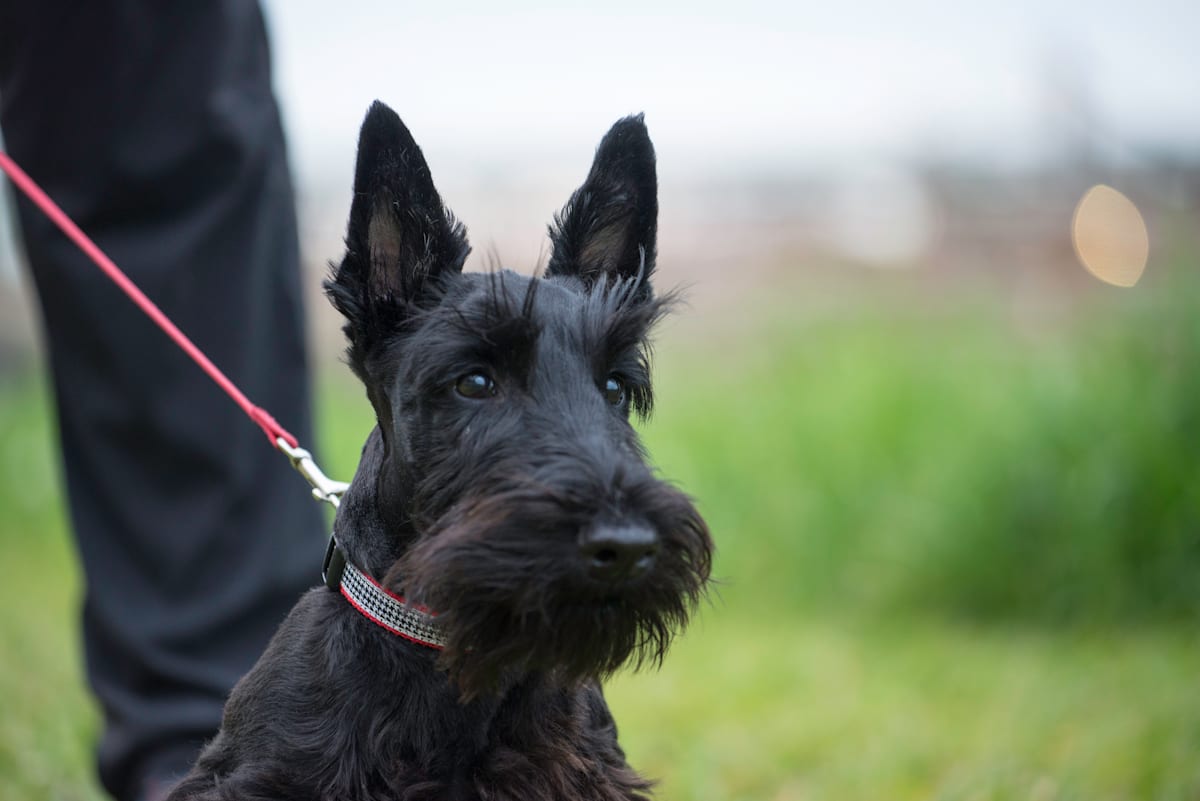
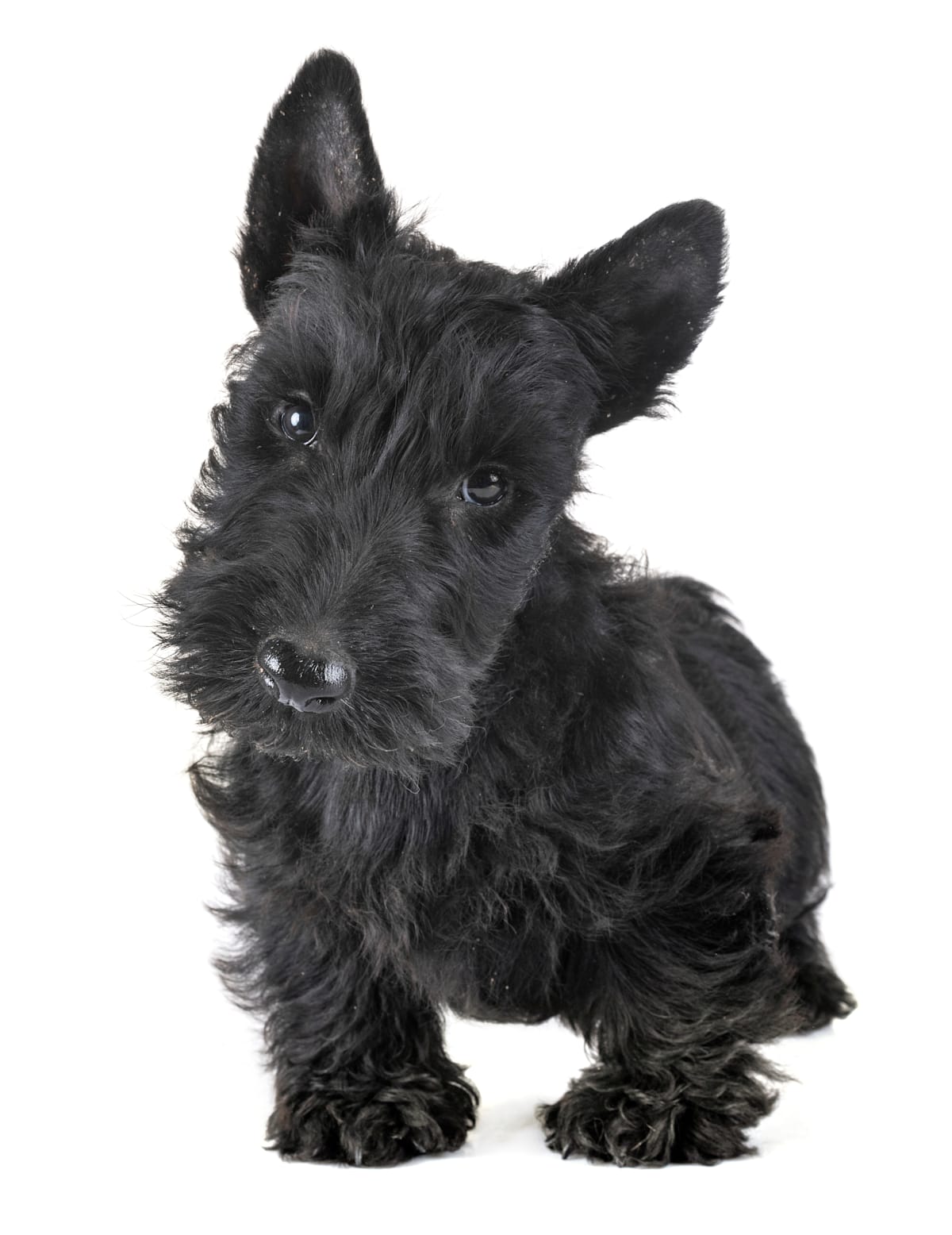
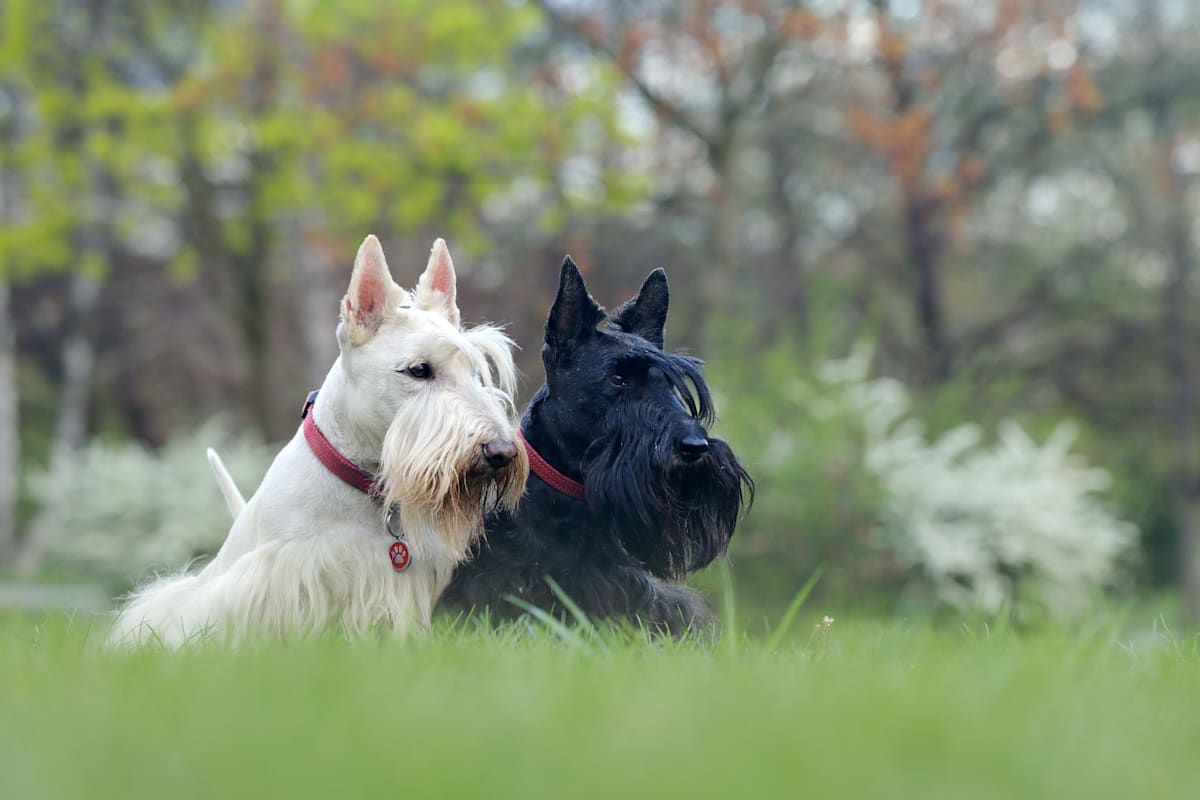
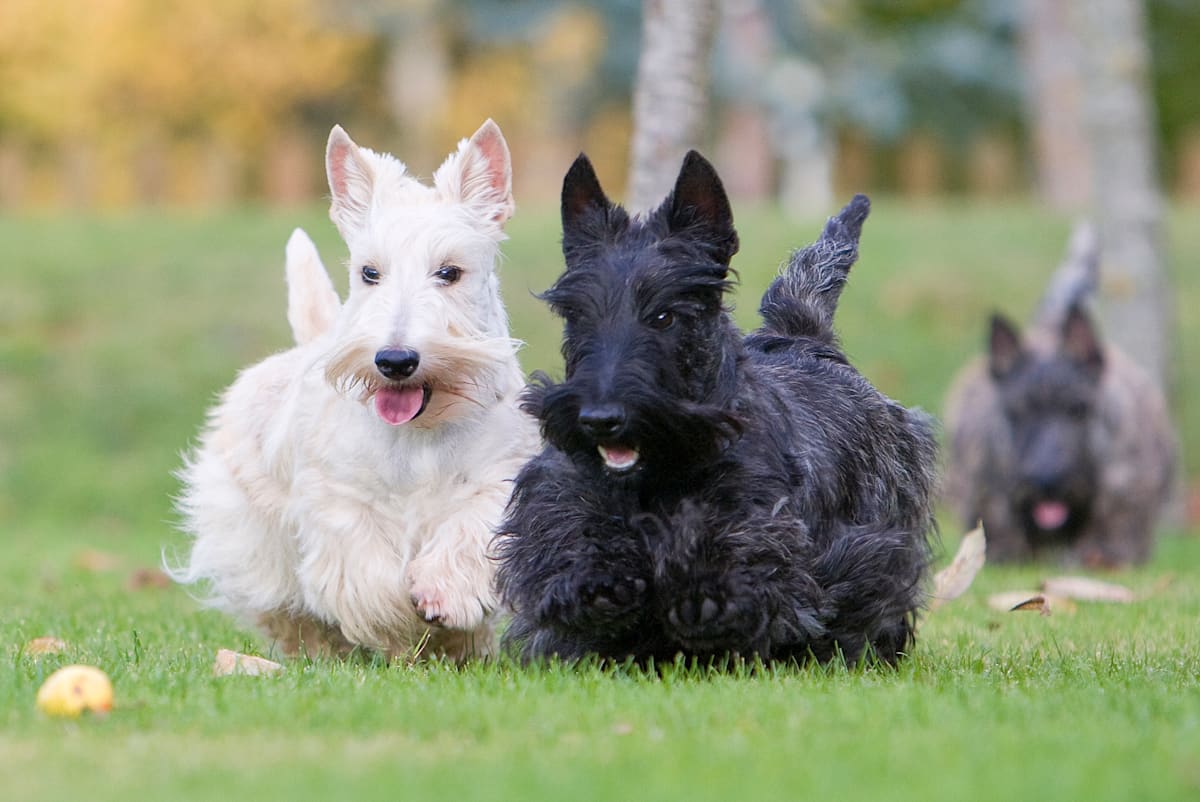
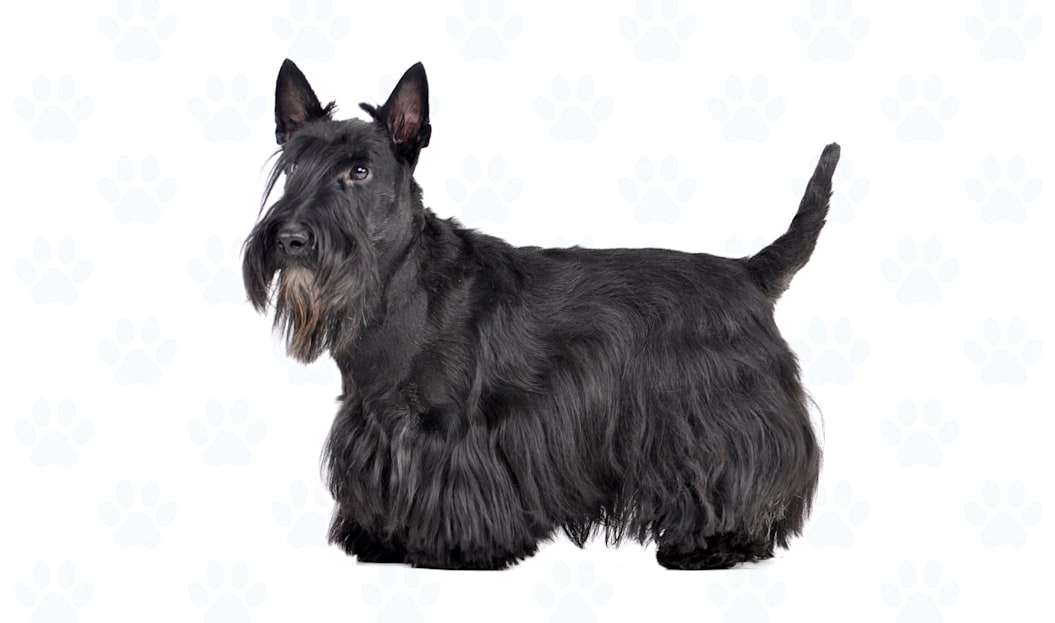
    Compactness defines the Scottish Terrier. They are stout and sturdy with a small frame and short legs. Their coat is wiry and hard with good weather-proofing built right into the package. Scotties have a proud and bold confidence in their gait and carry. While their ears are small and prick (but never cut), they are often obscured slightly by short crops of hair. Piercing eyes are set back in their inquisitive face.

    The American Kennel Club recognizes six colors in the official breed standard: black, black brindle, brindle, red brindle, silver brindle, and wheaten. There are no standard markings mentioned in the Scottish Terrier AKC breed standard.

    Size & Weight

    A fully-grown male Scottish Terrier typically weigh 19 to 22 pounds with a height of 10 inches at the shoulders. Females are similarly sized, but may be a bit smaller.
    Full Grown
    Female
    10 in. / 21 lbs.
    Male
    10 in. / 22 lbs.
    Height bar
    Female Pet
    Height Figure
    Male Pet
    Height is measured up to the shoulders.

    Scottish Terrier Characteristics

    Size

    Tiny

    Jumbo

    Weight

    Light

    Heavy

    Shedding

    Minimal

    Abundant

    Coat Length

    Short

    Long

    Grooming Frequency

    Occasional

    Frequent

    Living Space

    City apartment

    Ranch

    Exercise

    Couch potato

    Bring it on!

    Climate

    Warm

    Cold

    Personality

    Antisocial

    Outgoing

    Protection

    None

    Bodyguard

    Behavior with Kids

    Always monitor

    Babysitter

    Training

    Headstrong

    Obedient

    Barking

    Mute

    Loud

    How to Care for a Shiba Inu

    Caring for a Scottish Terrier means balancing their independent, spirited nature with consistent routines and gentle guidance. With regular grooming, thoughtful training, balanced nutrition, and daily activity, these confident little dogs can thrive as happy, well-rounded companions.

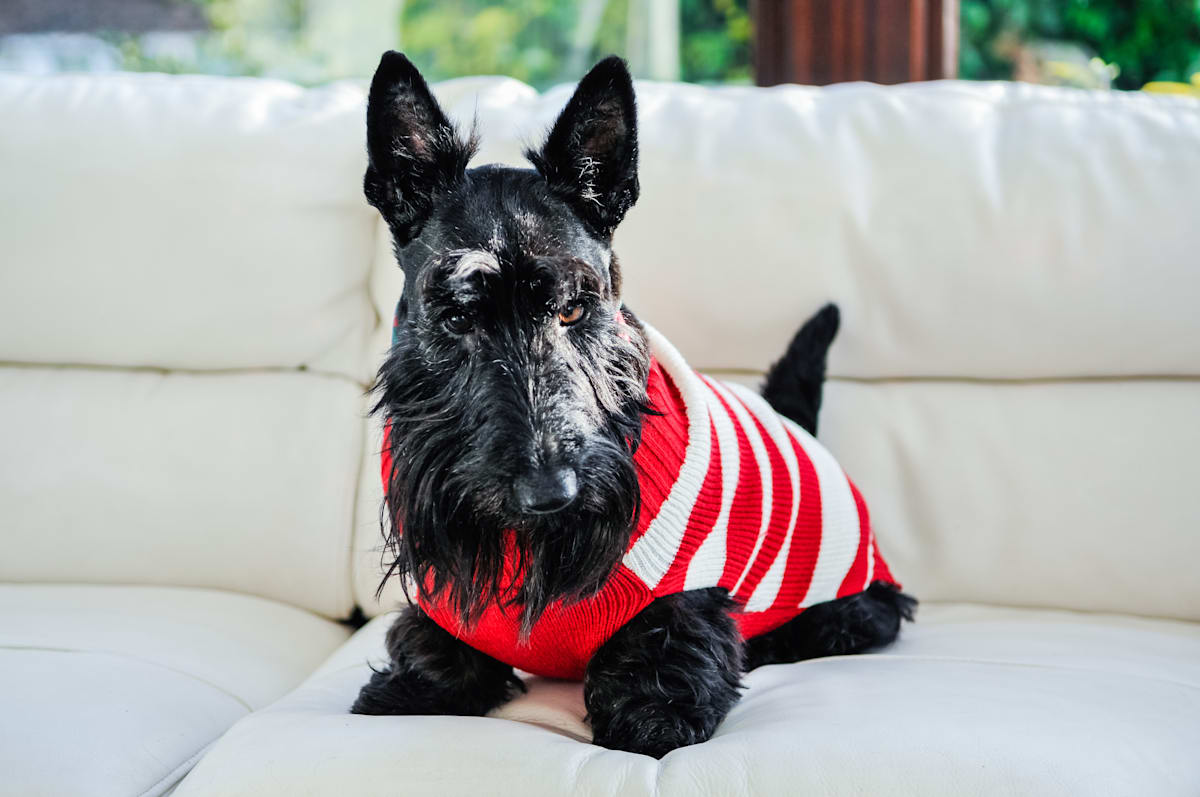
    Coat & Grooming: A Scottie’s coat is hard and wiry, perfect for long days working in poor Scottish weather. Grooming isn’t too much of a chore in terms of time, but you need to commit to weekly brushing at a minimum. Scotties have a double coat: a topcoat and a bottom coat. To keep both coats in top shape, it pays to invest in the proper tools and grooming products. A good dog brush is a lifesaver when it comes to grooming your Scottie. Show dogs are often clipped and trimmed daily to maintain that “perfect look”, but casual owners can get away with a professional grooming session every two months or so. When you do your weekly grooming, pay close attention to your dog’s teeth, eyes, ears, and nails for any signs of irritation or distress.

    Coat length: Short to Medium
    Grooming: Frequent

    Shedding: Scotties don’t shed much – their hair just keeps growing and growing. It’s important to clip your Scottish Terrier before it becomes unmanageable for you and uncomfortable for them. It’s a mistake to think that Scotties are an “easy” breed in terms of grooming. Even though they don’t shed much, their coat needs weekly maintenance to stay healthy and presentable.

    Training: Early obedience training is crucial with most dogs, but it’s especially important with a Scottish Terrier. They are typically proud and aloof, but Scotties love attention, even if they rarely show it. While they tend to be a bit standoffish with total strangers, Scottish Terriers are loyal and loving with their immediate family and friends. It’s important to supervise strangers and small children around your pet. Crate training is a good idea for younger Scotties, but they can suffer from separation anxiety if left alone for too long.

    Barking: If you can’t stand to live with a barking dog, you might reconsider sharing your home with a Scottie. They are always keen to sound the alarm, whether it’s an intruder, squirrel, or strong gust of wind outside. Training and obedience classes will help, but it’s nearly impossible to get a Scottish Terrier to stop barking altogether.

    Temperament & Behavior: The Fourth Earl of Dumbarton coined the nickname “the diehard” for his favorite breed. Scotties are alert and quick on their feet with a keen sense of place. Territorial and feisty, the Scottish Terrier is always quick to sound the alarm if a stranger calls. The Earl gave them their moniker based on “a rugged nature and determination”. This is a perfect way to describe the temperament of the proud and noble Scottie.

    Behavior with kids: As a confident and proud breed, Scotties don’t take kindly to roughhousing. Unwanted pulling and prodding doesn’t usually end well for curious children. Always keep a keen eye out when strangers and small children interact with your Scottie.

    Protection: As a territorial breed, Scotties are a fairly effective burglar alarm. They don’t take kindly to strangers, and barking comes naturally to these dogs. If you are familiar with the expression “doesn’t know his size”, you already know a bit about Scottish Terriers.

    Life span: On average, Scottish Terriers live to be about 12 years old.

    Inherited health issues: Health conditions can occur in Scottish Terriers, just as they can in any breed of dog. Certain conditions occur at an increased frequency in Scotties, and other conditions have a genetic link. Genetic tests are available for some of these conditions, which are typically performed by responsible breeders in an attempt to decrease the incidence of inherited health conditions within the breed. These conditions may include, but are not limited to, the following: Familial vasculopathy, Hyperadrenocorticism (Cushing’s disease), Hemophilia B, Von Willebrand’s disease, Craniomandibular osteopathy, Cutaneous histiocytoma, Cutaneous lymphoma, Nasal cavity tumors, Congenital deafness, Scottie cramp, Cataracts, Vacuolar hepatopathy and Transitional cell carcinoma.

    Preventive care: Although many of the more common health problems found in Scotties cannot be definitively prevented, staying on top of routine veterinary care can help to detect some problems before they become more severe. Even if your Scottish Terrier appears to be healthy at home, do not skip routine veterinary exams. Your veterinarian has been extensively trained to detect subtle changes and can formulate a wellness plan for your individual dog. If you notice any new lumps and bumps, changes in your Scottie’s water consumption or urination, or other changes at home, be sure to bring these changes to your veterinarian’s attention.

    The Scottish Terrier Club of America and the AKC require that breeders perform DNA tests for Von Willebrand’s Disease and evaluation of the patella prior to breeding, but an ophthalmologist eye evaluation and thyroid testing are also recommended. The goal of testing dogs prior to breeding is to avoid breeding affected dogs, which decreases the incidence of hereditary conditions within the breed.

    With insufficient exercise or overfeeding, Scotties can easily become overweight. Maintaining a healthy body weight is a crucial step in keeping your Scottie at the peak of health. Avoid offering table scraps or too many treats, and offer portion-controlled meals of a high quality and balanced diet.

    Daily Consumption: Average daily consumption for an adult Scottie is 1/2 to 3/4 cup.

    Energy Level: Frisky, energetic breed that is always ready for action

    Exercise: Scotties are quickly bored when left alone, and they possess a big gas tank despite their small, compact body. Vigorous swimming and running are not advised, but a brisk walk and playtime in a fenced yard are perfect for a Scottie. If you are looking for a marathon partner or a hiking companion, this breed won’t fulfill your needs adequately. Chasing squirrels ranks highly on the list of preferred Scottie pastimes. Always use a leash in public to contain their unbridled enthusiasm for the chase.

    Climate: Most climates won’t pose a problem for a hearty terrier breed, such as the Scottie. If it’s extremely cold or warm, it’s worth giving them a break from the elements if they appear distressed.

    Living Space: Scottish Terriers are small and compact dogs, but they are not a low-energy pet. They enjoy running around and living it up as a lively member of the household. It’s possible to live in harmony with a Scottie in a condo or apartment, but it’s better to have a little breathing room if possible.

    Cost of Owning

    On average, owning a middle-aged Scottie costs around $1000 per year
    $250
    Vet Care
    $250
    Grooming & Boarding
    $250
    Food & Treats
    $250
    Other

    Unlock exclusive rewards with Vital Care, or enjoy up to 35% off essentials when you subscribe with Repeat Delivery.

    Enjoy exclusive rewards every time you shop. Get member-only deals, points, and special offers designed to help you save more on what your pet needs.

    Never run out of the essentials. Subscribe and get your pet’s favorites delivered on schedule—with up to 35% off plus the convenience of automatic refills.

    Your love story starts here.

    Find adoptable pets near you with a simple search.

    Fun Facts

    Only the Scottie and the German Shepherd can claim to have three stays in the White House. Presidents FDR, Eisenhower, and GW Bush all owned Scotties while living in the Presidential Residence in Washington.

    Only the Scottie and the German Shepherd can claim to have three stays in the White House. Presidents FDR, Eisenhower, and GW Bush all owned Scotties while living in the Presidential Residence in Washington.

    Other famous actors and celebrities loved the breed. Queen Victoria, Jackie Kennedy Onassis, Rudyard Kipling, and many more had Scotties of their own.

    Other famous actors and celebrities loved the breed. Queen Victoria, Jackie Kennedy Onassis, Rudyard Kipling, and many more had Scotties of their own.

    The popular board game Monopoly features a Scottie as a player piece. The President of Hasbro once claimed that the Scottie token is the most popular with Monopoly players worldwide.

    The popular board game Monopoly features a Scottie as a player piece. The President of Hasbro once claimed that the Scottie token is the most popular with Monopoly players worldwide.

    The Scottish Terrier is one of the perennial winners at the Westminster Kennel Club Dog Show. Only the Wire Fox Terrier has won Best in Show more often in competition at the historic event.

    The Scottish Terrier is one of the perennial winners at the Westminster Kennel Club Dog Show. Only the Wire Fox Terrier has won Best in Show more often in competition at the historic event.

    History

    The true origins of the Scottish Terrier were lost to the sands of time, but the breed certainly traces to modern-day Scotland. The earliest written history of the breed dates back to 1436 and the writings of Don Leslie. When King James VI became the first King James of England, he sent six Scotties to France as a gift celebrating his ascension to the throne.

    The earliest Scottish Terriers eventually split into five distinct modern terrier breeds: Scottish, Skye, Cairn, West Highland White, and Dandie Dinmont. Today, the Scottish Terrier is one of the most recognized breeds from the British Isles and certainly the best known from the country of Scotland.

    The Scottie came to America in the late 1800s, but the two World Wars exposed the breed to American soldiers fighting in Europe. The popularity of the breed exploded thereafter, and it remains popular to this day. At one point, the Scottish Terrier was the third most popular American breed for pets. The AKC first recognized the breed in 1885, one of the earliest registrations for American dog enthusiasts.


    Read More

    Sponsored